
Micronesia Madness
Adventure Part 2: Truk Lagoon
Pacific Master – Master Liveaboards
November 21st – 30th, 2025
Captain: Venus Cruise Director: Joe Gurney
Total Dives: 22 Total Time: 18 hours and 3 minutes
Chuuk Lagoon was originally inhabited by the Micronesian peoples, with distinct communities that had their own political and social systems based on island clans, local chiefs, and inter-island trade. In the early 19th century, Spain claimed sovereignty over the Caroline Islands but was mostly just for show with limited actual presence or structure.
The Spanish defeat in the Spanish-American War in 1898 resulted in the sale of the Caroline Islands to Germany in 1899. The islands became part of German New Guinea and became a focus of trade and other commercial interests. However, during this period Chuuk Lagoon remained mostly undeveloped and ignored. Due to the mispronunciation of Chuuk by the Germans, Chuuk Lagoon became known as Truk Lagoon.
Japan and Britain allied together at the start of World War I and quickly took control of Chuuk from German; and Japanese forces too control in 1914. After the war, the League of Nations granted Japan the South Seas Mandate, a Class C Mandate, which gave it control over Chuuk Lagoon, the Marshall Islands, and the Marianas Islands, including Saipan and Tinian but not including Guam. Many Japanese migrated to the islands, and Chuuk became an important naval and military base and a major strategic point.
During WWII Chuuk was an important asset for Japan. It functioned as a major fleet base for the Imperial Japanese Navy, as well as a supply and fuel depot, and a repair yard for ships. As the war continued, the Allied forces advanced through the Gilberts, Marshalls, and Solomon Islands, putting increased pressures on the IJN. As Japan continued to invade China and southwest Asia, President Roosevelt blocked all Japanese assets in the United States.
At the time, they were importing 94% of their oil from the US; by blocking this it, basically halted Japanese expansion. Japan refused to stop expanding and give into the other demands of President Roosevelt, and planned on taking the oil by force. The bombing of Pearl Harbor on 7th December 1941 forced the United States to join the war.
In retaliation for Pearl Harbor, the US began planning Operation Hailstone and, between the 17th and 18th of February 1944 carried out a massive attack on Chuuk Lagoon. This two-day long attack bombed warships, merchant ships, airfields, aircraft, and multiple shore facilities. This was carried out by five fleet carriers and four light carriers containing around 500 warplanes. These were all supported by seven battleships, heavy cruisers, destroyers, and submarines. American reconnaissance planes were spotted prior to the attack, so most of the anchorage was evacuated, leaving mostly damaged and non-seaworthy ships. During these attacks, between 50 and 60 ships were sunk, hundreds of aircrafts were destroyed, and major amounts of supplies were lost. This effectively ended Chuuk as a major offensive base, and most wrecks remain on the bottom of the seafloor.
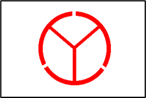
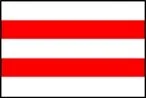
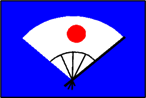
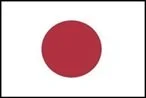
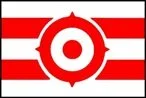
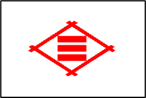
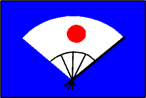
Most of the ships that the IJN used were former merchant vessels that were refitted for the war. Many vessels would have Maru at the end of the name, which translates to circle or round. This was more for good luck and the wish that the ship would leave and return whole and safe. Most vessels would fly two main flagsthe Japanese National flag as well as the shipping company house flag. The house flags would help show the ownership of the vessel and make it easier to identify while in port or sailing. During wartime, they kept the house flags to try and add some level of camouflage or secrecy, but they were mostly left out of tradition.
After Operation Hailstone Allied forces mostly ignored Chuuk due to its location and isolation from other islands. It remained in Japanese control and was occasionally bombed during the remainder of the war to ensure it remained neutralized.
The war ended on 2 September 1945 when Foreign Minister Mamoru Shigemitsu and General Yoshijiro Umezu signed the Japanese Instruments of Surrender with General Douglas MacArthur and Admiral Chester W. Nimitz aboard the USS Missouri in T okyo Bay.
Chuuk fell under US control, and Japanese forces were disarmed and remaining inhabitants were repatriated. The islands moved from Japanese mandate rule to an American administration. Most of these islands became part of the Trust Territory of the Pacific Islands in 1947, bringing in new administrative systems, increased American political influence, and changes in education, health, and infrastructure with the plan of becoming self-governed. Most of Chuukese society maintained their own traditions and cultures.
The Federated States of Micronesia was established in 1979 and brought together the islands of Yap, Chuuk, Pohnpei, and Kosrae. The FSM became a sovereign nation in 1986, which gave it the ability to self-govern; however, the US still retained defense responsibilities and provides economic assistance.
The name was officially changed back to Chuuk Lagoon in 1990 after independence and the Compact of Free Association. Now the state and people are often referred to as Chuuk Lagoon, while the actual lagoon area and wrecks are called Truk Lagoon.
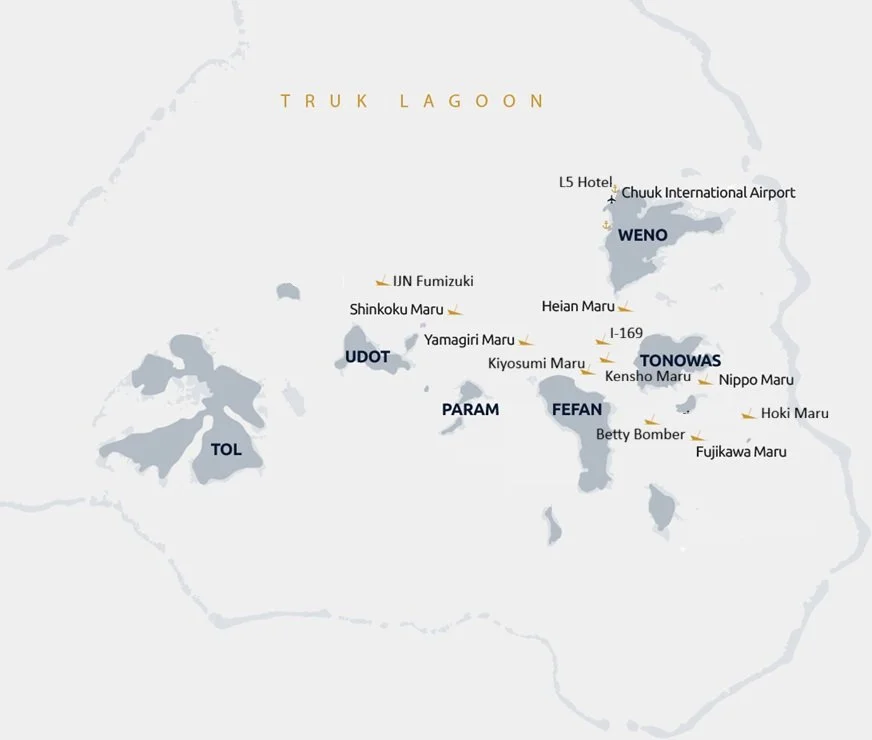
Wreck 1: Yamagiri Maru (山霧丸)
山 (Yama – Mountain) 霧 (Giri/kiri – Mist/fog) 丸 (Maru – Circle)
100’ for 55 minutes and 92’ for 45 minutes
Built: 25 May 1938 Sunk: 17 February 1944
GRT: 6,438 tons Length: 439’
Beam: 58.3’ Draught: 32’
Depth: 108’ Speed: 17 knots
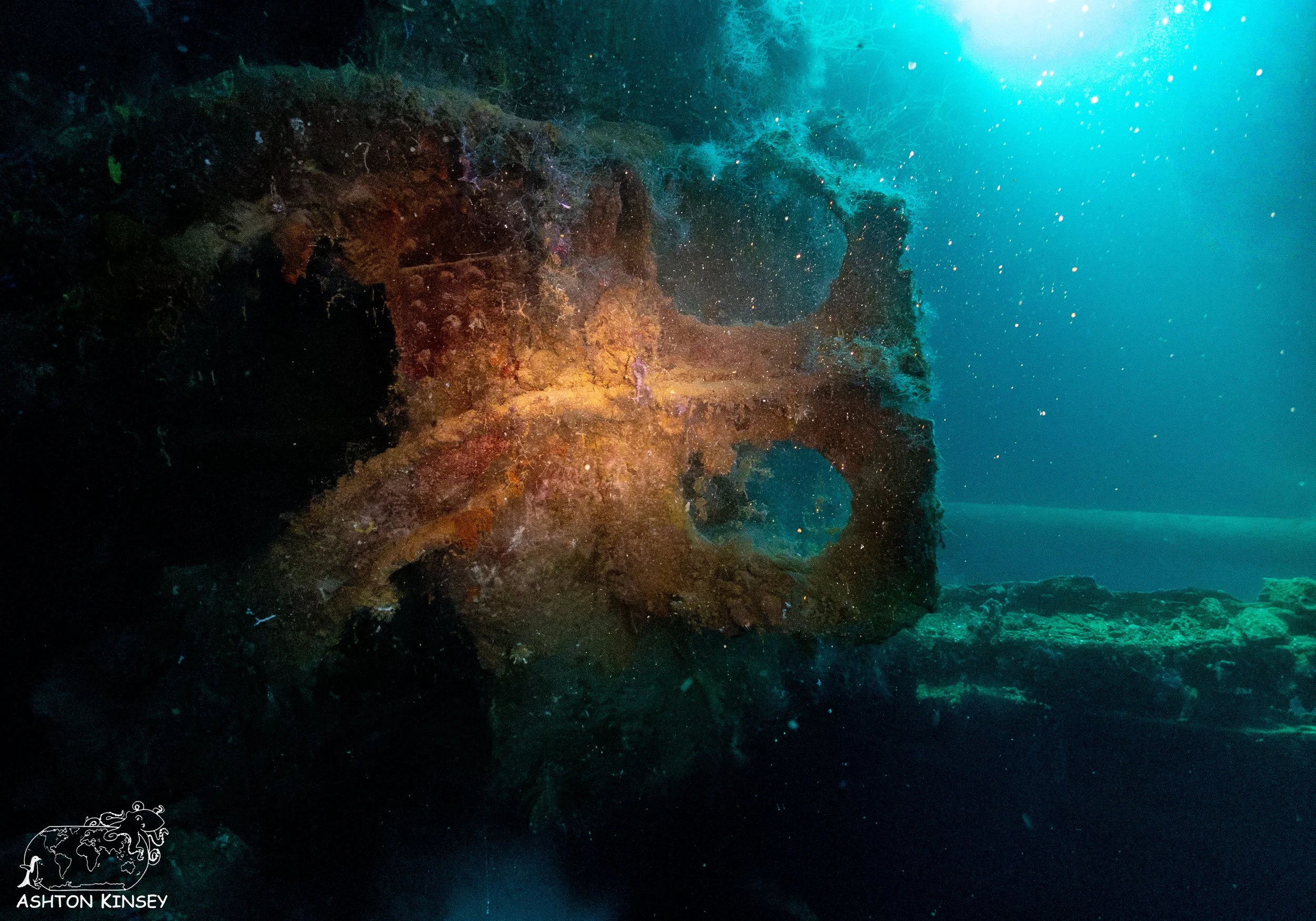
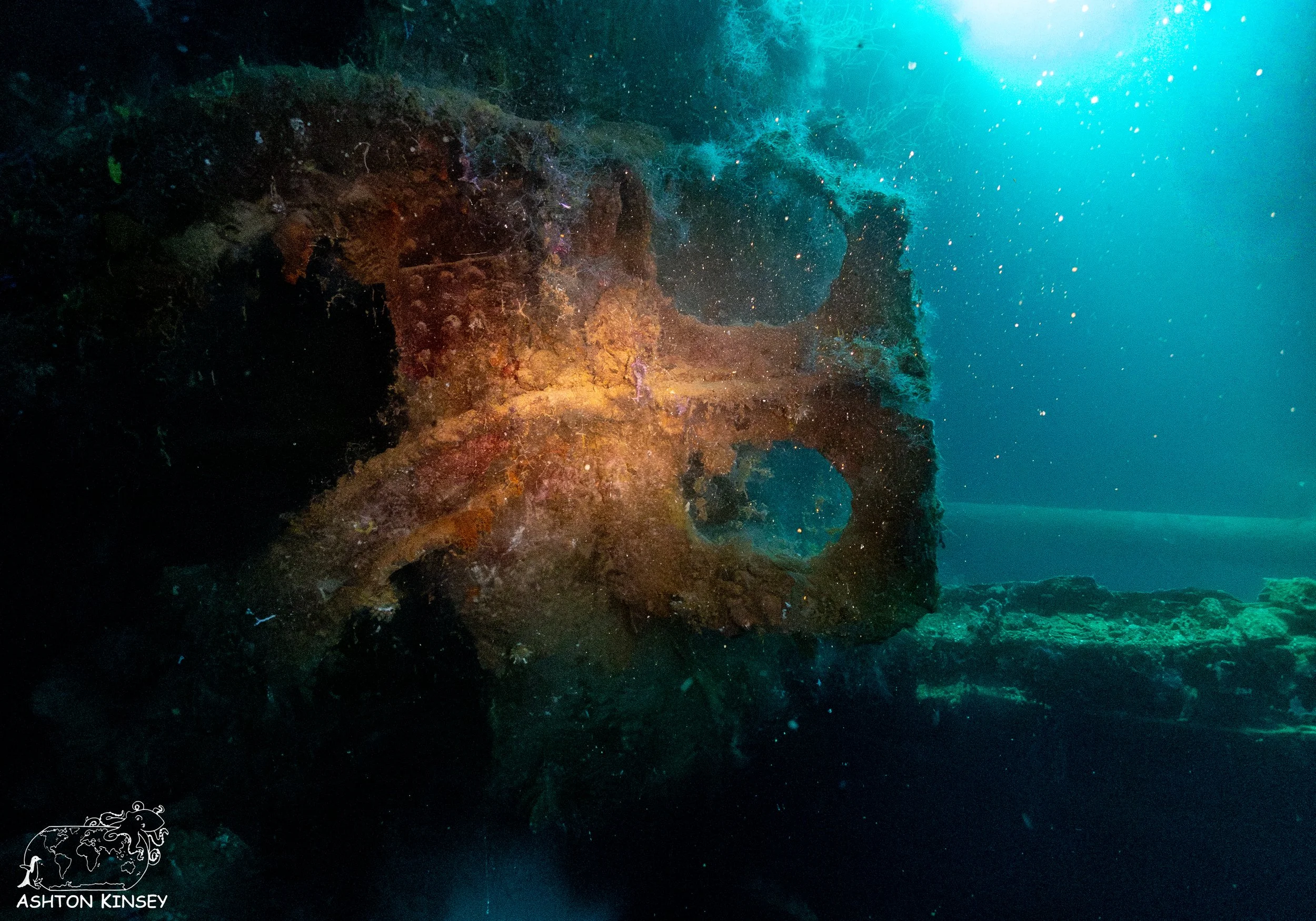
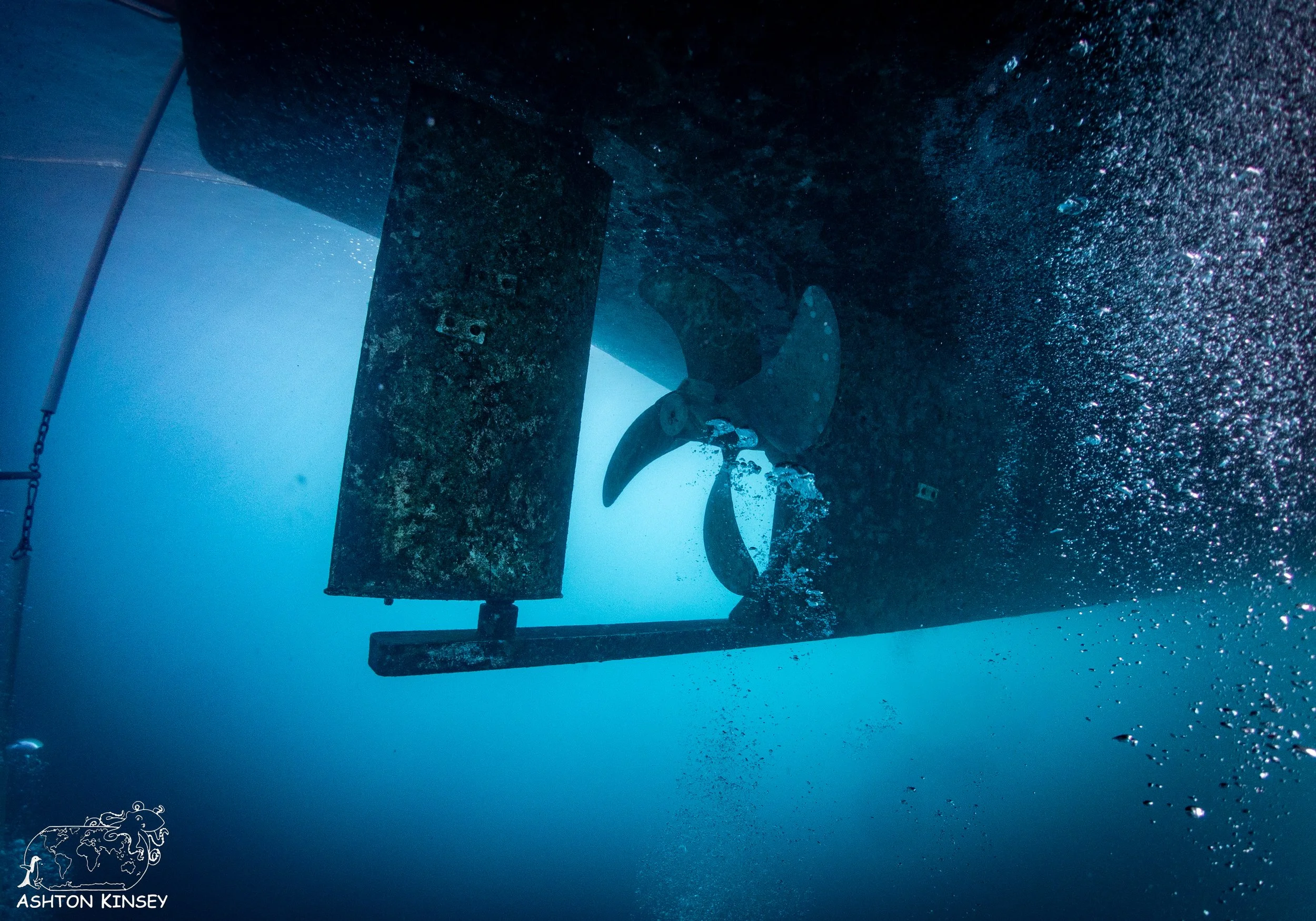
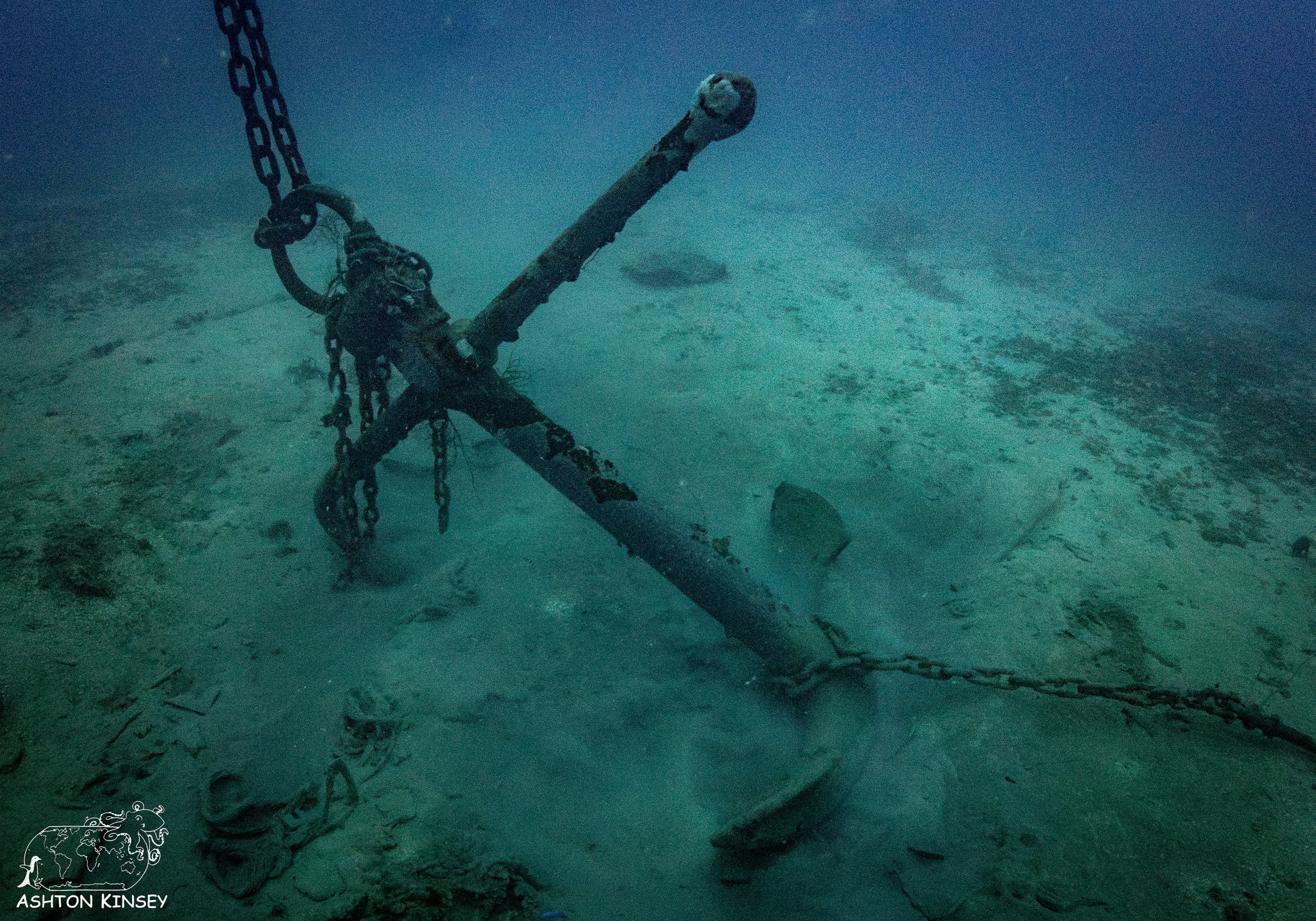
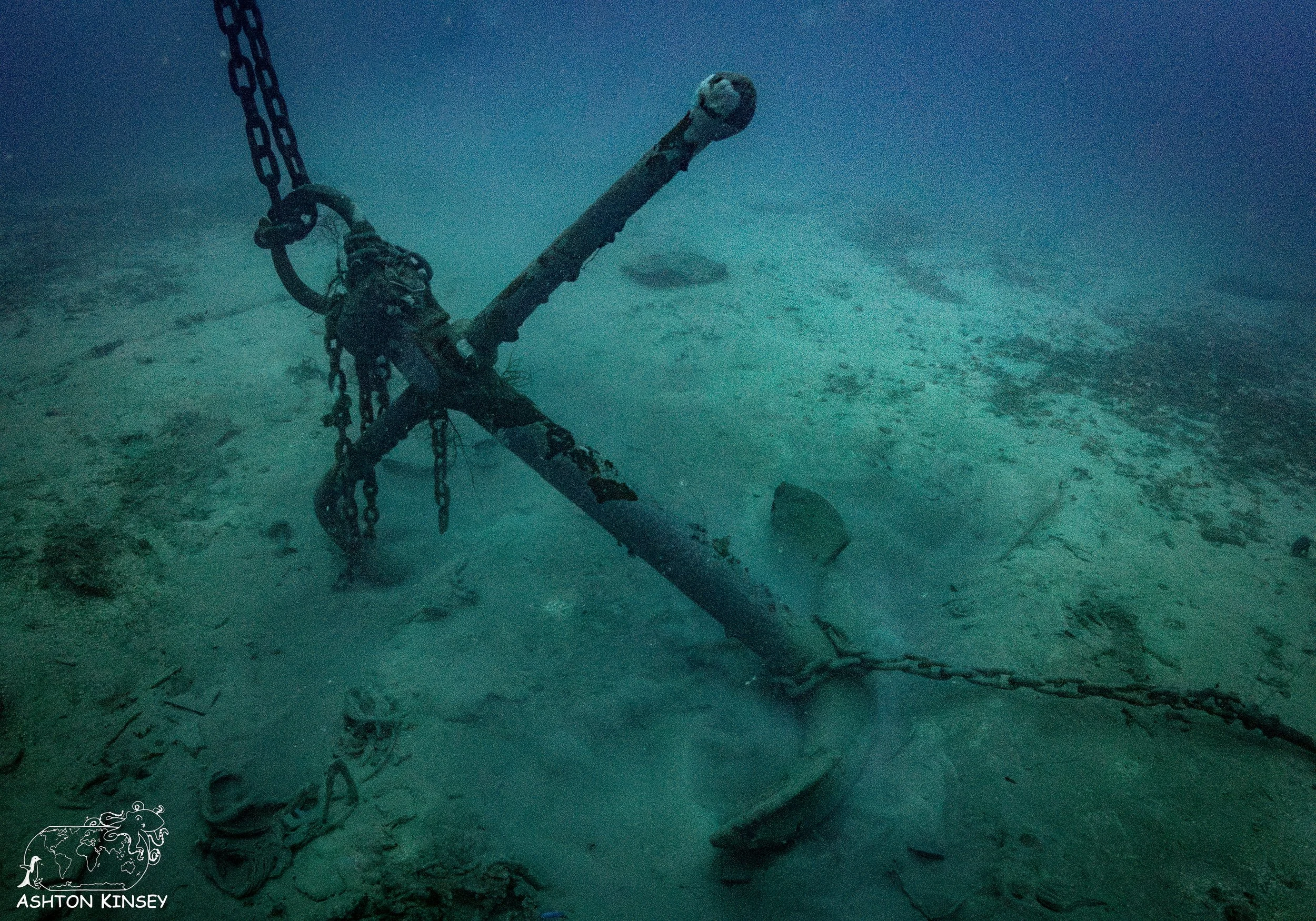
The Yamagiri Maru was originally a cargo-passenger freighter for the Yamashita Kisen Line, built by Mitsubishi Heavy Industries. Its original purpose was mostly transport between East and Southeast Asia, occasionally carrying passengers but mostly cargo, industrial goods, and raw materials. She was propelled using a single prop and rudder system, which can still be seen in roughly 75’ of water.
Once it was requisitioned by the IJN in 1941 it became a transport and auxiliary ship, likely transporting troops, equipment, fuel, ammunition, and supplies between the Solomon Islands and the Caroline Islands. In late 1943, she was hit by two torpedoes from the USS Drum in the Solomons. This wasn’t enough to sink her, but she had a large hole in her forward bow section. The crew moved all of the cargo from the forward holds to the aft holds, so the bow was out of the water, and she limped back, reaching Chuuk in December.
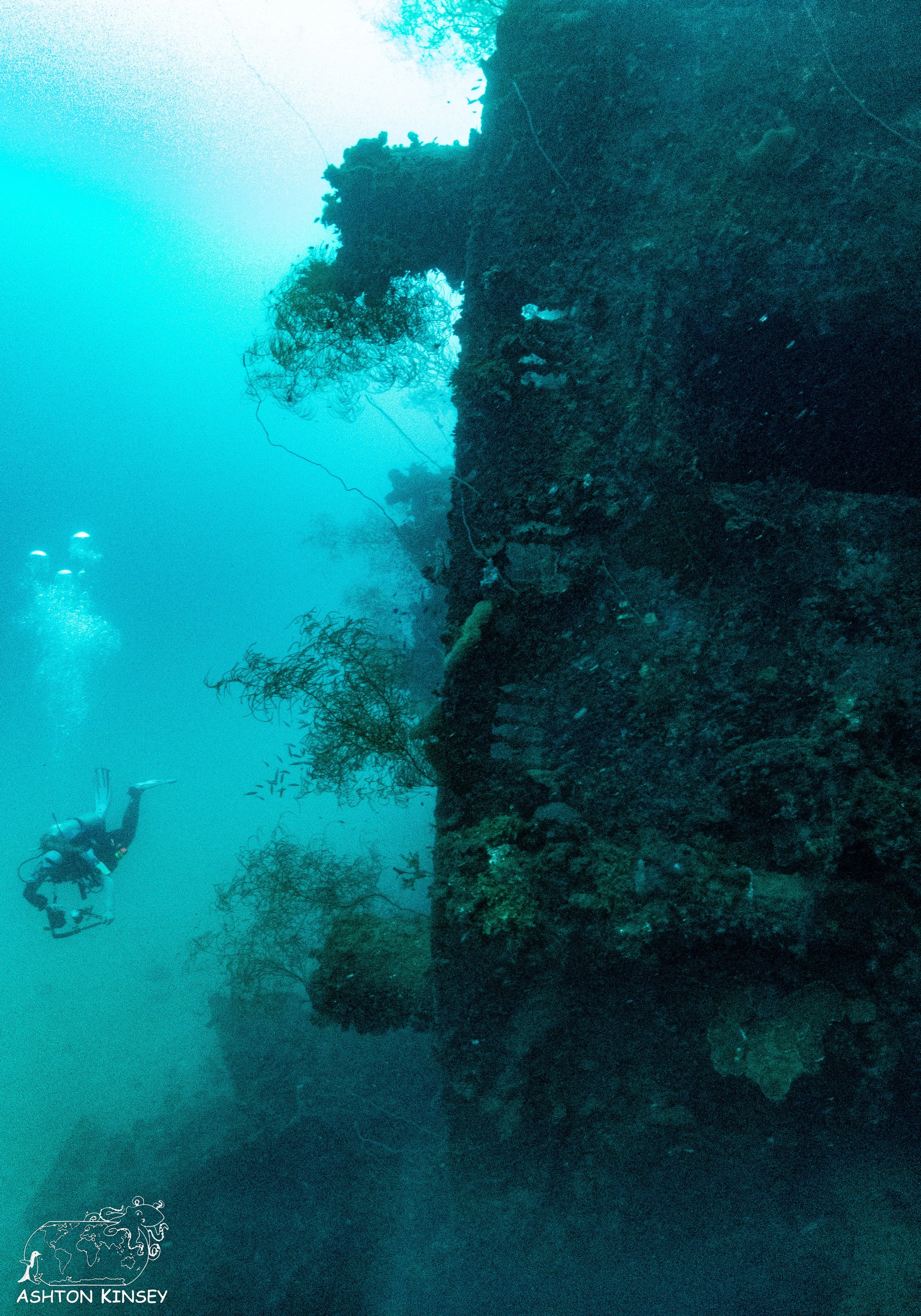
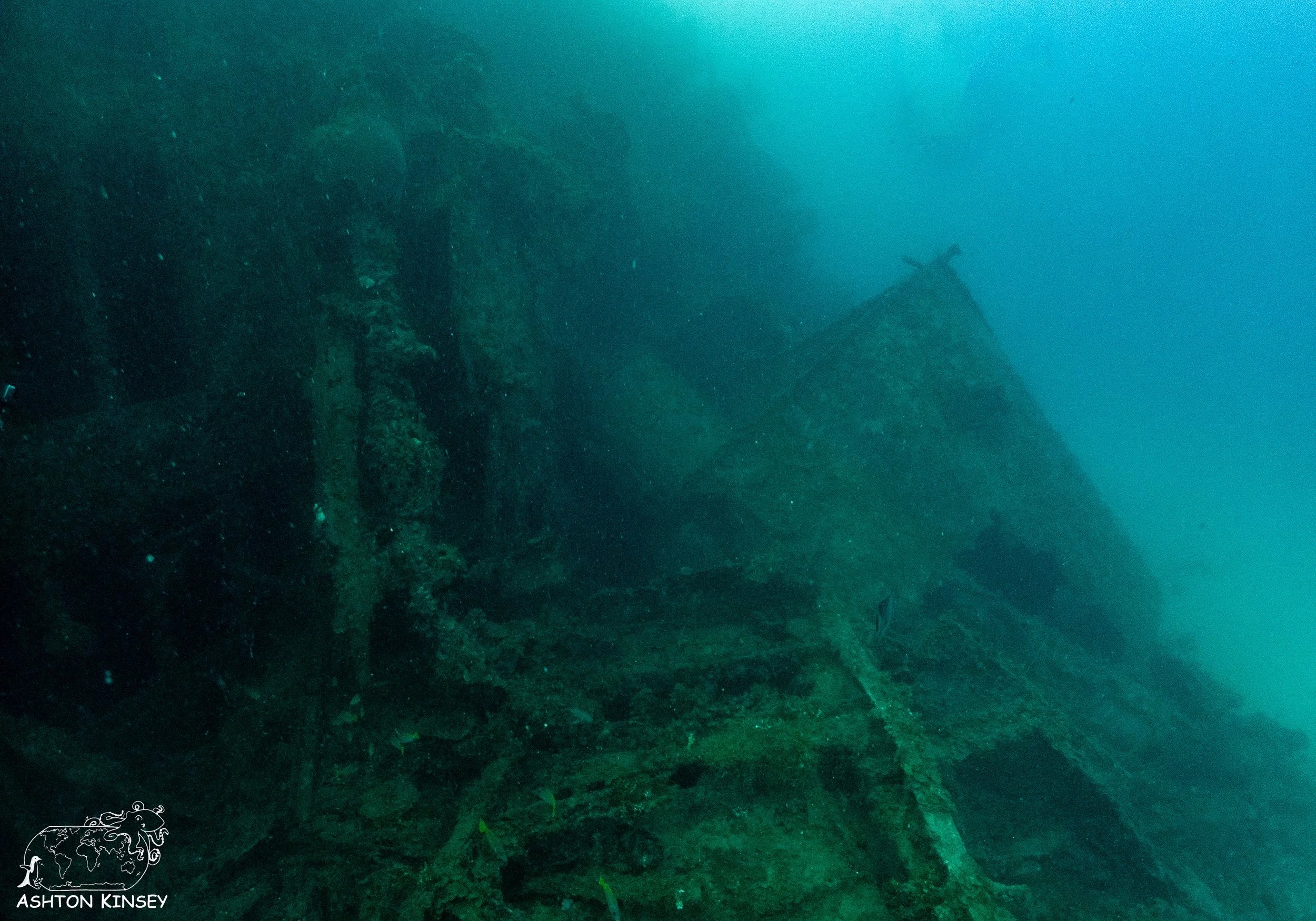
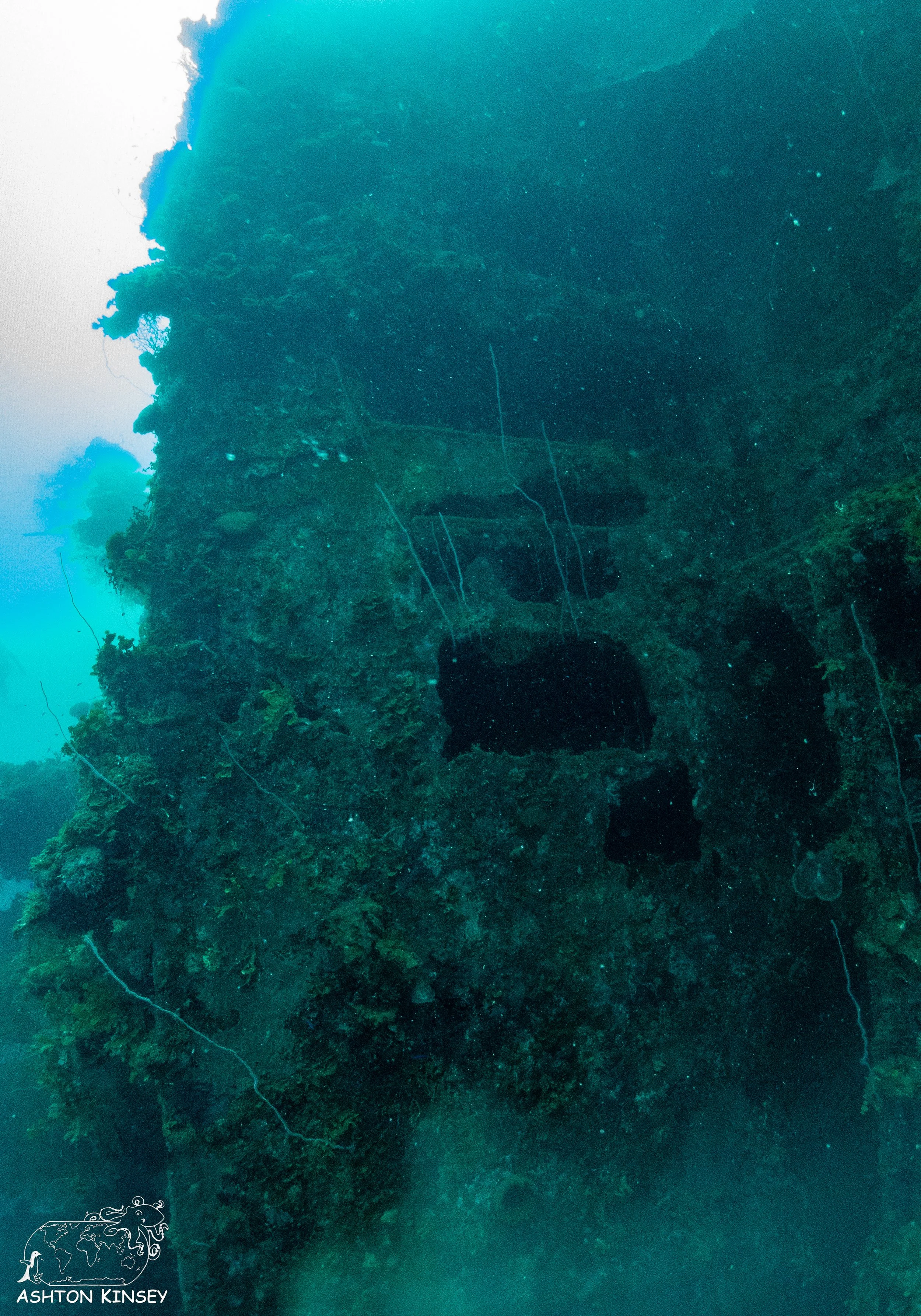
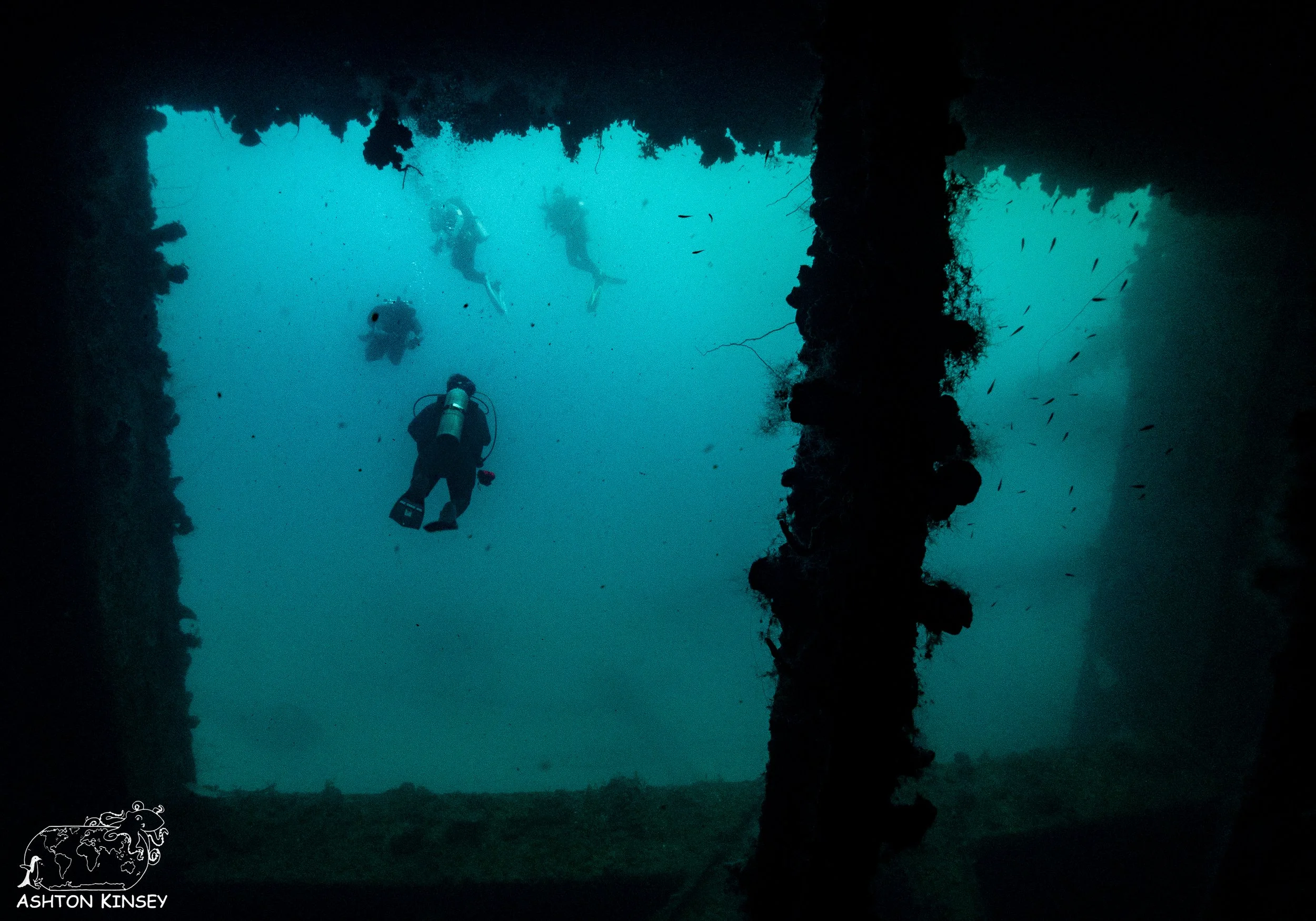
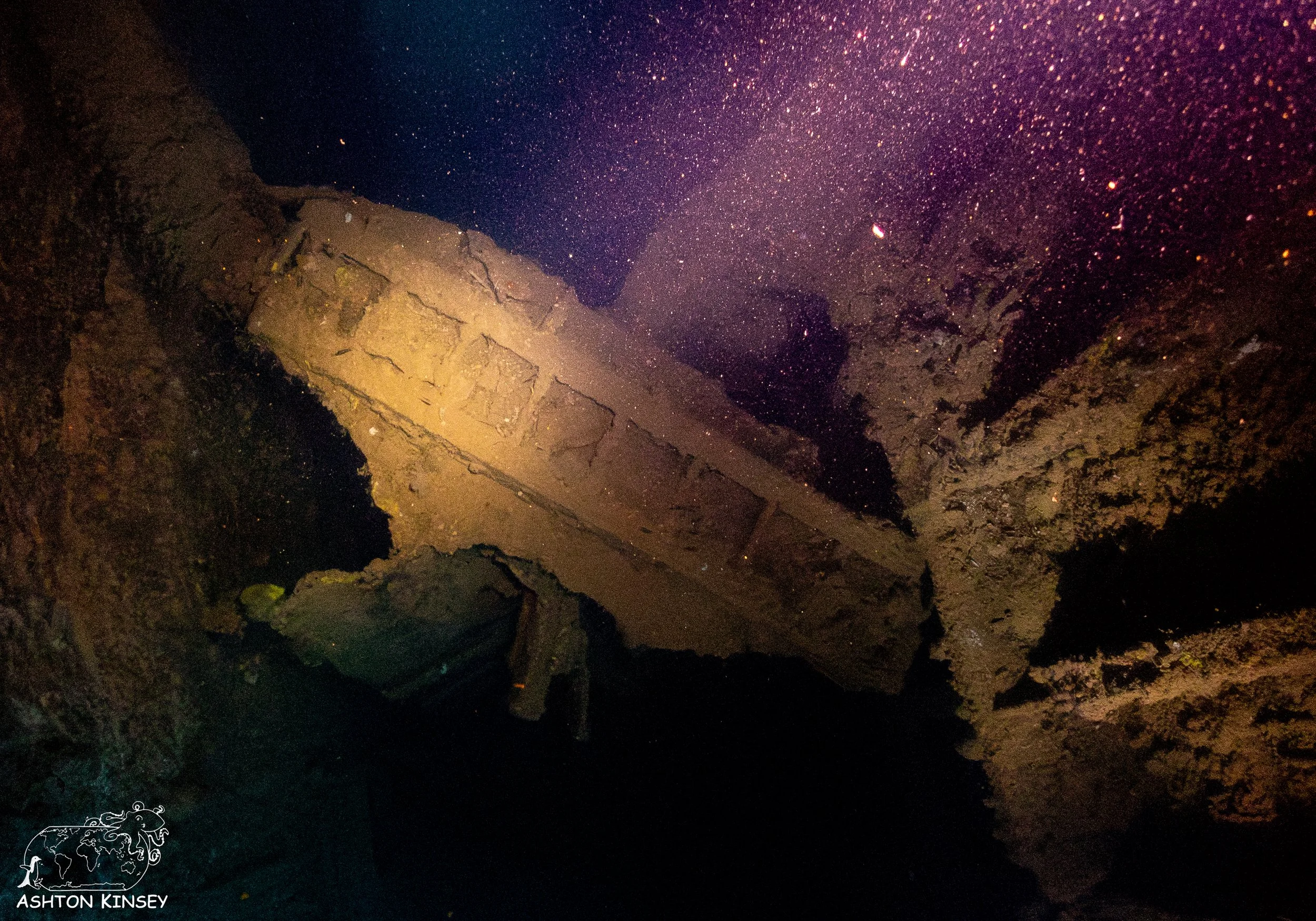
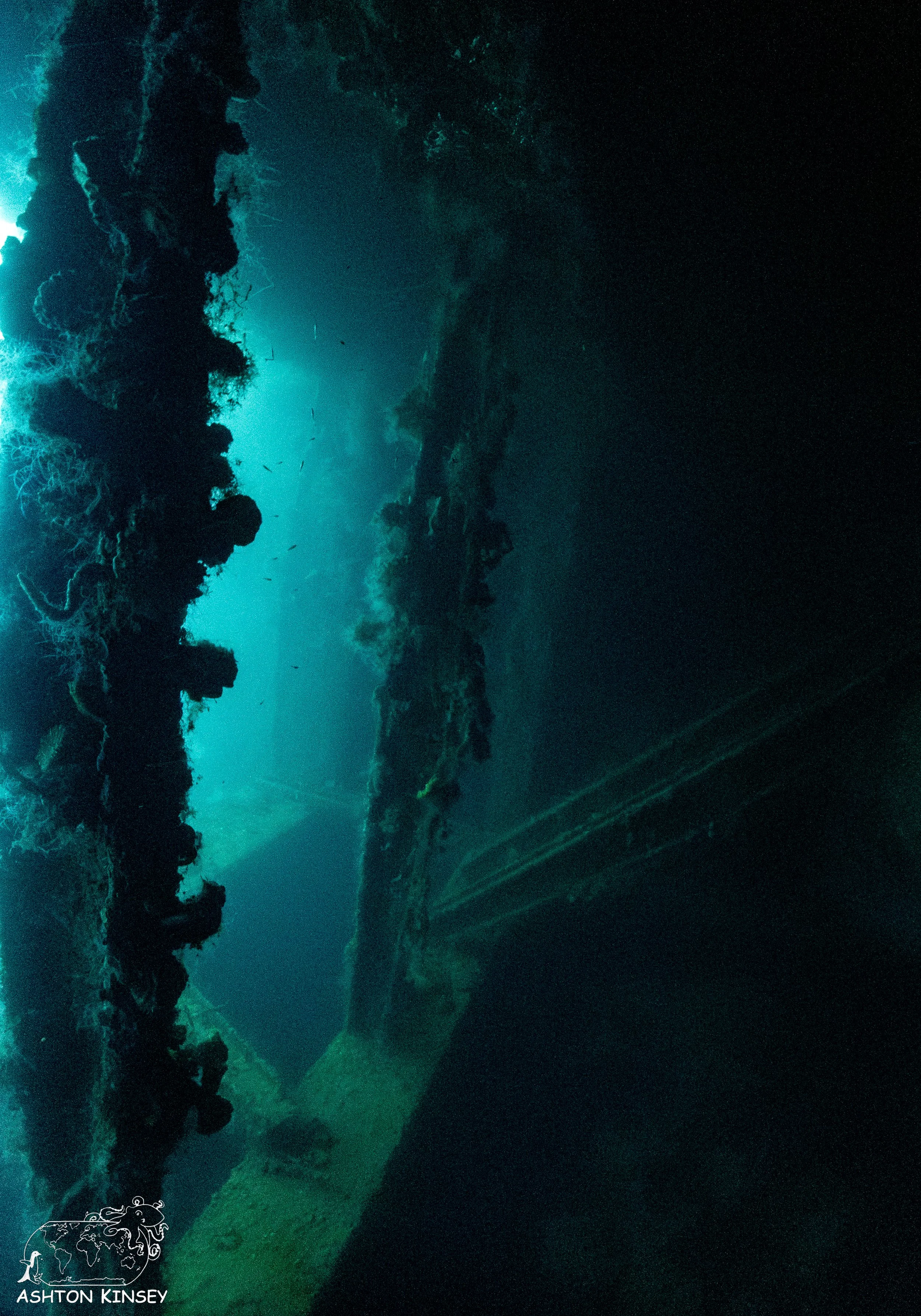
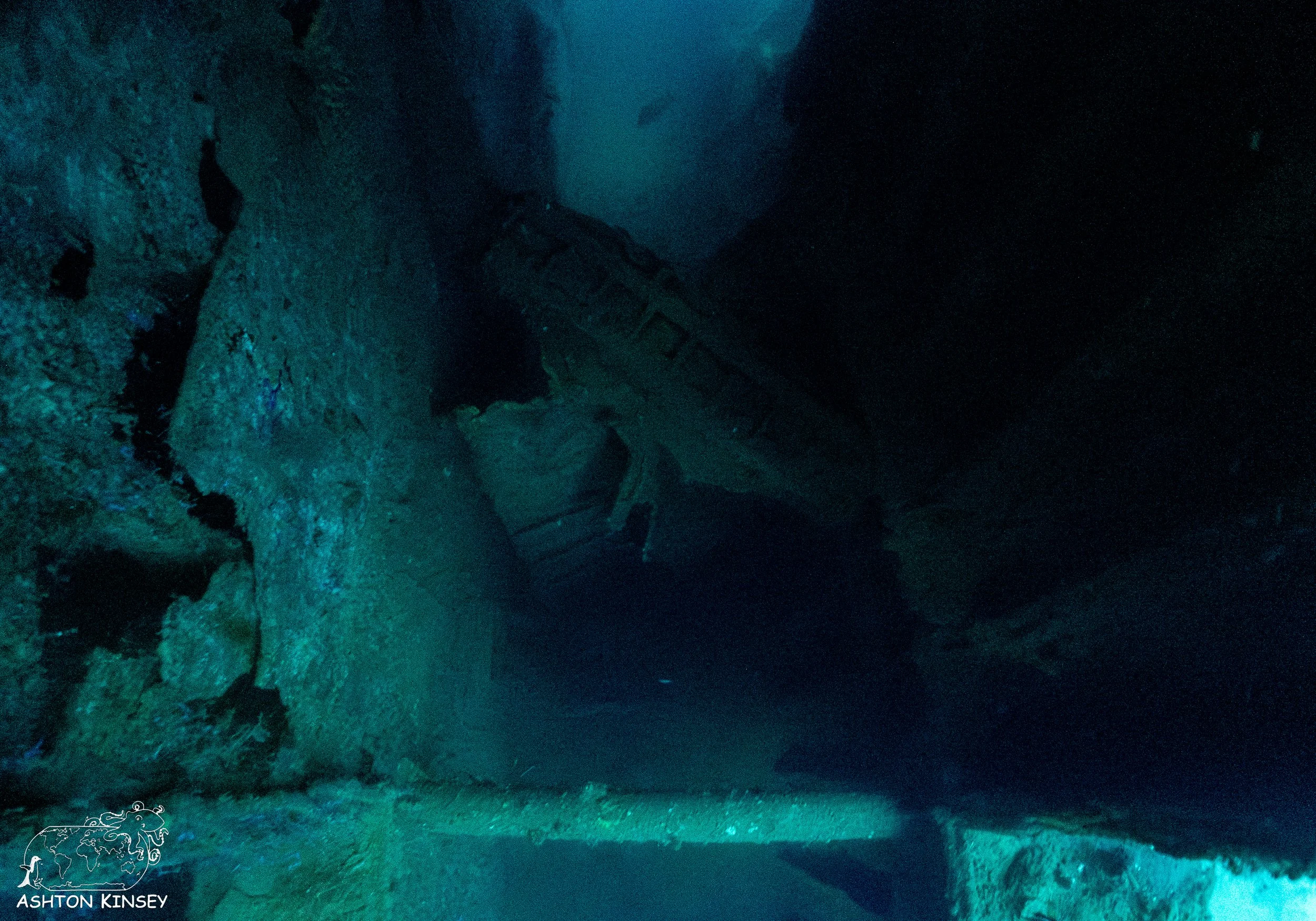
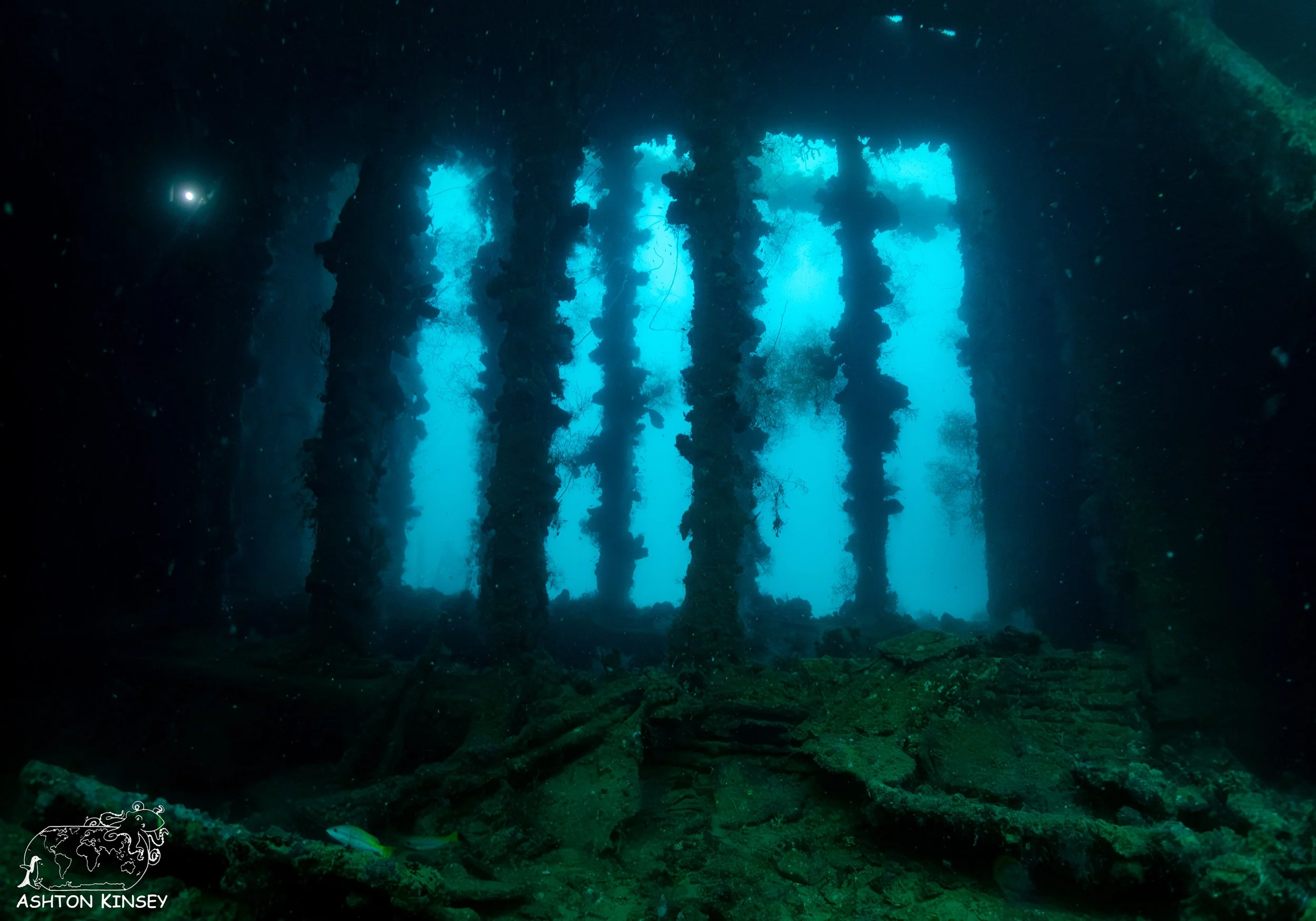
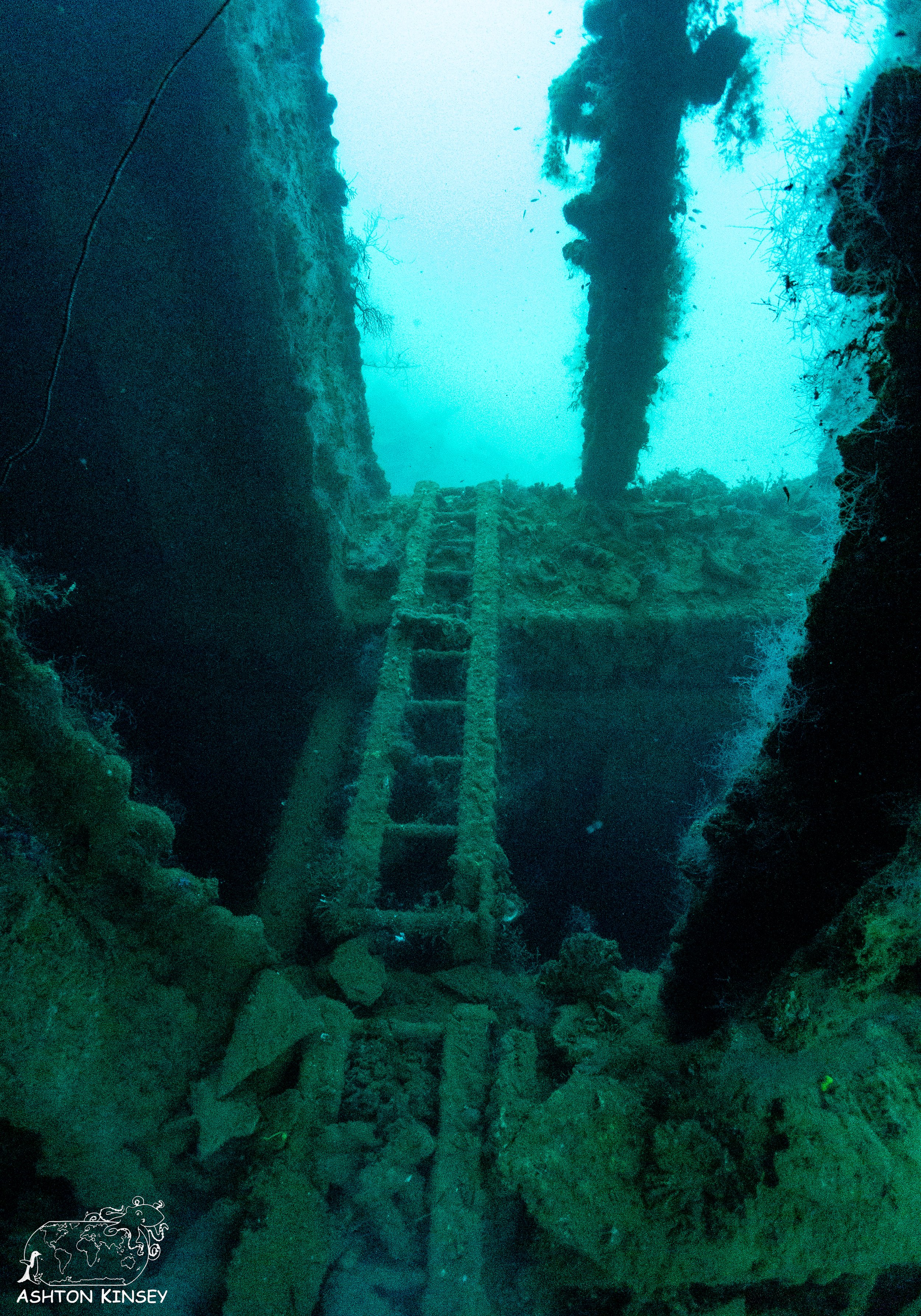
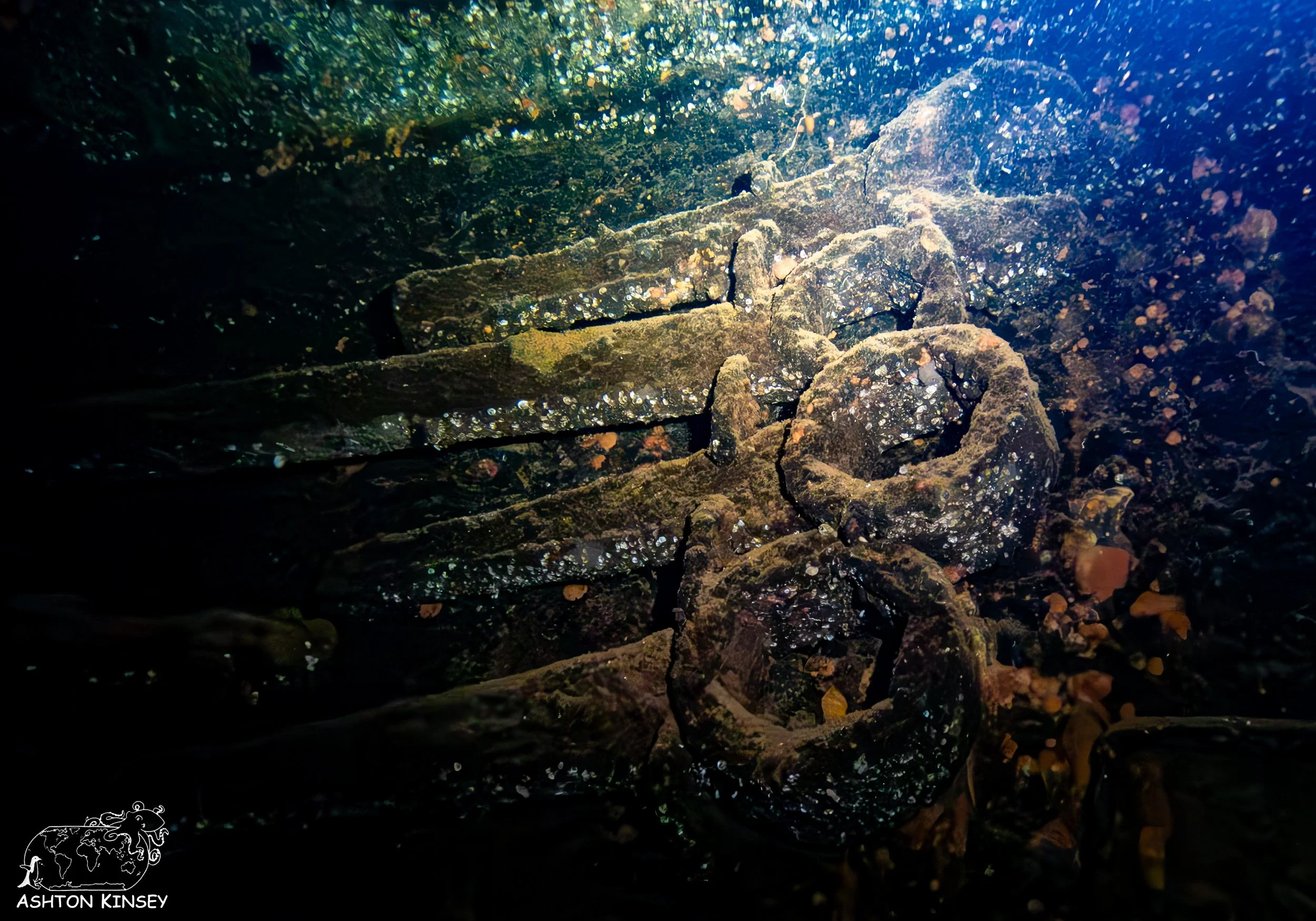
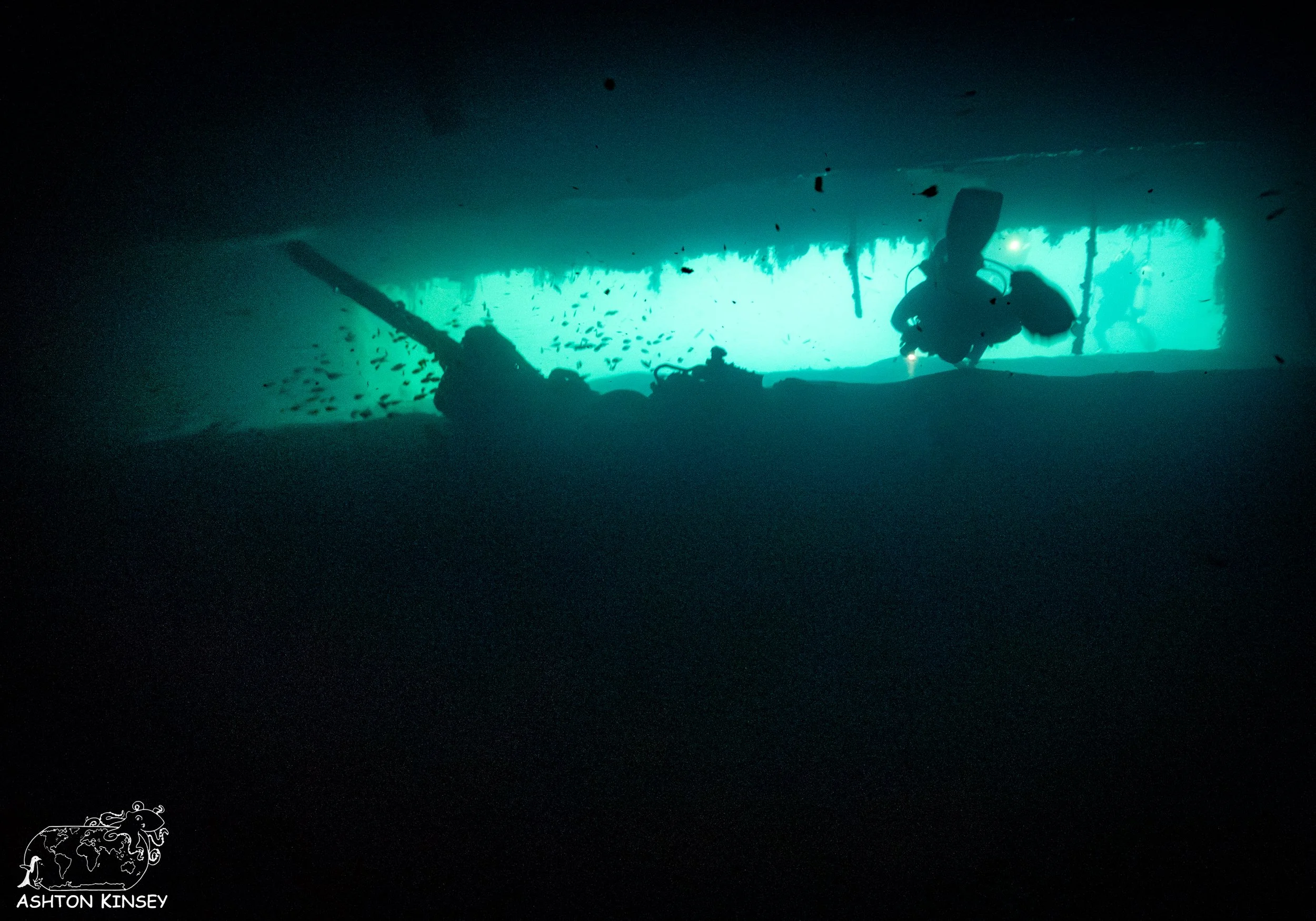
There is heavy structural damage on the aft third of the ship; likely a bomb fell into or near an aft cargo hold or a machinery area which caused significant damage and resulted in the sinking. She is now sitting on her port side with the deck in approximately 90’ of water. The exact number of casualties was not reliably recorded, but a human femur can be found on the wreck, serving as a sobering reminder that we are diving through a mass grave.
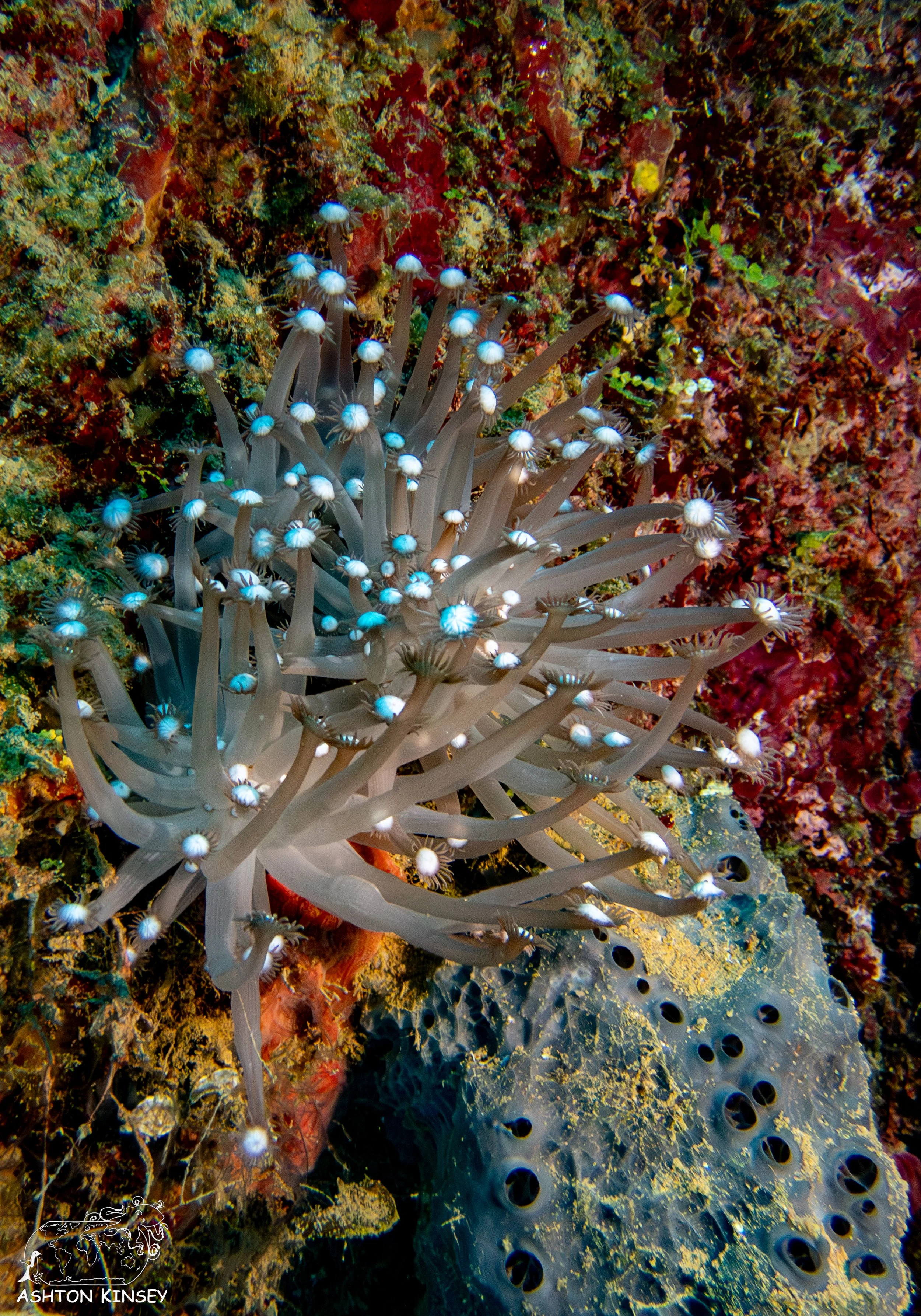
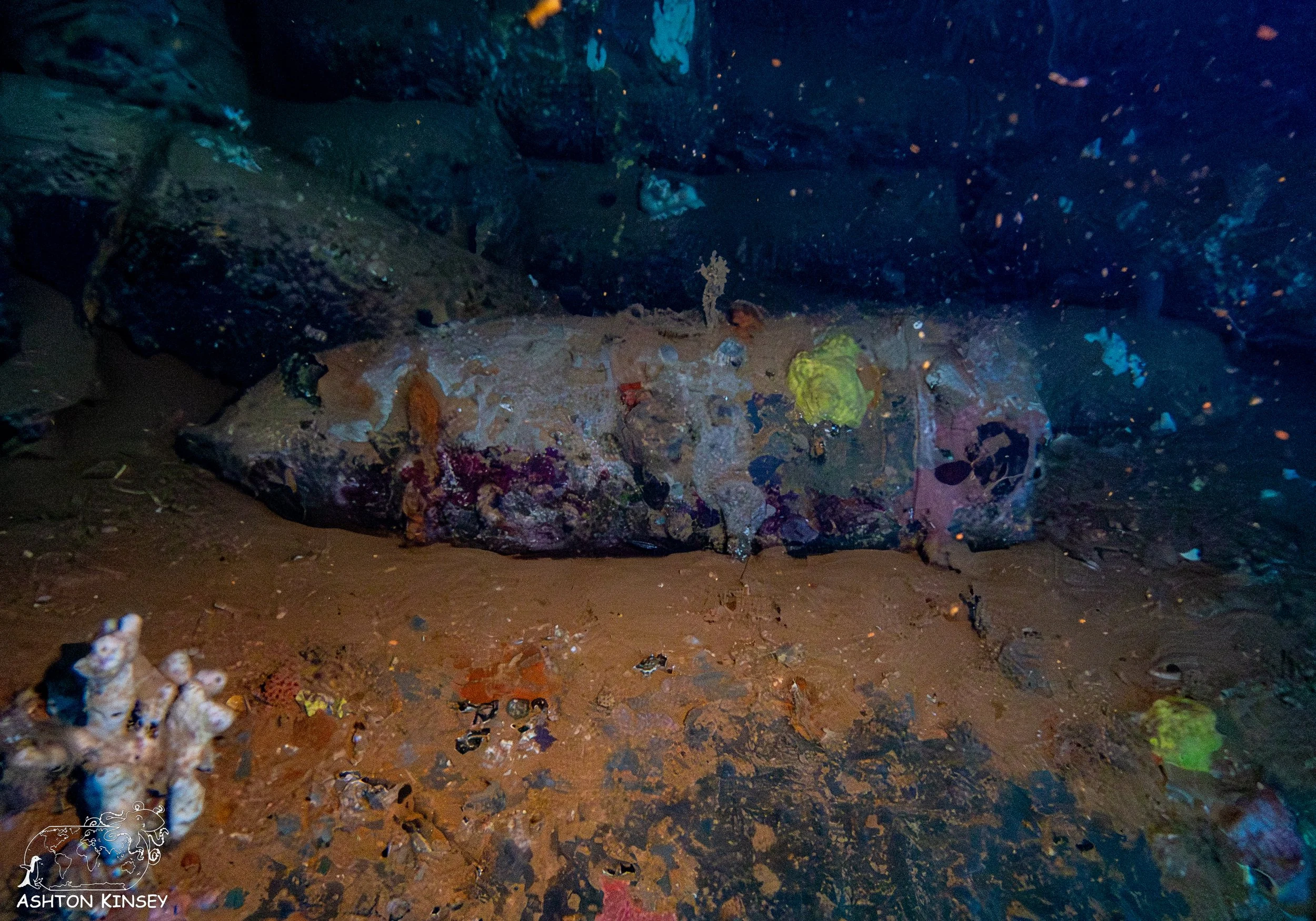
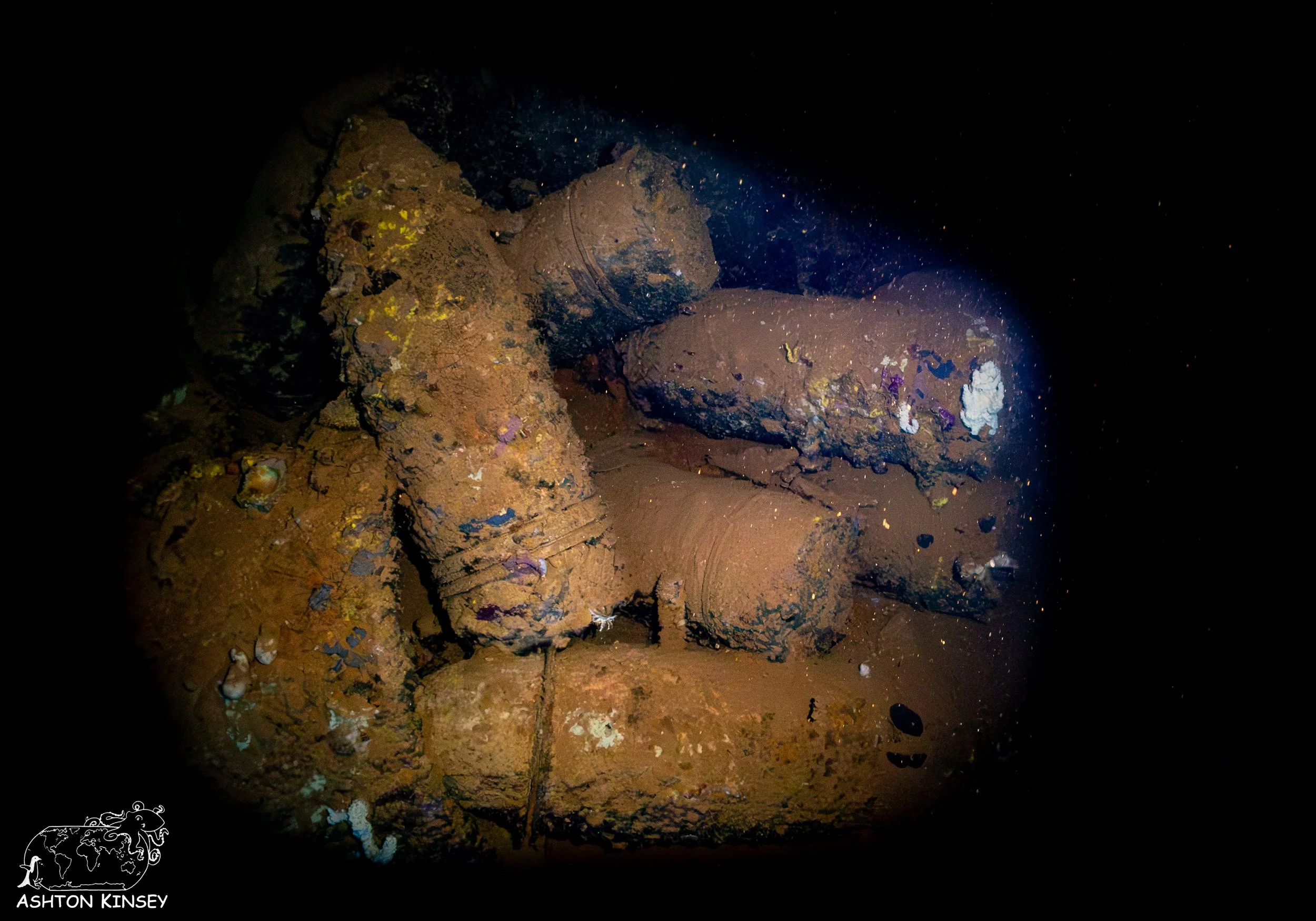
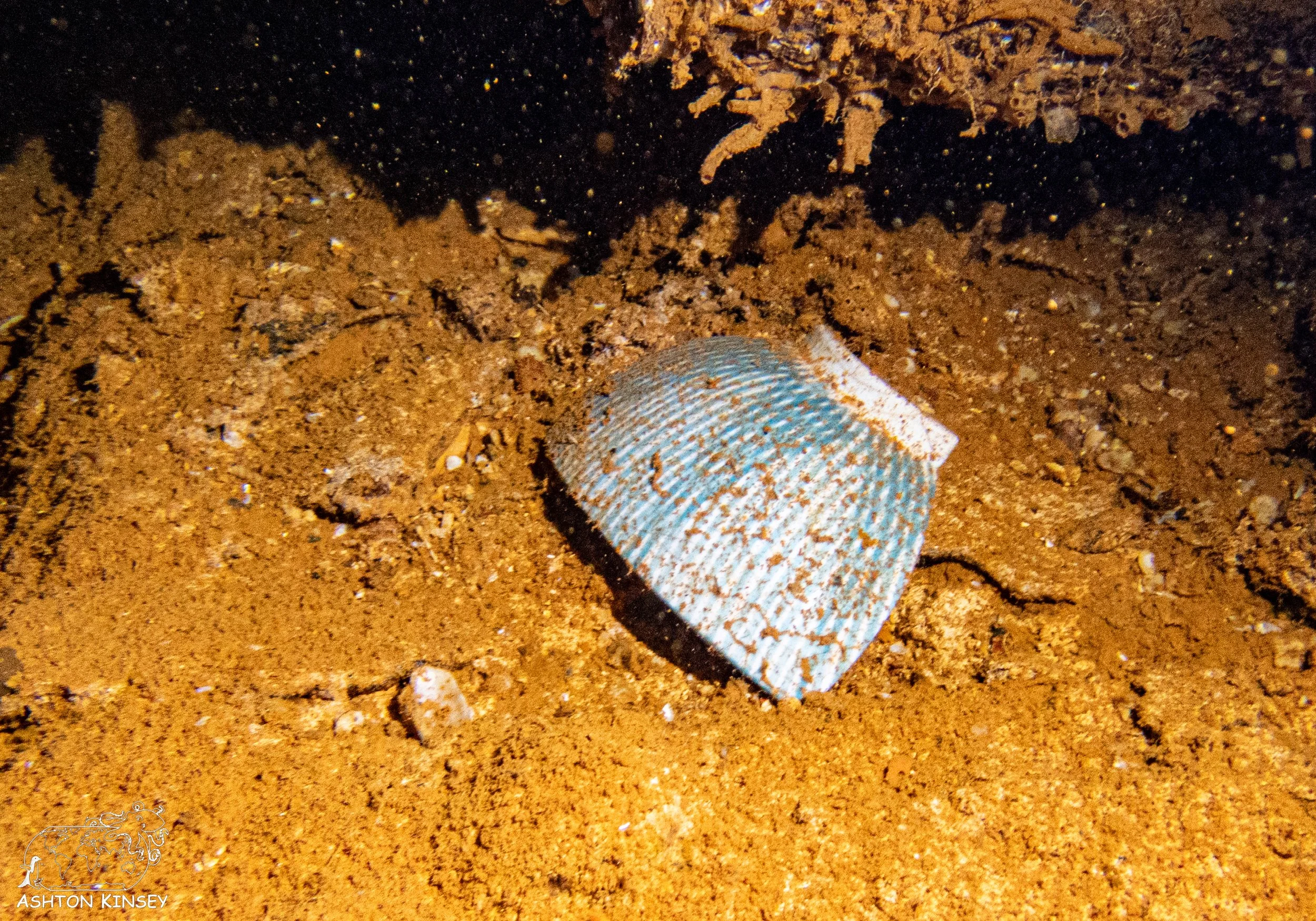
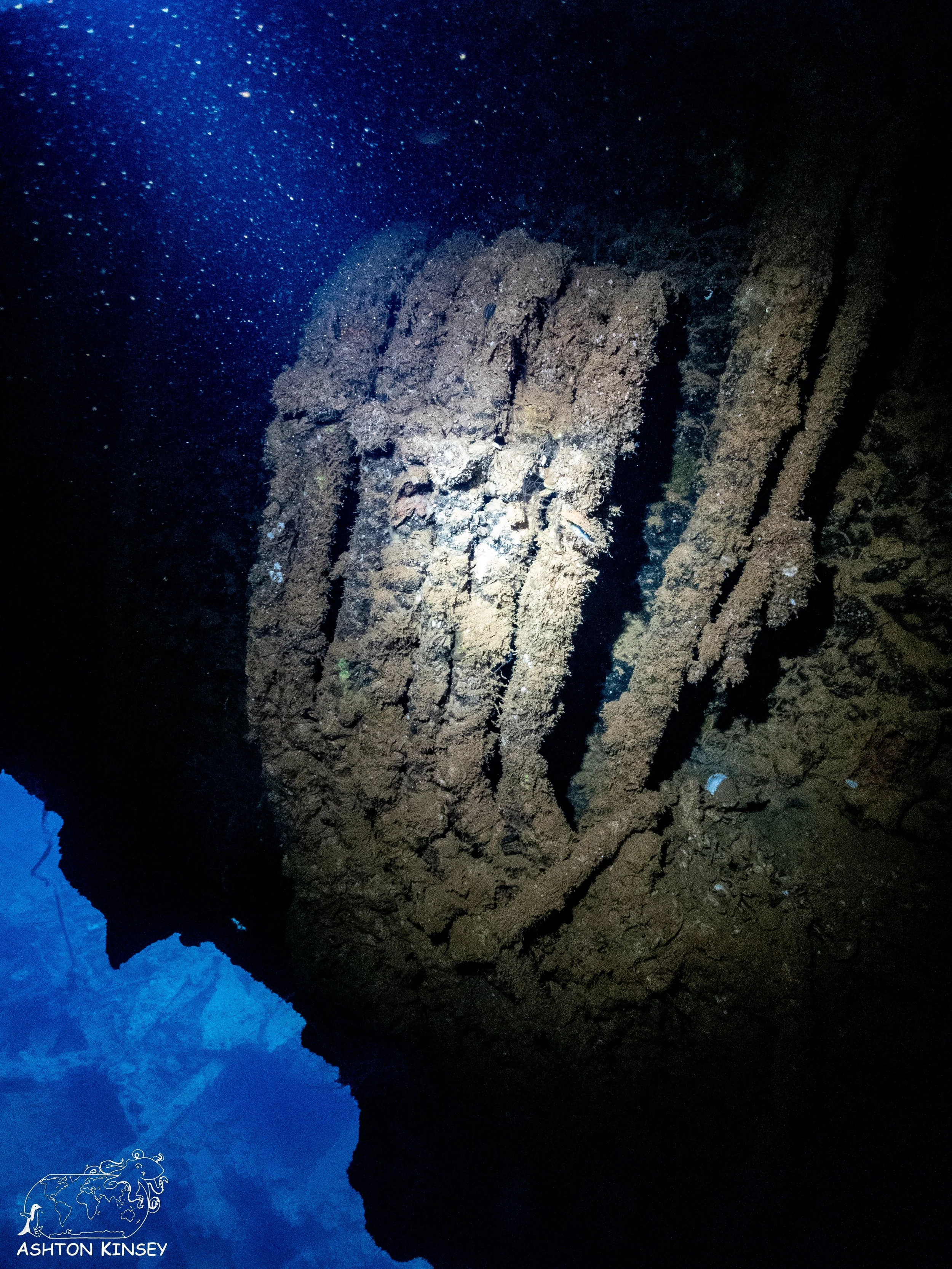
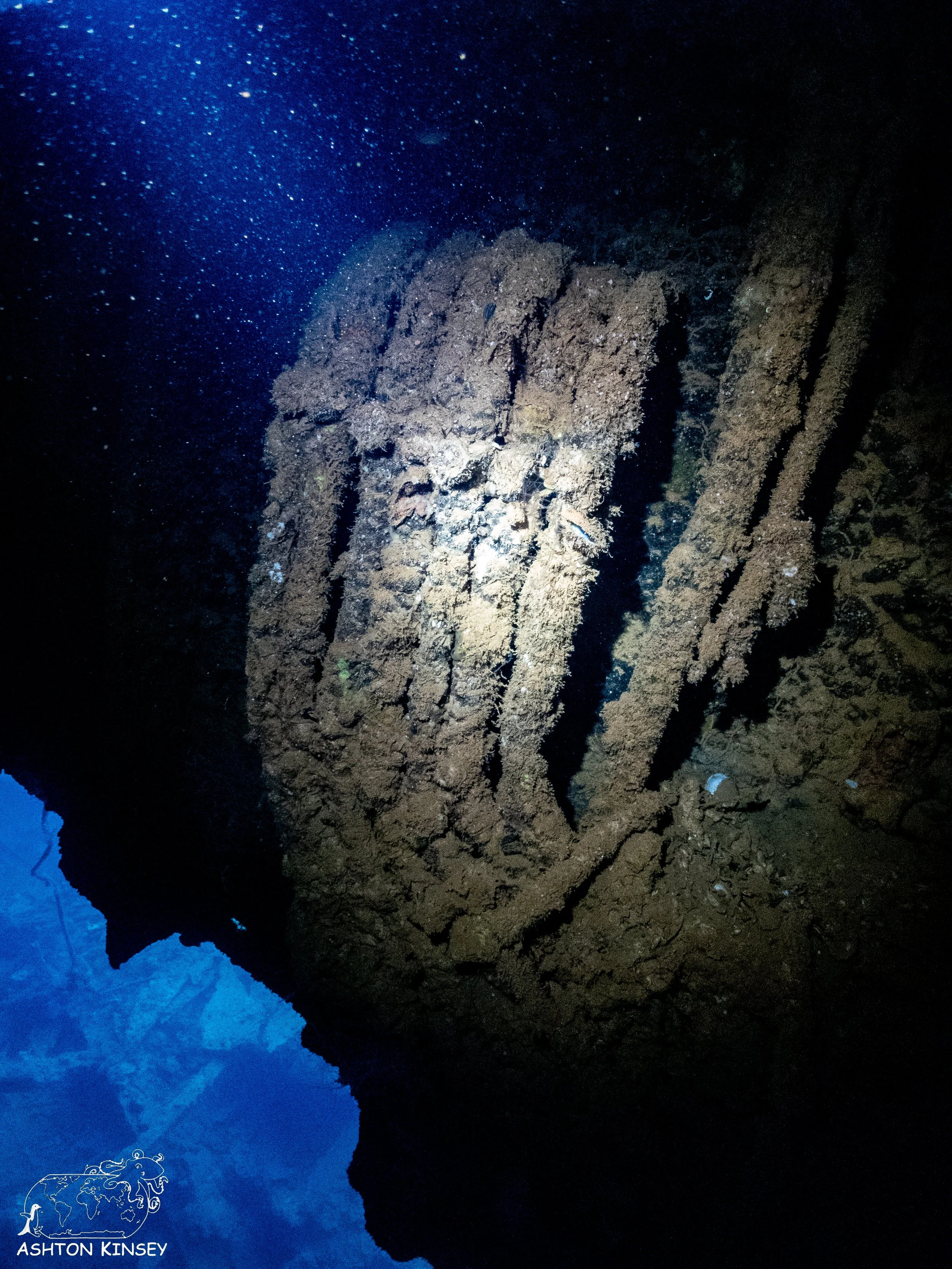
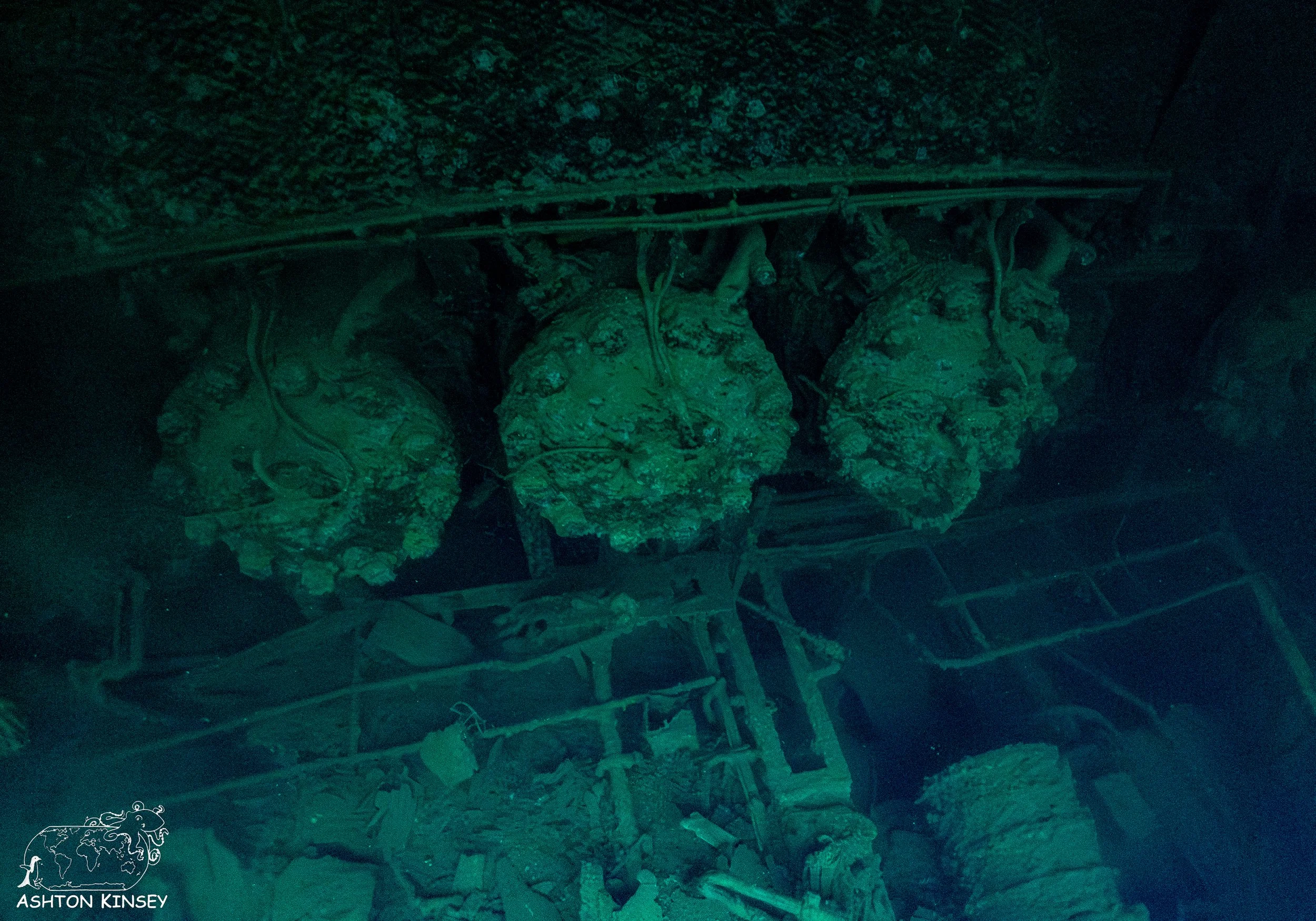
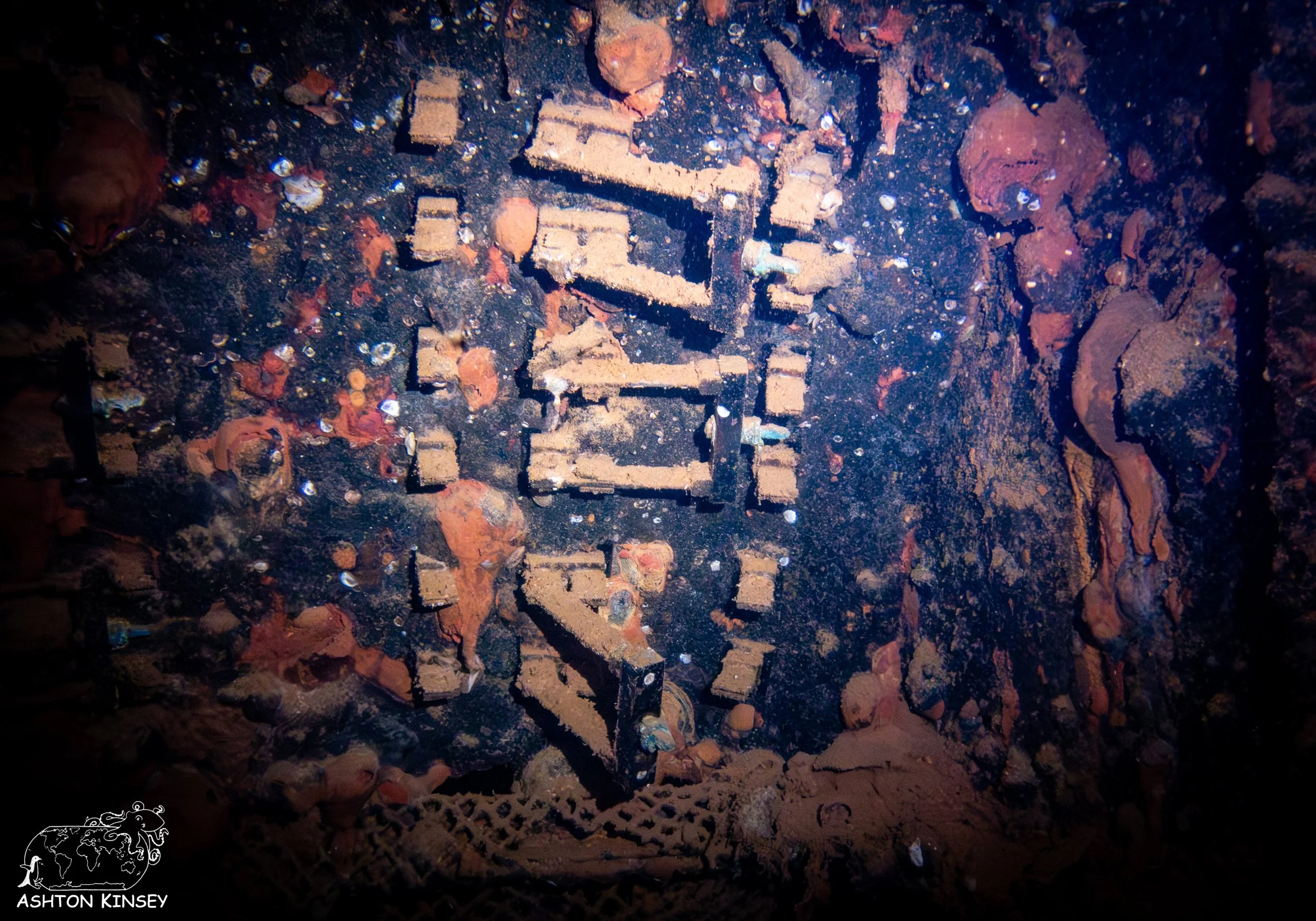
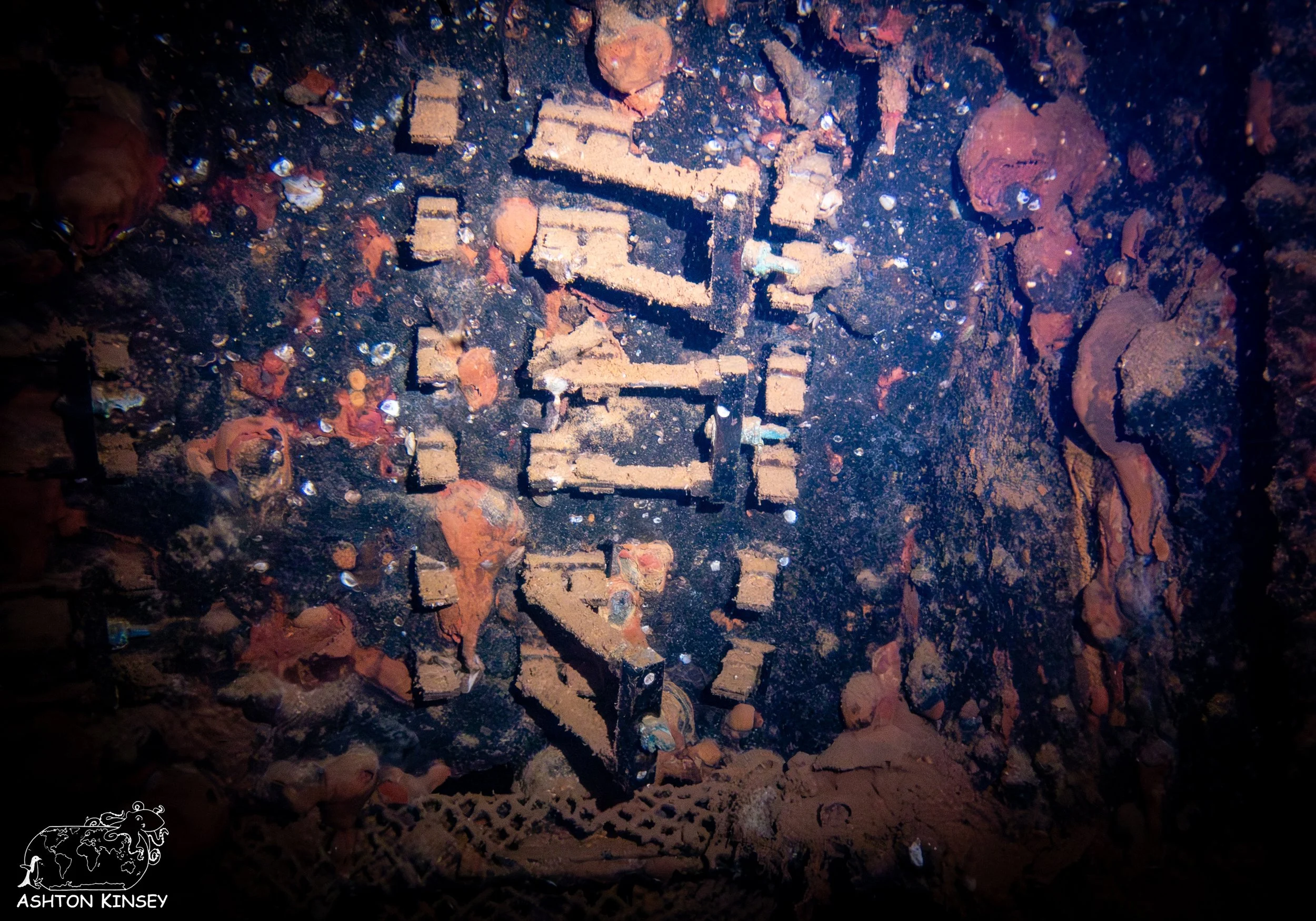
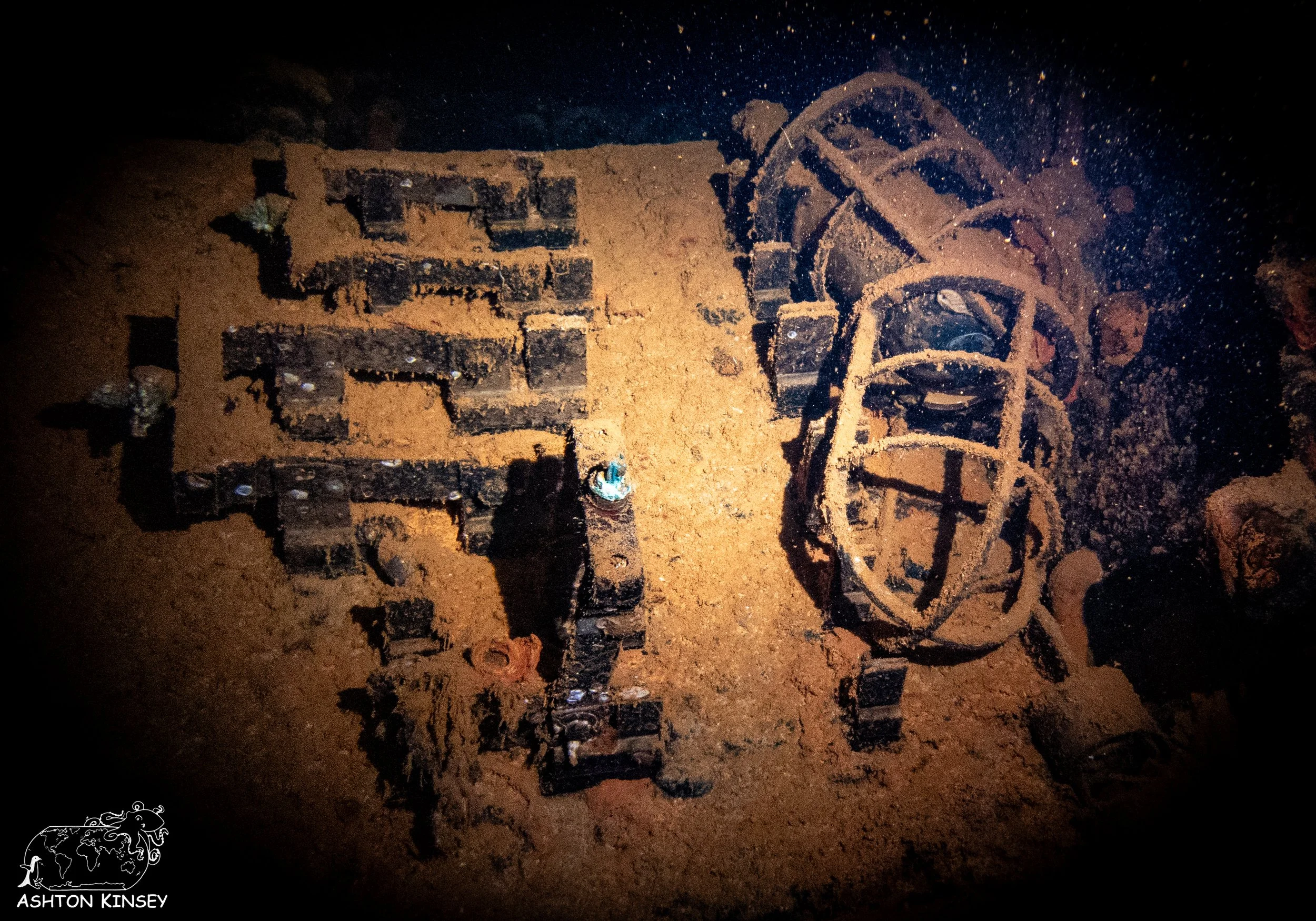
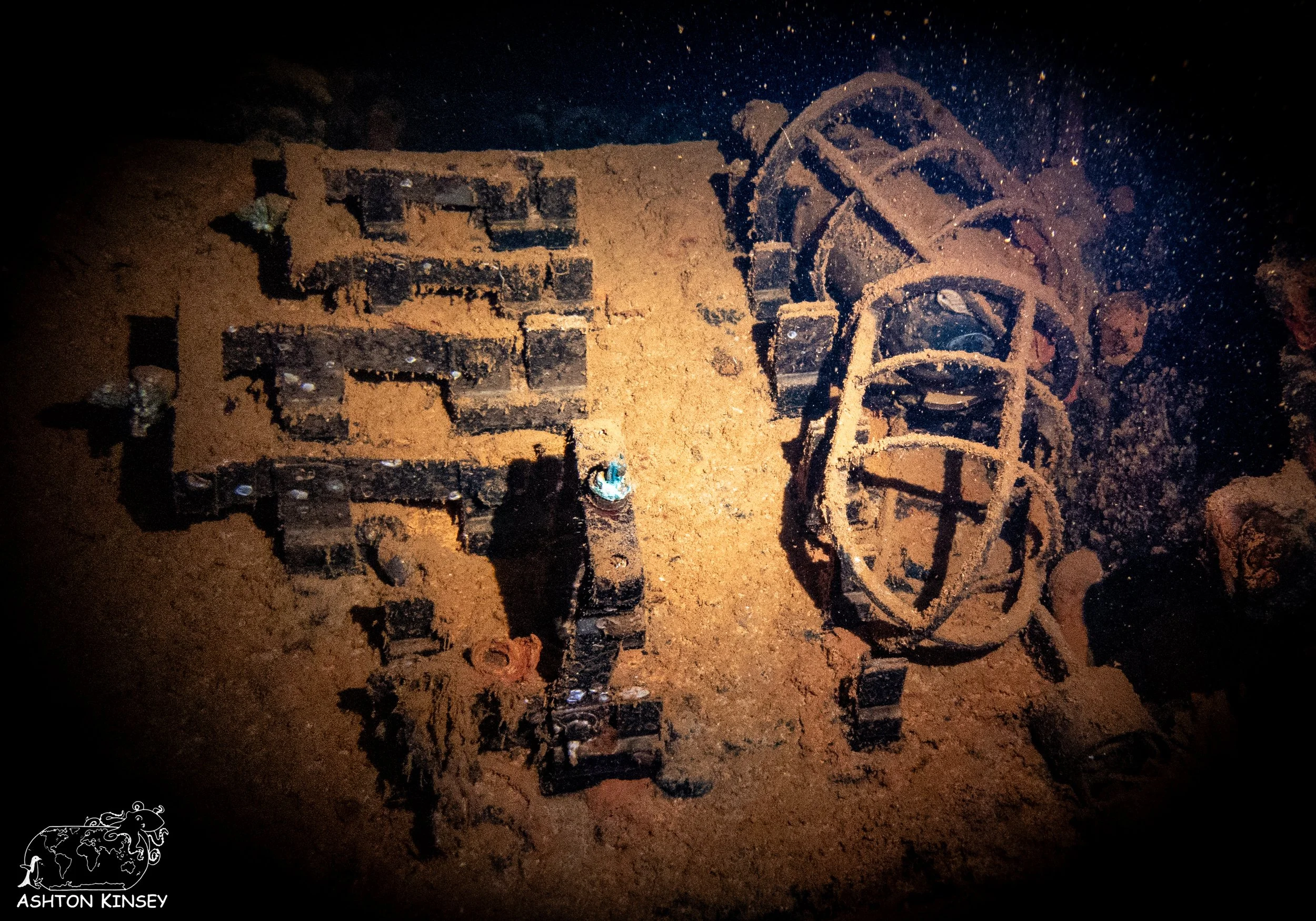
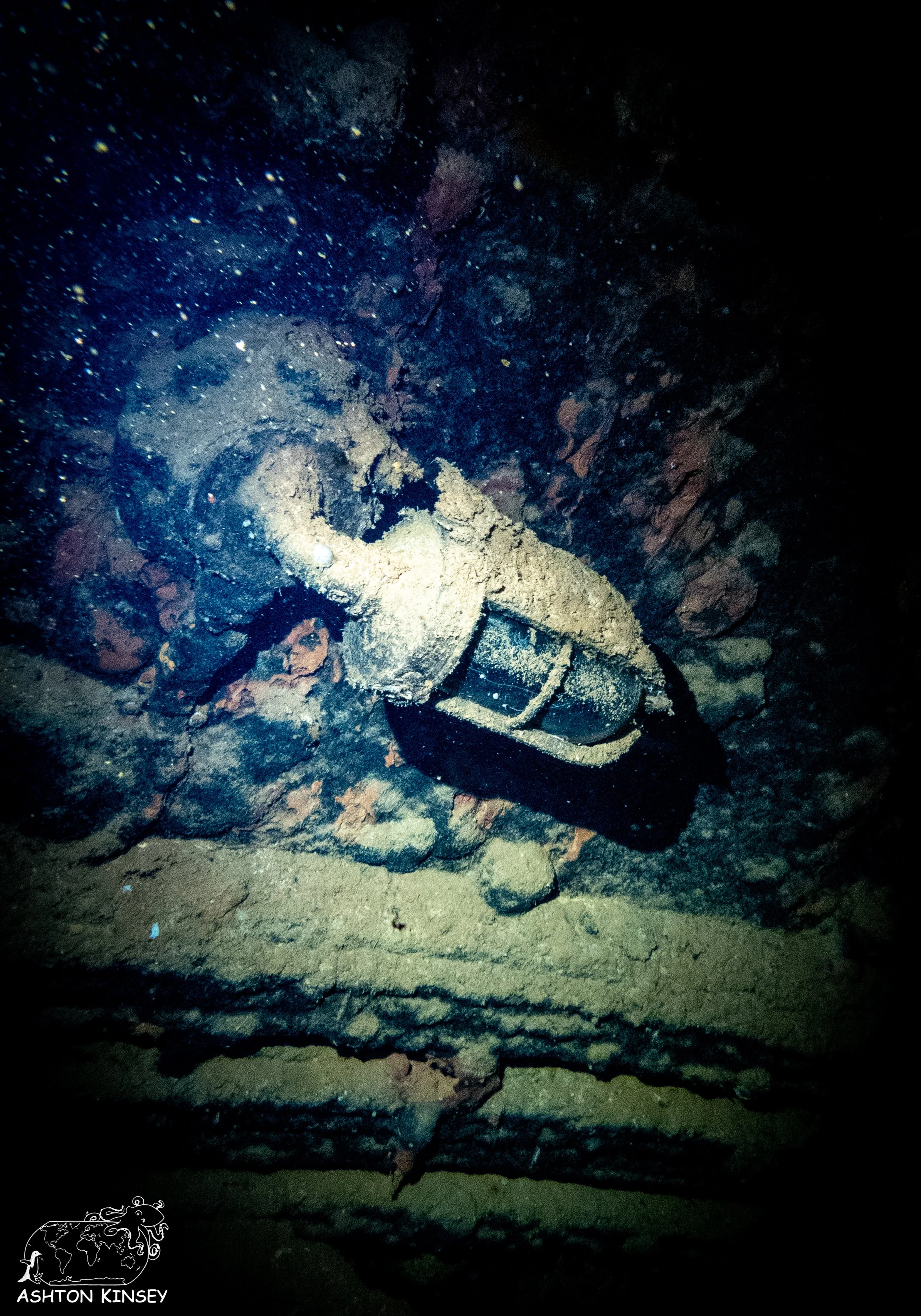
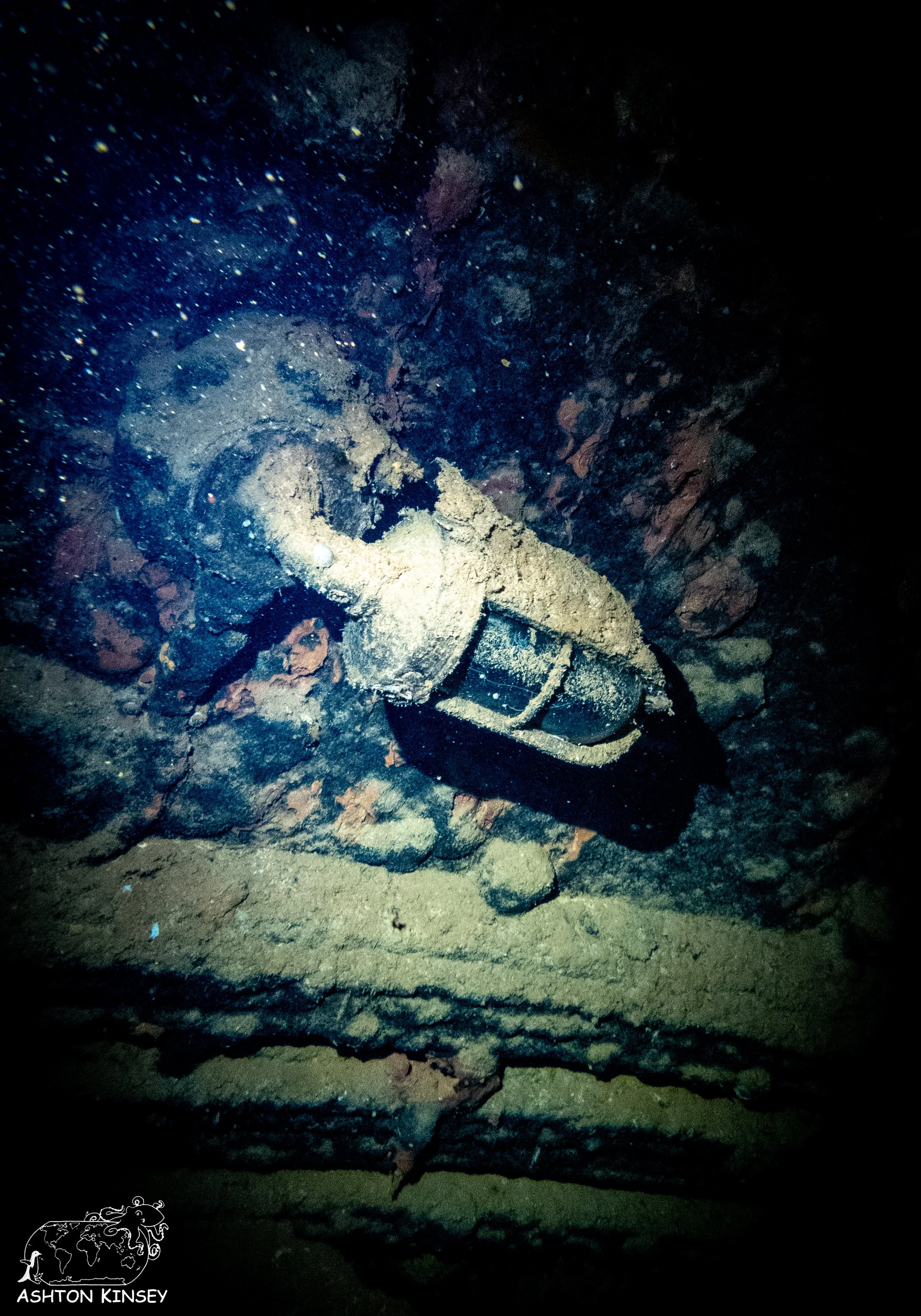
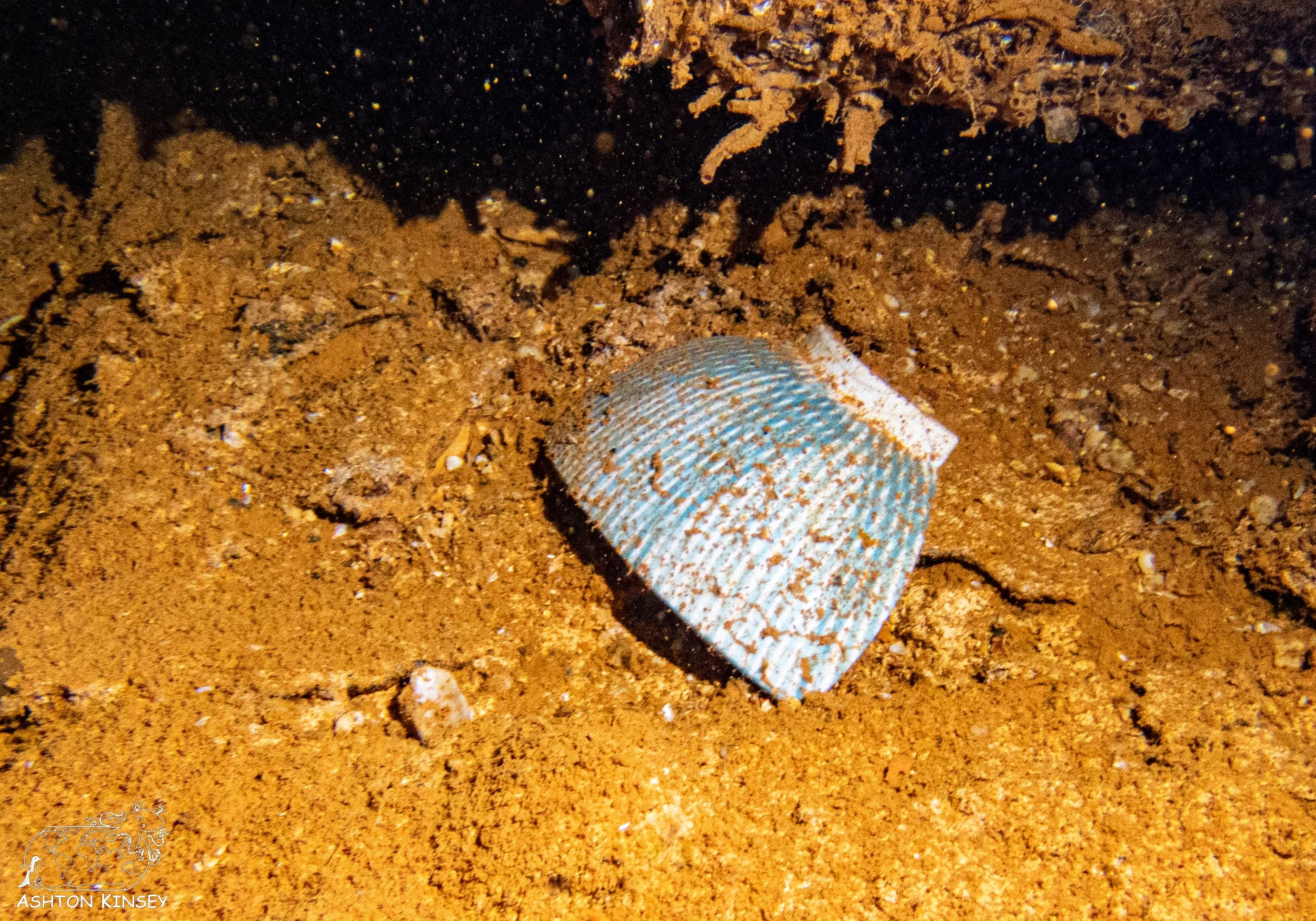
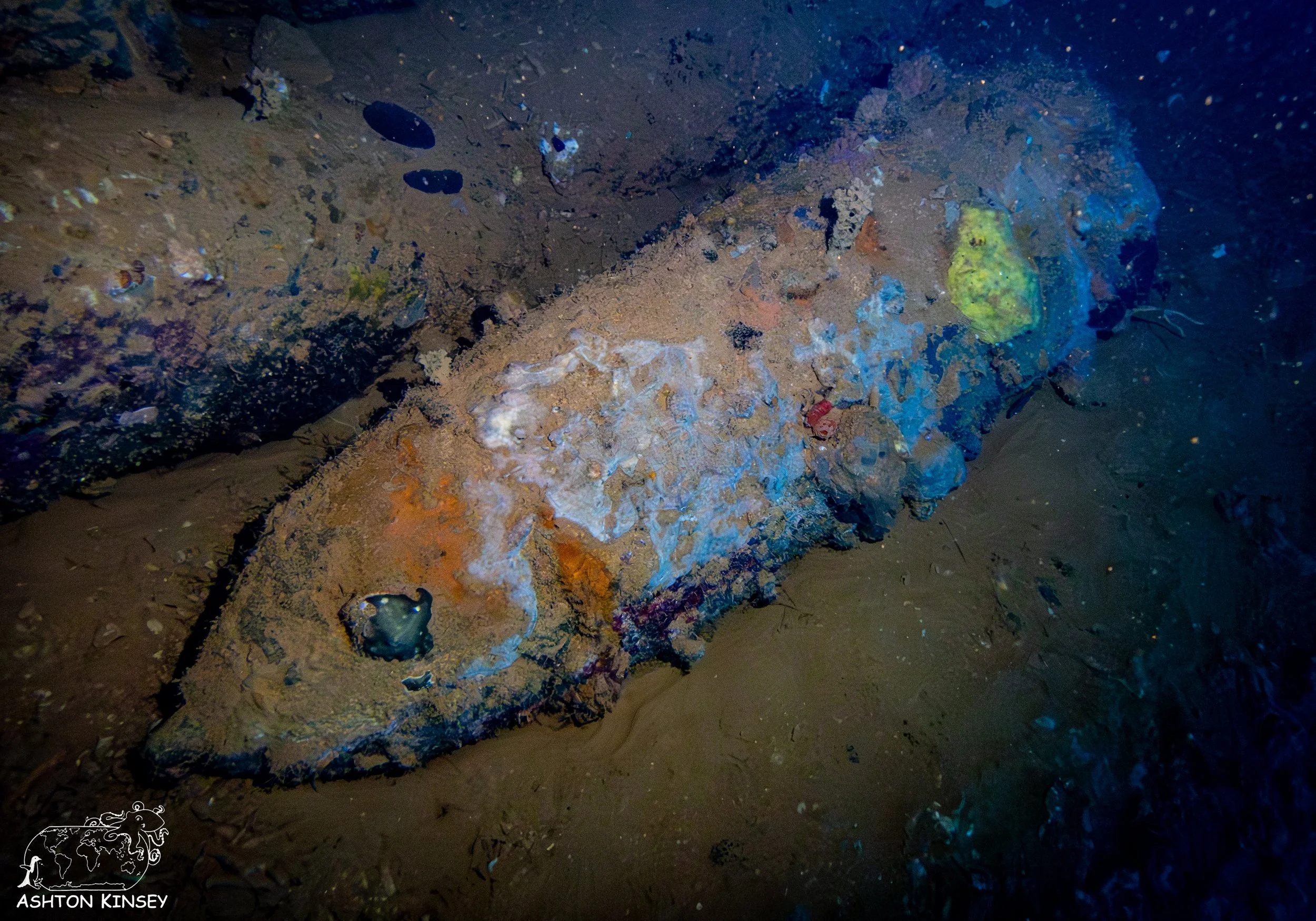
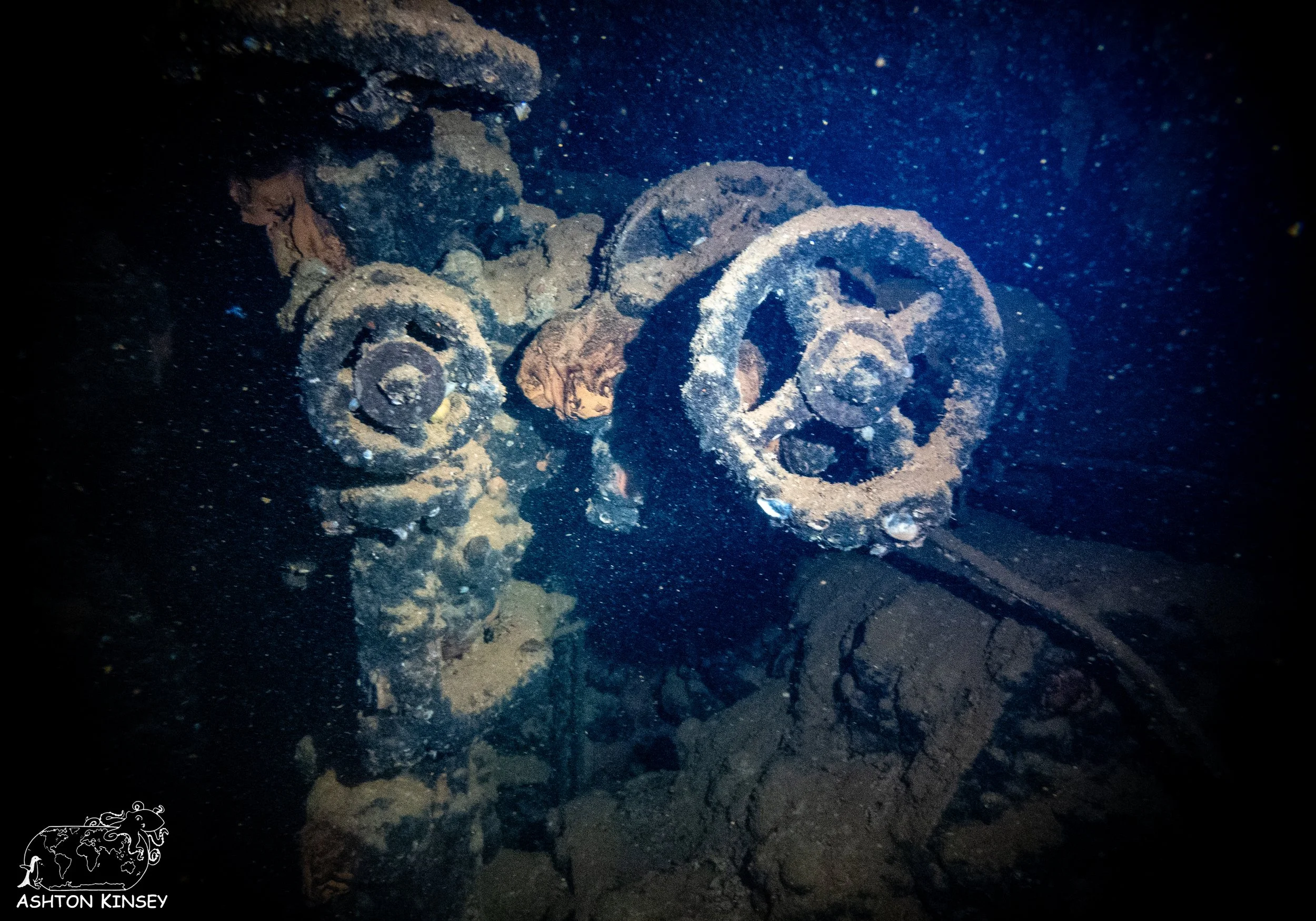
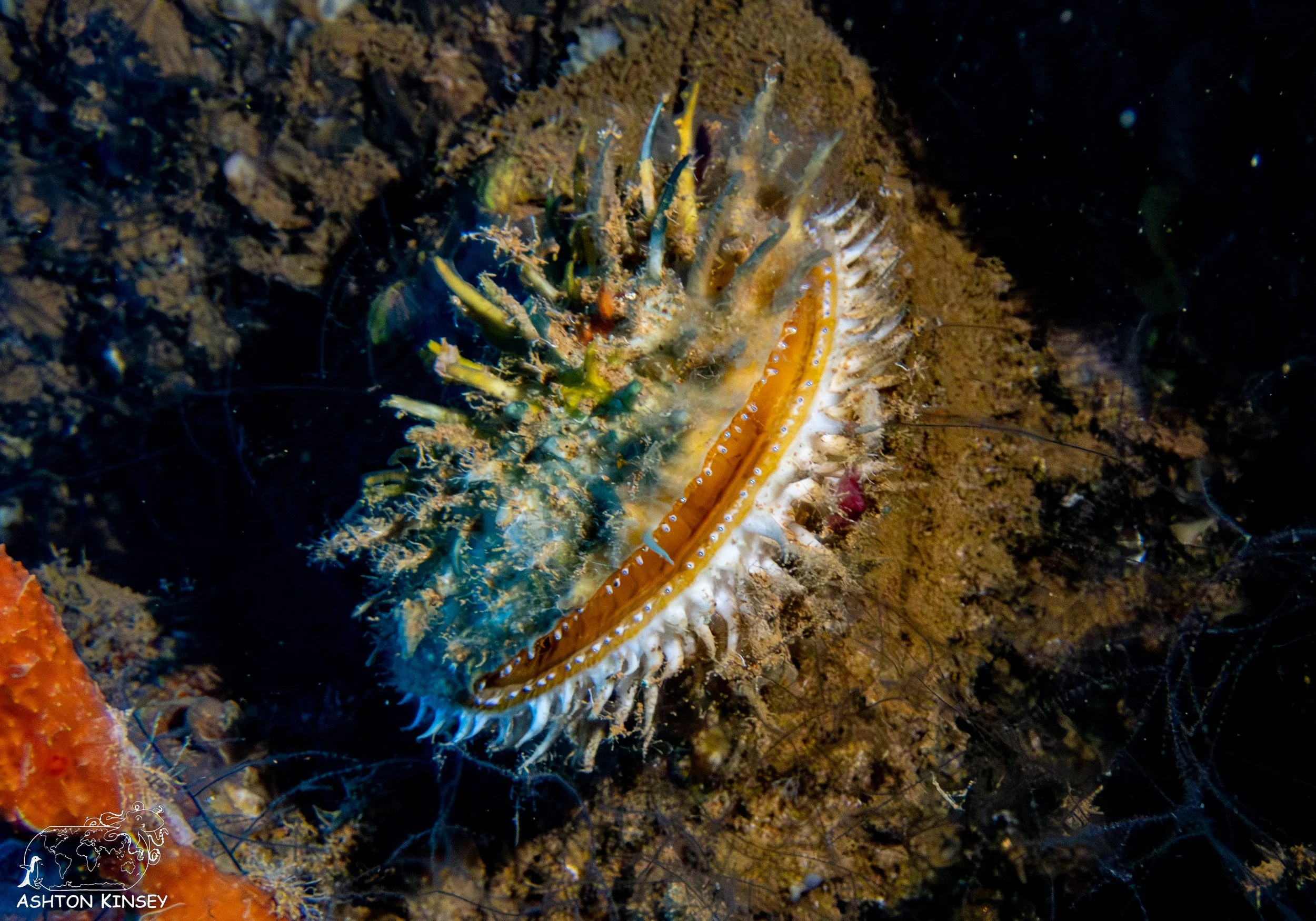
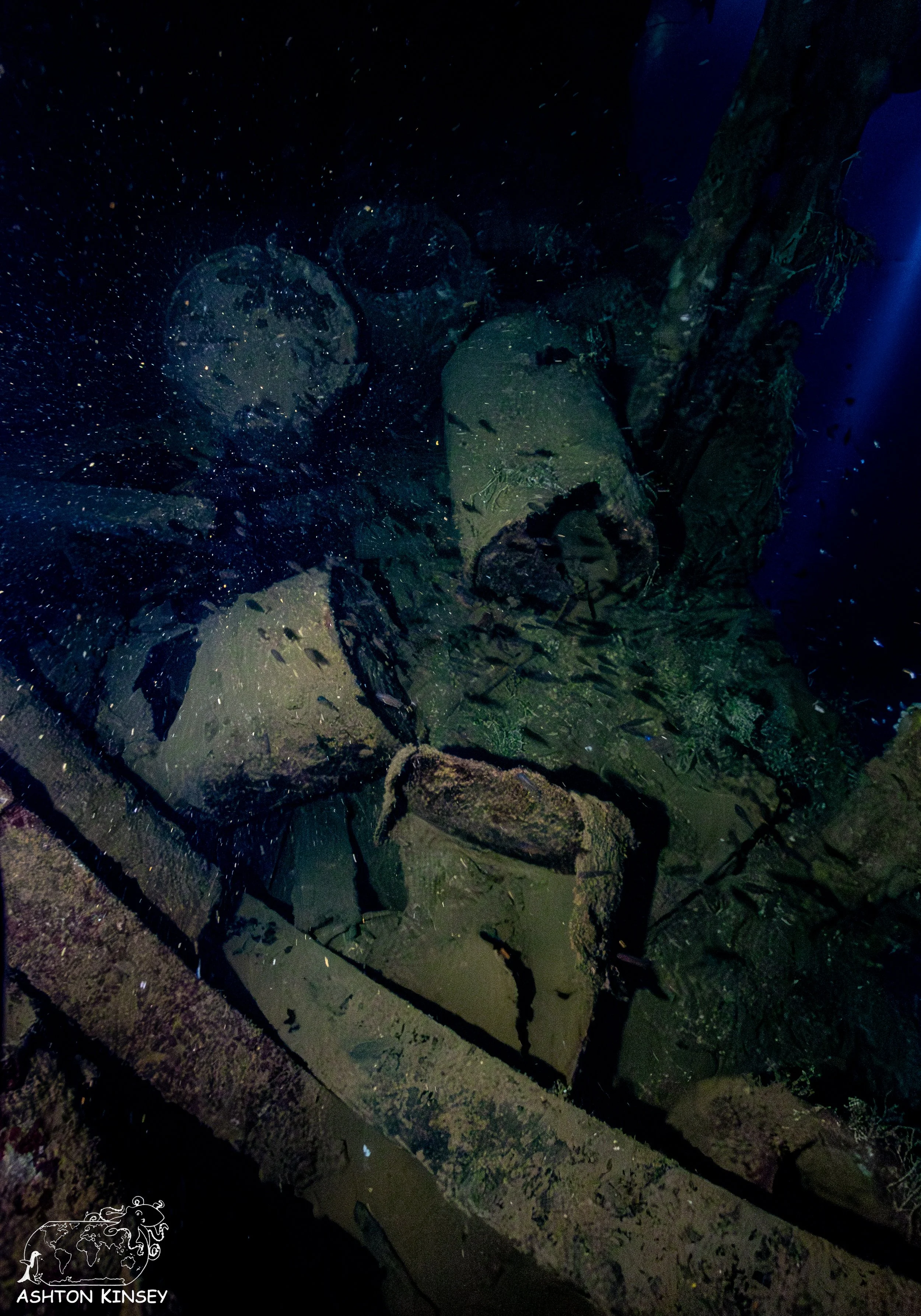
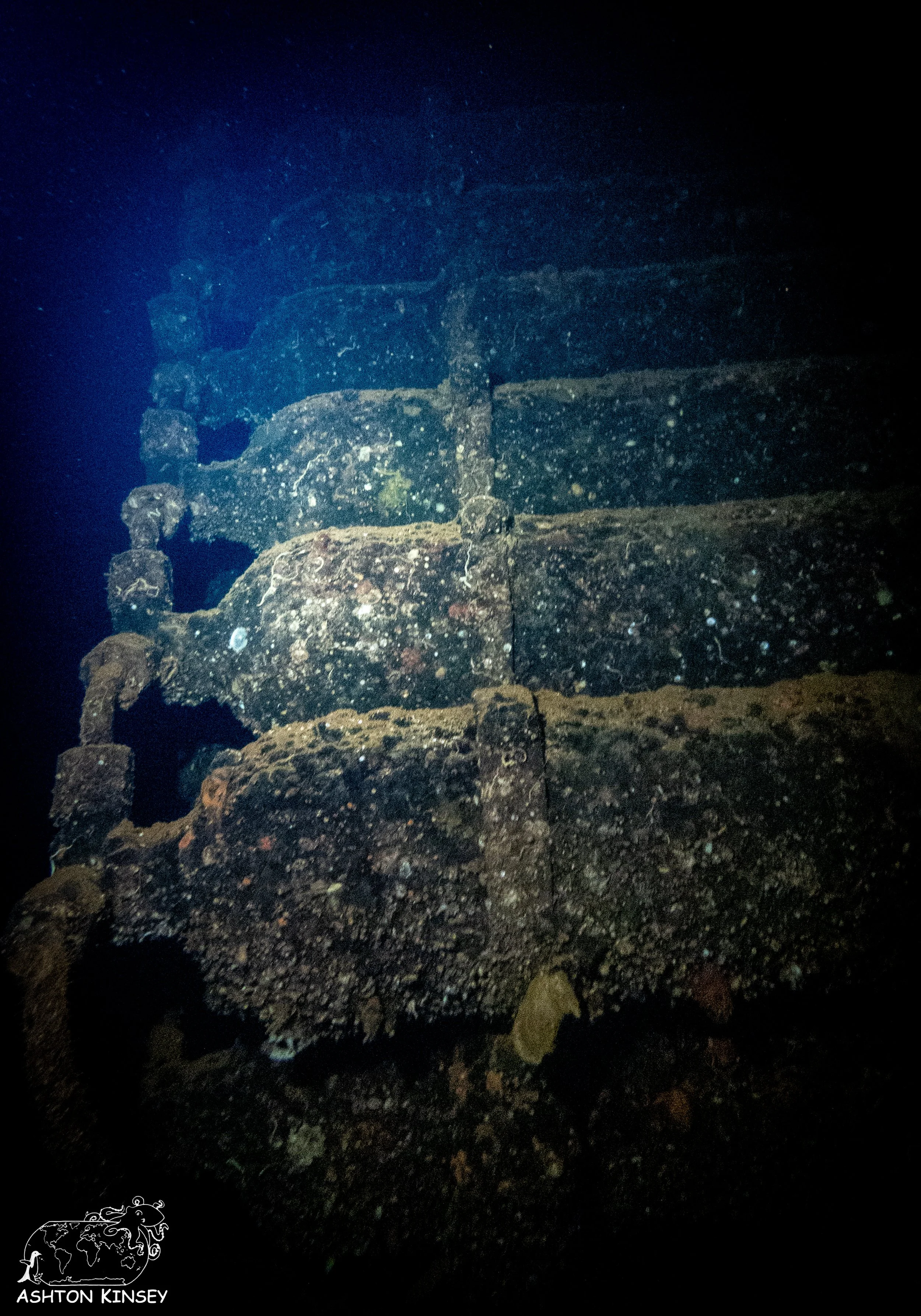
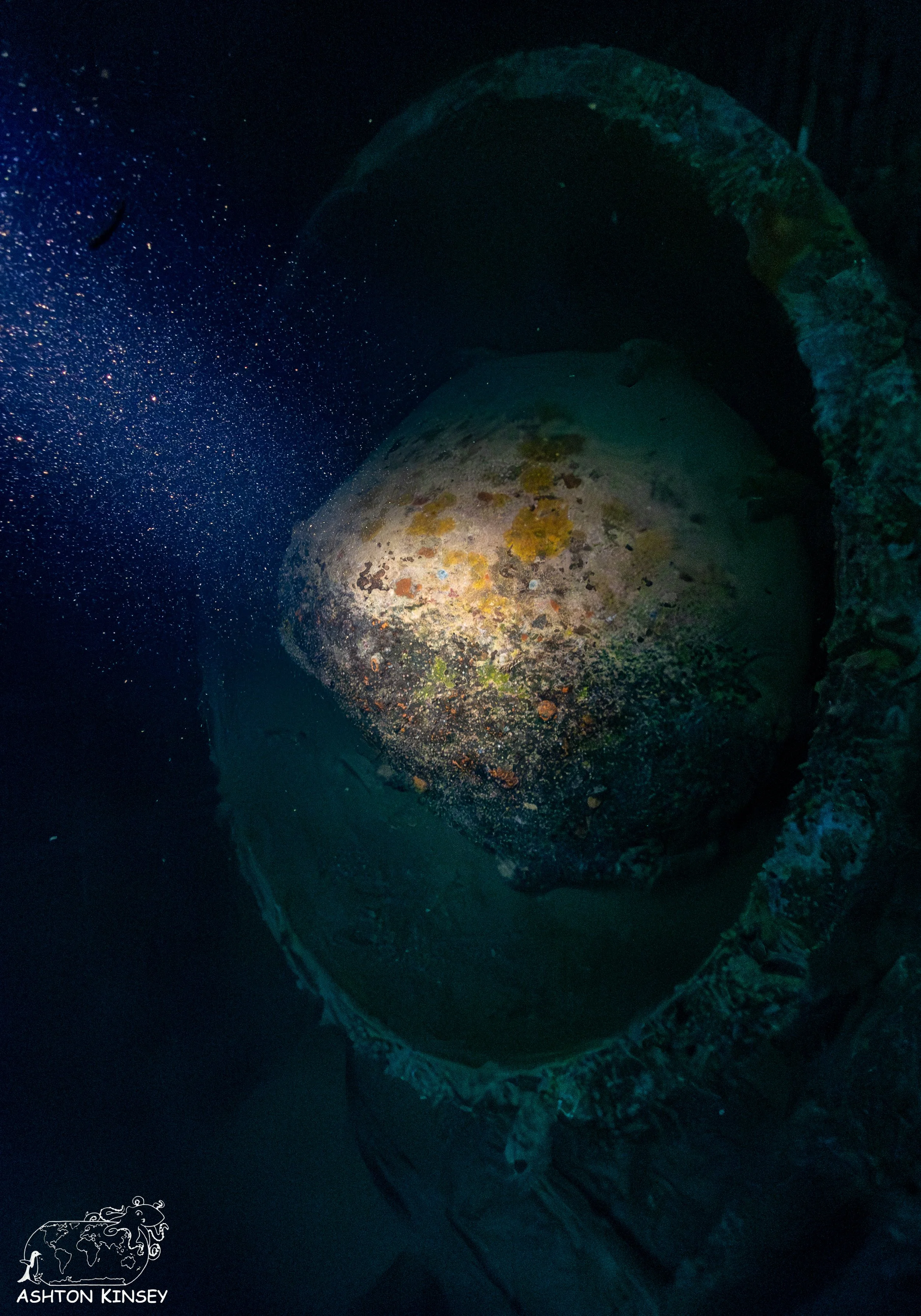
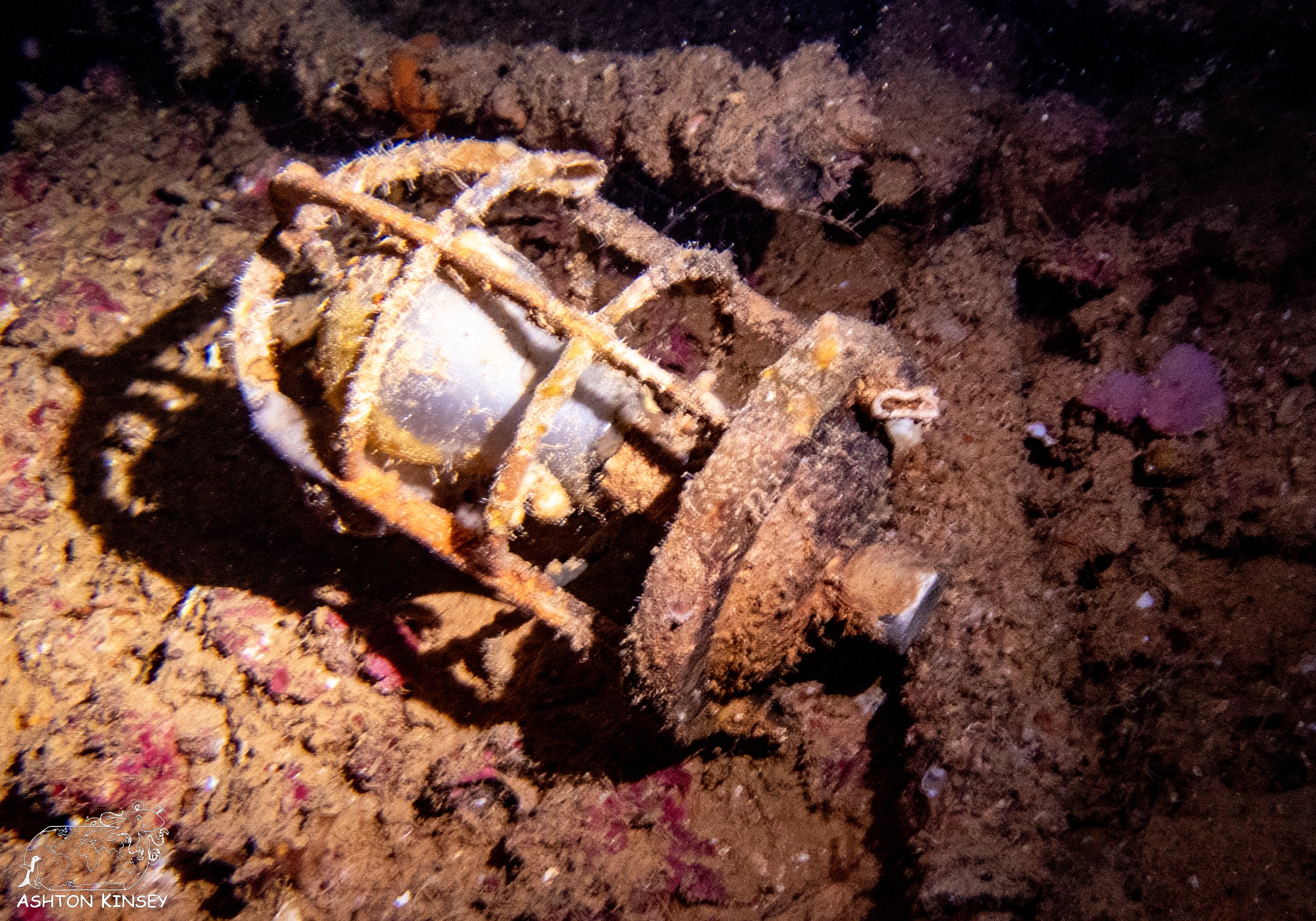
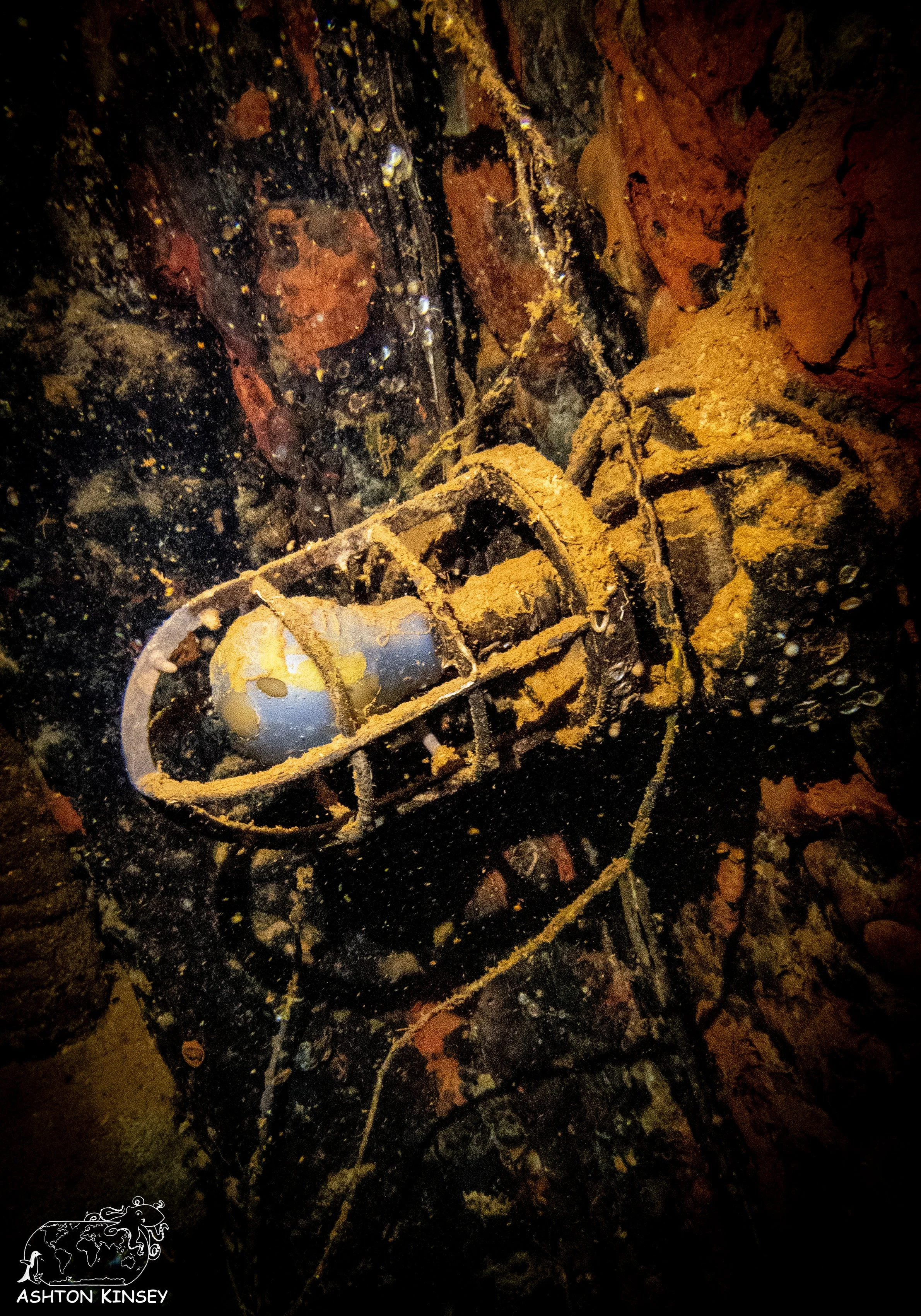
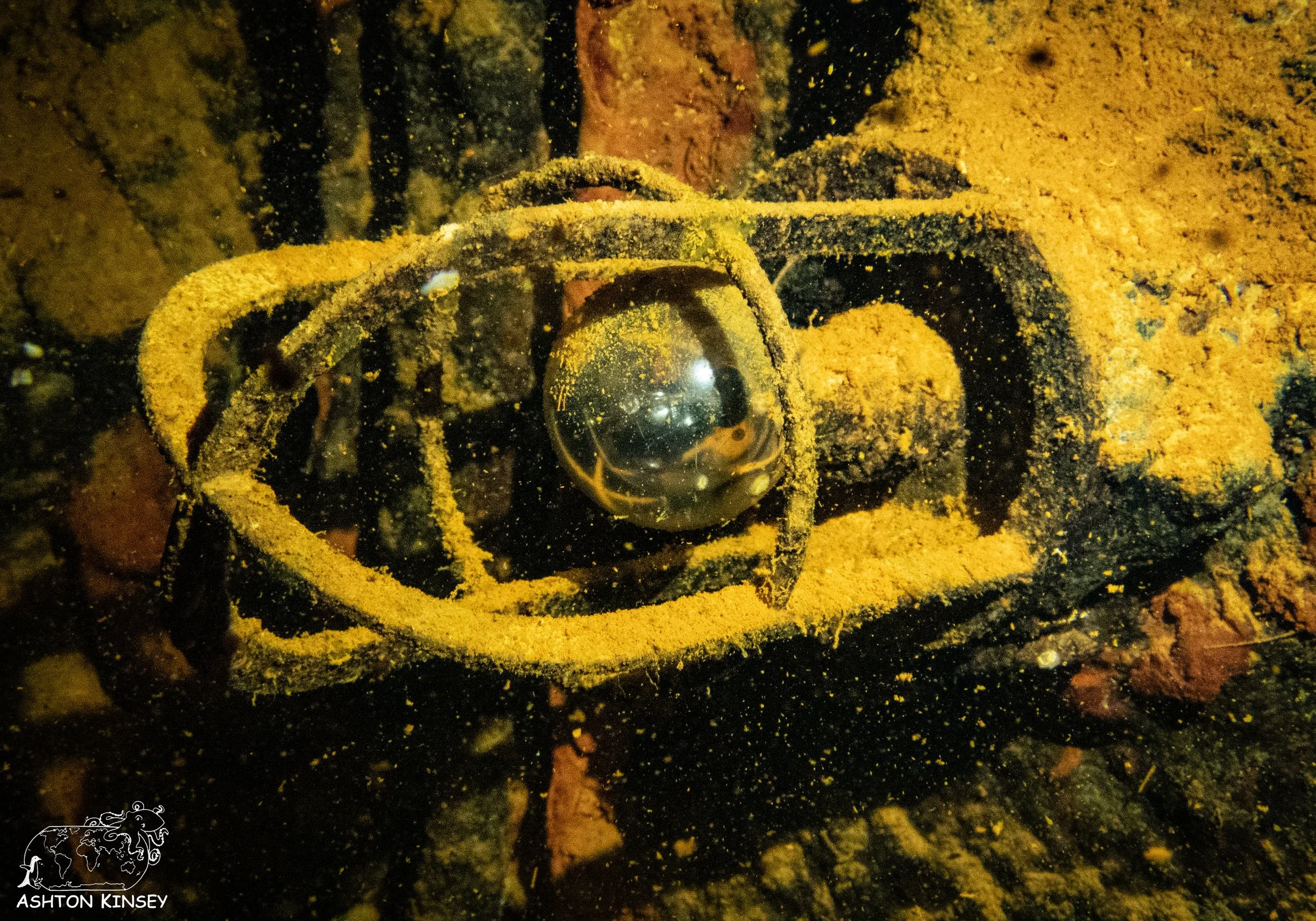
Inside cargo hold #5 are several 14-inch shells, weighing roughly 3,300 lb. Some are still stacked up, while others have fallen over and are partially buried in the silt. Cargo hold #6 has several barrels of aviation fuel lying on the bottom. Inside the engine room, light fixtures with bulbs, wrenches, and other small tools can be found along with small personal items from the crew throughout the wreck.
Wreck 2: Kiyosumi Maru
清澄 (Kiyosumi – pure/clear) 丸 (Maru – Circle)
95’ for 51 minutes and 86’ for 53 minutes

Built: 1934 Sunk: 18 February 1944
GRT: 8,614 tons Length: 435.5’
Beam: 60.7’ Draught: 28’
Depth: 115’ Speed: 13-18 knots
Built in 1934 by Kawasaki for the Kokusai Kisen Line (KKL) as a single-propeller, mid-sized passenger and cargo vessel, she mainly traveled between Kobe, Japan, and New York USA. Most cargo carried was silk, sugar, and general goods via the Panama Canal, returning with metals and other exports from the US. Like most ships, she was requisitioned by the IJN in 1941 when she was outfitted as an armed-merchant raider to help with the war efforts.
During the rebuild, she was fitted with eight-gun platforms, but most of them were removed when they were needed for other boats that were on active duty. During an attack on 2 January, 1944 by the USS Balao, near Rabaul, Papua New Guinea, she had six torpedoes fired at her, three of them hitting and flooding the forward holds. The damage was not enough to sink her, and she was towed to Truk, where she was undergoing repairs; due to this, most of her holds were empty. During Operation Hailstone, she was struck by several bombs, two striking midships near the bridge and one inside the 2nd hold. Her sinking resulted in 43 reported fatalities.
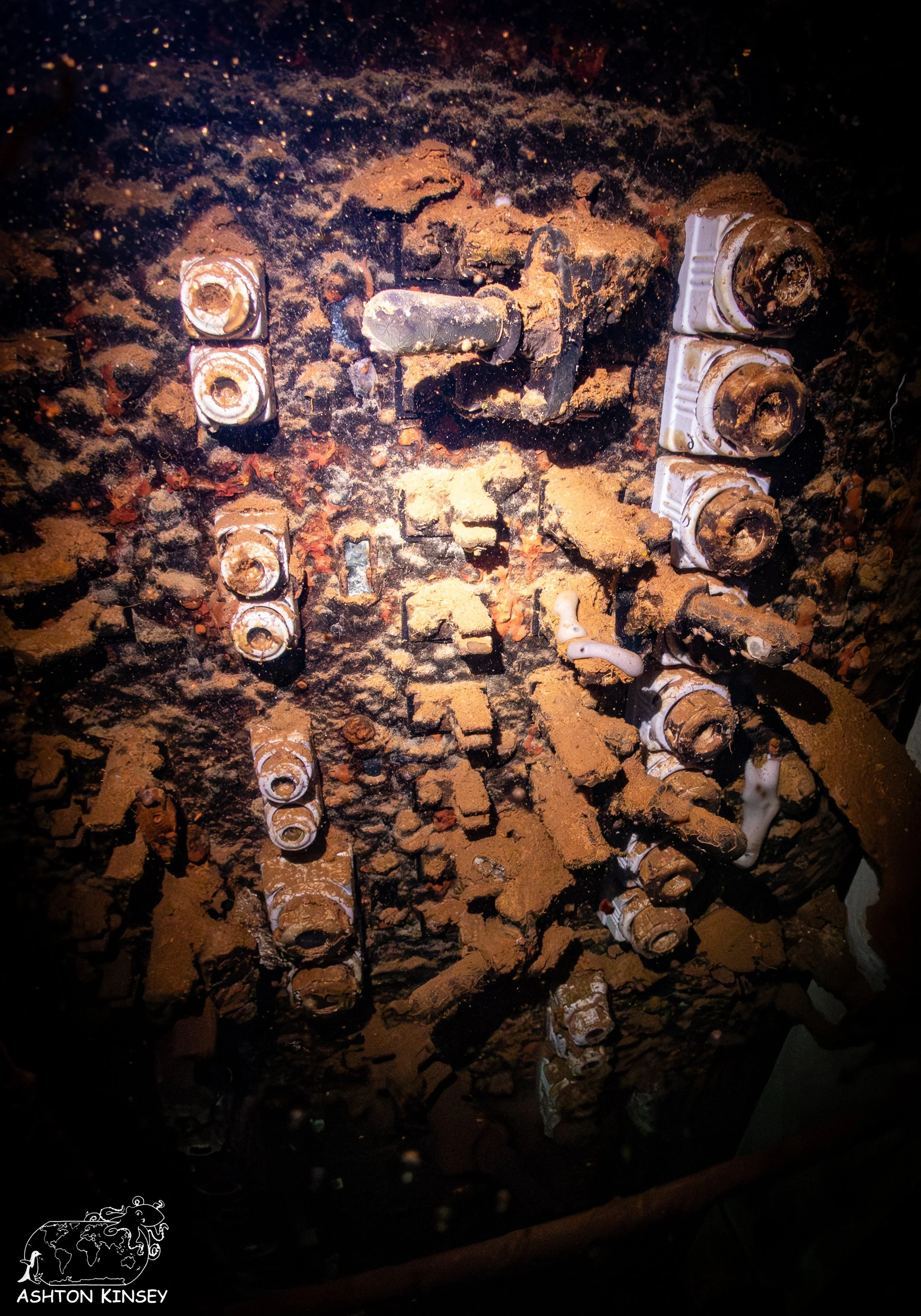
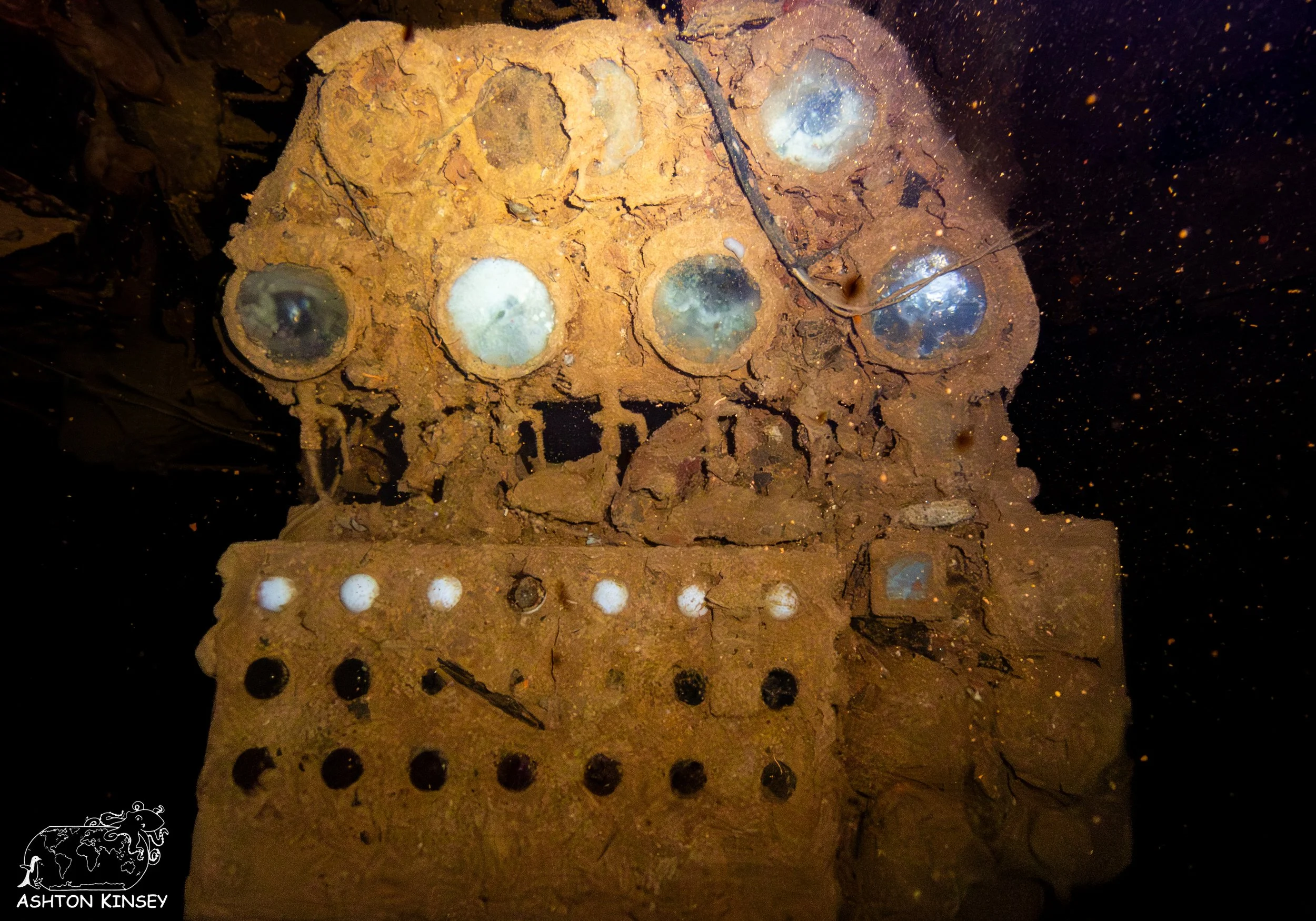
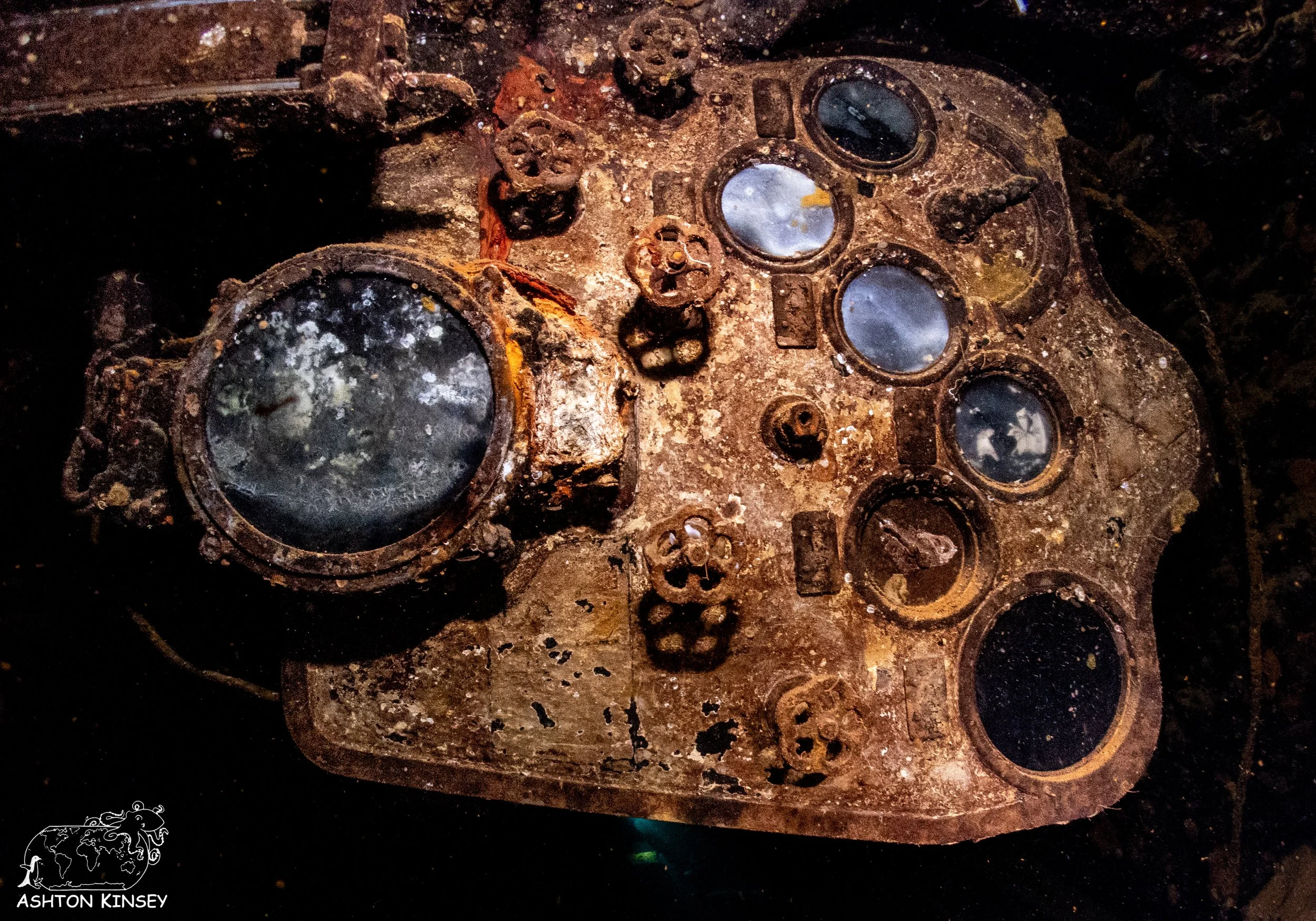
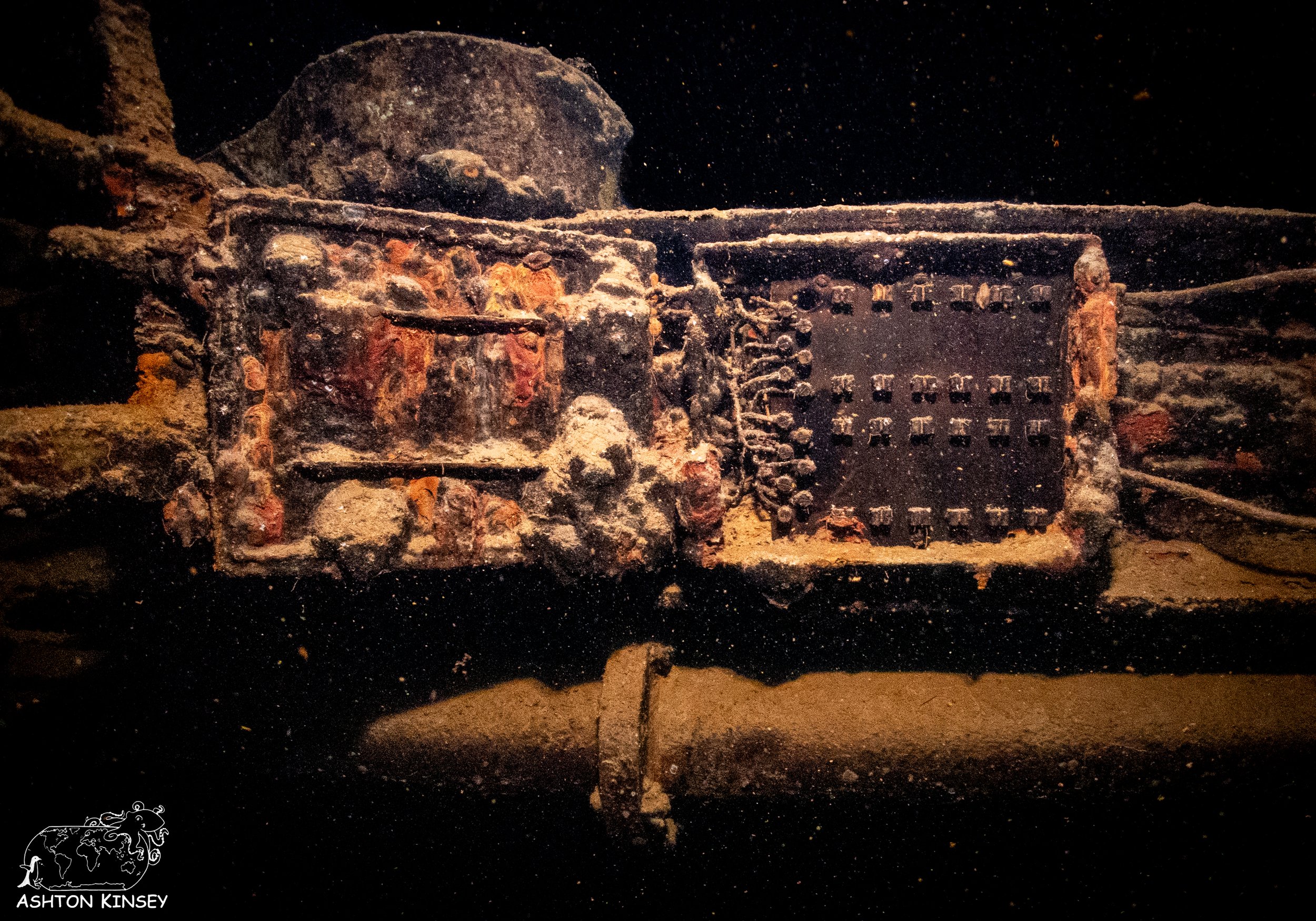
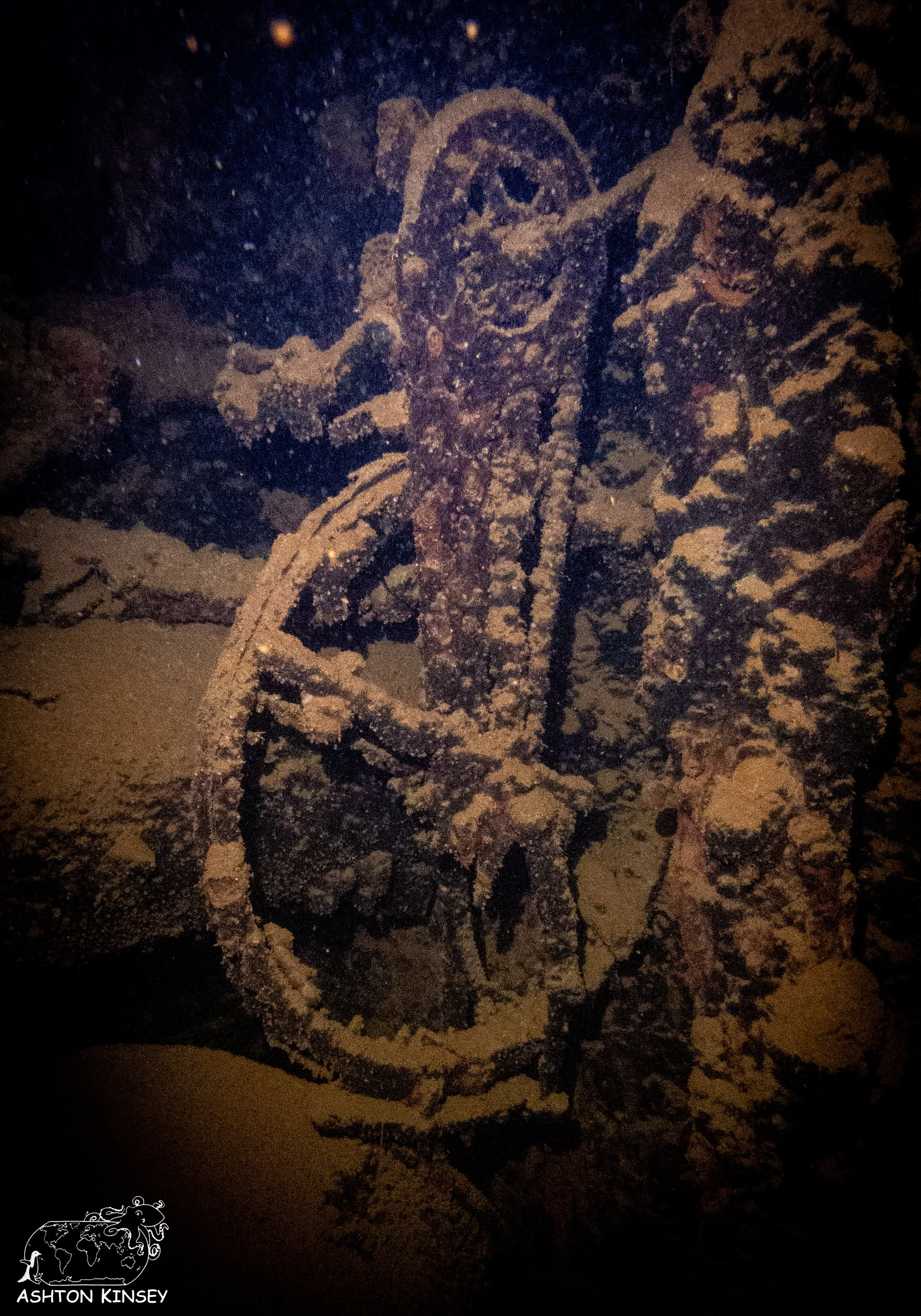
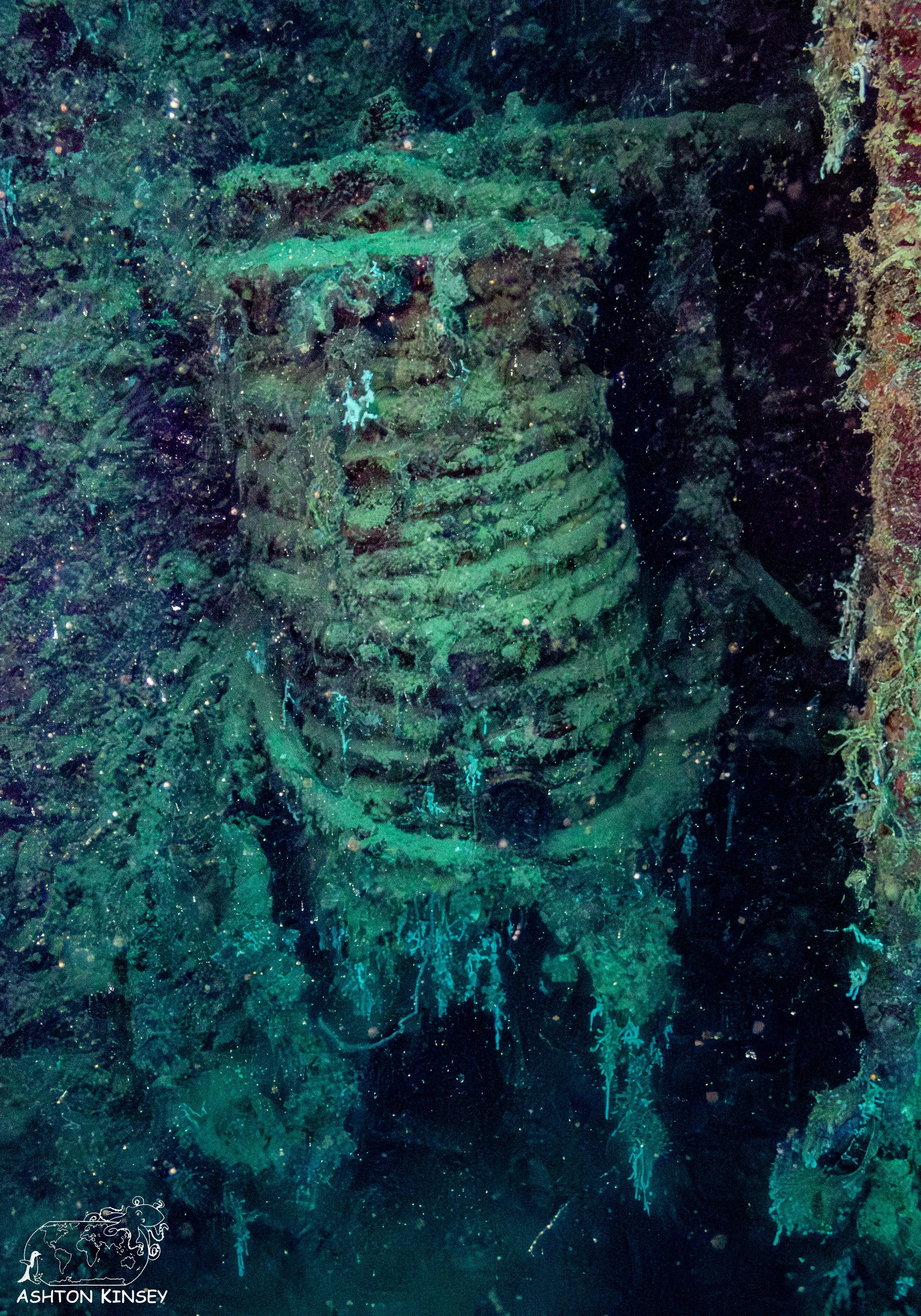
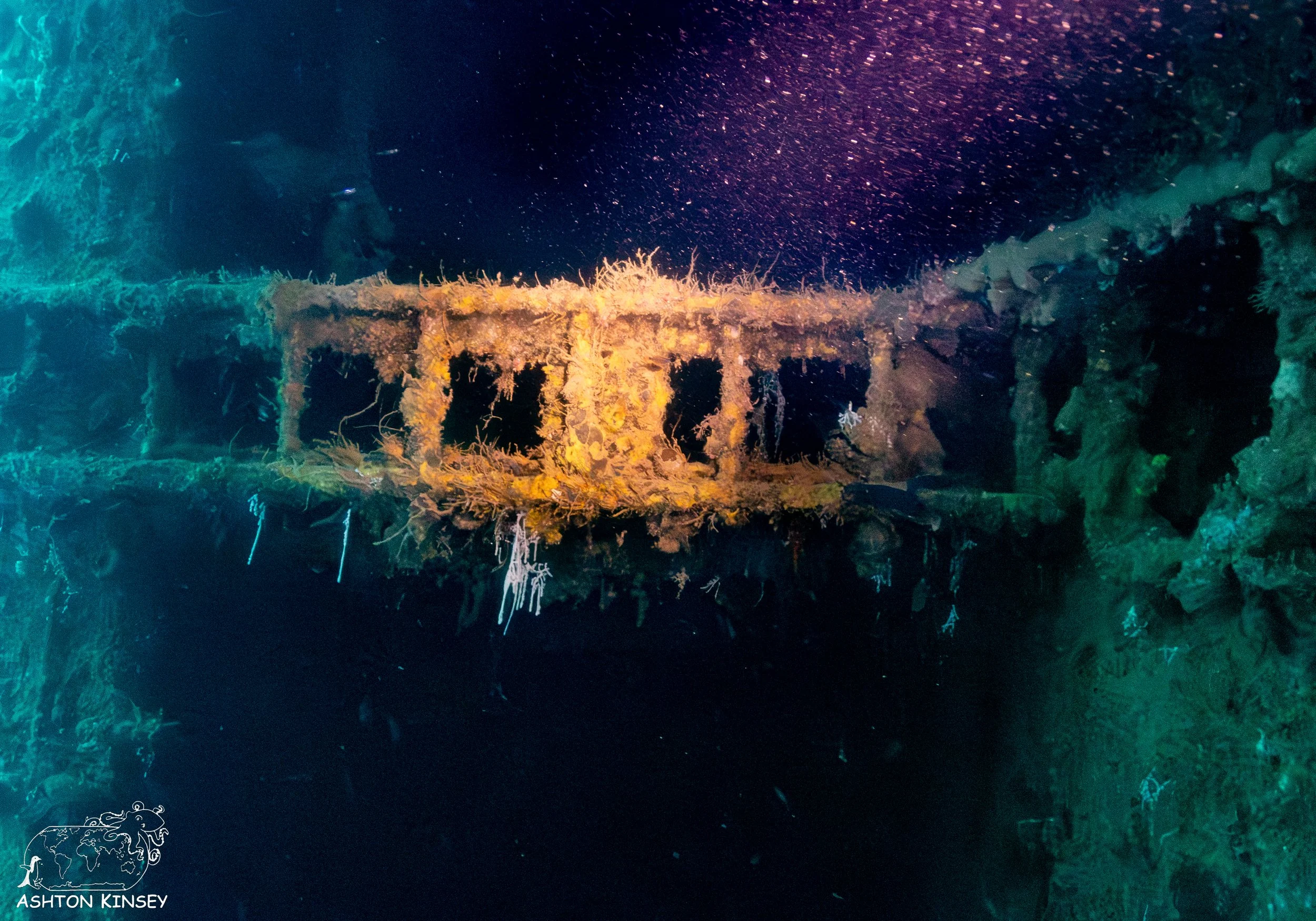
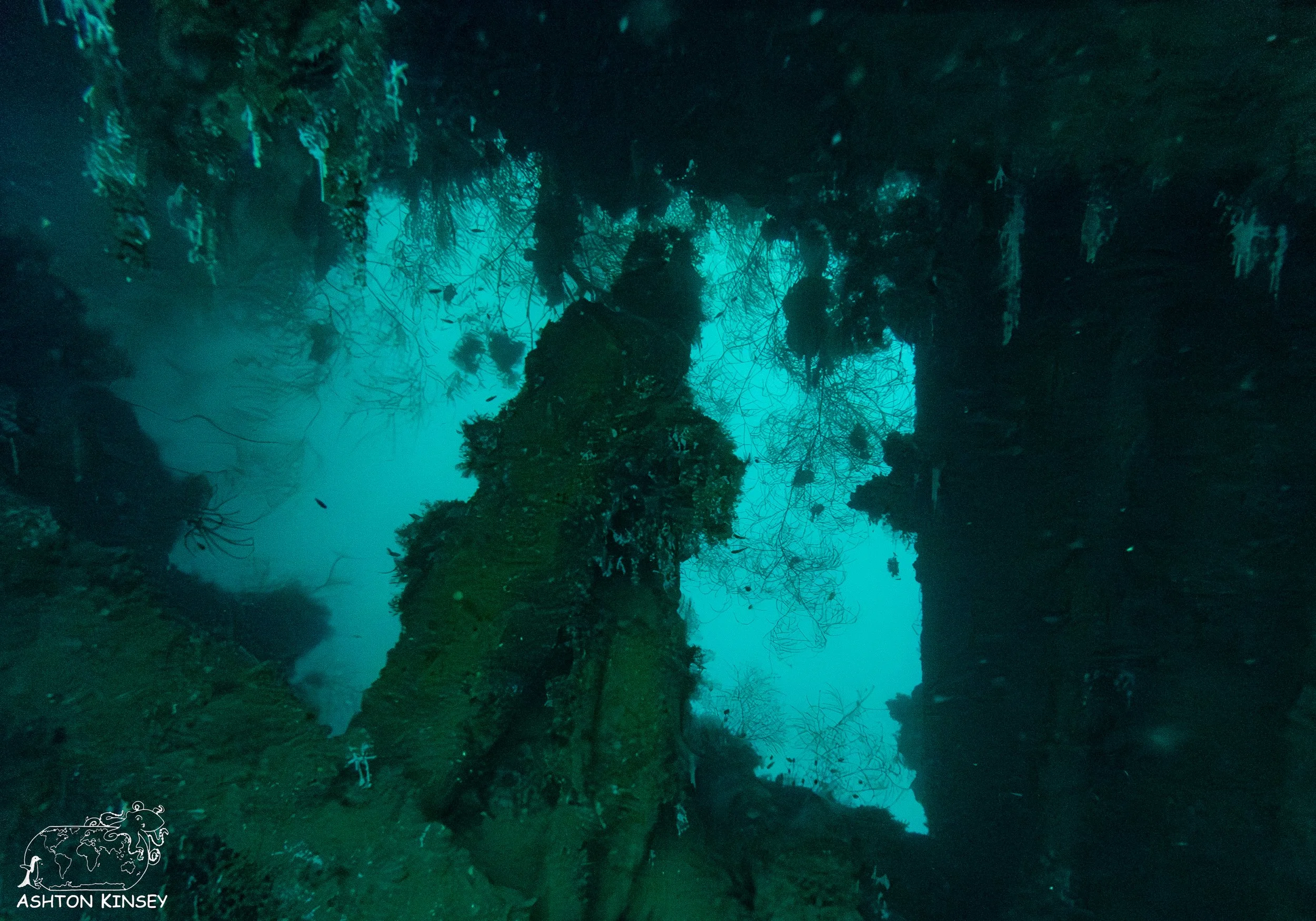
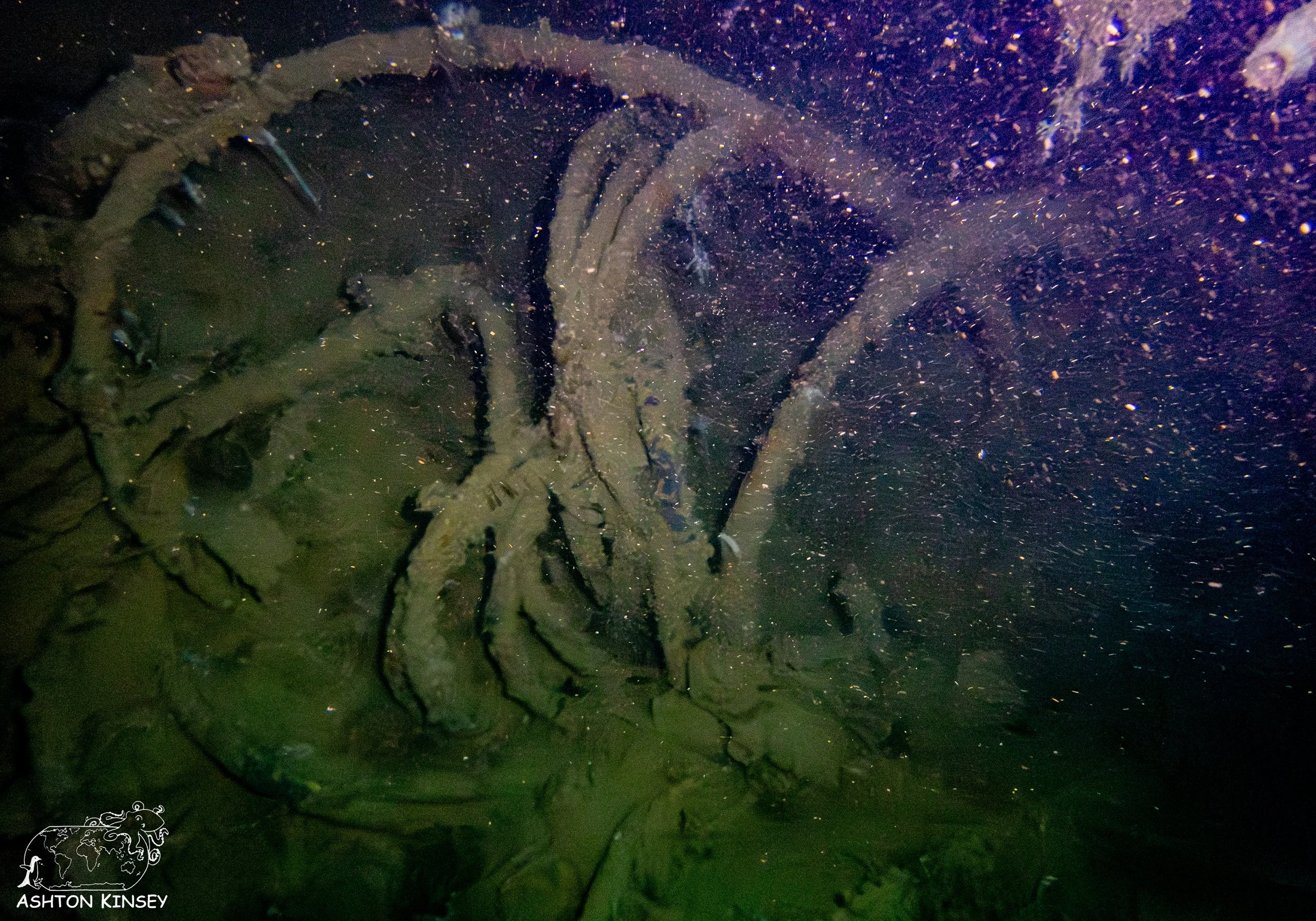
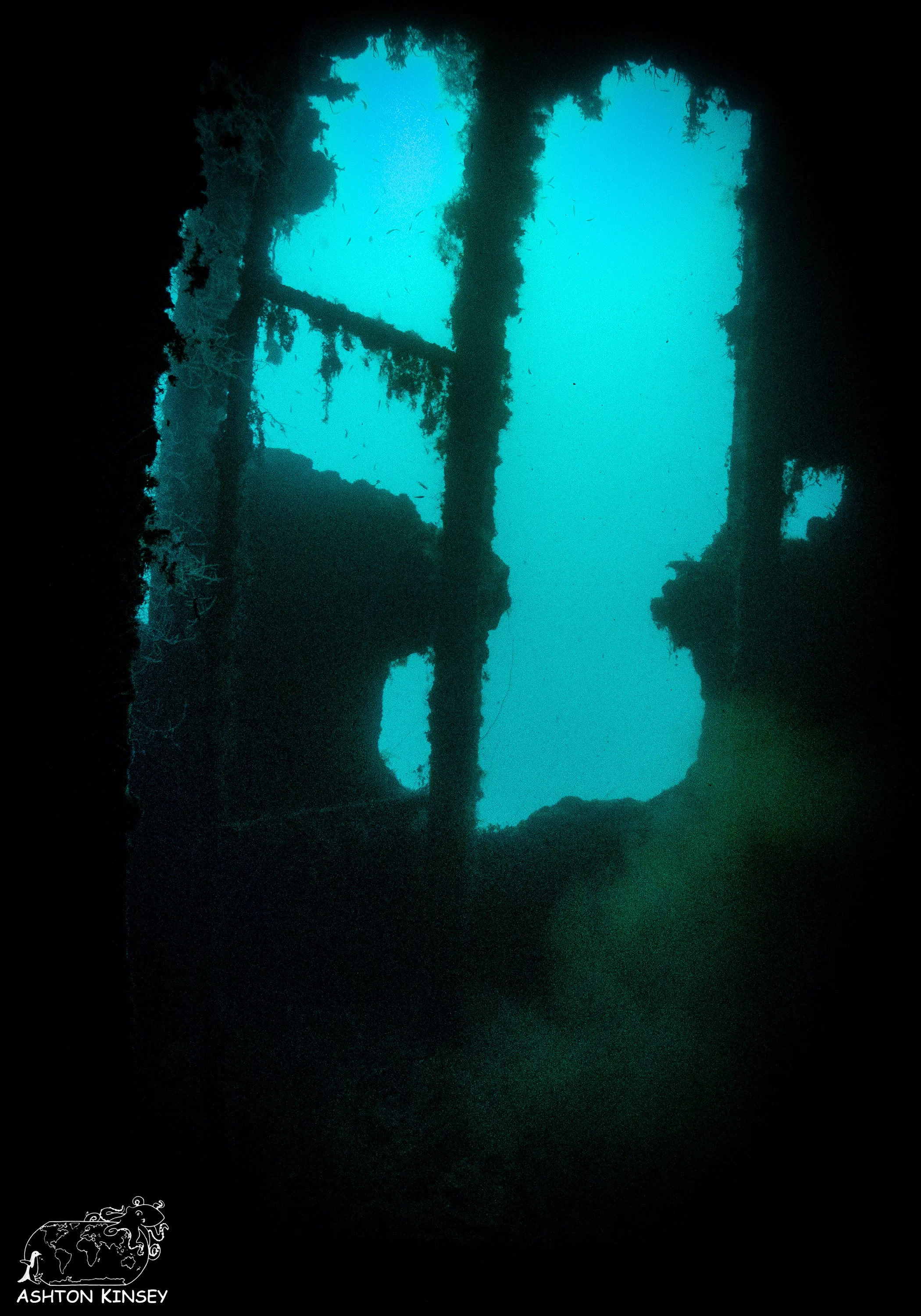
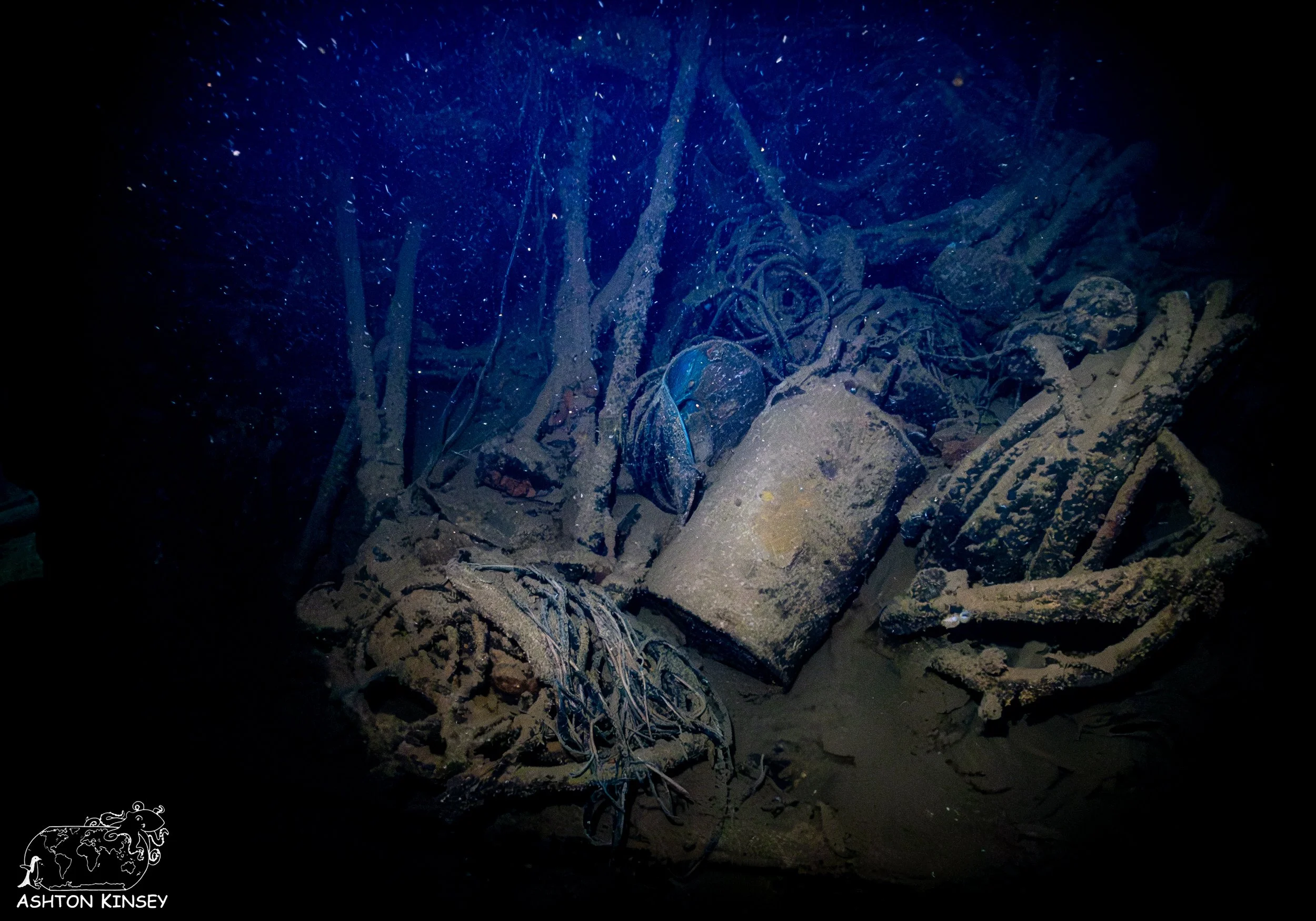
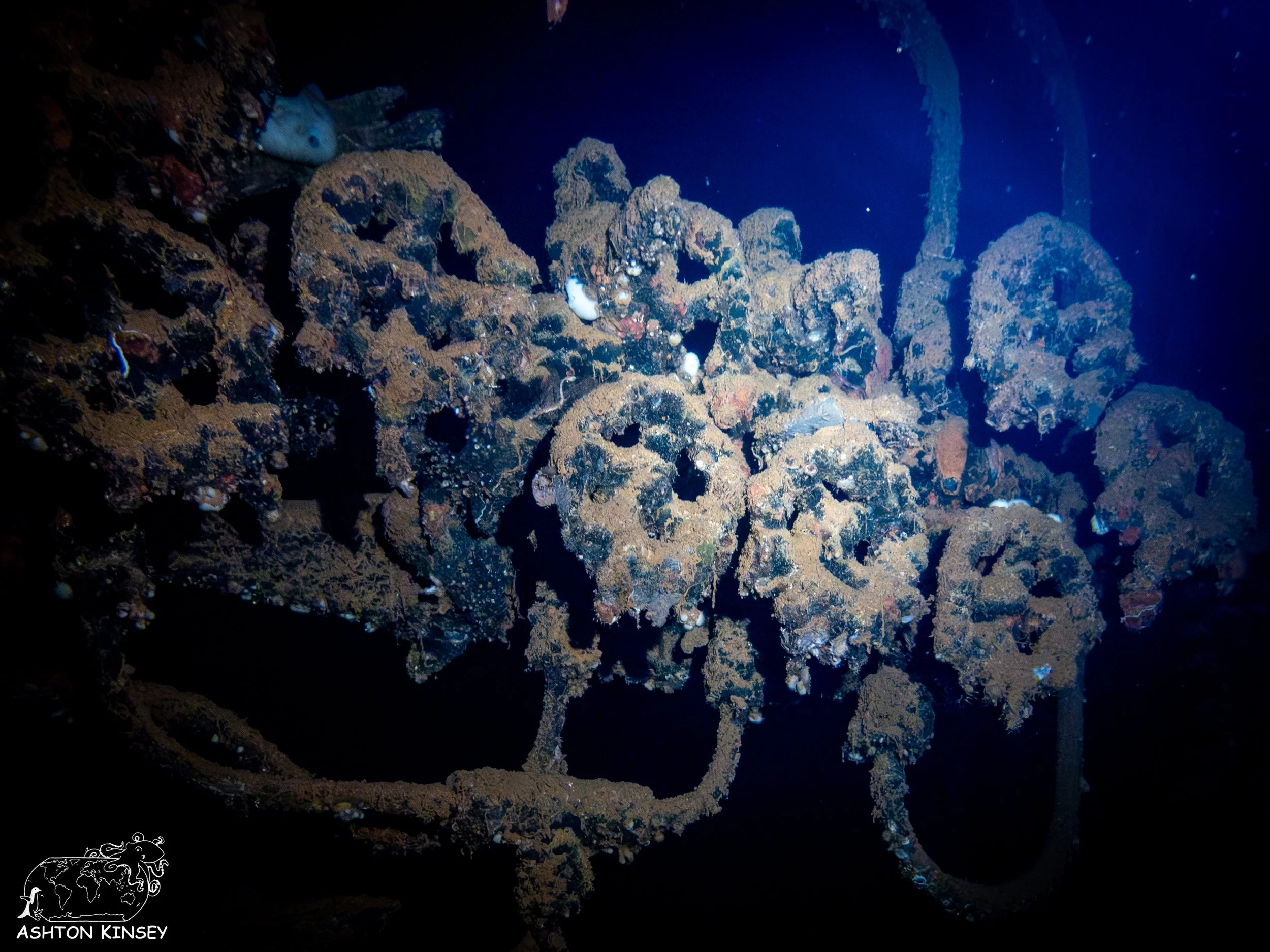
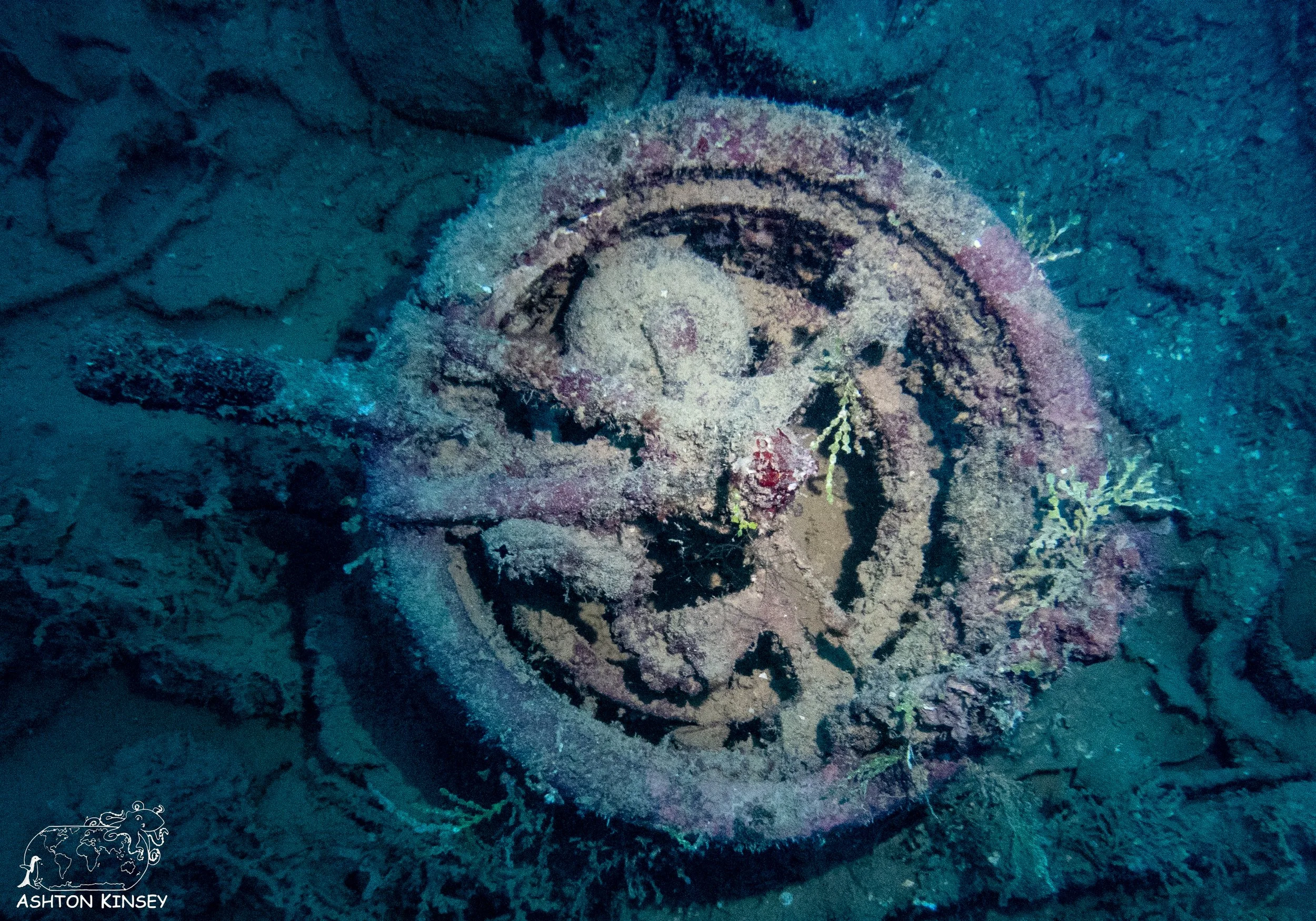
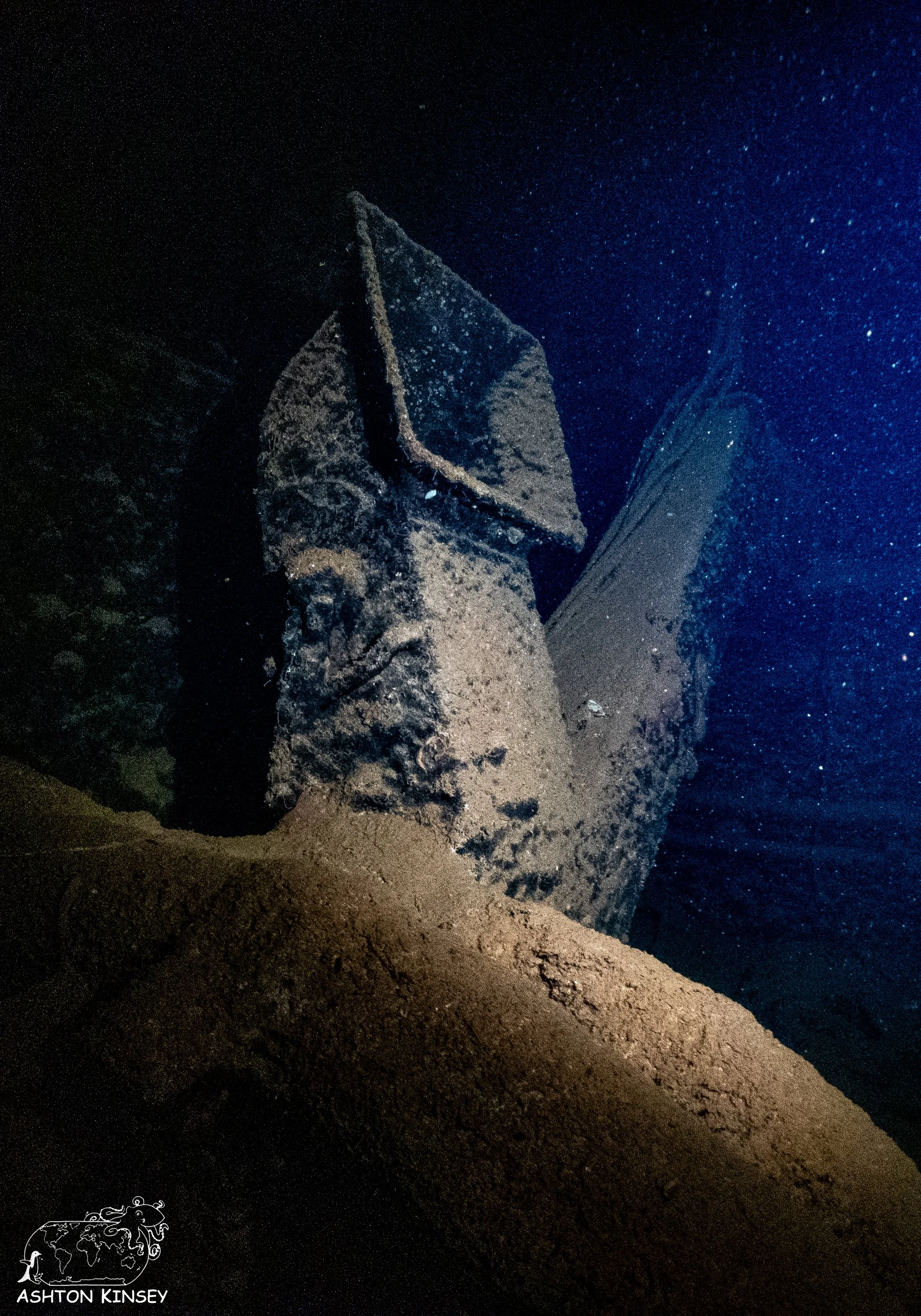
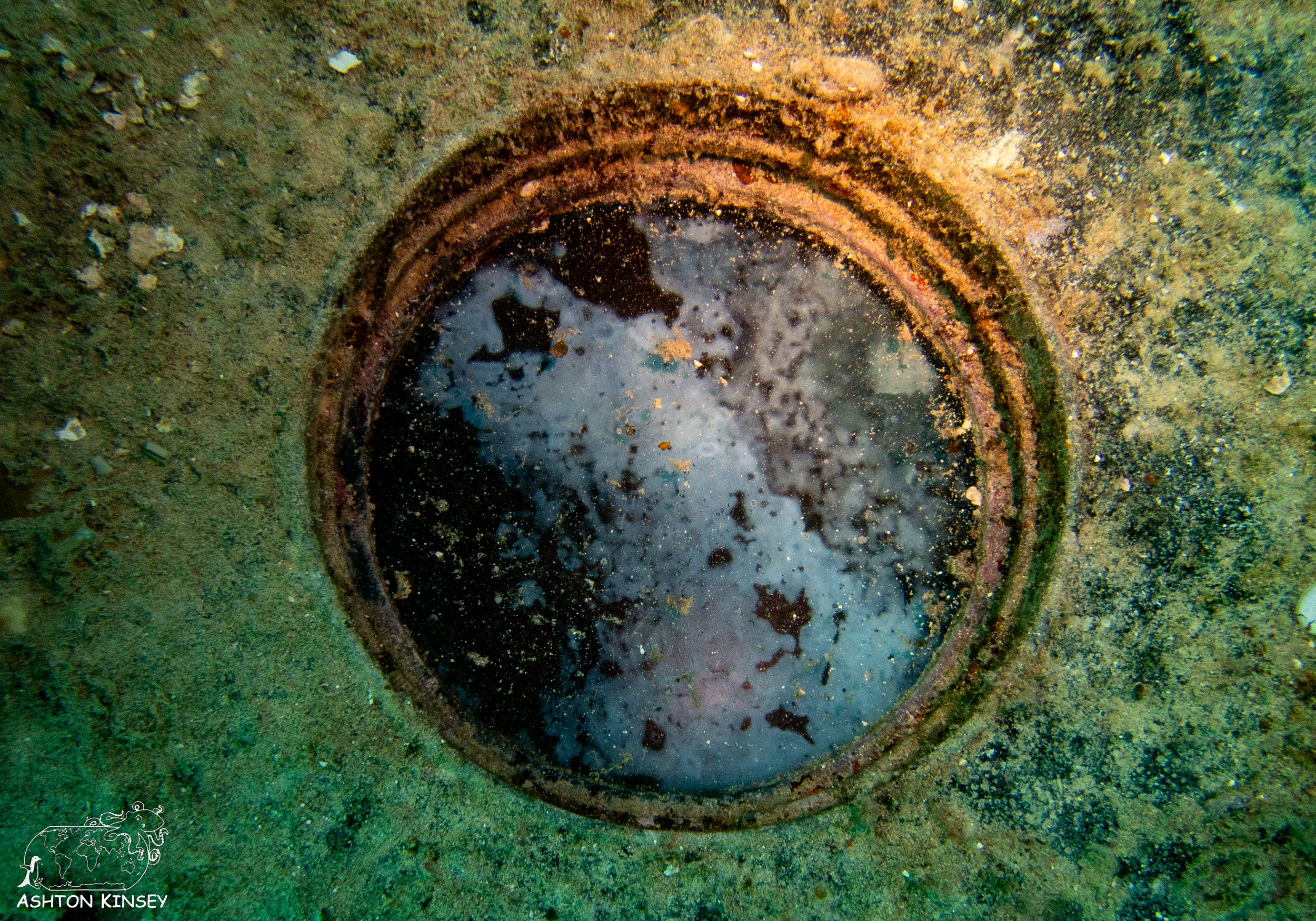
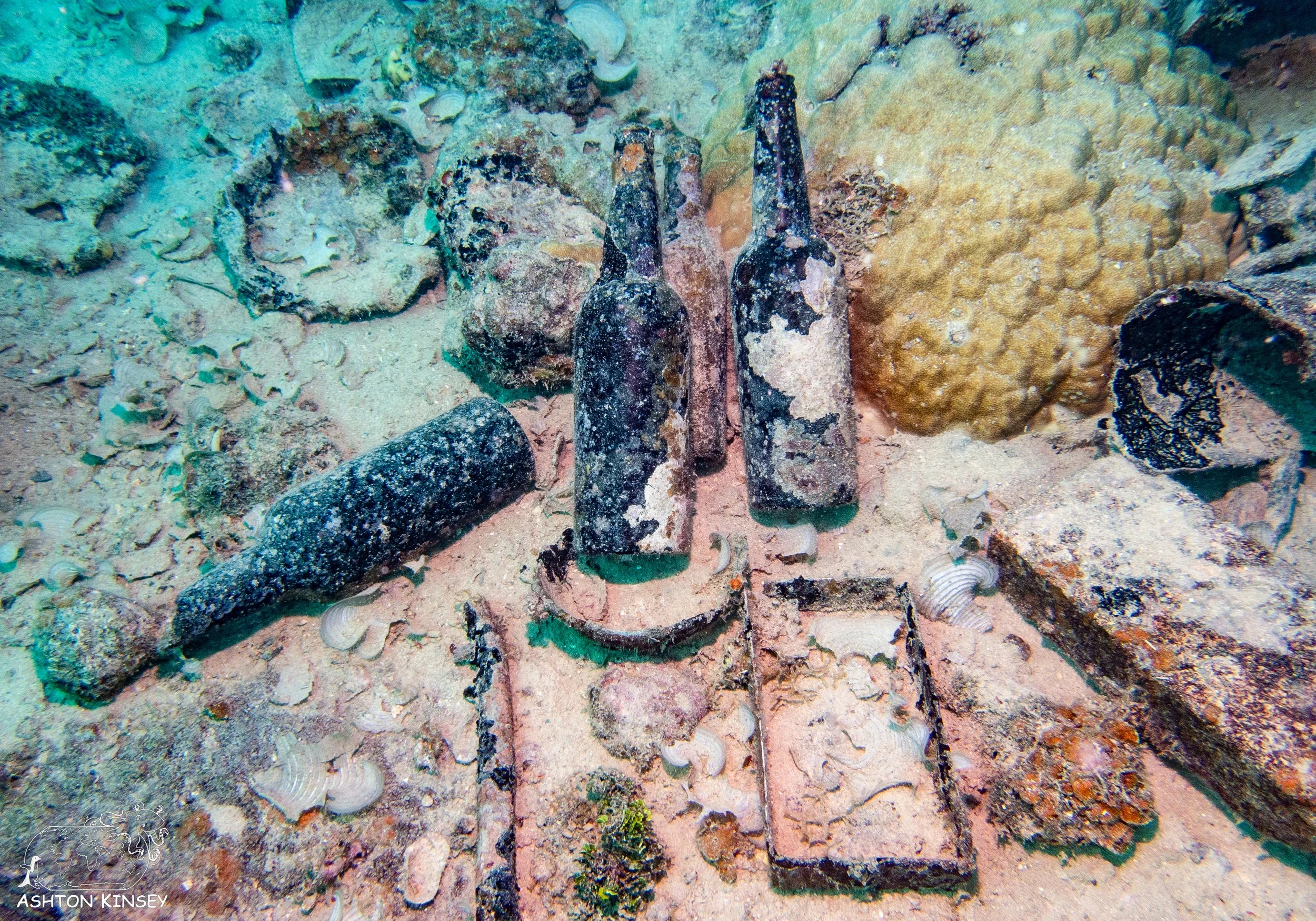
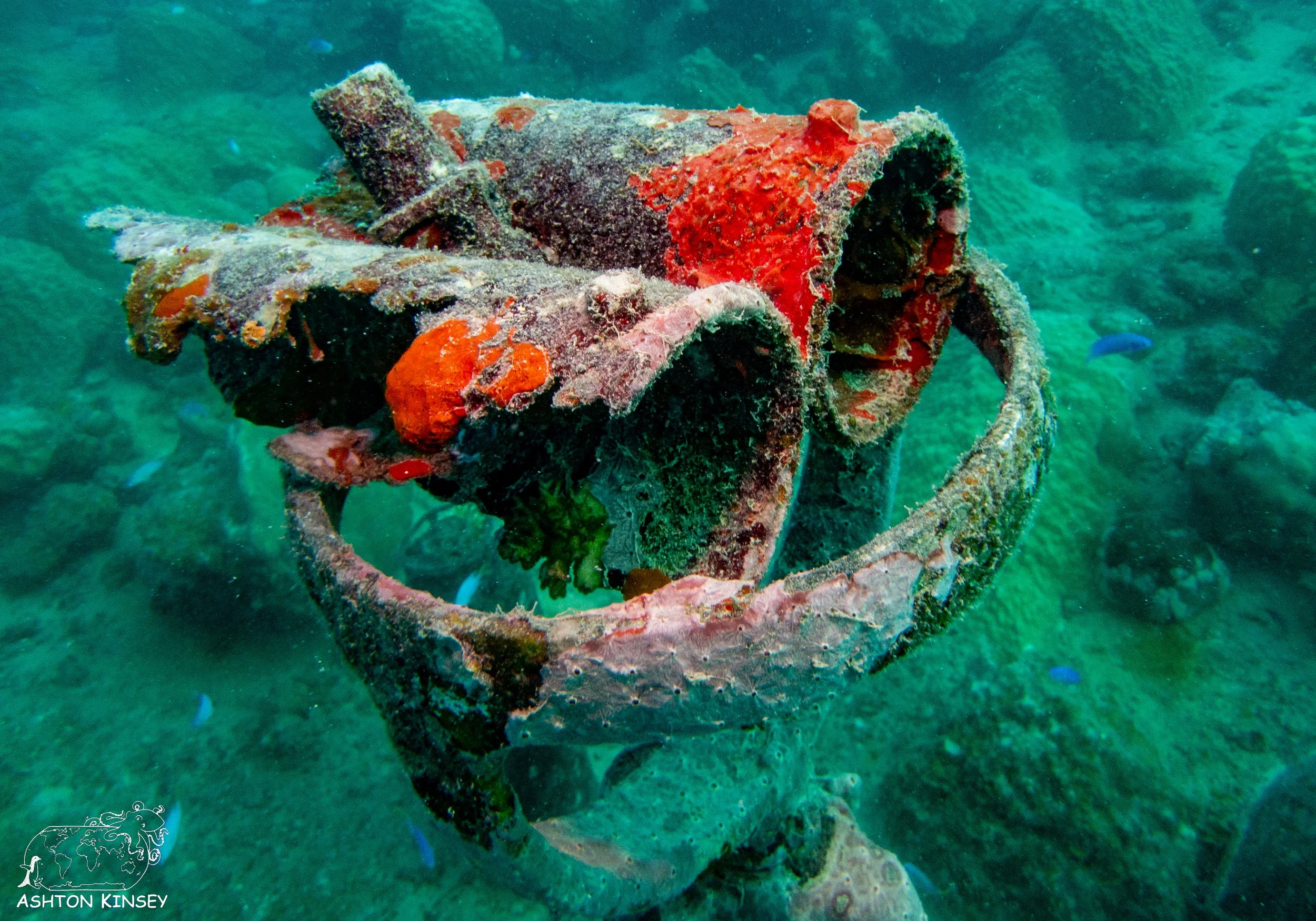
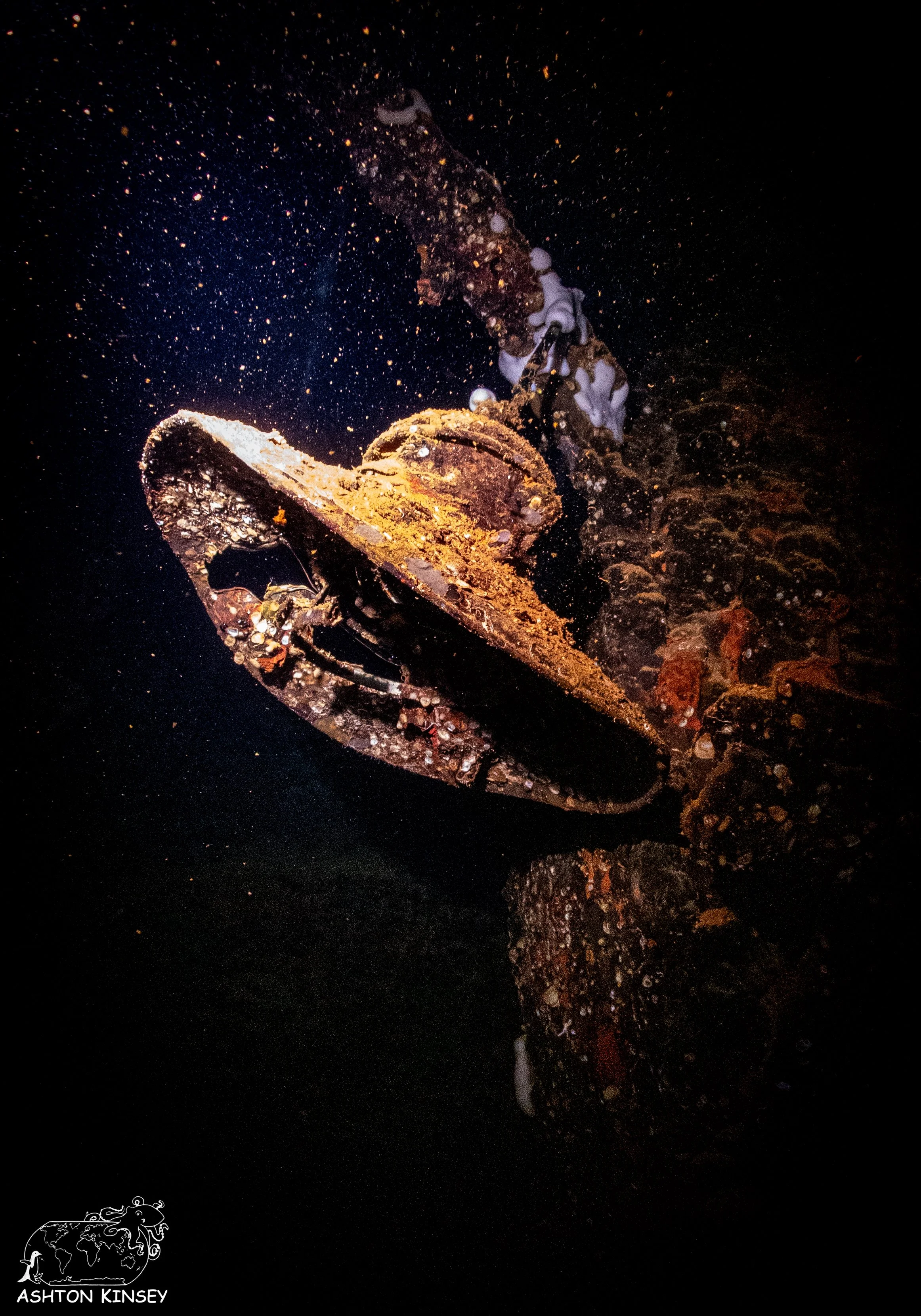
The superstructure has collapsed, which gives easy access into the engine room for swim-throughs. Most of the cargo holds are empty, but hold #4 has the remains of a bicycle, which was a quick and easy method of getting around at port. Hold #6 has propeller blades, and a telegraph can still be seen on the remains of the bridge, though it has fallen to the ground.
Wreck 3: Heian Maru
丸安 (Heian – Peace/Tranquility) 平 (Maru – Circle)
101’ for 54 minutes and 100’ for 55 minutes
Built: 1930 Sunk: 17 February 1944
GRT: 11, 616 tons Length: 510’
Beam: 66’ Draught: 30’
Depth: 112’ Speed: 14-18 knots
Starting in the late 1920’s the Nippon Yusen Kabushiki Kaisha Line began a program to extend their international passenger services. Three of the eight ships were luxury liners, the Hikawa Maru, Hiye Maru and the Heian Maru. Each one of these ships cost $15 million to build, which is roughly $267 million today. The Heian Maru was the last built in 1930 and was primarily used to ferry 300 passengers. Trips departed every three weeks and traveled from Hong Kong to Kobe, then to Yokohama before crossing to Seattle, and in 1935 Vancouver was added as a stop. Japanese representatives Prince and Princess Chichibu were brought to the coronation of King George VI and Queen Elizabeth in 1937.
Like most ships, it was requisitioned in 1941, and converted for military use. Because of her size, she was later converted into a submarine tender and served with the IJN 6th Fleet at Kwajalein. During Operation Hailstone, she was supporting submarines in Chuuk, including the 1-169.
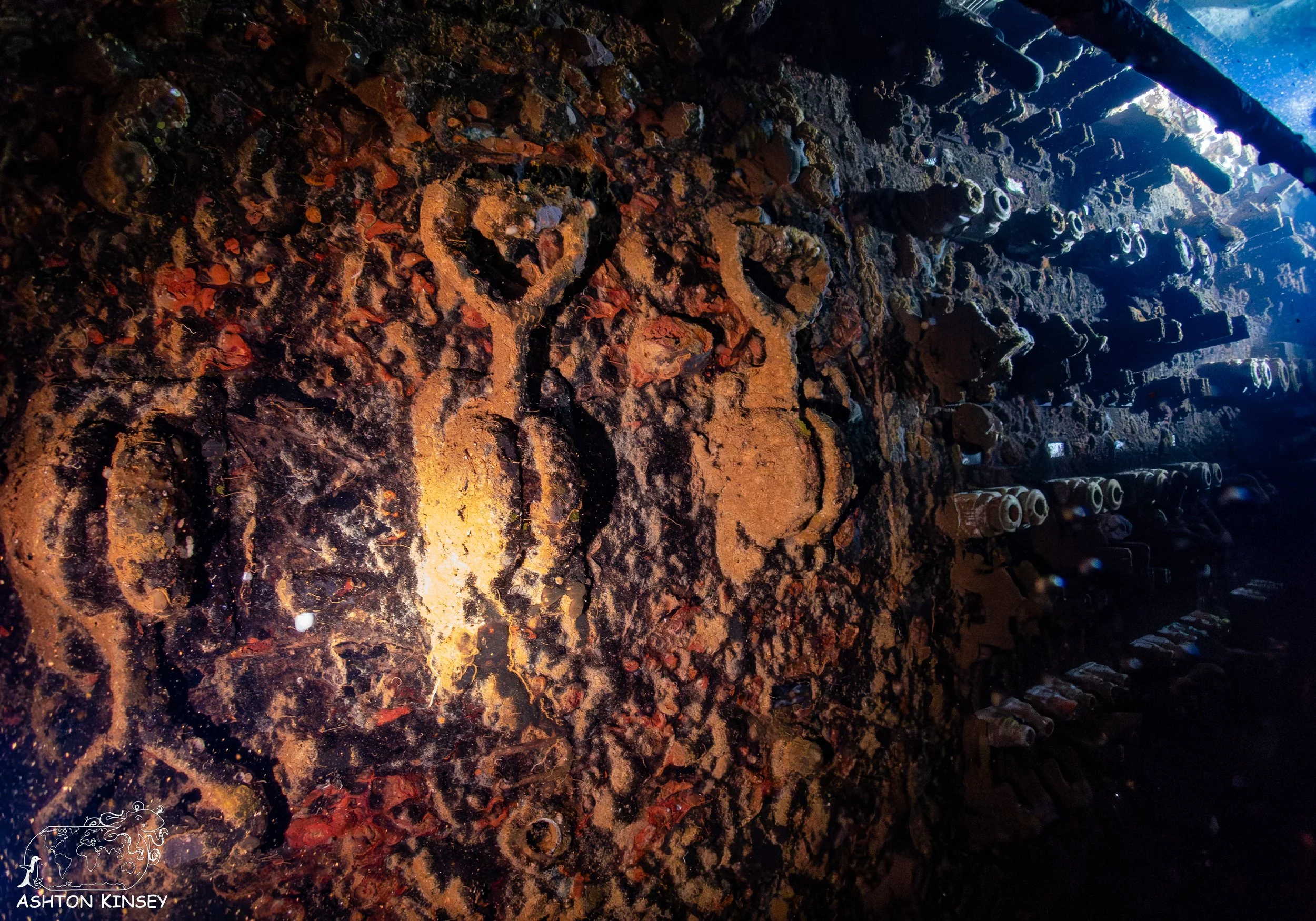
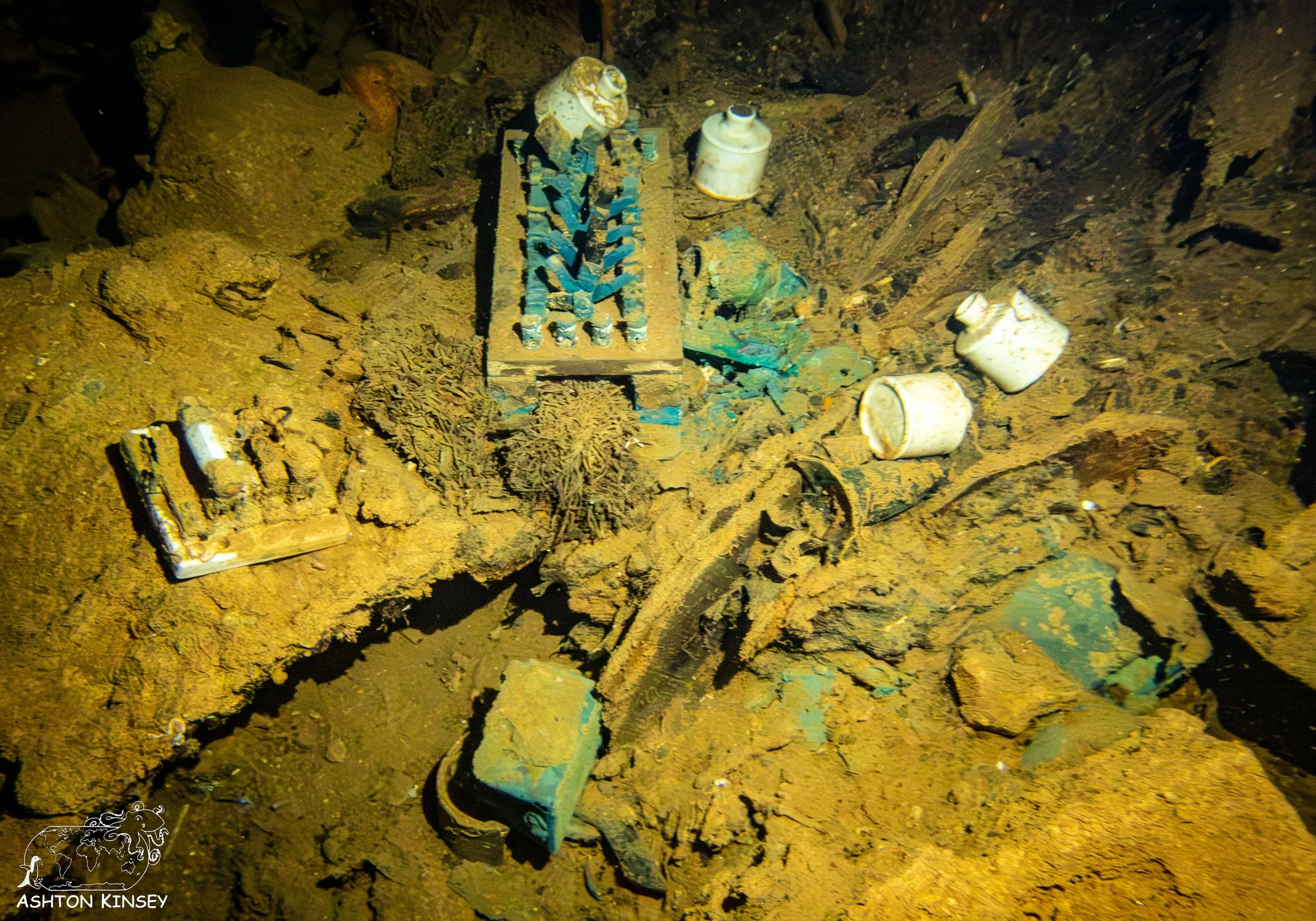
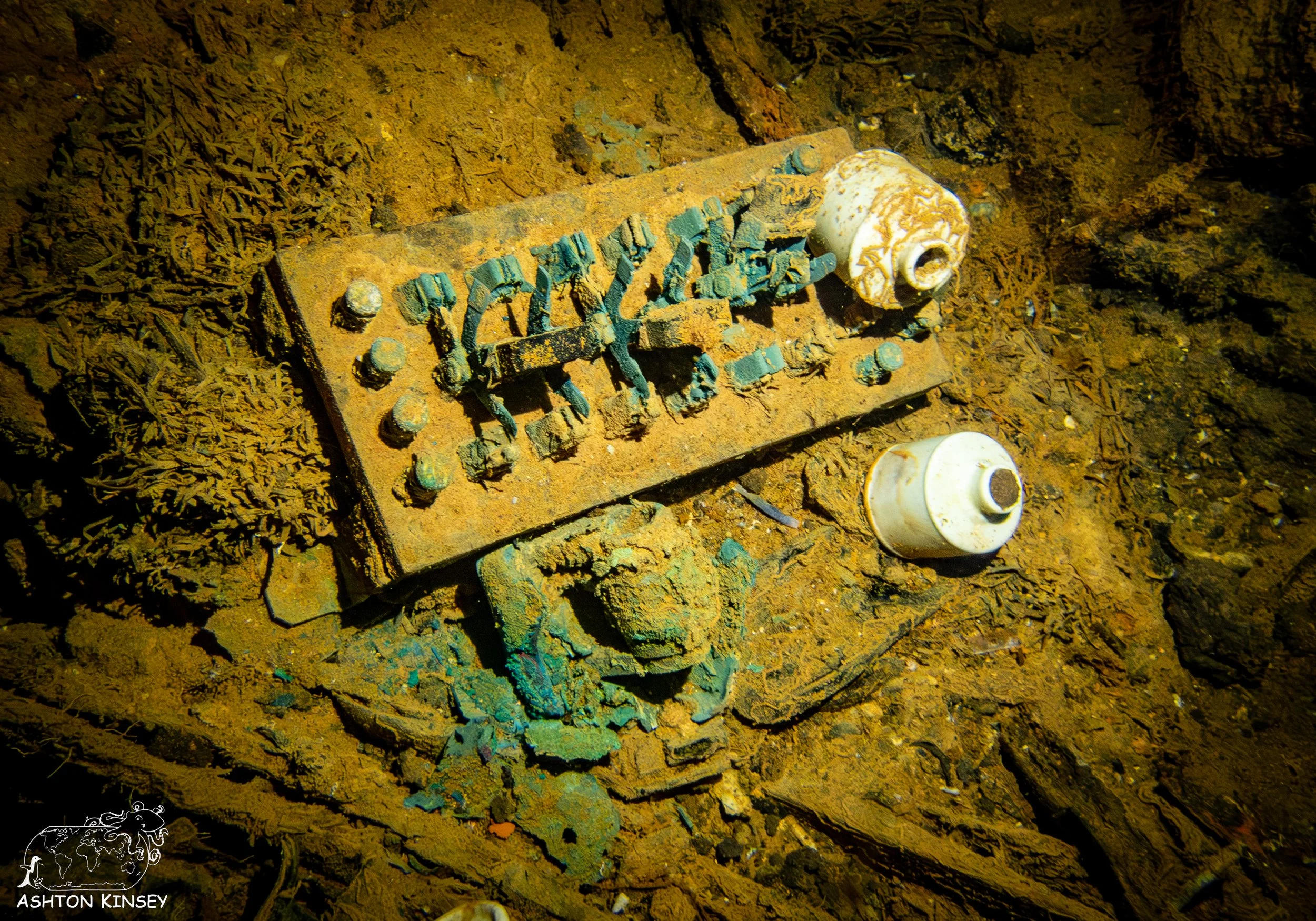
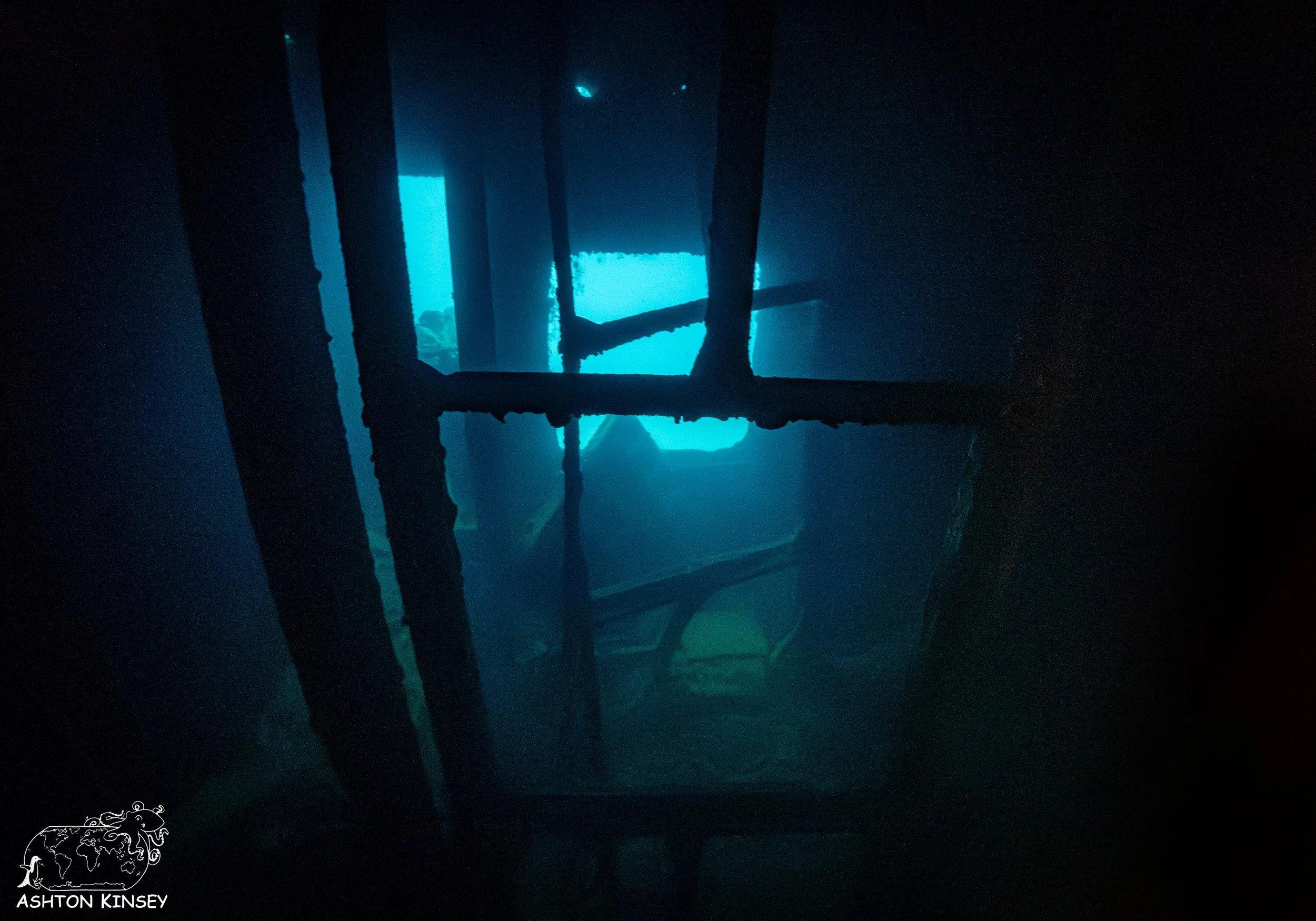
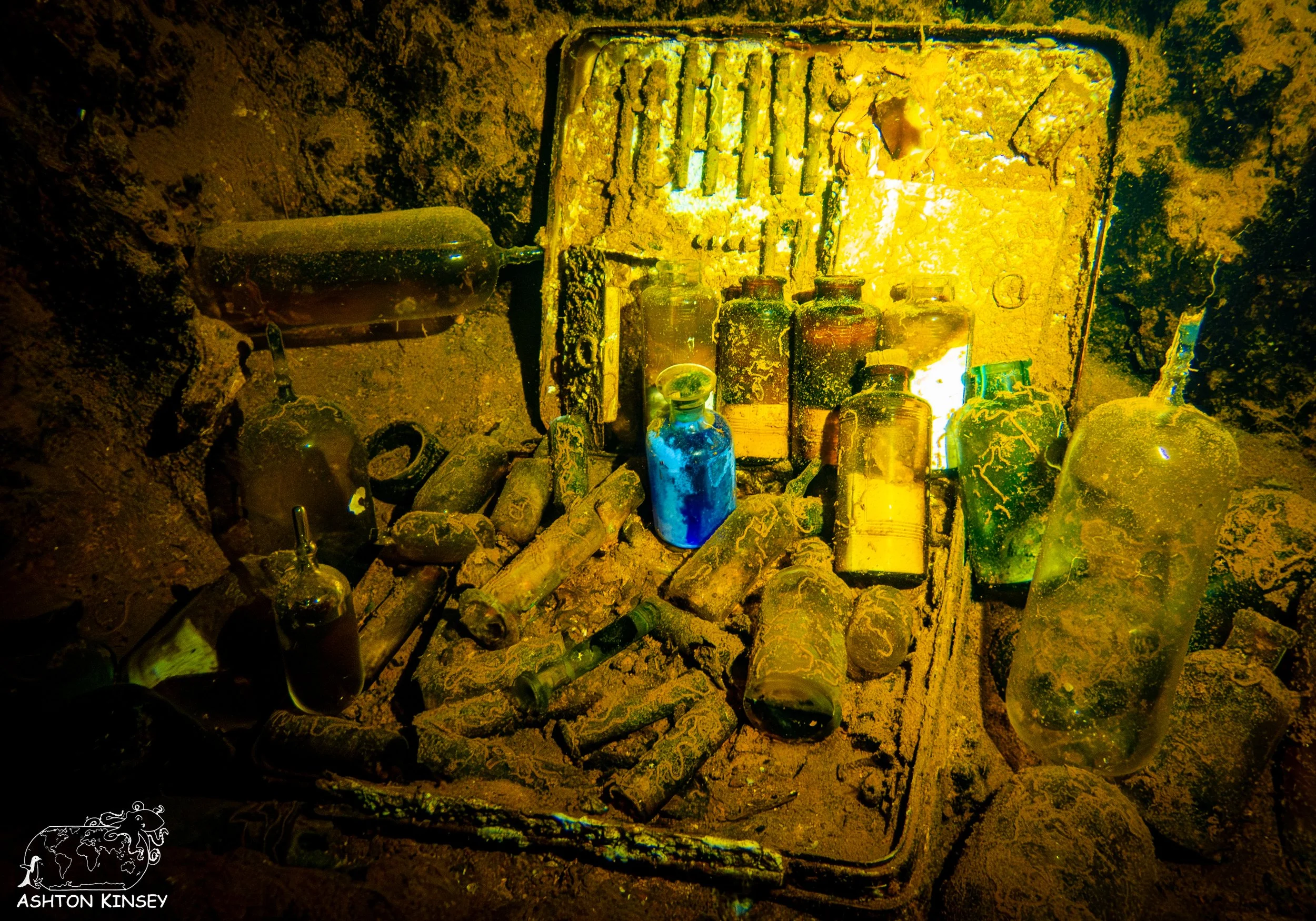
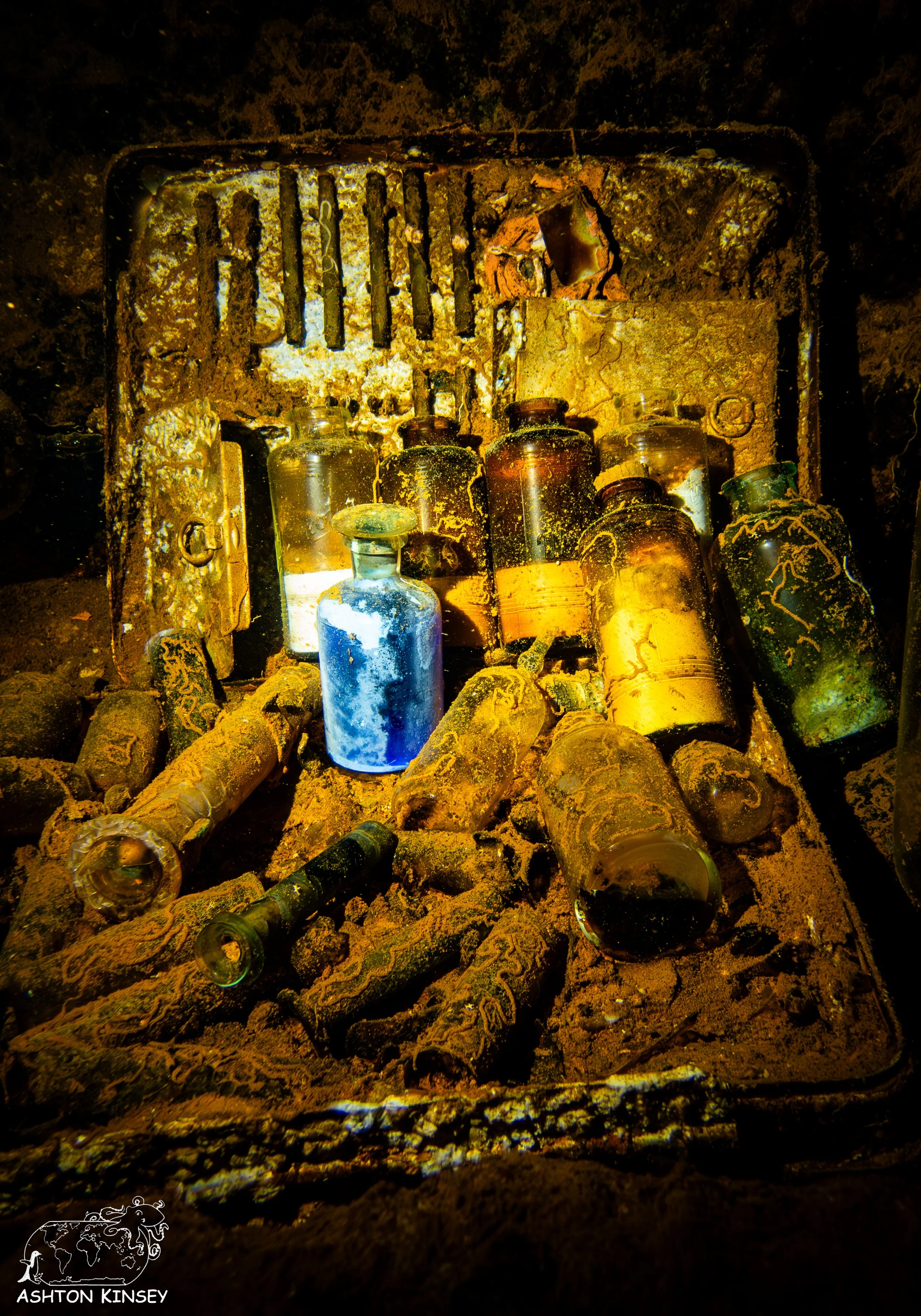
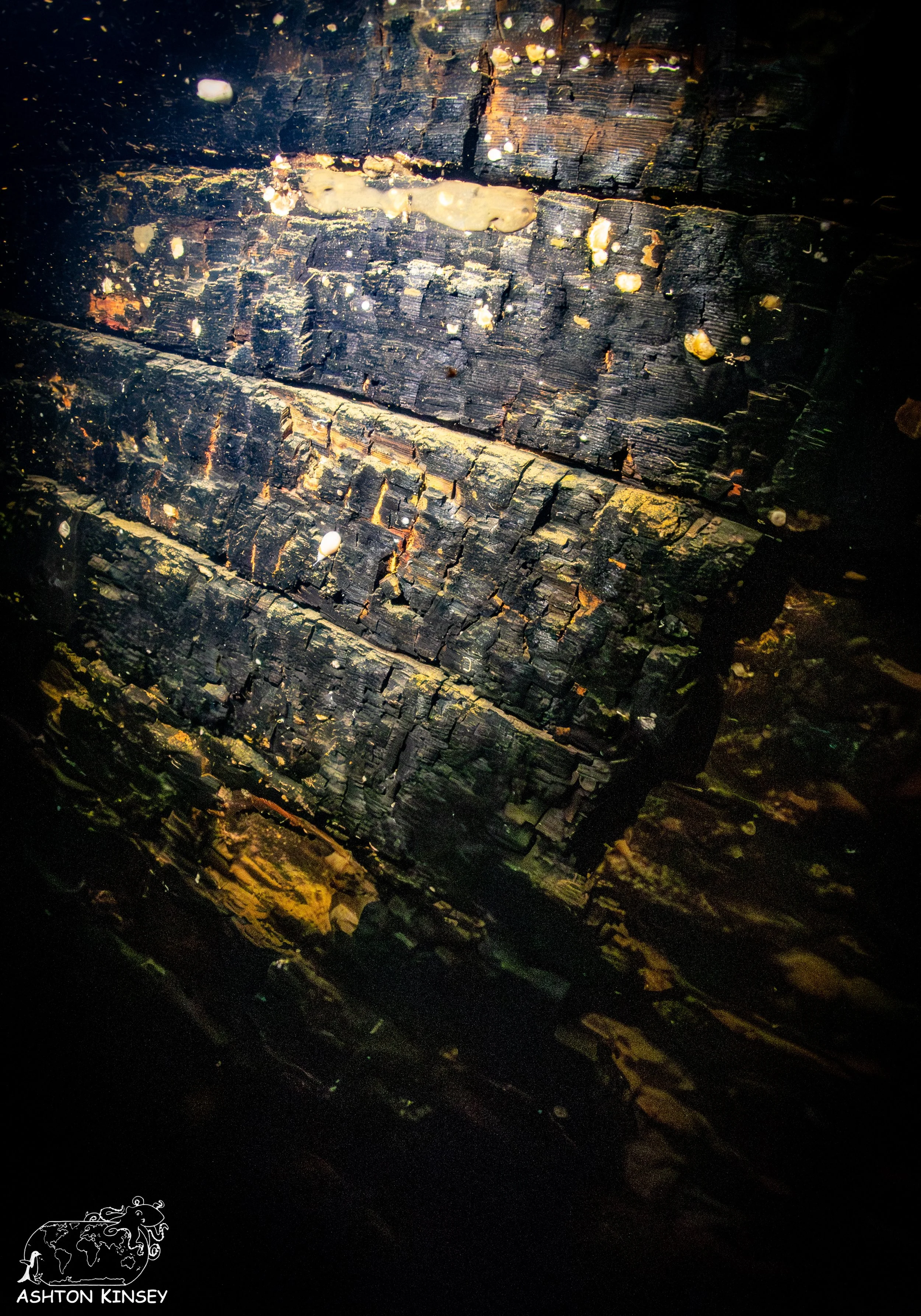
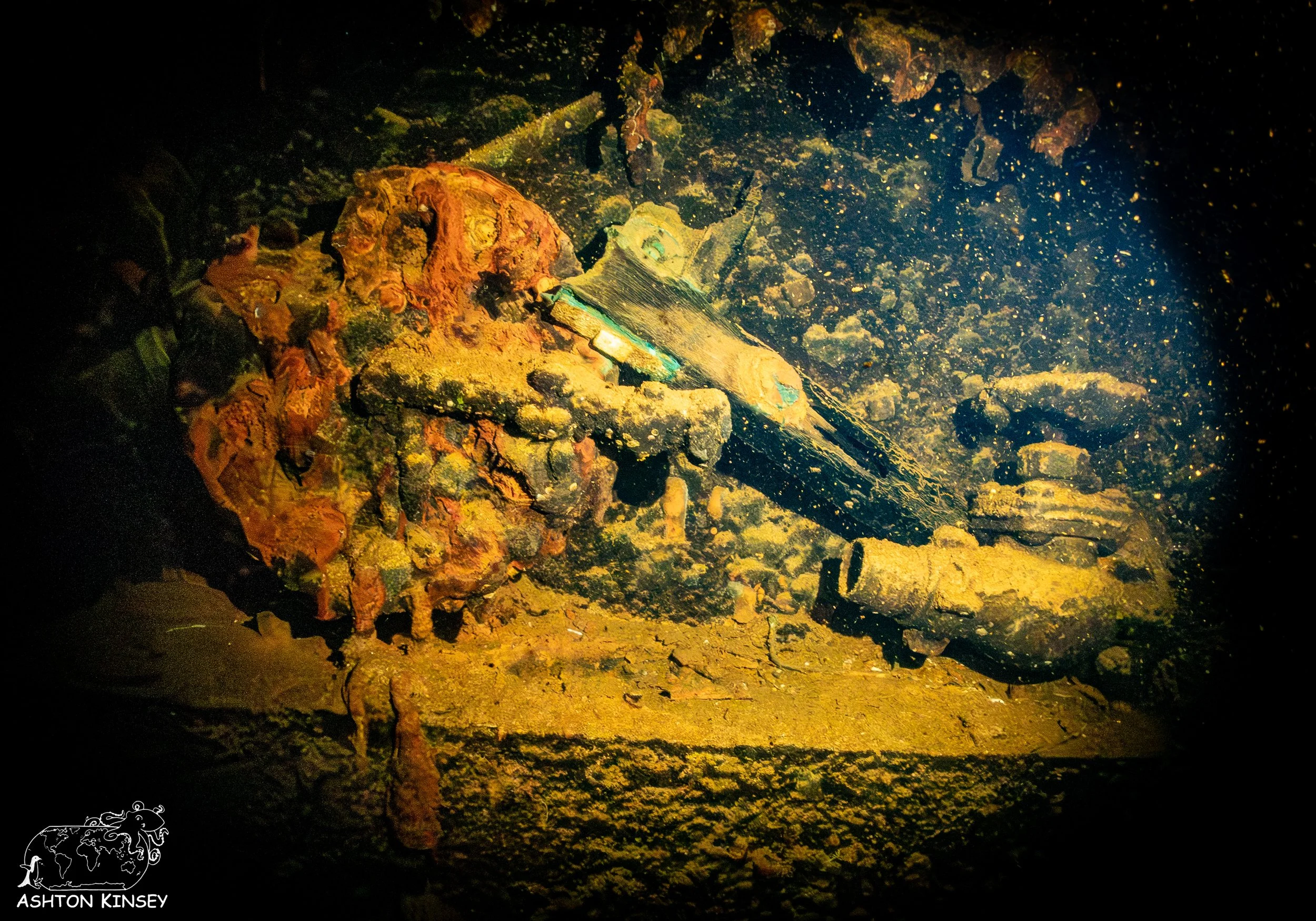
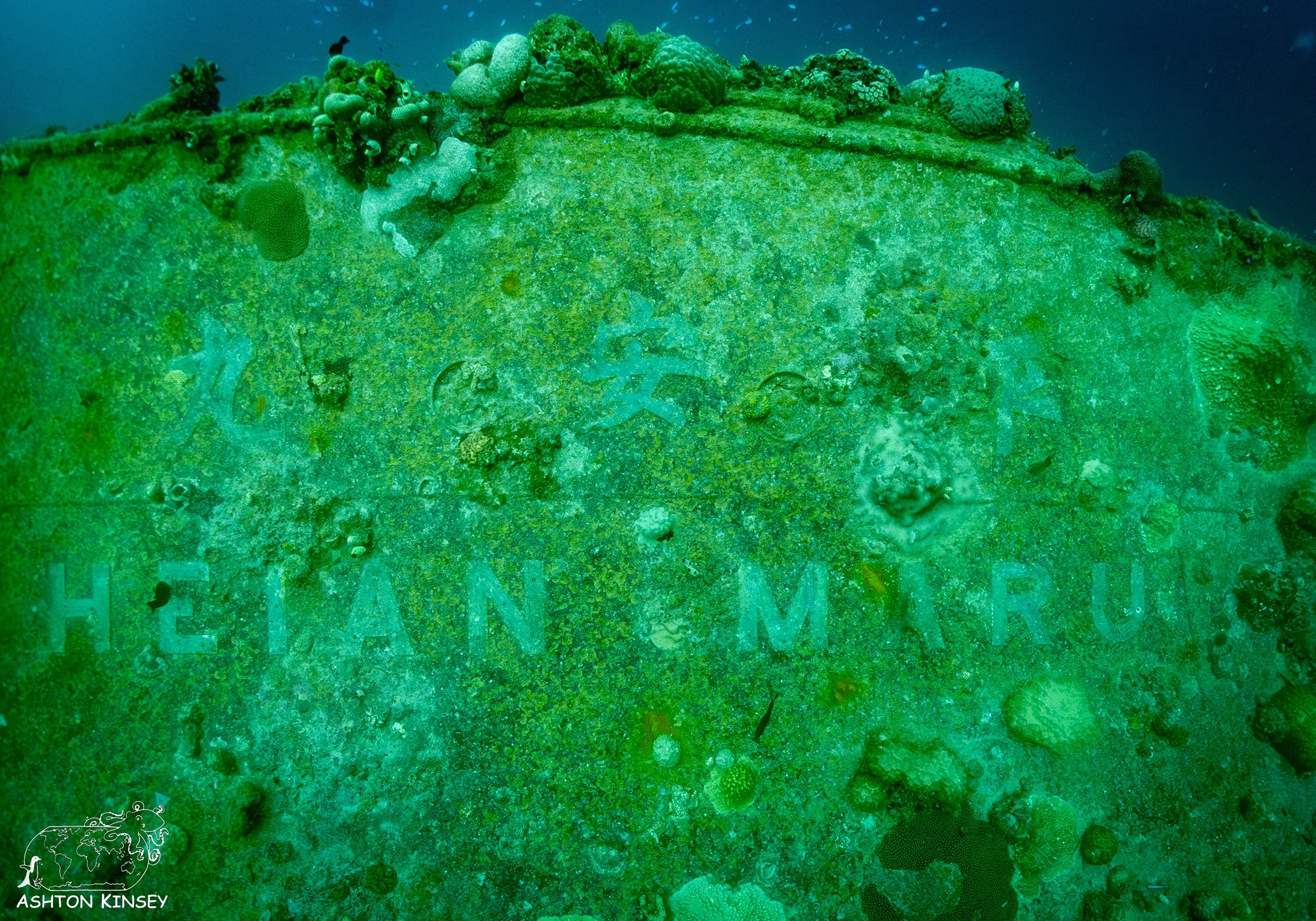
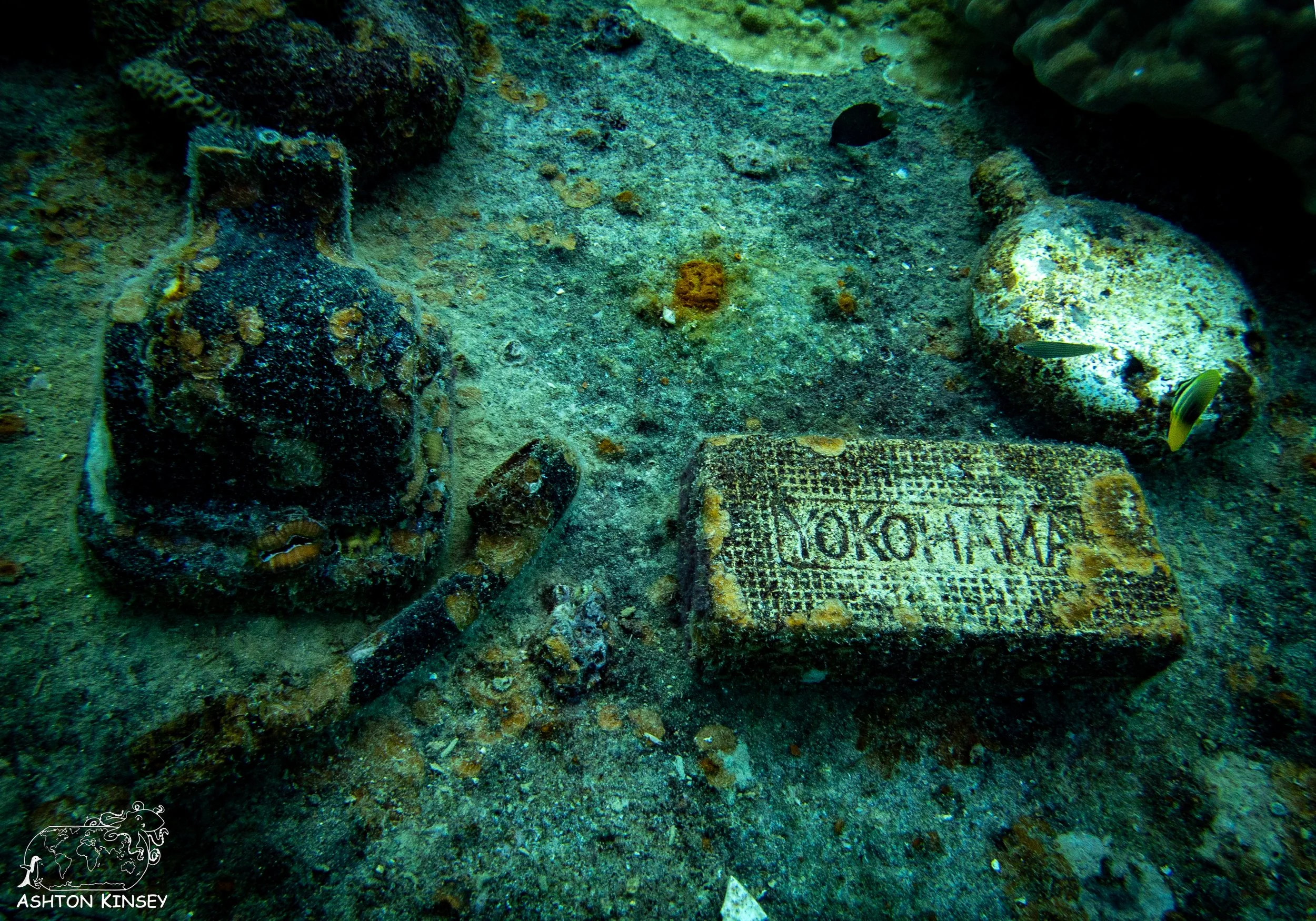
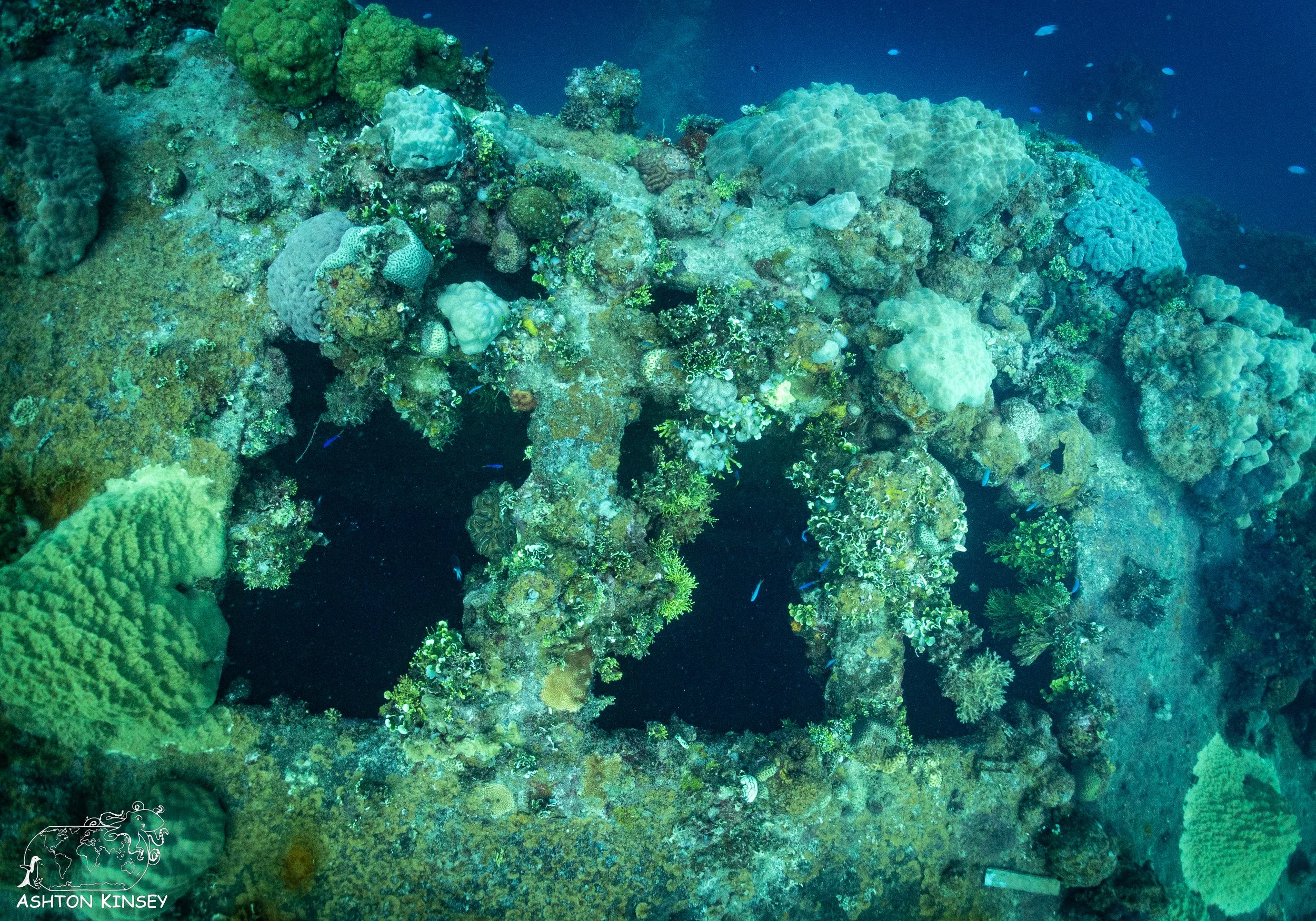
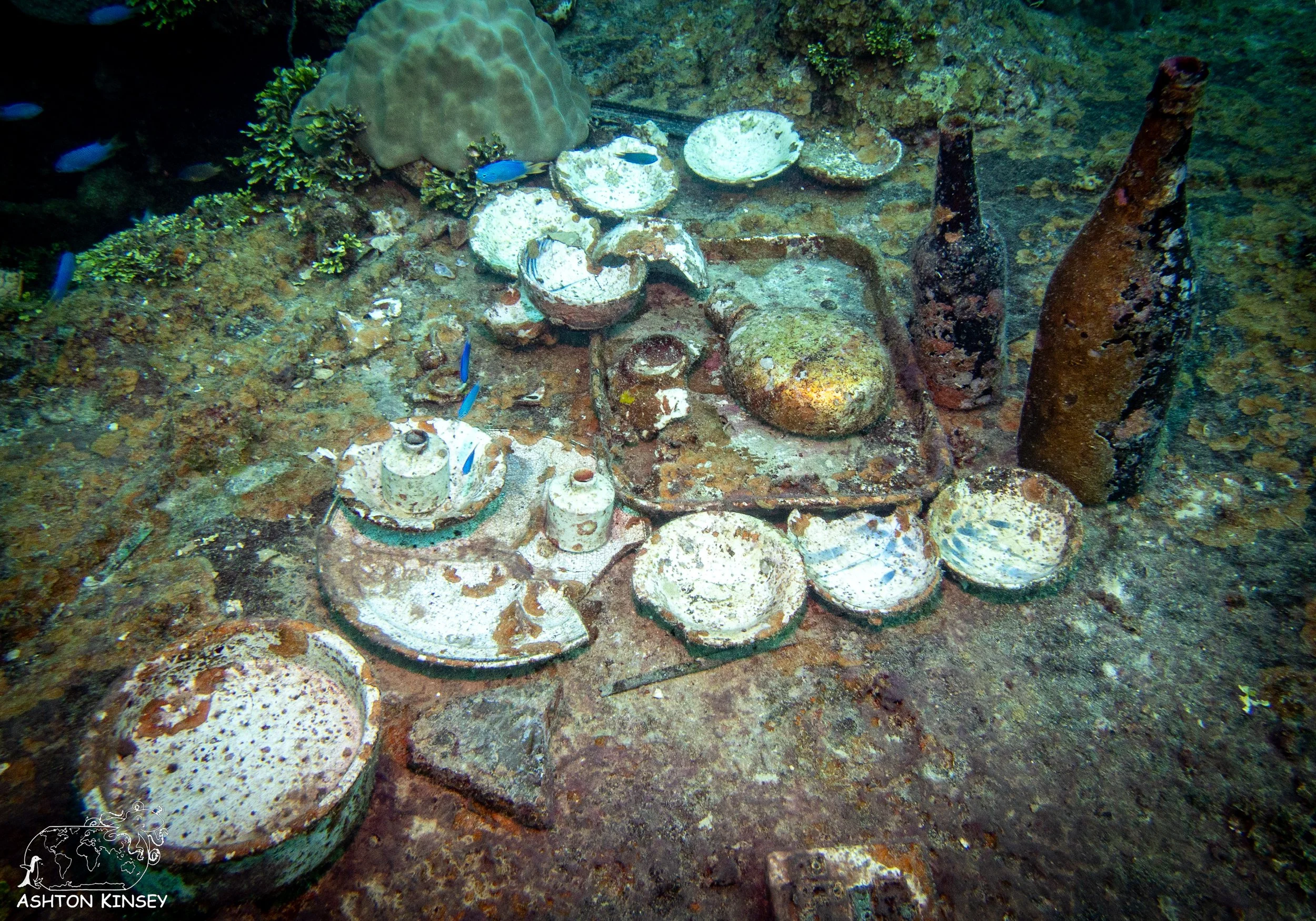
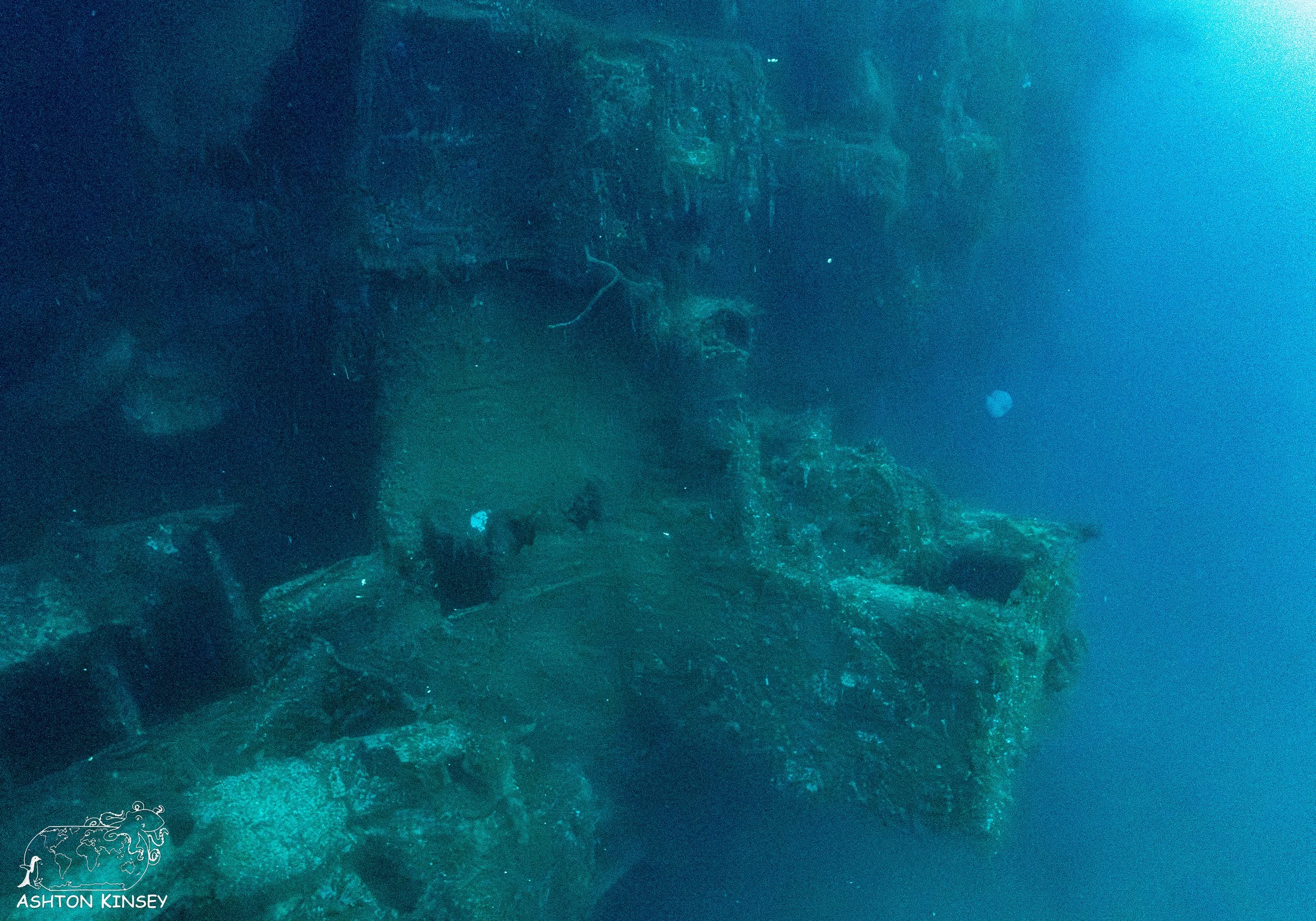
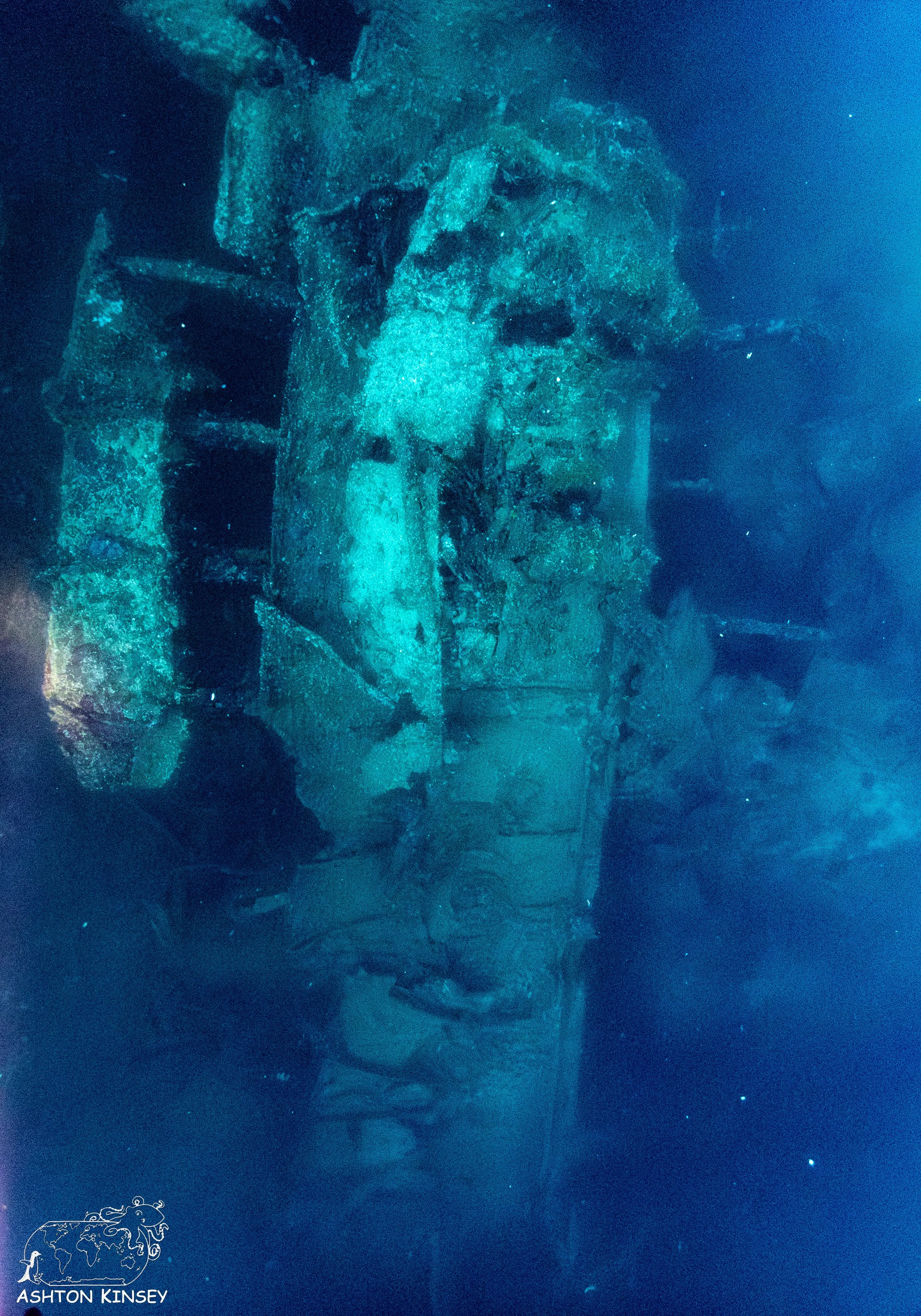
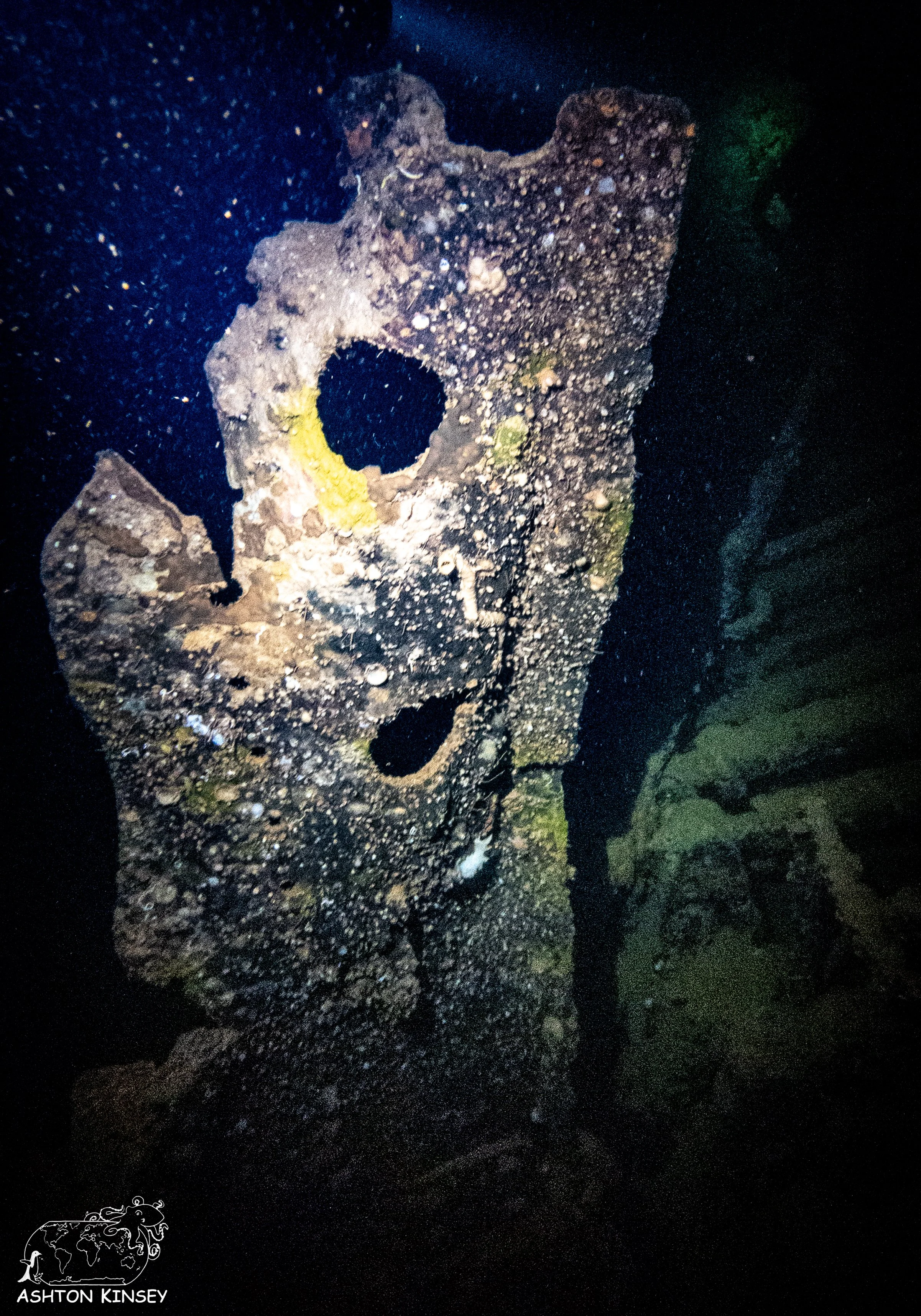
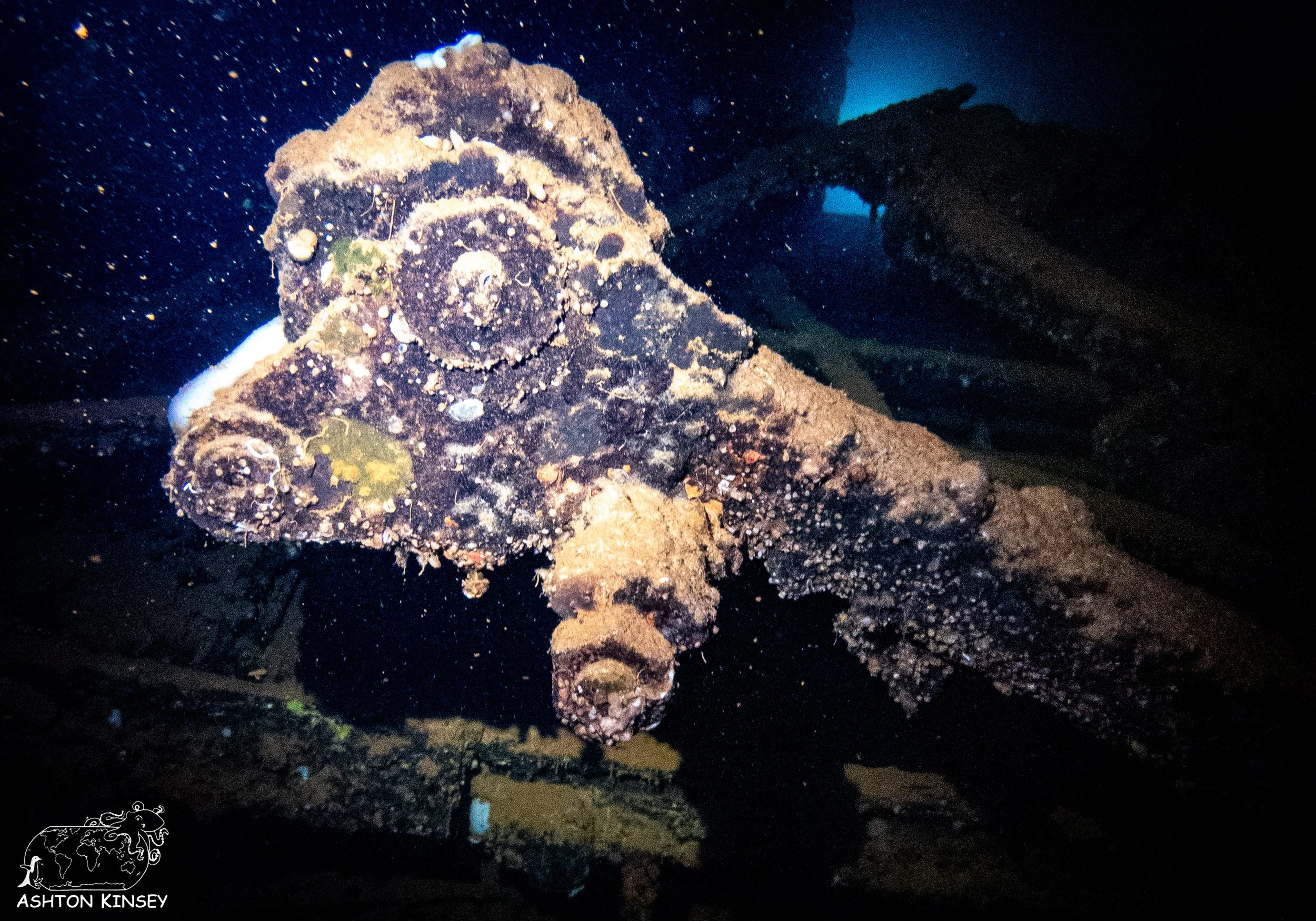
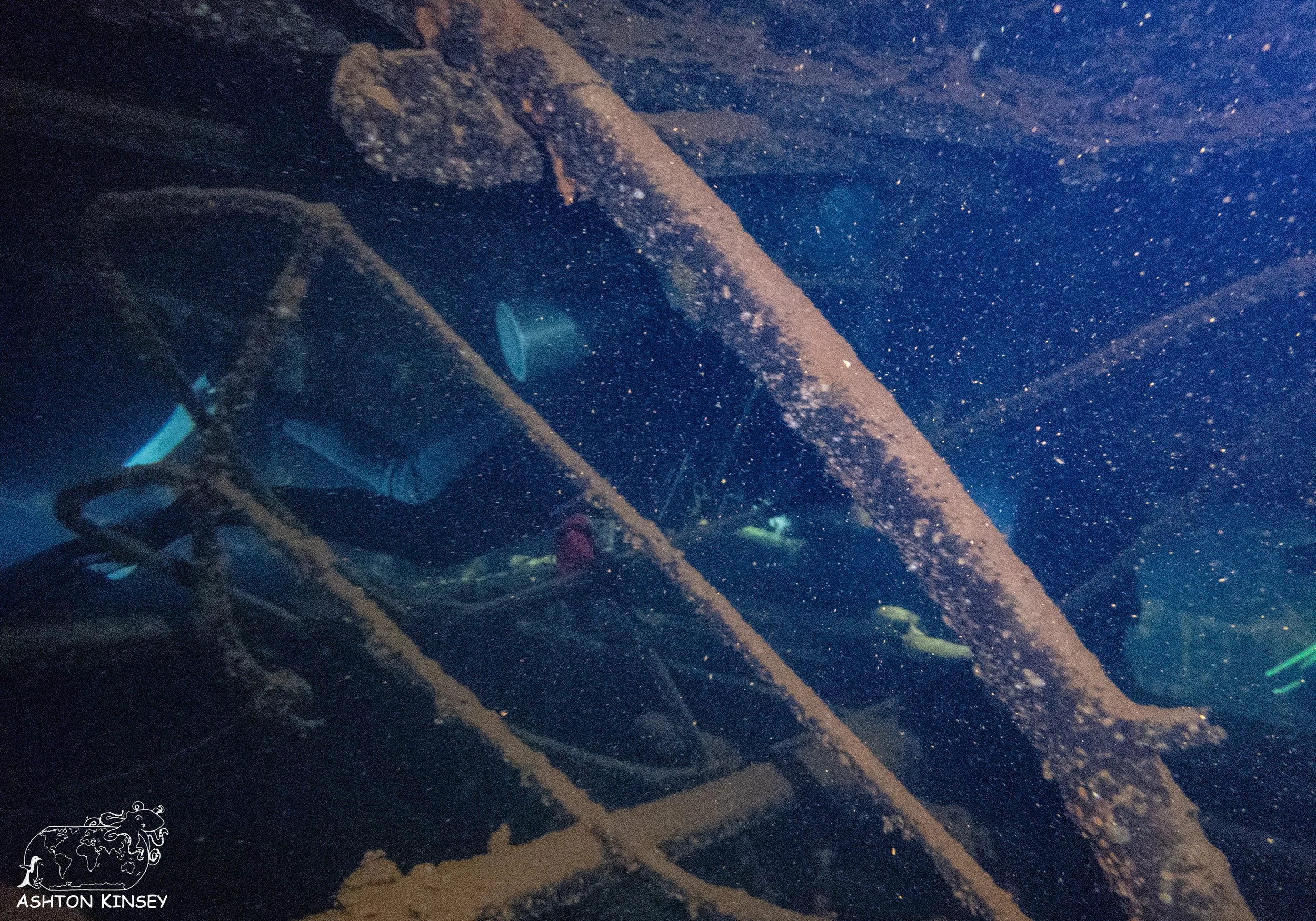
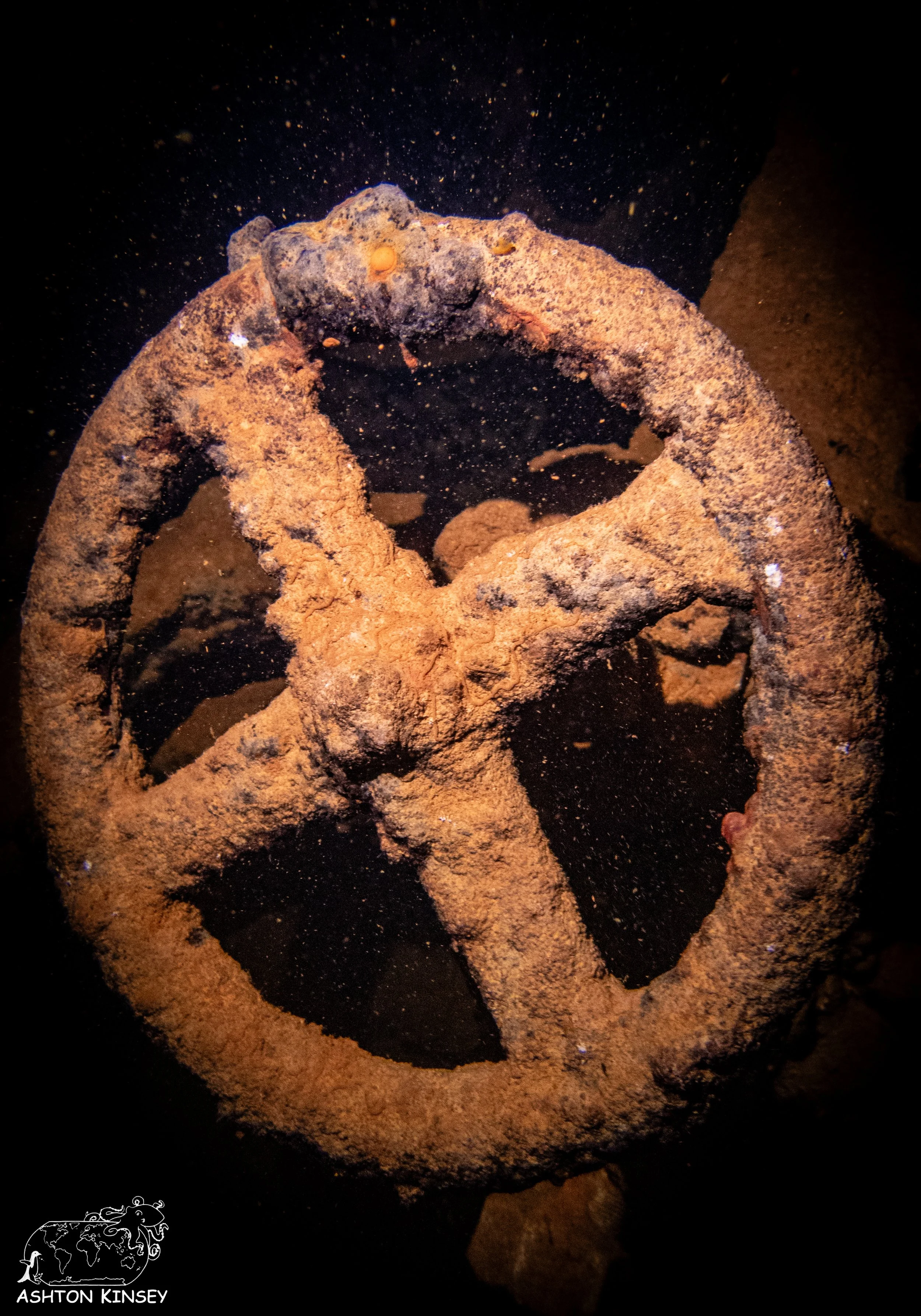
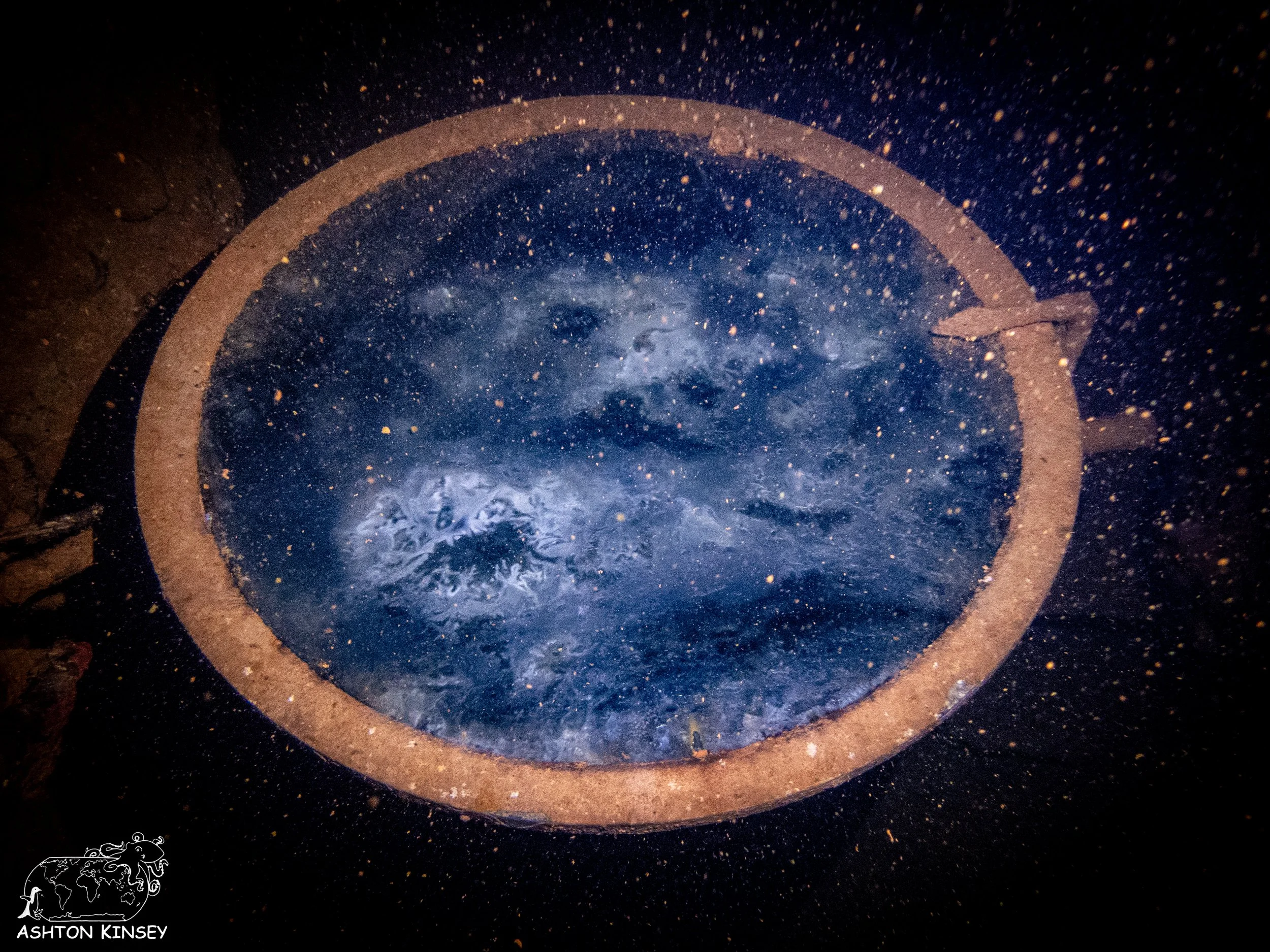
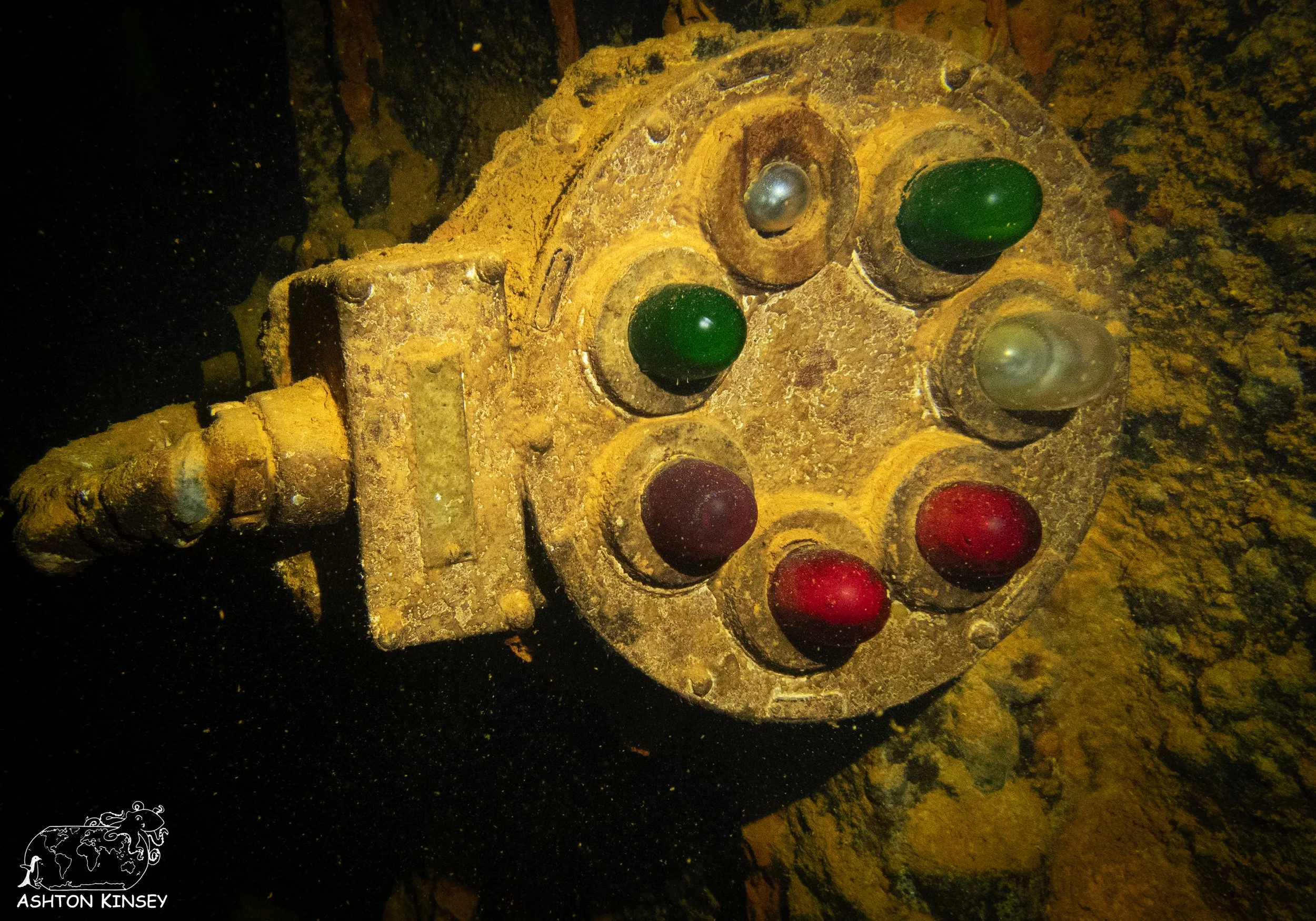
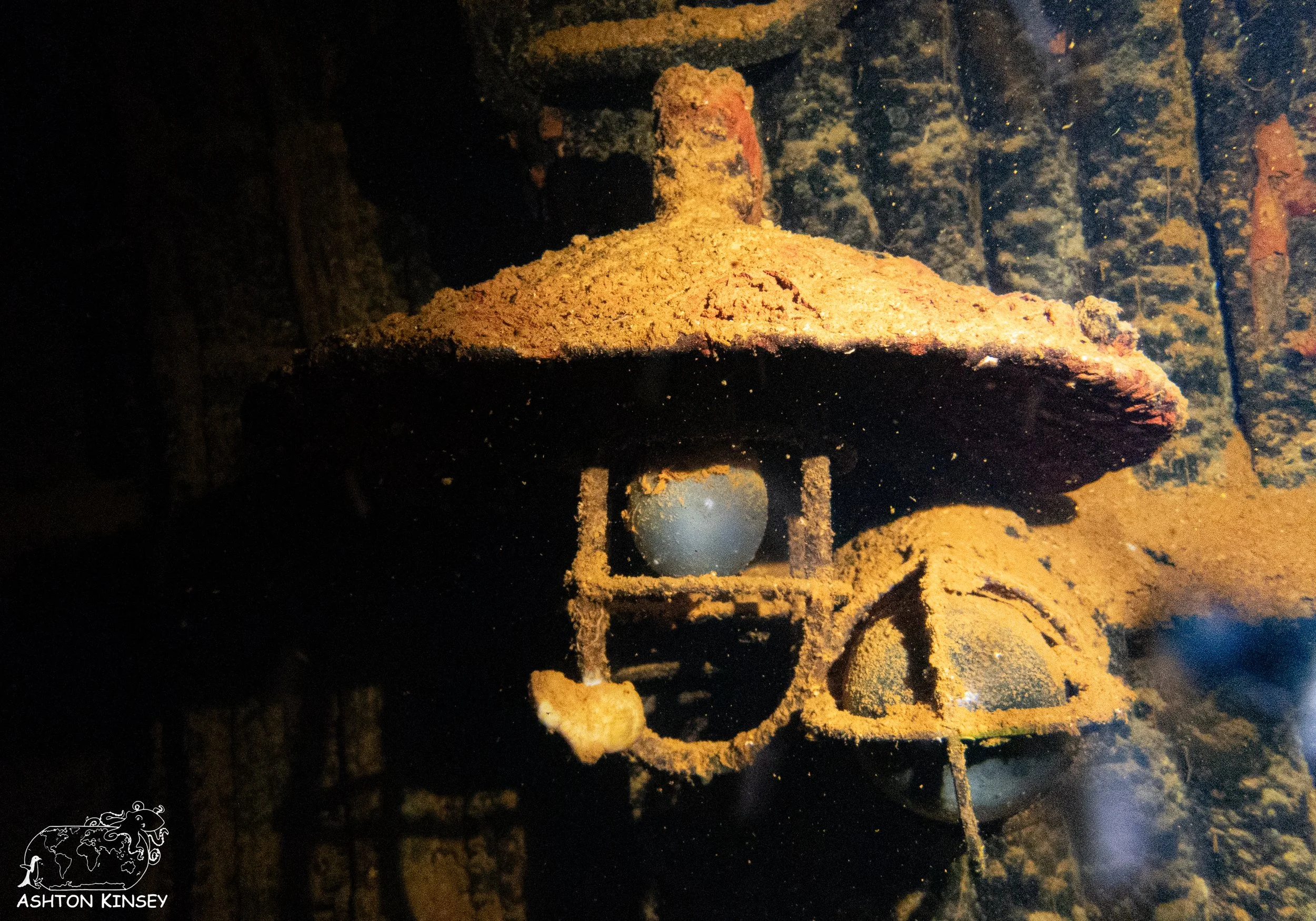
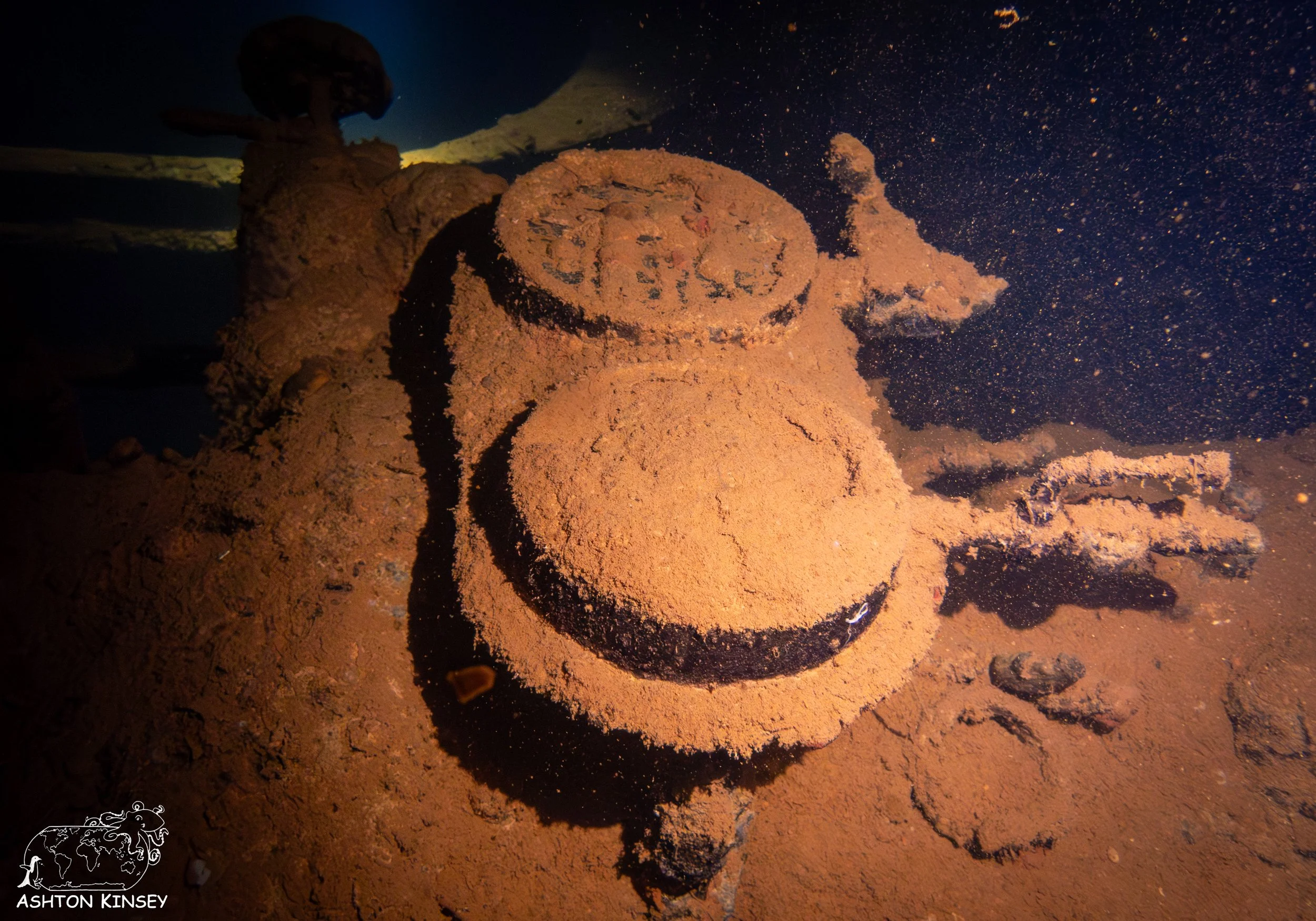
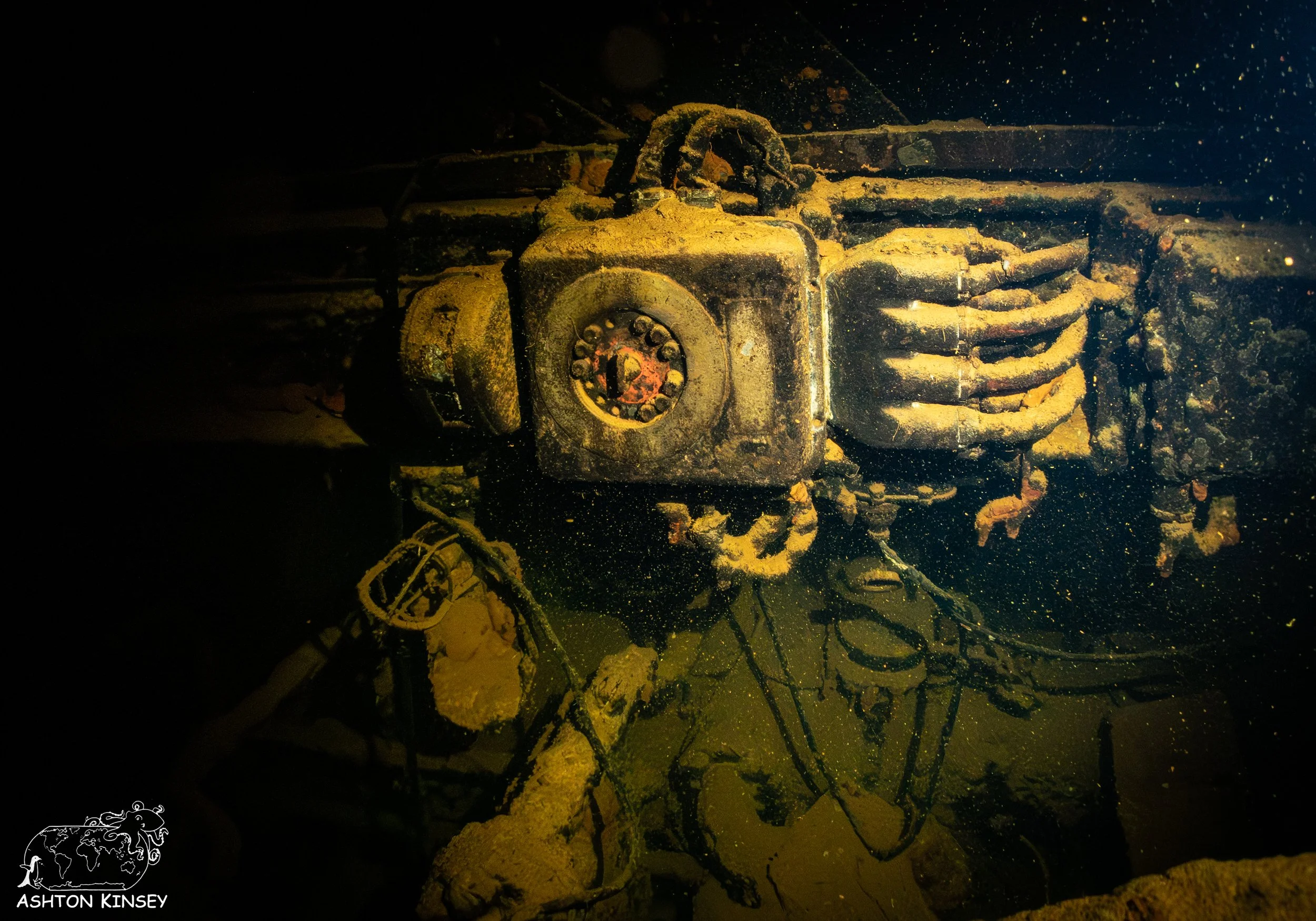
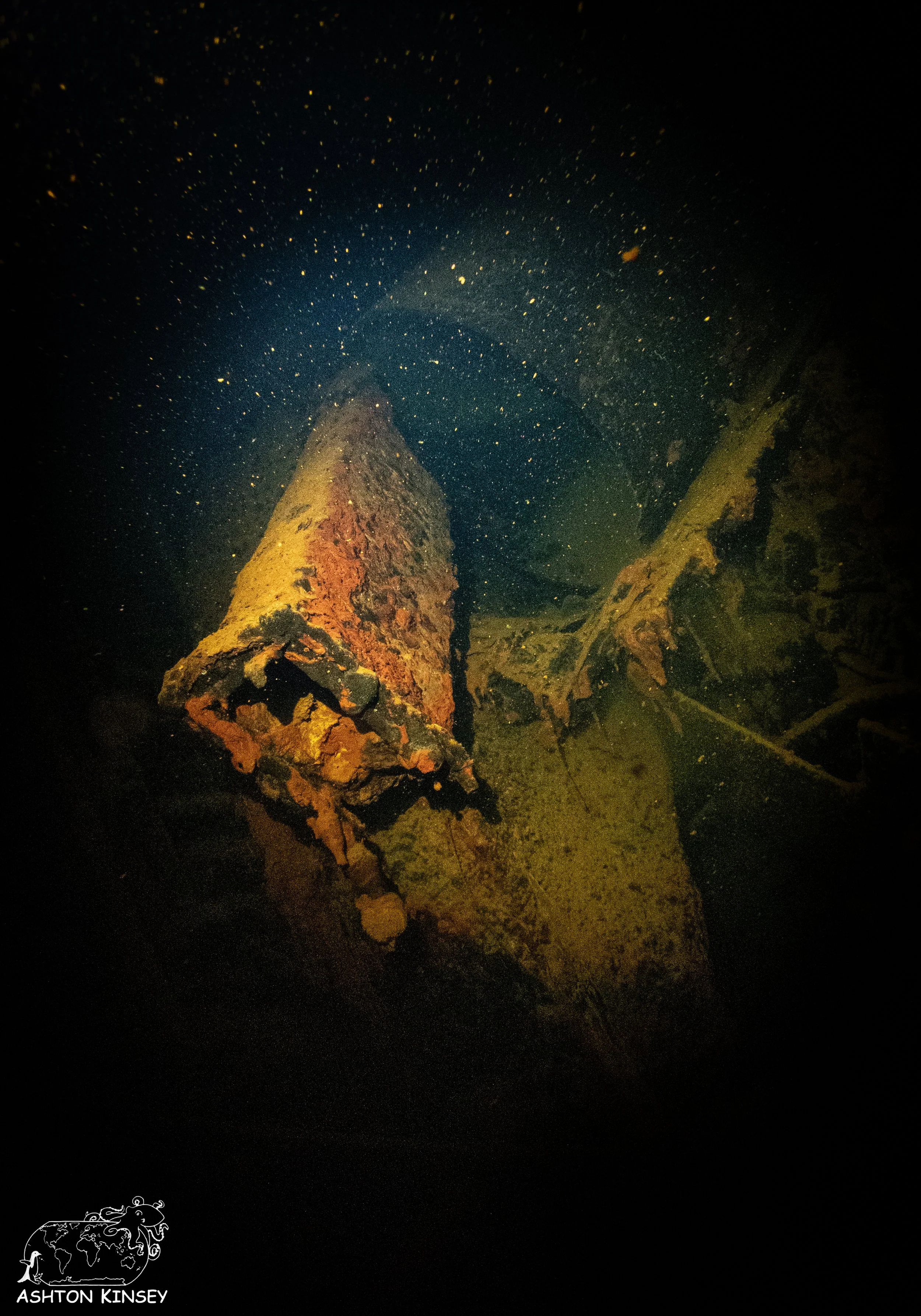
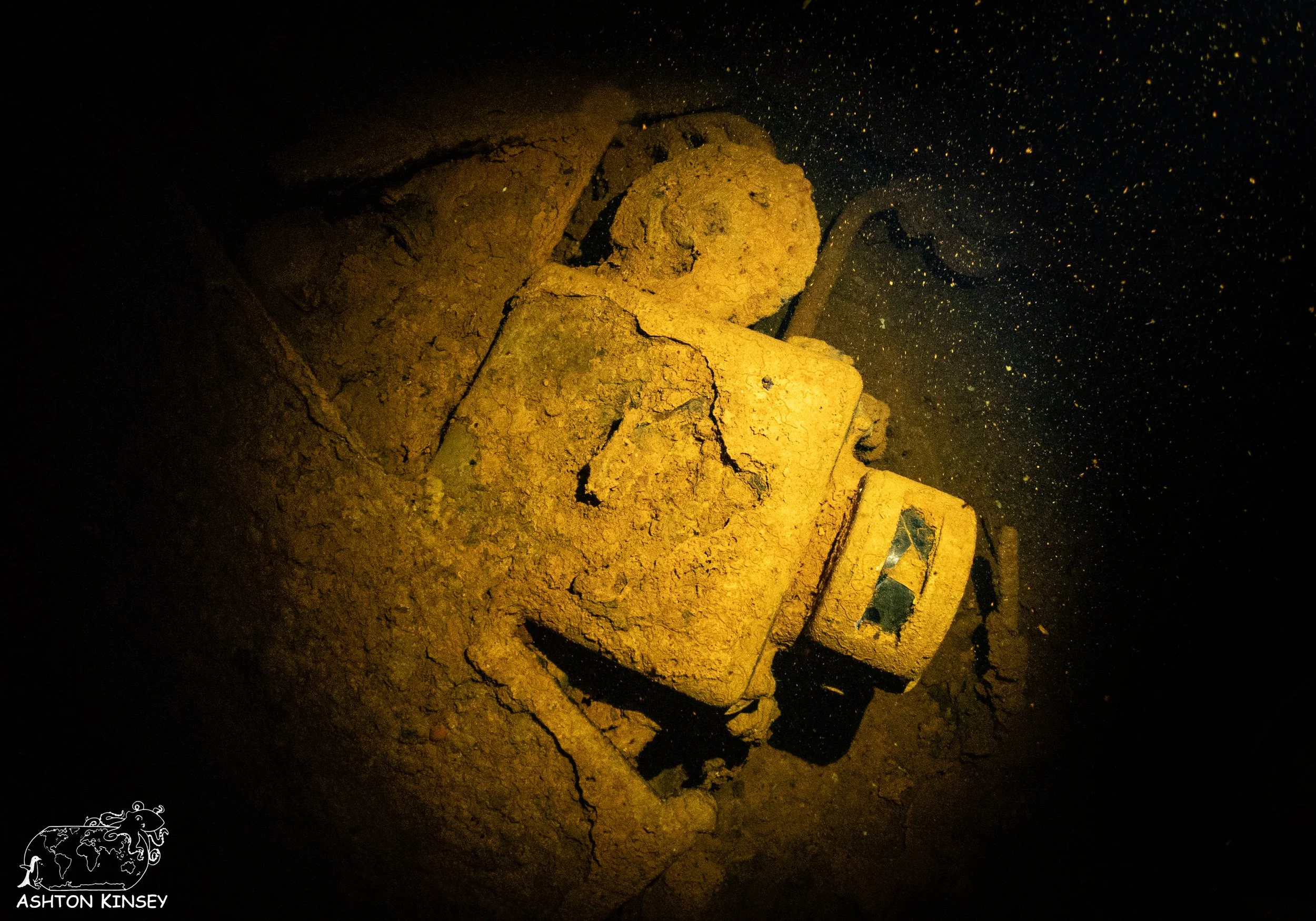
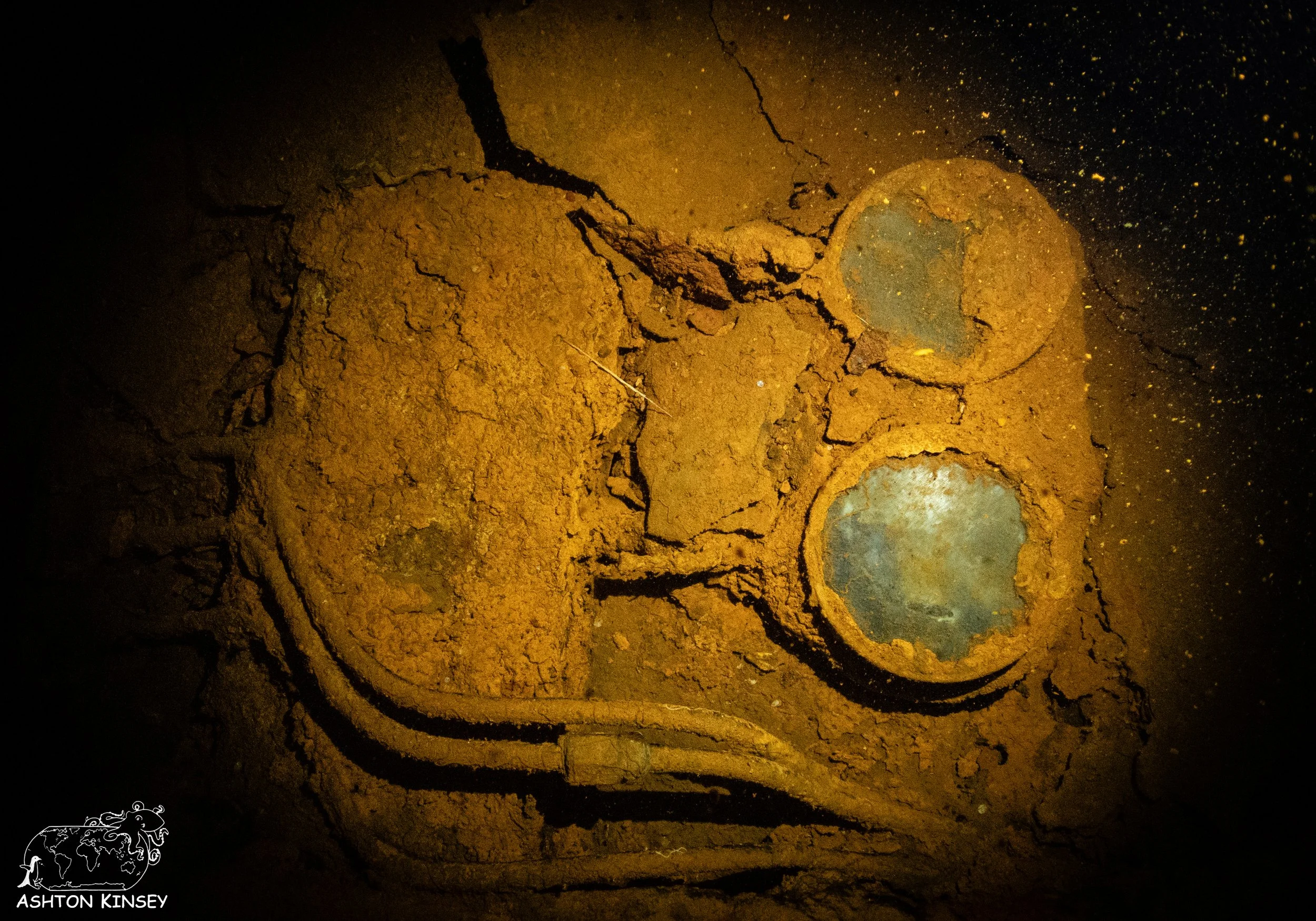
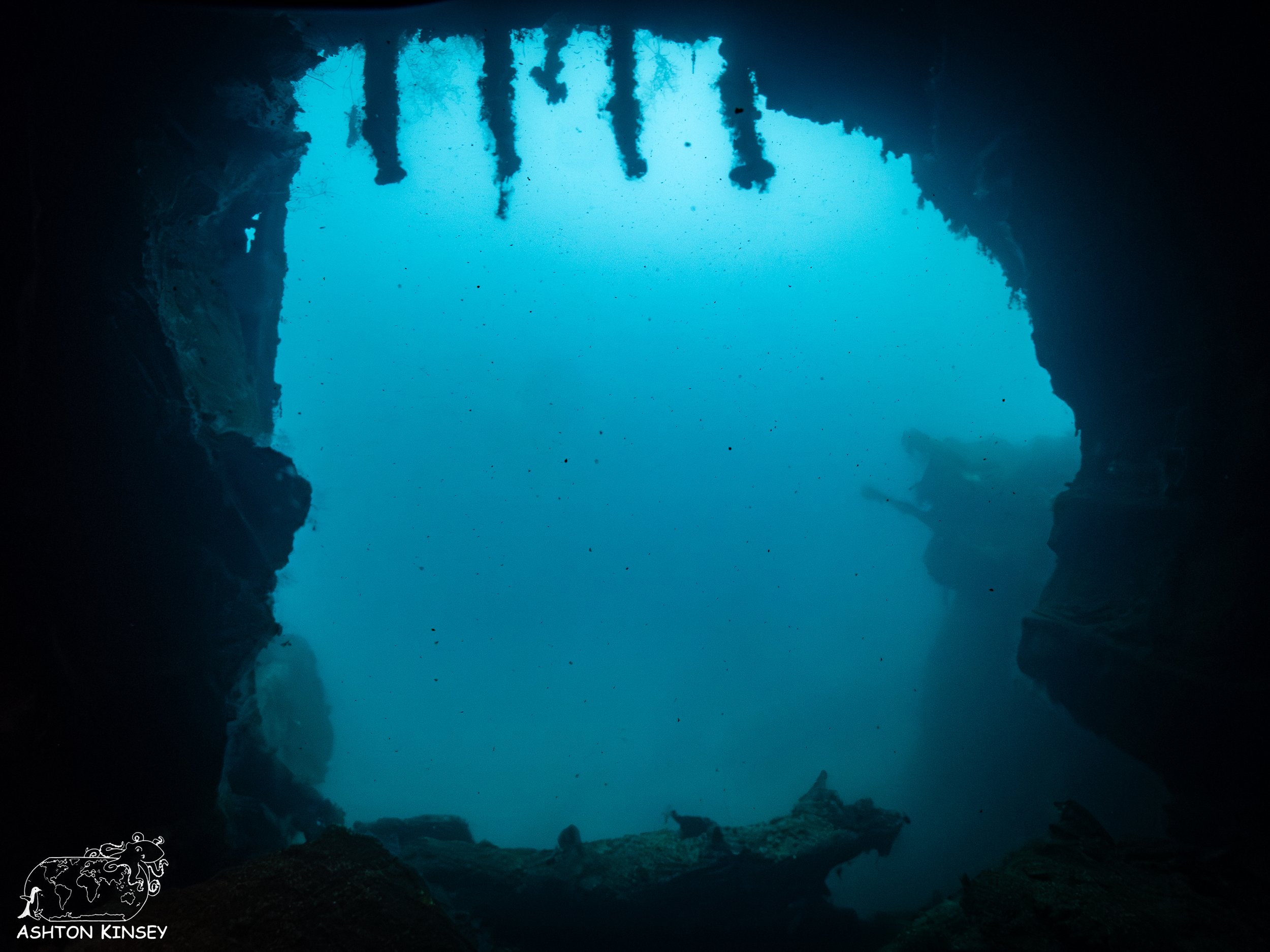
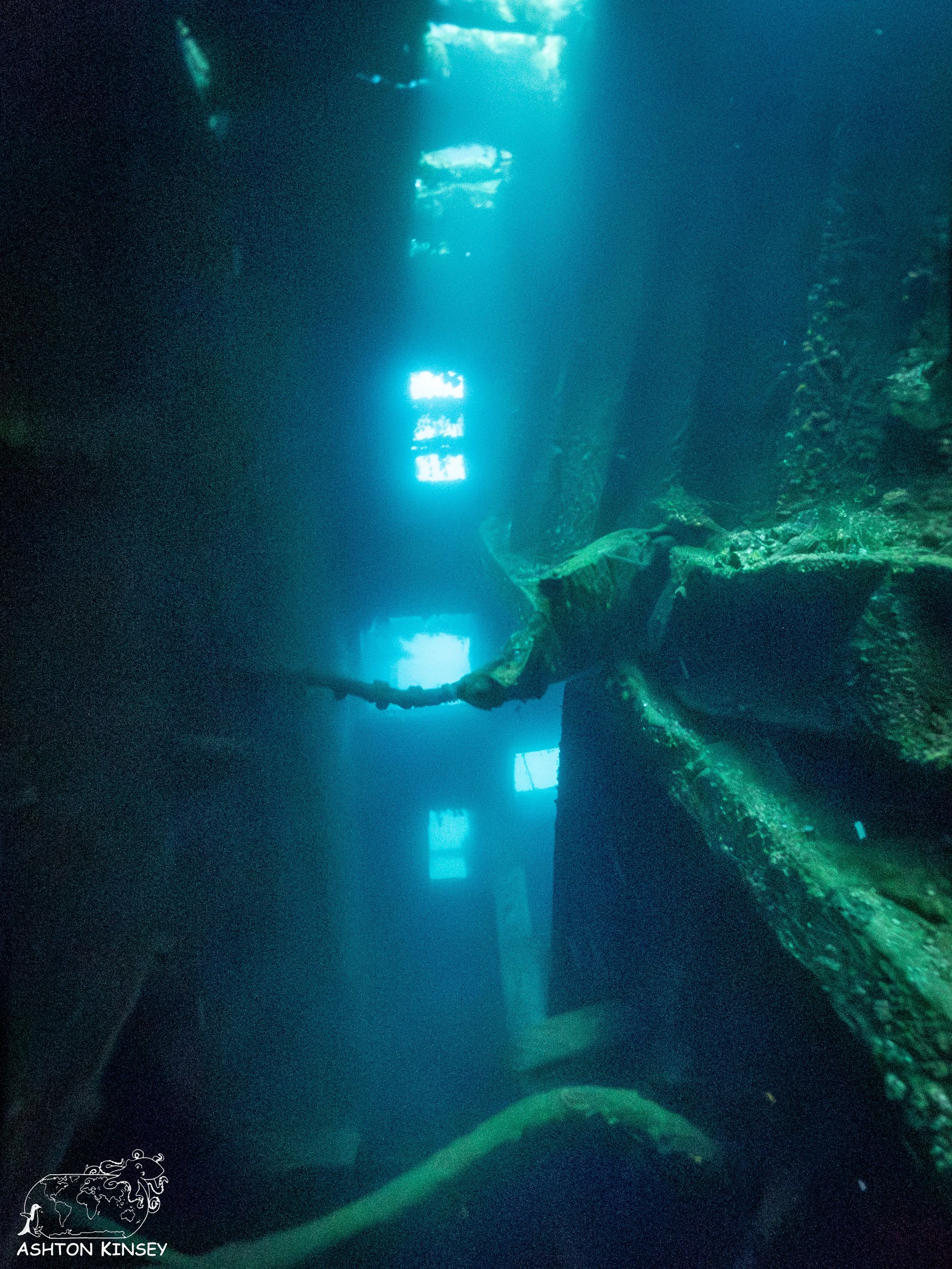
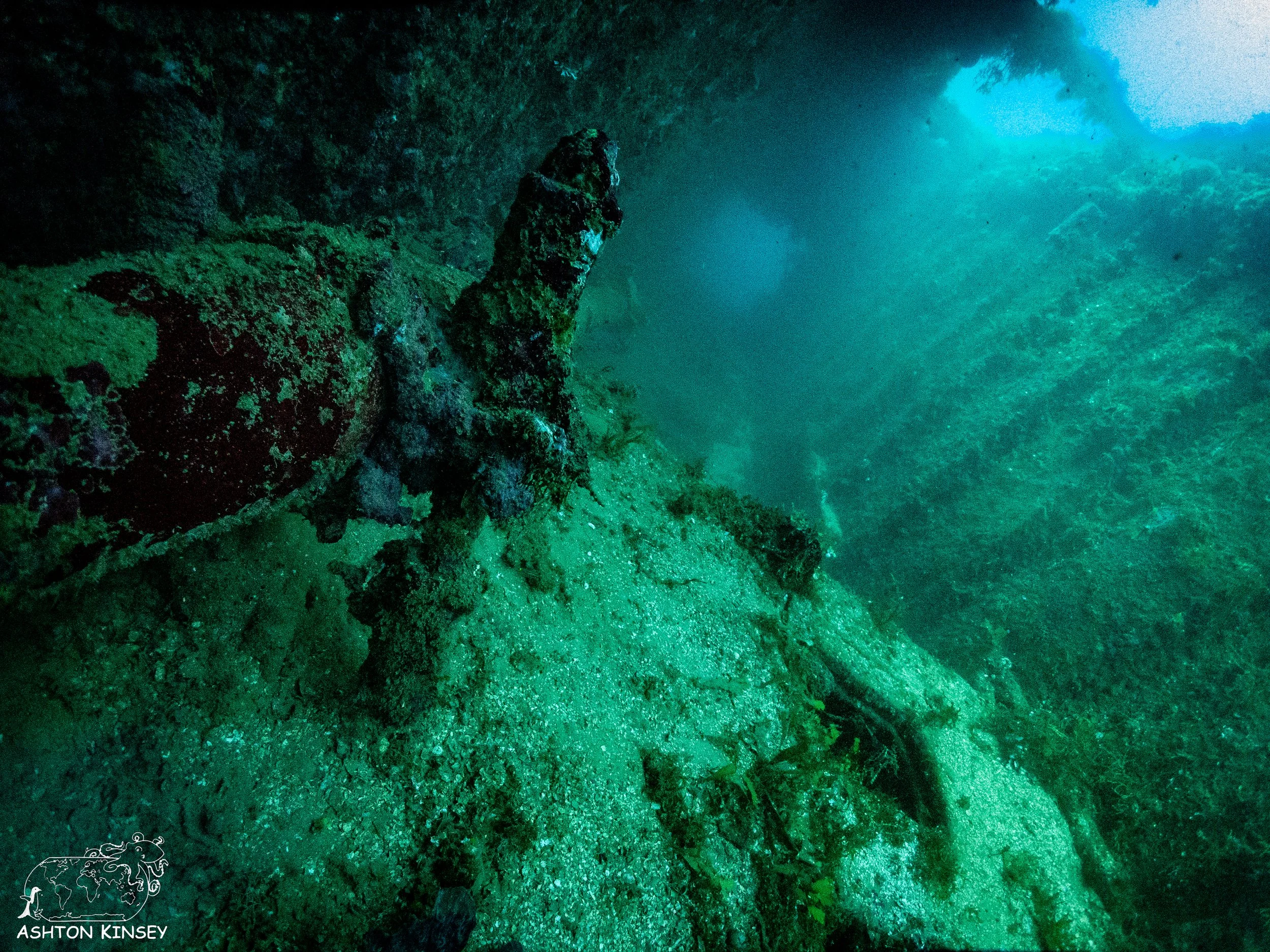
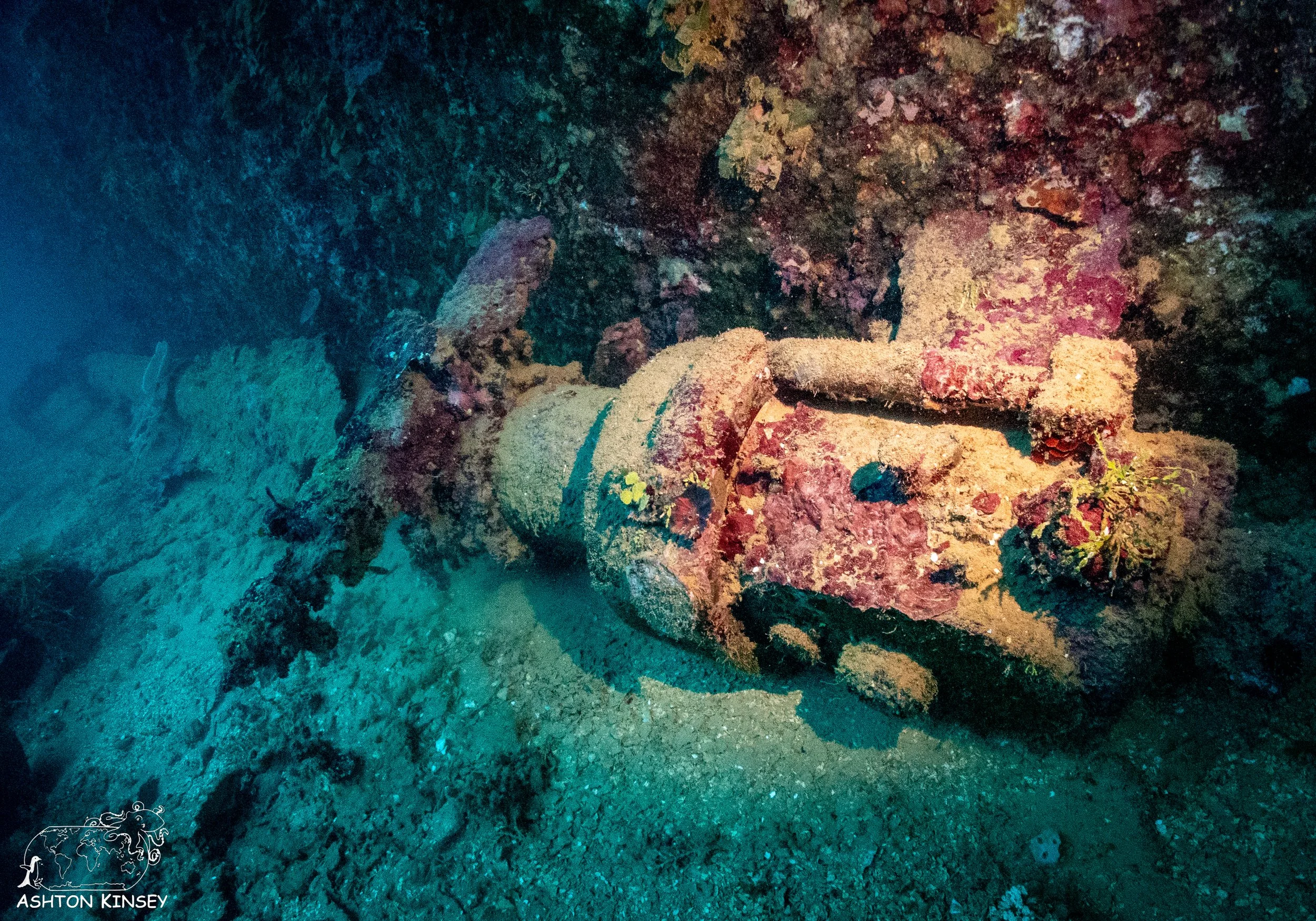
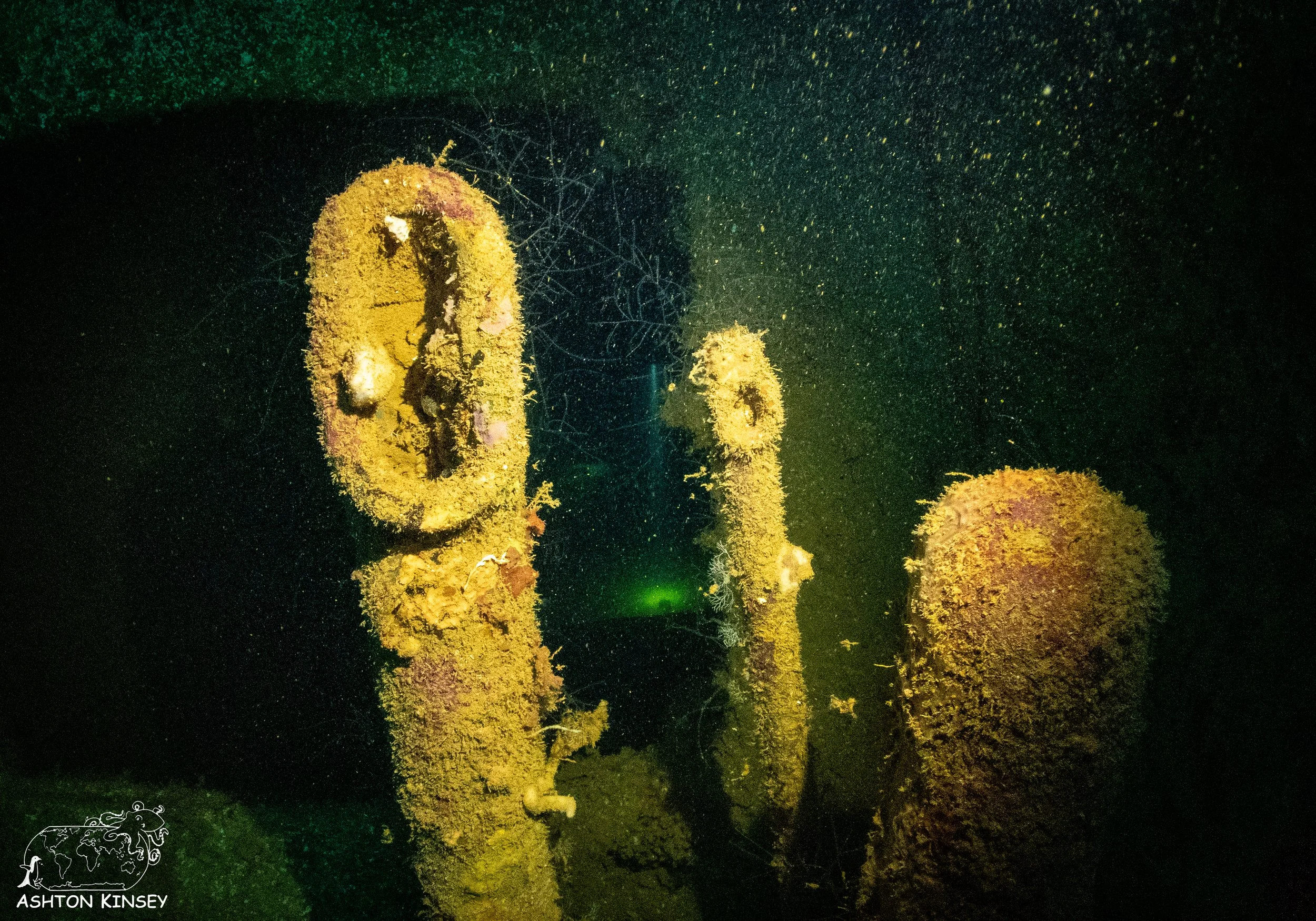
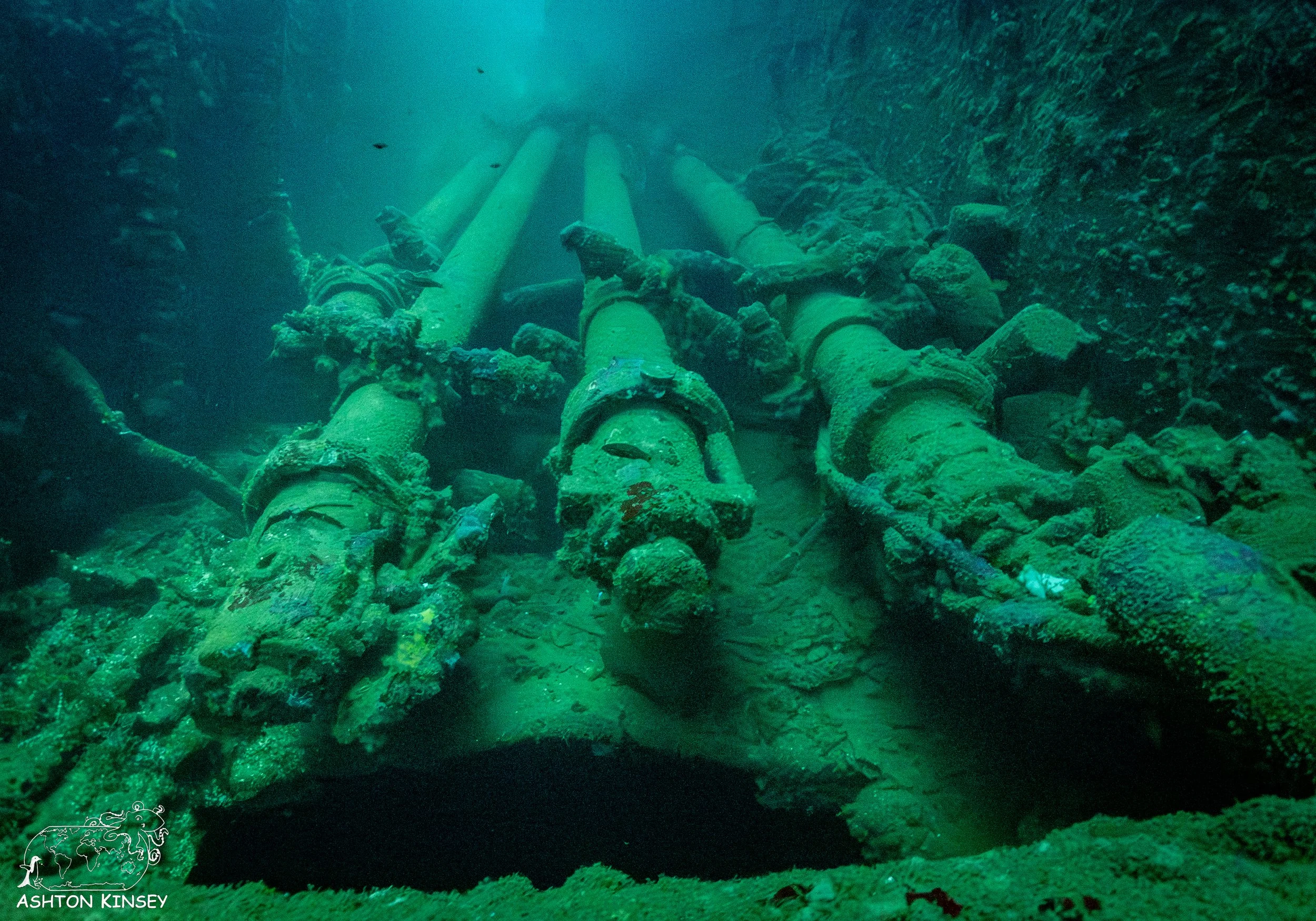
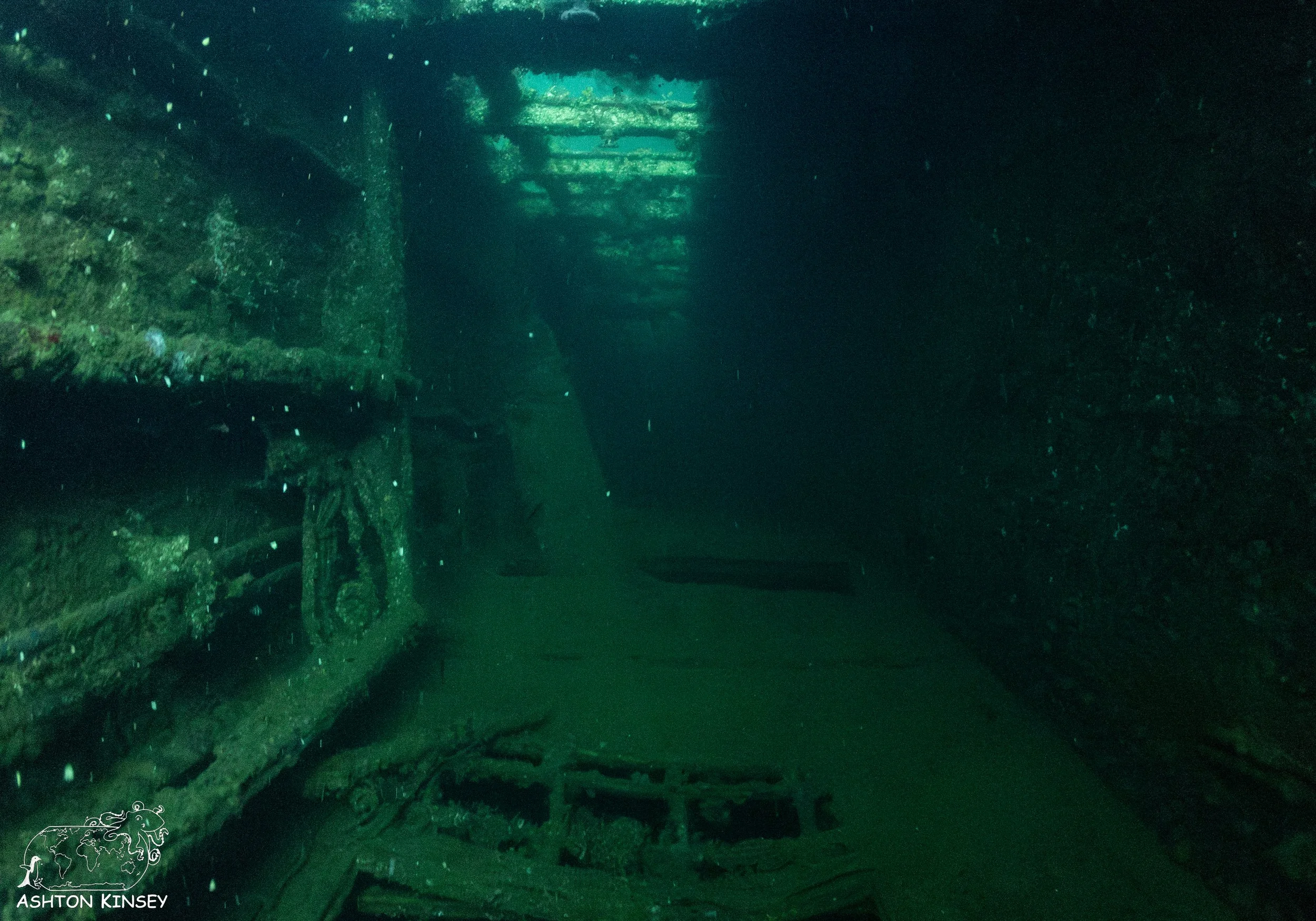
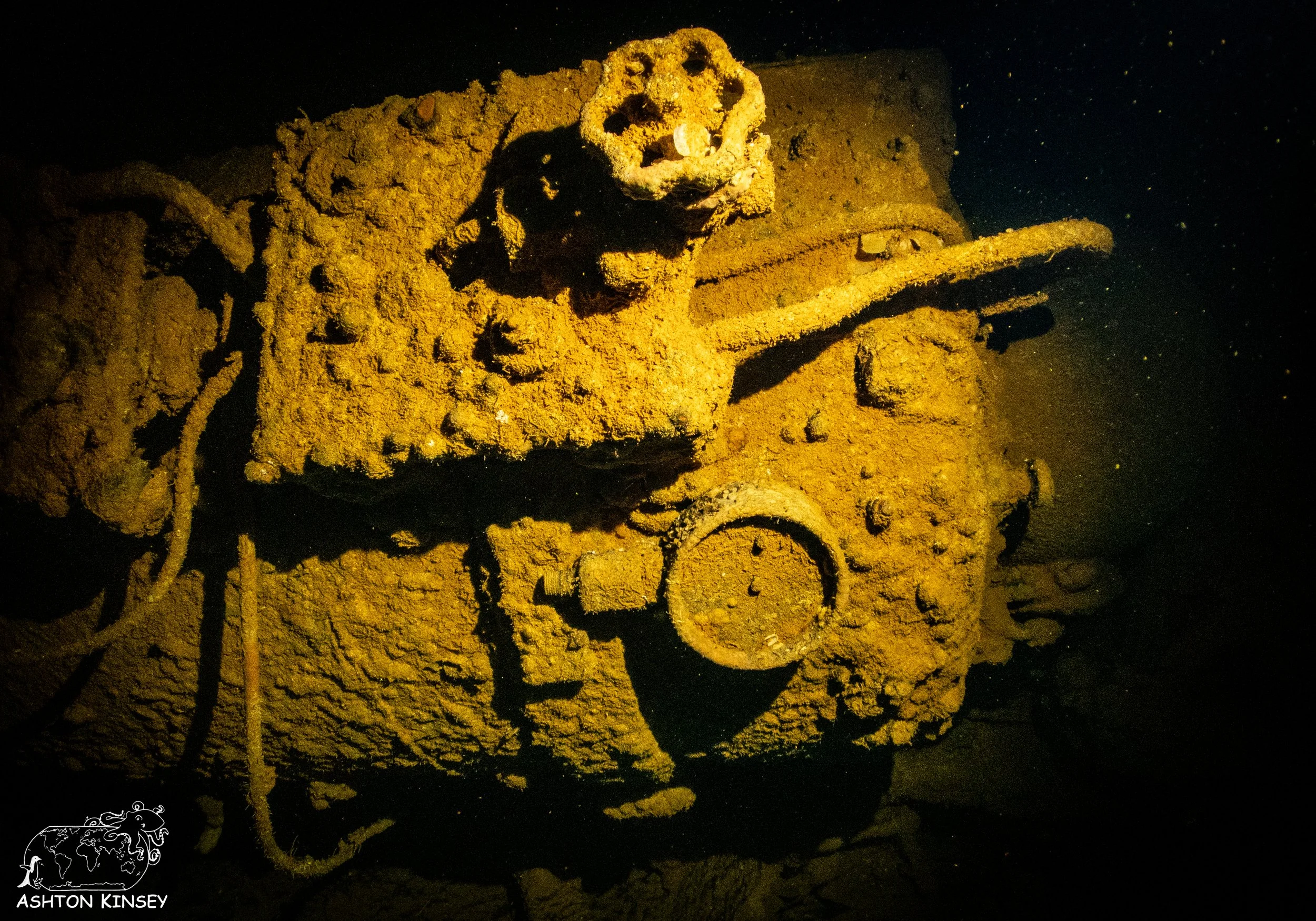
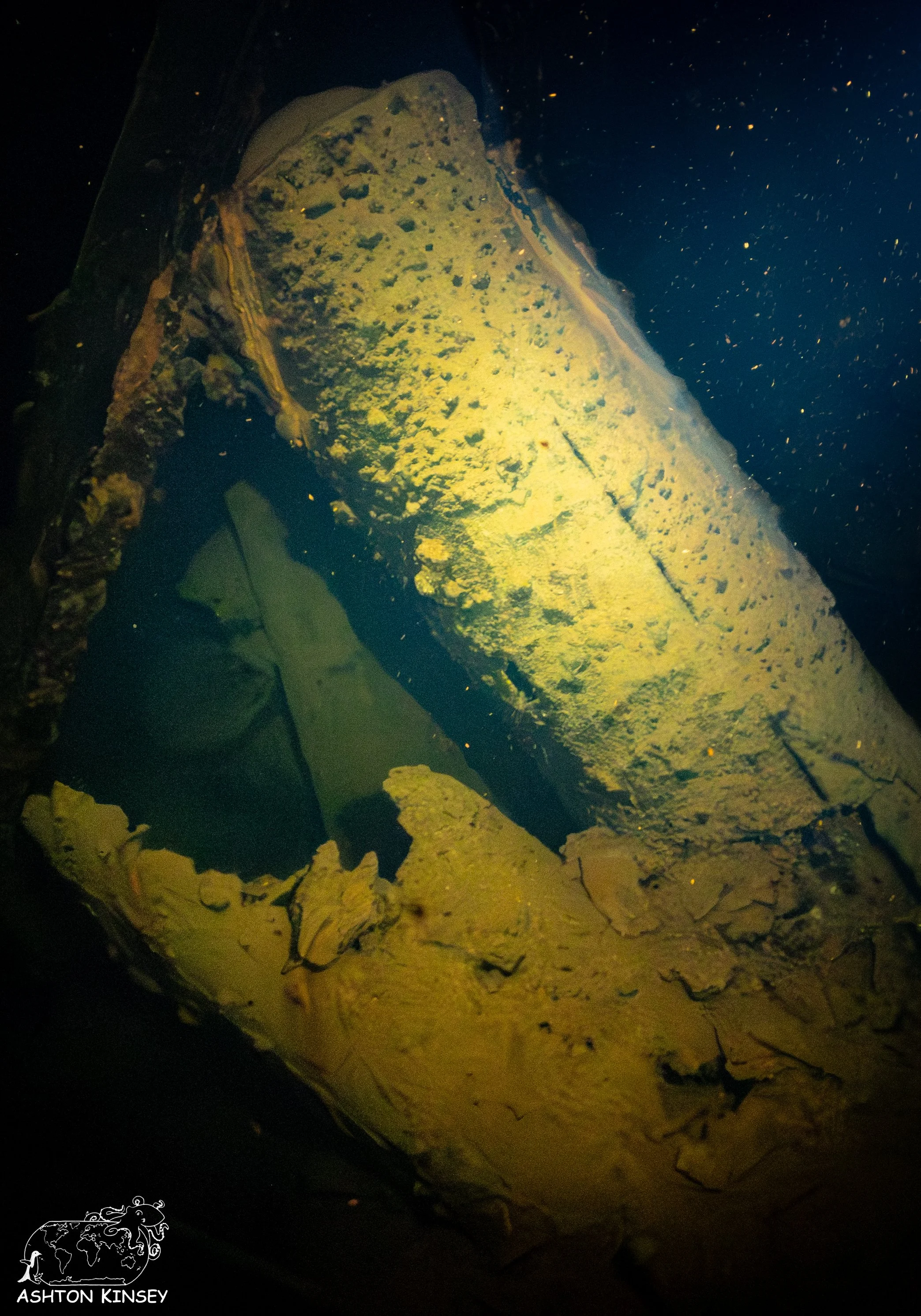
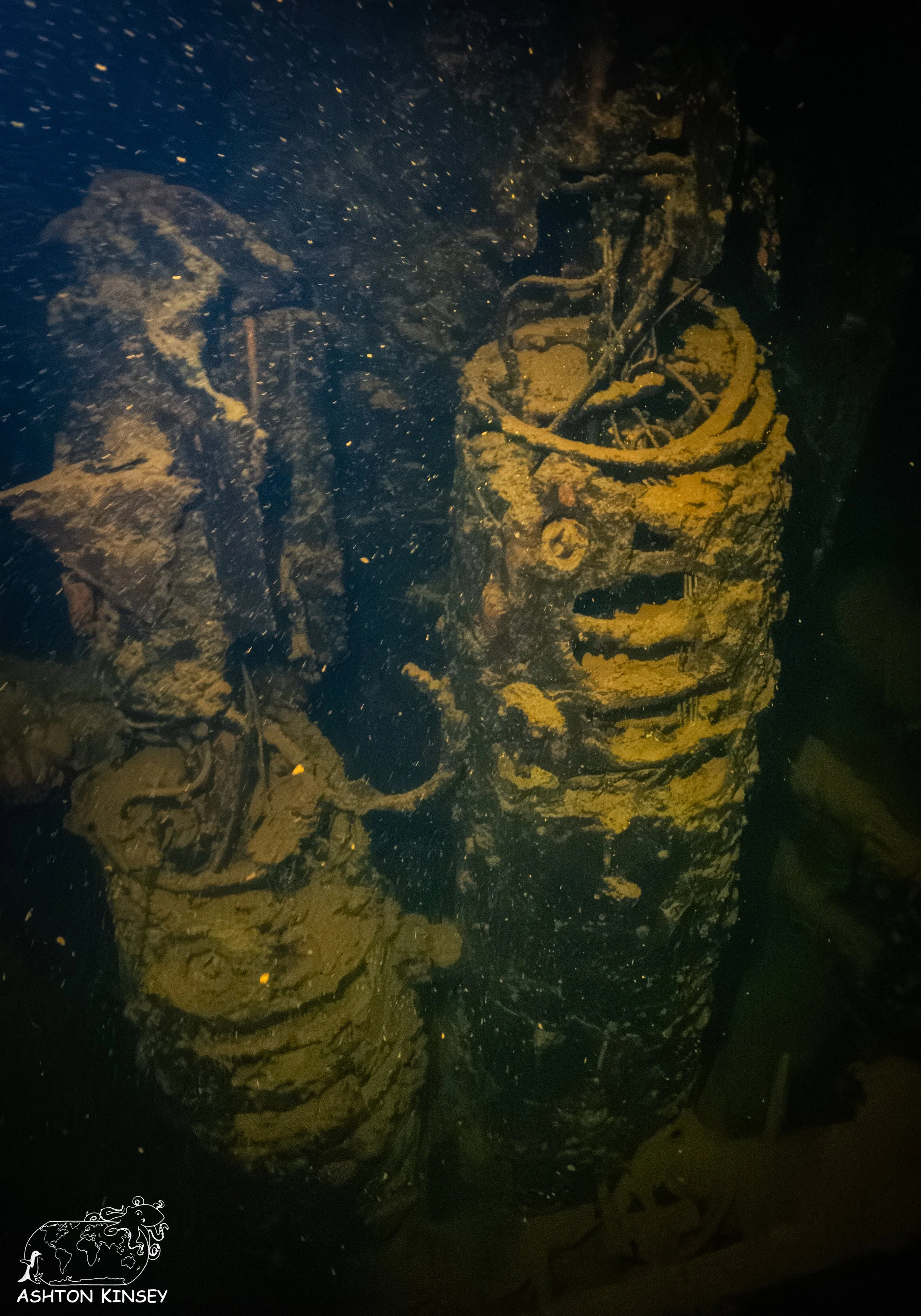
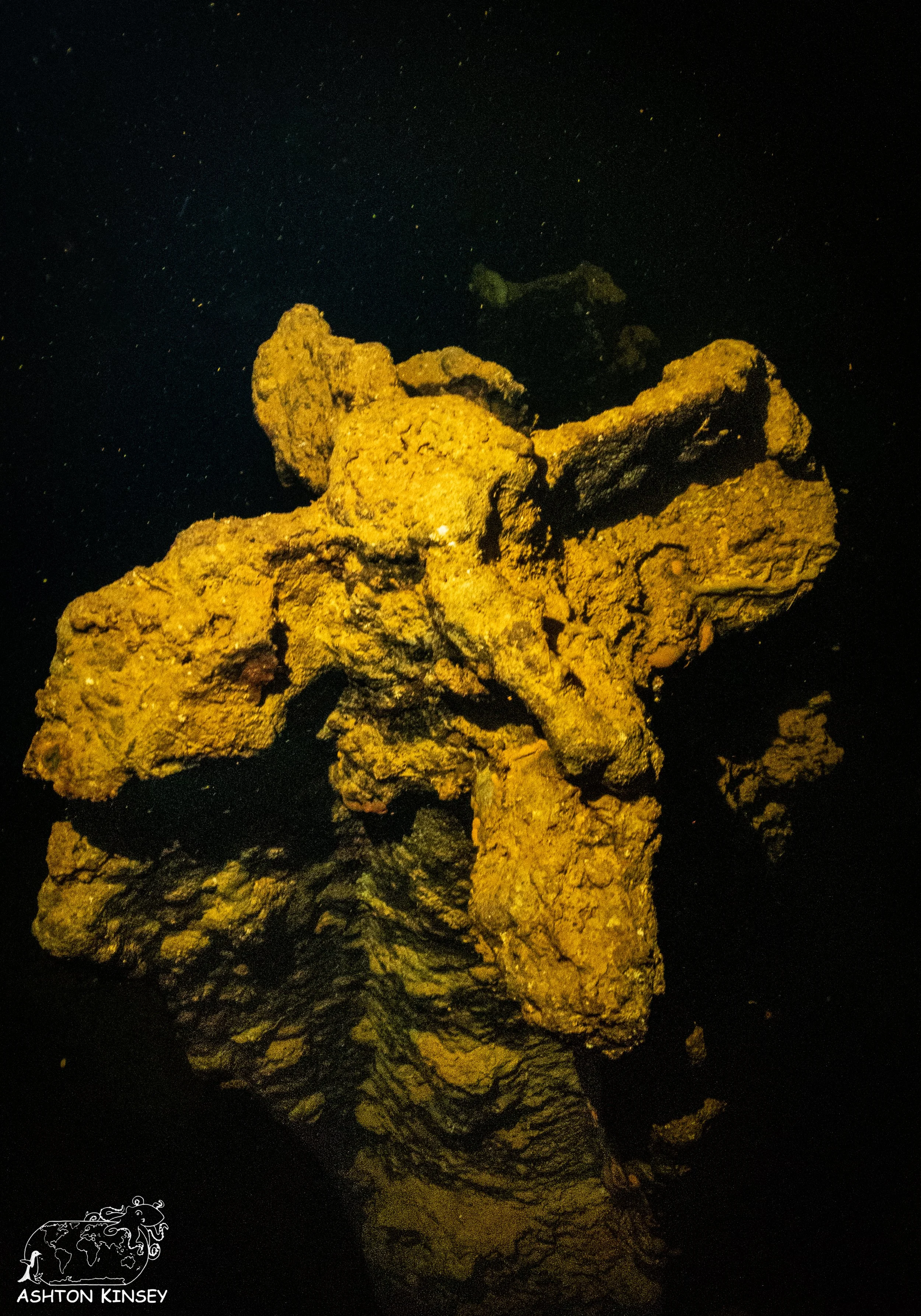
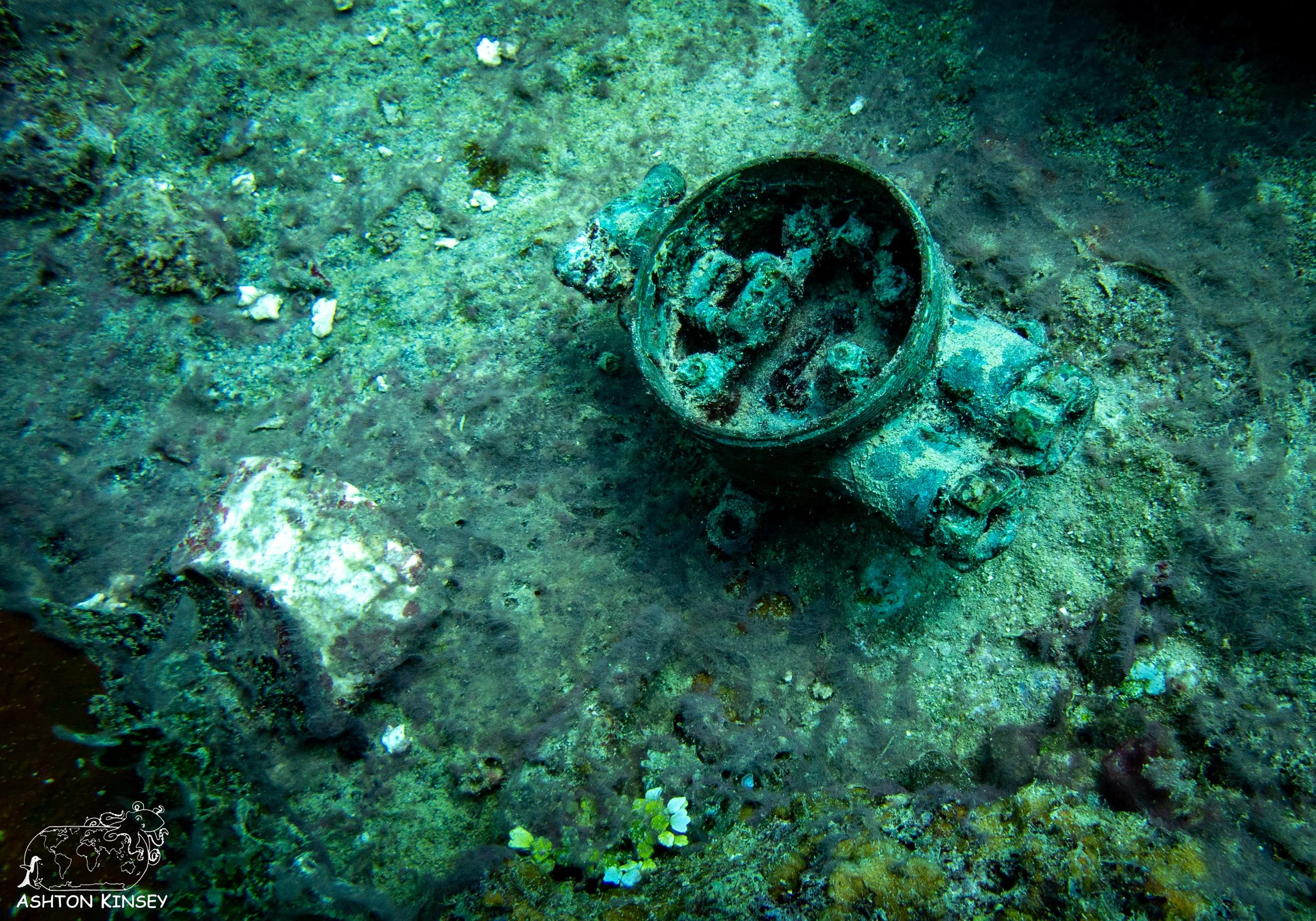
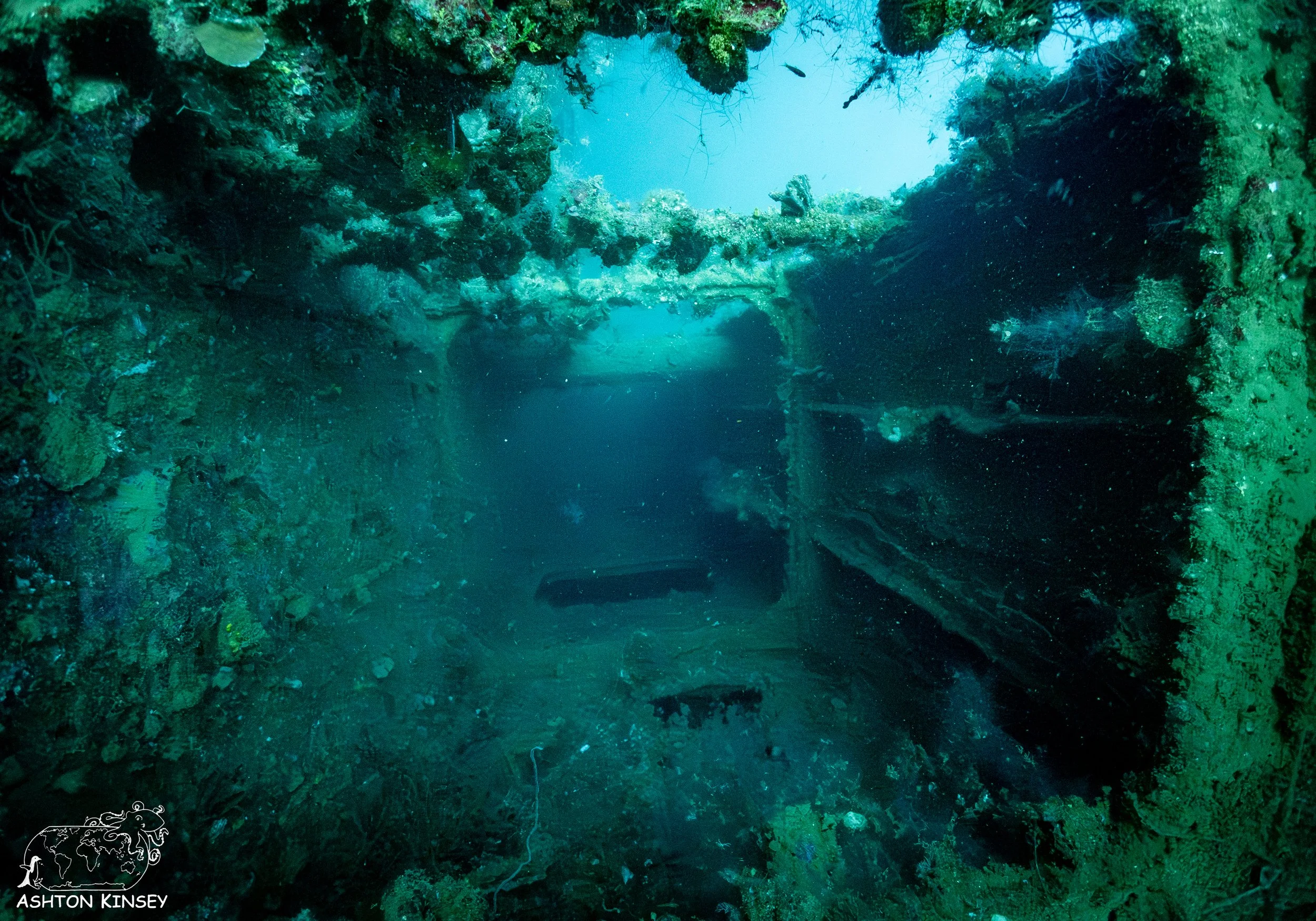
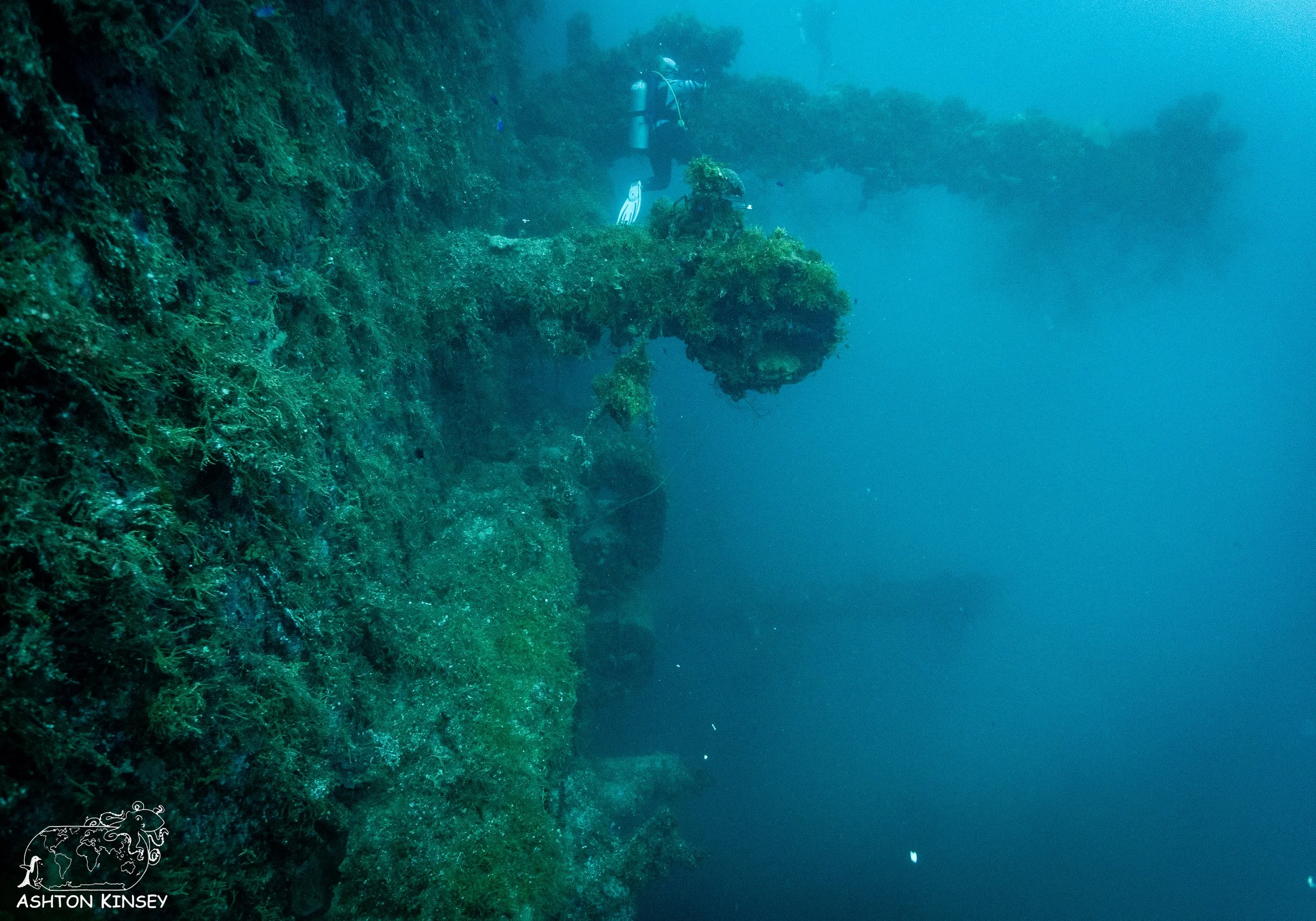
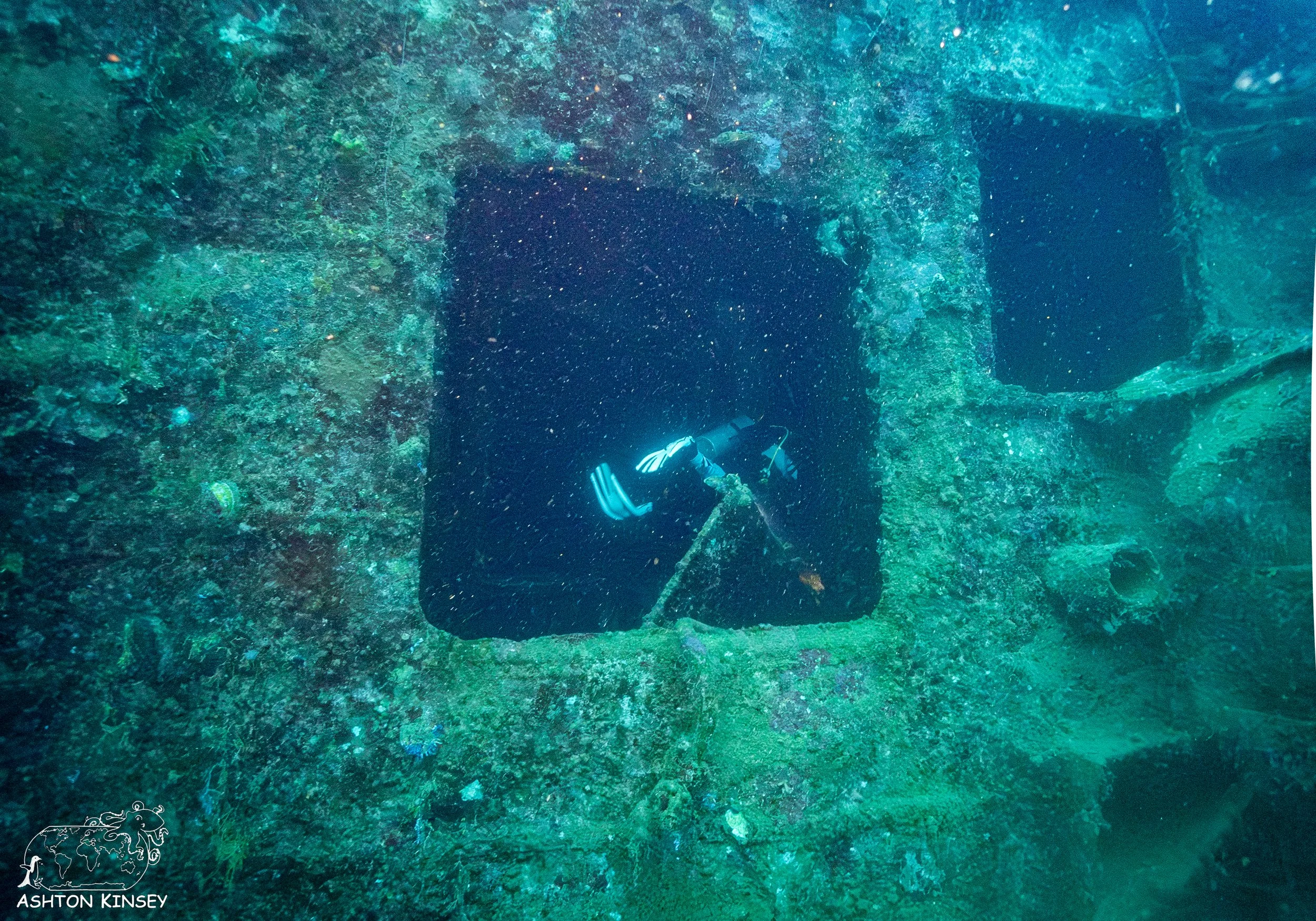
She is the largest ship sunk in the lagoon, sitting on the port side, and uniquely still has her name still legible on the bow. The cargo holds include shells and several type 93 torpedoes used for long-range attacks and measuring roughly 30 feet long x 2 feet in diameter, weighing 2.8 tons. Observation and attack periscopes can be found along the passage ways, along with several bottles, radio equipment, and a med kit complete with still sealed medicine bottles.
Wreck 4: I-169
129’ for 33 minutes and 121’ for 36 minutes

Built: 15 February 1934 Sunk: 4 April 1944
Diving Depth: 245’ Length: 336’
Beam: 26’ Draught: 15’
Depth: 141’ Speed: 23 knots (surface)
8 knots (submerged)
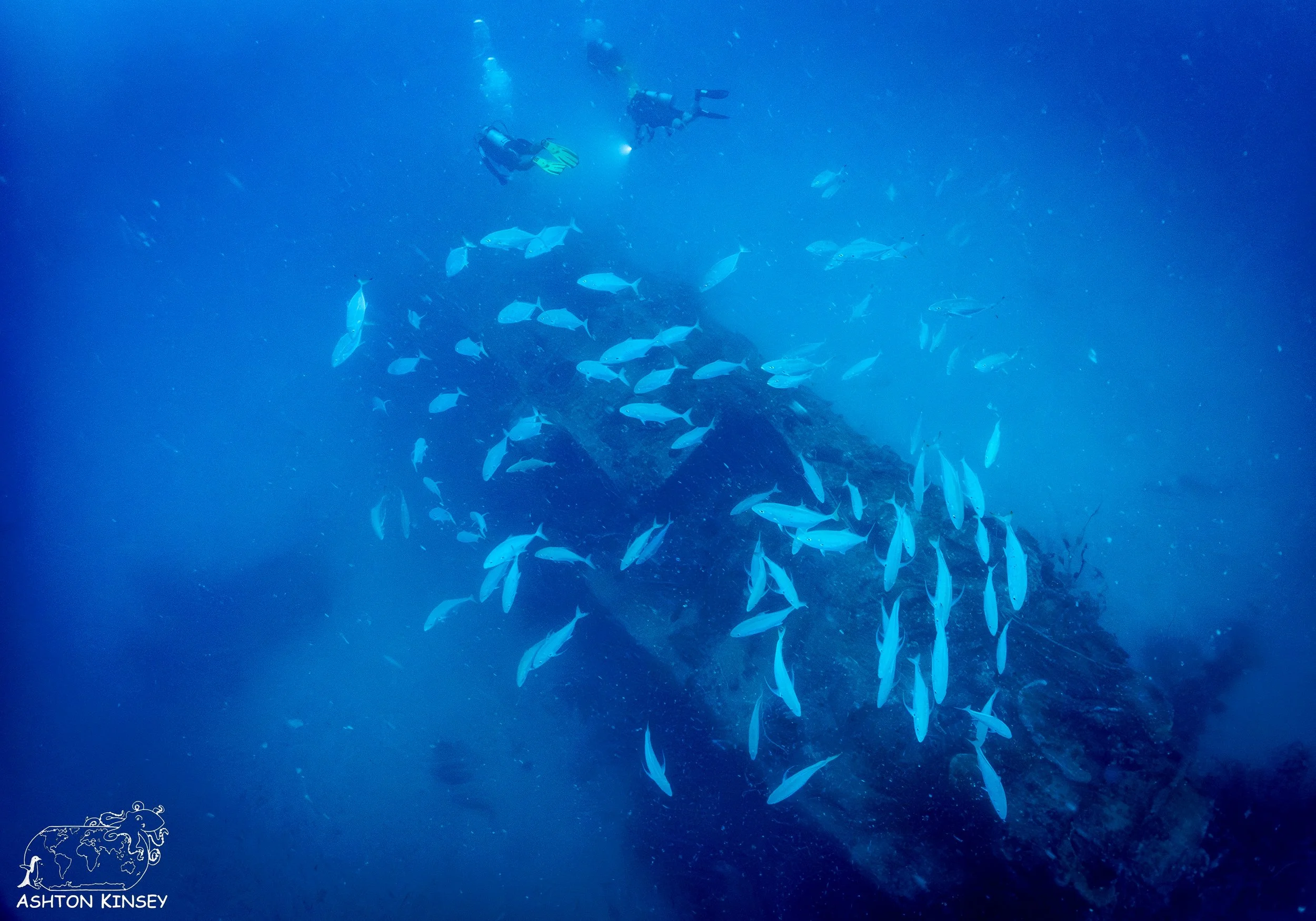
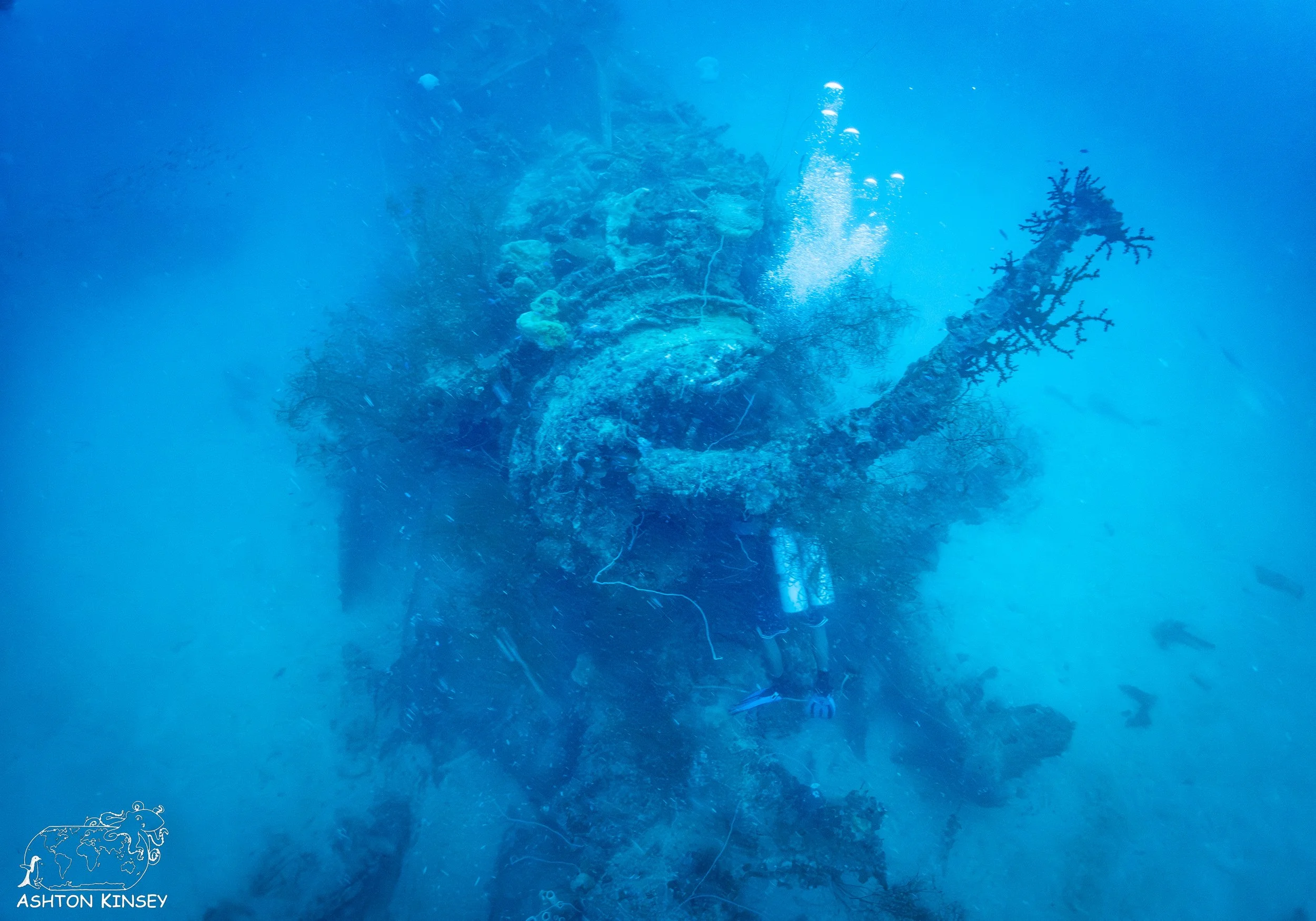
Built by Mitsubishi was a Kaidai class submarine, or Large Type Navy Submarine and was a prominent part of war patrols in the Pacfic. On 15 December 1938, she was decommissioned and placed in the Third Reserve before being recommissioned again on 1 September 1939. She was present during the attack on Pearl Harbor, the Battle of Midway, Guadalcanal, the Aleutians campaigns, and the defense of the Gilbert Islands.
In August 1943 she arrived in Kure, Japan for overhaul and refurbishment before spending time patrolling Hawaii and the Marshall Islands. During a patrol on 1 December, she was detected by an American plane and was fired upon; however, she was able to dive and avoid damage. She returned to Truk in January to resupply torpedoes and supplies from the Heian Maru and left on 27 January 1944 weeks before Operation Hailstone.
On 4 April 1944, at 0900 she was resupplying in Truk when air raid warnings sounded. The command came for her to dive to avoid being struck. Due to the rush several deck hatches were left open and she flooded immediately and sank to the bottom. After the raid ended, and she failed to respond, concerns grew that something was the matter. A Navy diver descended, found her flooded, but heard tapping coming from inside the submarine. Several rescue attempts were made, however due to her extra water weight it was impossible to raise her to the surface. Efforts continued while the tapping slowed until ending completely the morning of 5 April. To prevent the Allies from capturing her, depth charges were deployed and heavily damaged her bow and conning tower.
The wreck was re-discovered in February 1972 and, in August 1973 efforts were made to collect thirty-two sets of remains and personal effects of the deceased crew members.
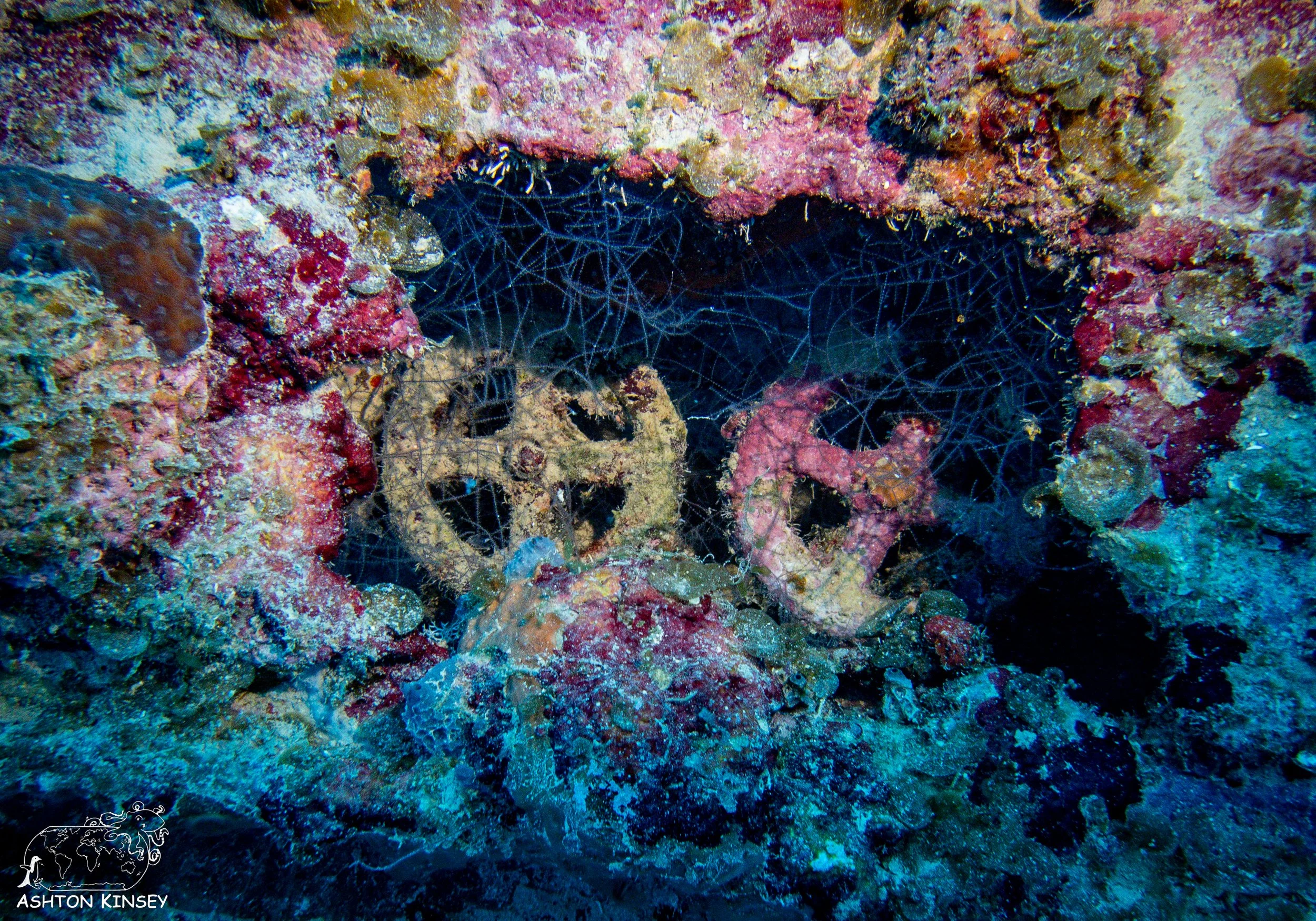
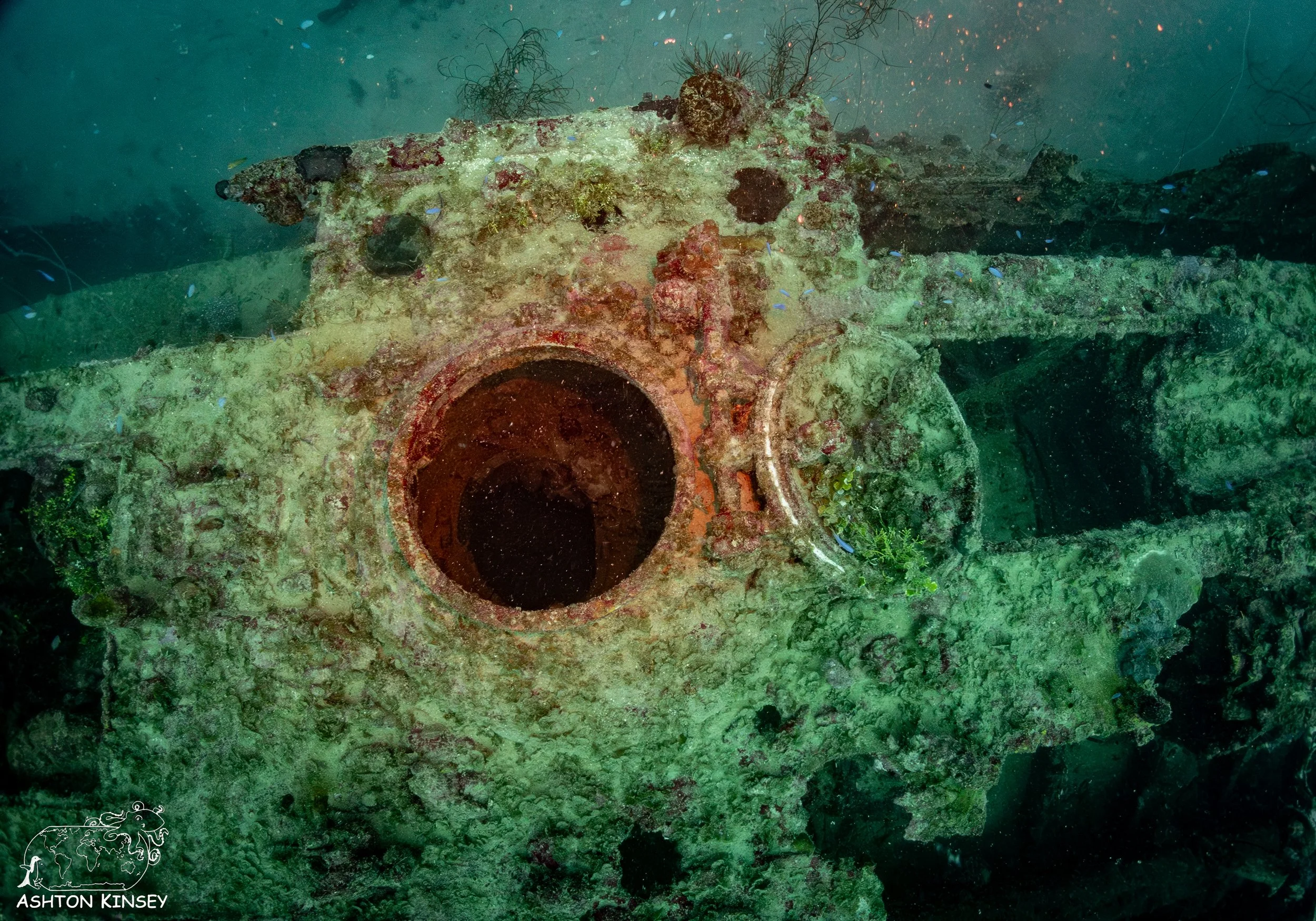
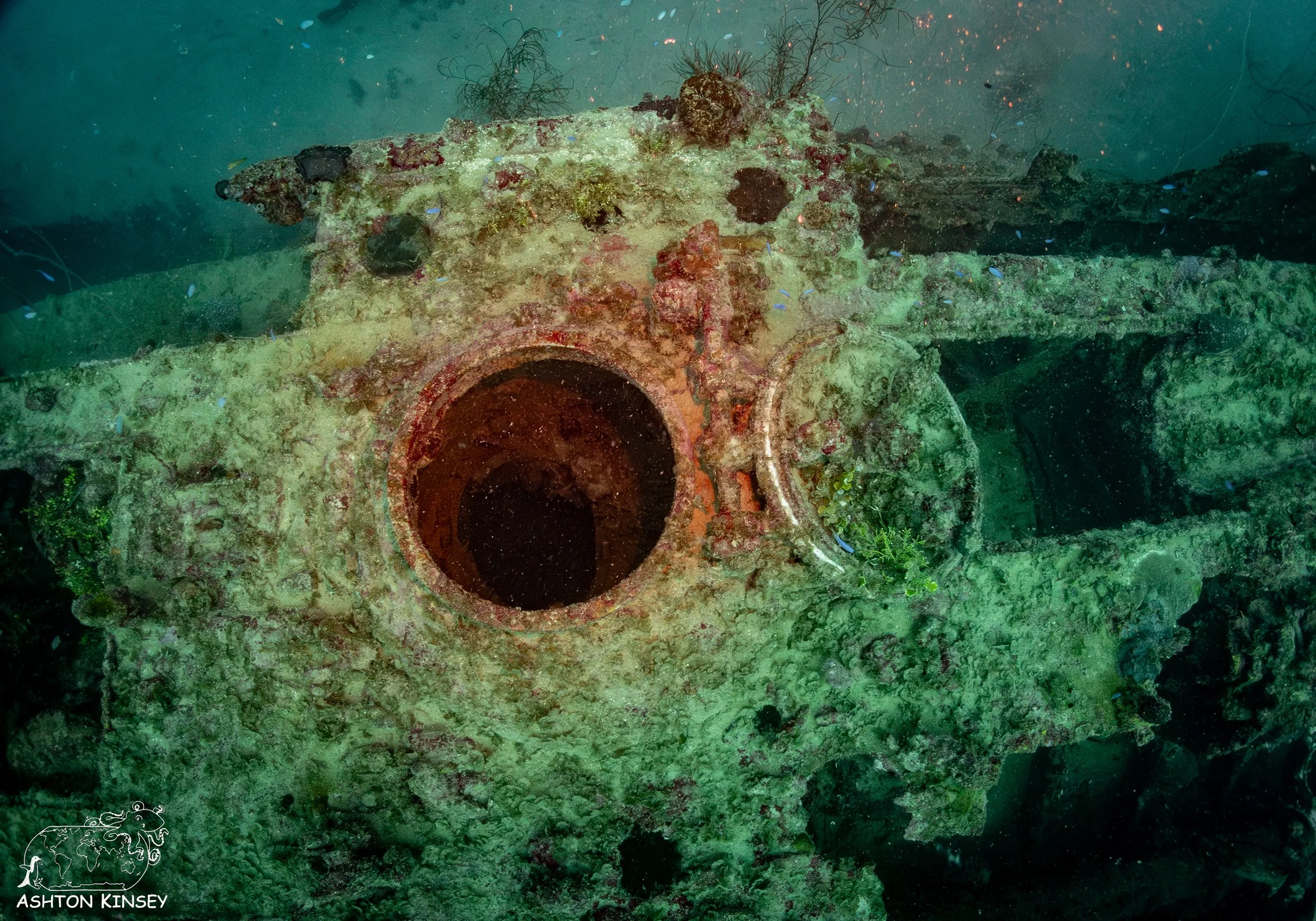
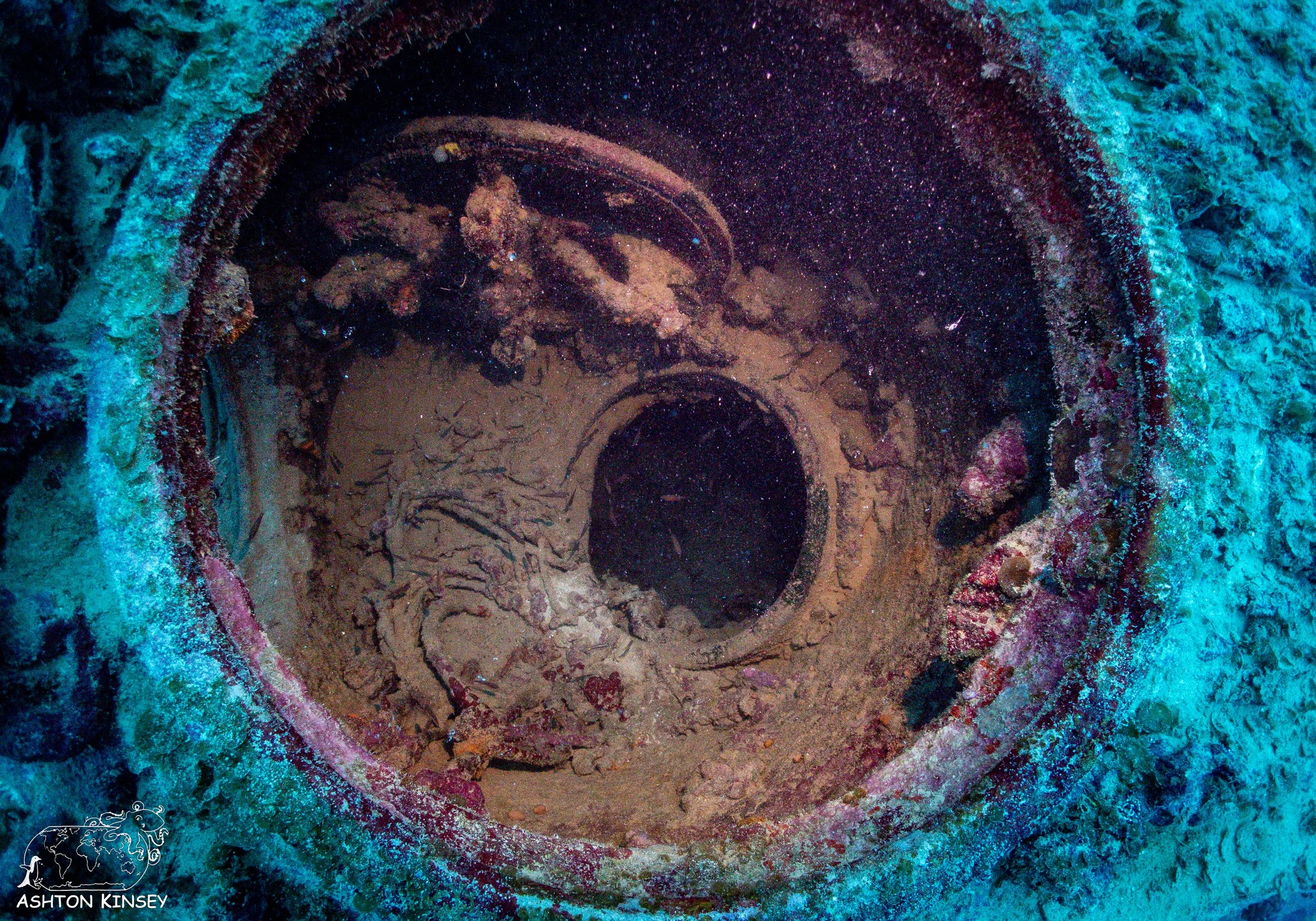
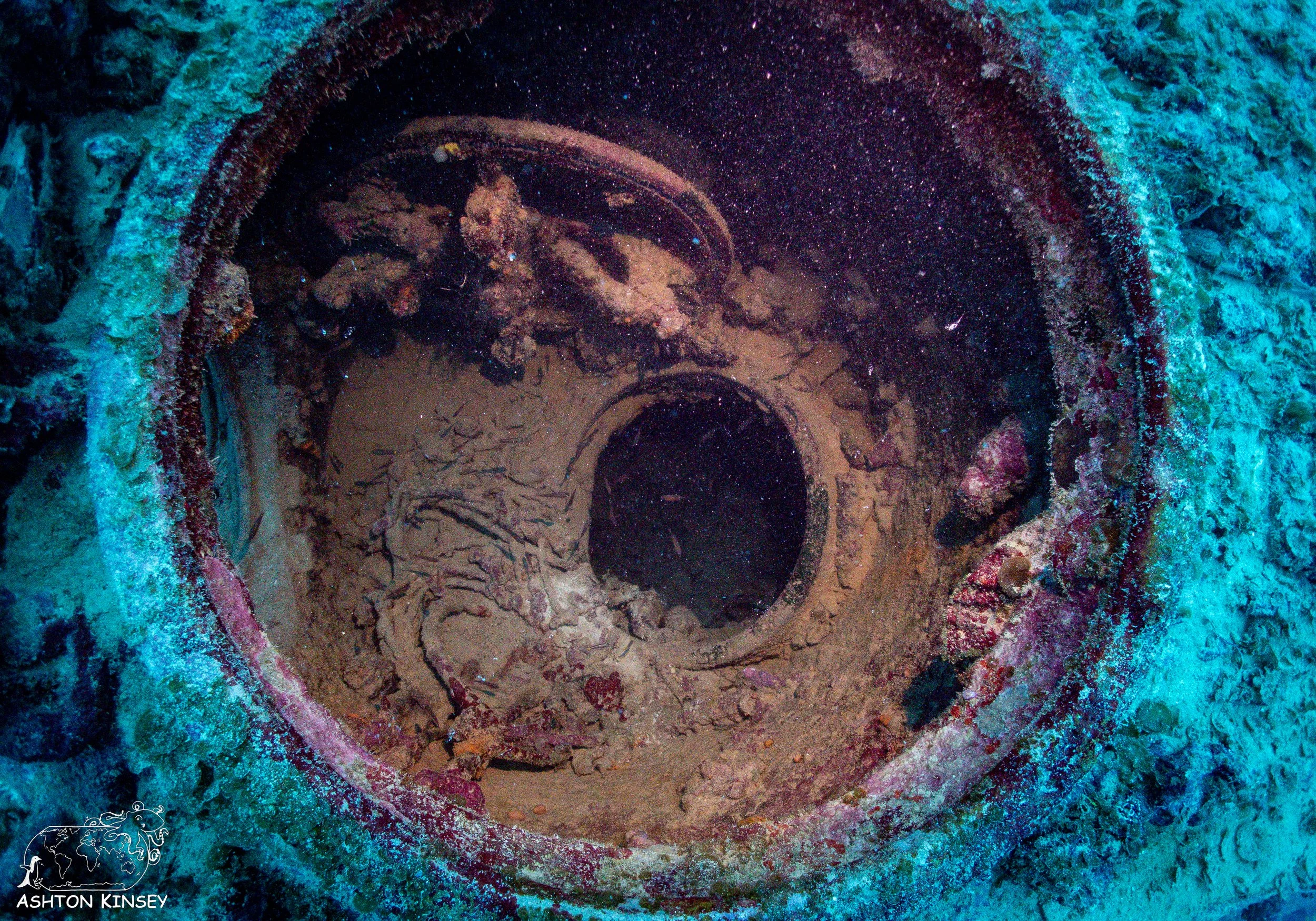
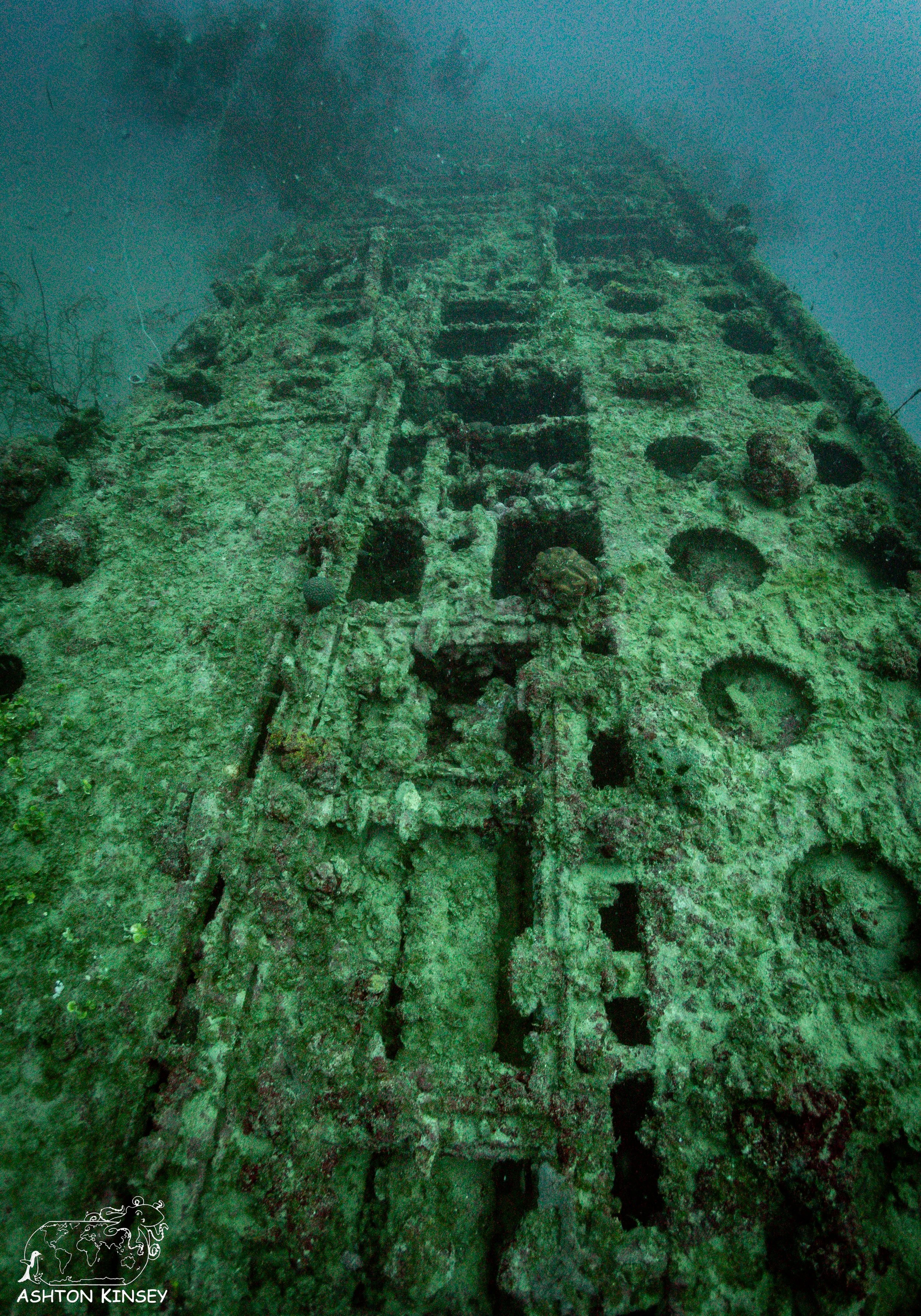
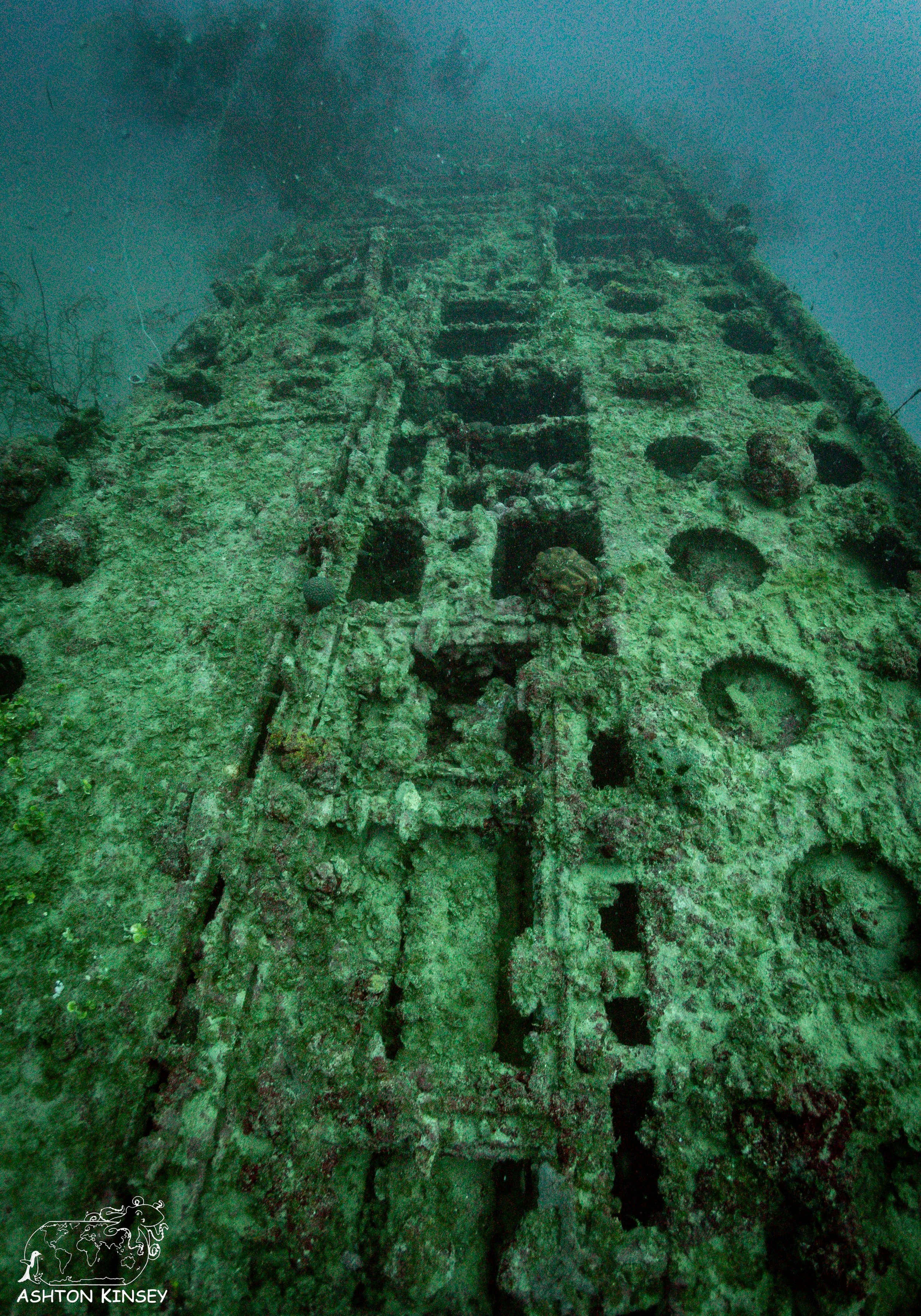
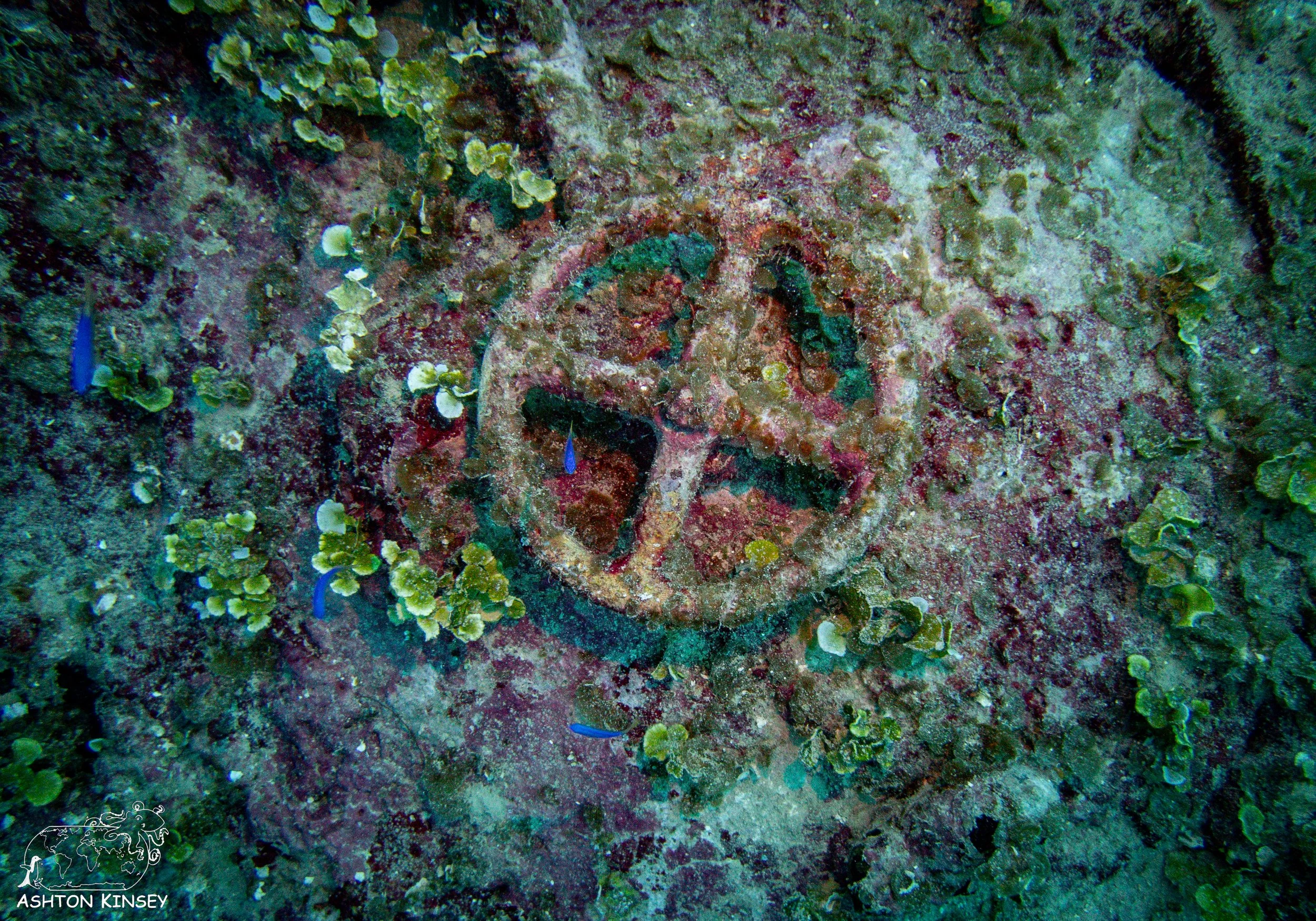
Wreck 5: IJN Fumizuki
文 (Fumi/bun – Literature/writing) 月 (zuki/tsuki – Moon, month)
111’ for 34 minutes and 121’ for 36 minutes

Built: 16 February 1926 Sunk: 18 Feb 1944
GRT: 1,300 – 1,900 tons Length: 335’
Beam: 30’ Draught: 9’
Depth: 129’ Speed: 37.25 knots
Starting in 1926 the Imperial Japanese Navy started building 12 Mutsuki-class destroyers. Each one was given names for the month of the year, with the Fumizuki named for July. These destroyers were an improvement on the Kamikaze class destroyers, with triple mounted torpedo launchers on their decks. In addition to the launchers, they had four 4.7-inch Type 3 guns mounted, as well as several depth charges and mines. The new destroyers were used as convoy escorts and to hunt down submarines. They were powered by a dual propeller shaft, using a total of four steam turbines. These impressive shafts and lighter weights allowed them to be much faster than the other marus that were converted in the fleet.
On 2 November 1943, the Fumizuki was strafed while stationed at Rabaul, and then was damaged further on 4 January 1944 while at Kavieng. She returned to Chuuk for repairs and during the attack was hit by a Grumman TBF Avenger disabling the port side turbine and causing flooding. Unable to escape, and despite rescue attempts, she slowly flooded and sank. During the attack and subsequent sinking, 29 crew members were killed.
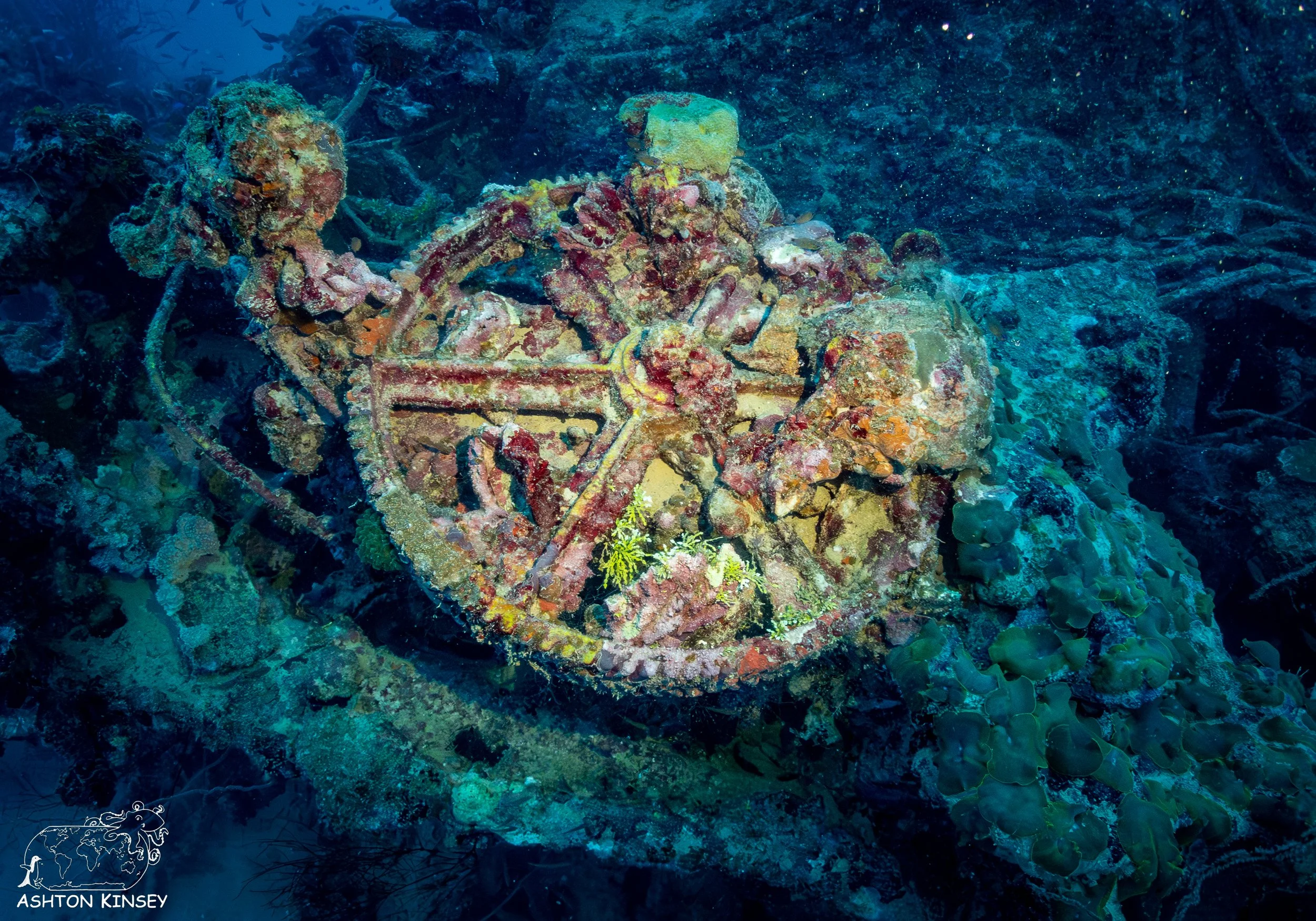
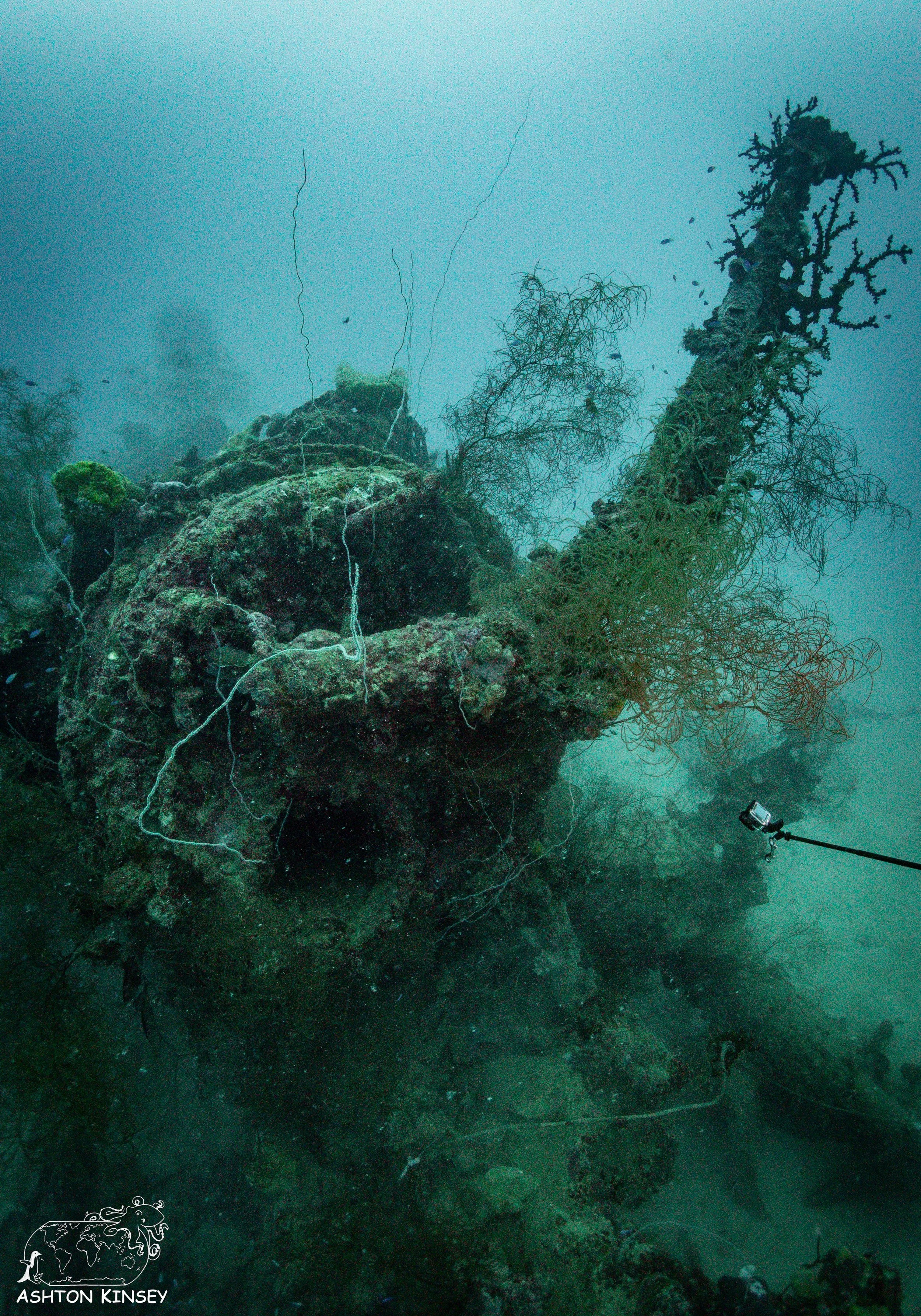
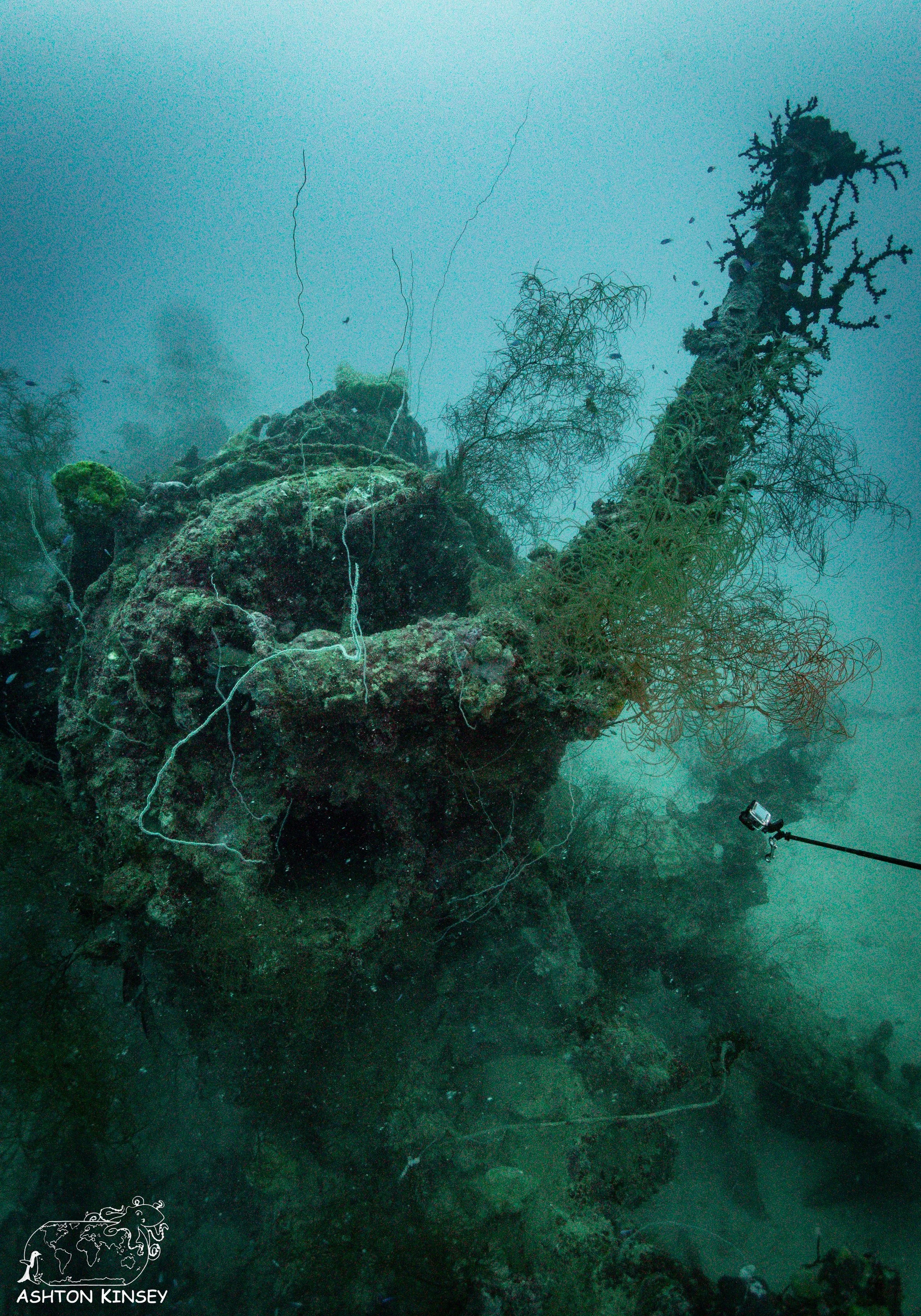
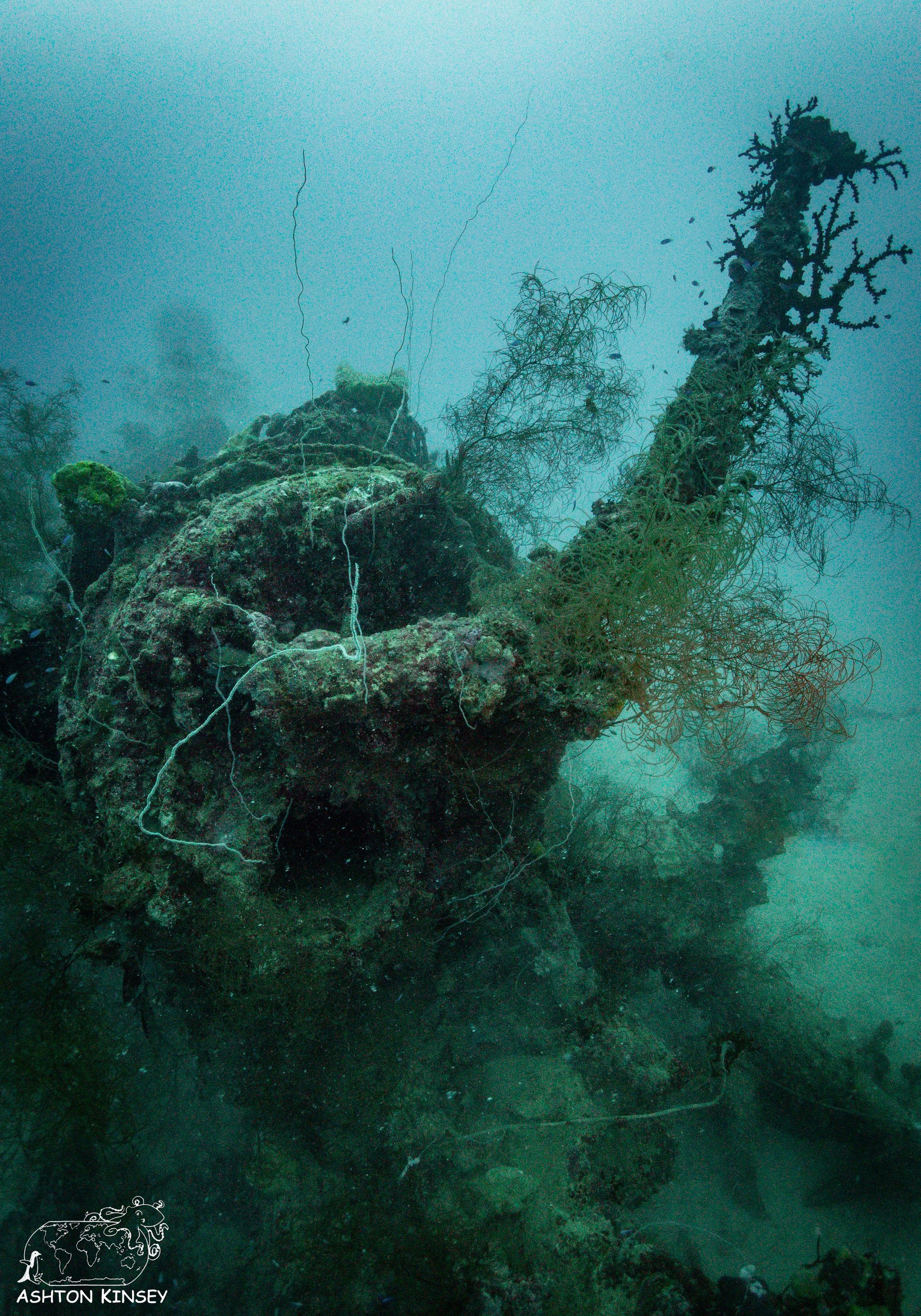
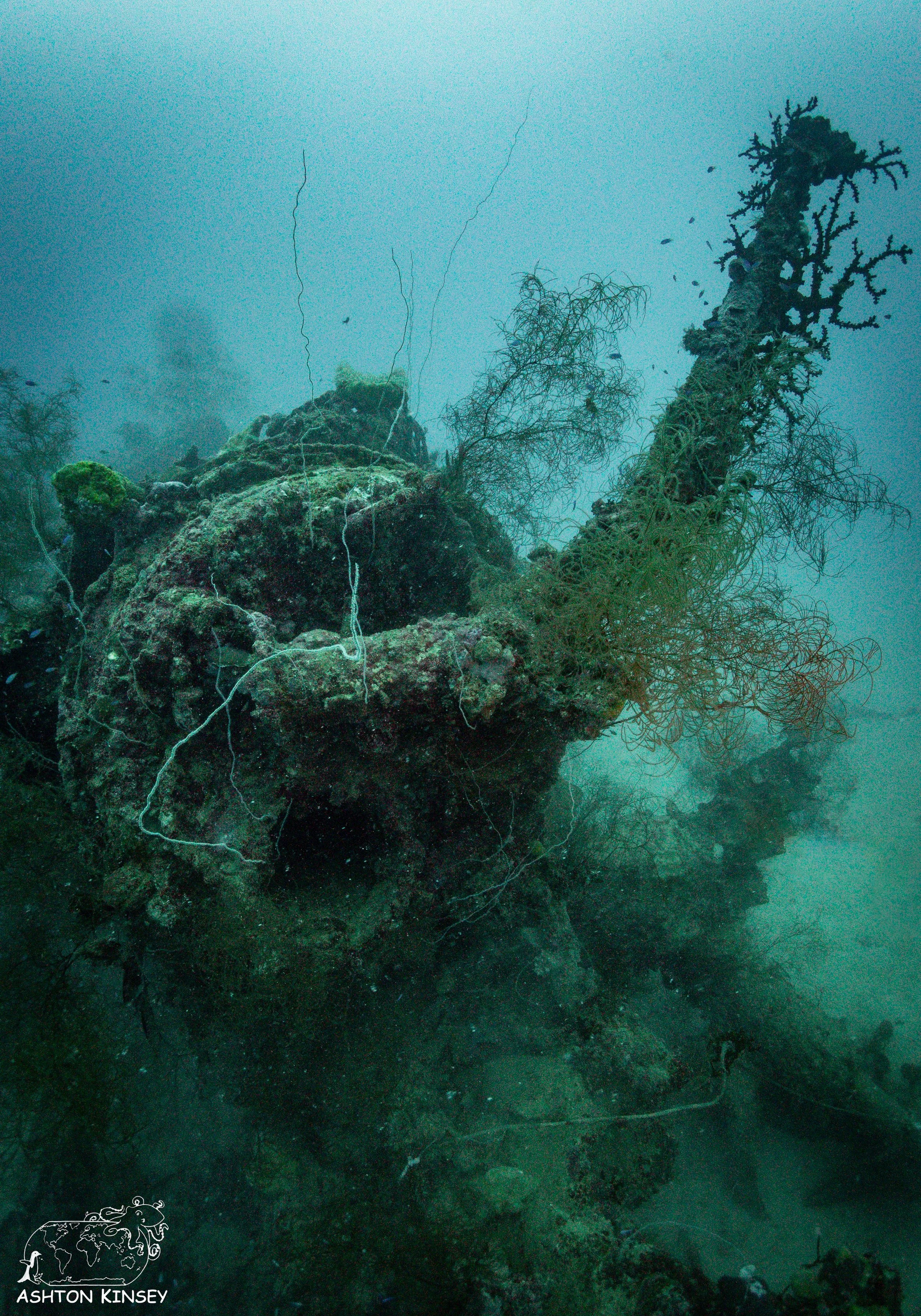
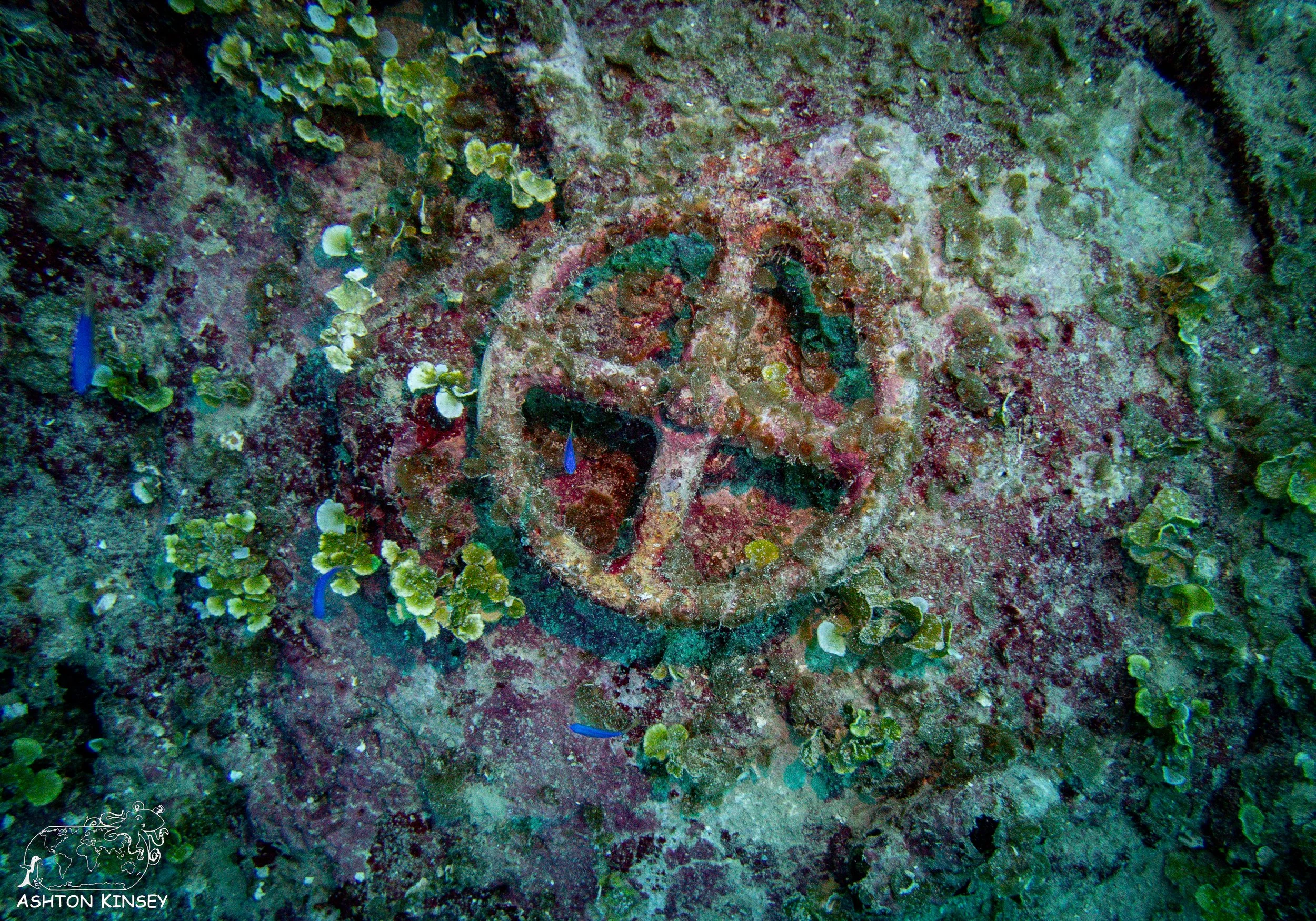
The wreck now sits upright in the sand with a slight port side list. Most of the bridge superstructure has collapsed and there is evidence of bomb damage along the stern of the wreck. The two torpedo launchers on the deck are still visible, and the forward 4.7-inch gun rests on the seabed. The other guns are overgrown with coral and but are still semi recognizable. The starboard propeller is visible and has healthy coral growing on it.
Wreck 6: Shinkoku Maru
神 (Shin – God/divine) 国 (Koku – Country/nation) 丸 (Maru- Circle)
101’ for 55 minutes and 87’ for 59 minutes

Built: 1939 Sunk: 18 Feb 1944
GRT: 10,200 tons Length: 500’
Beam: 65’ Draught: 29.5’
Depth: 129’ Speed: 19 knots
Initially built by the Kawasaki Dockyard as an oil tanker for the Kobe Sanbashi line, often chartered by Kawasaki Kisen. She was originally used to carry oil to Japan from the United States. This ended when the US embargoed Japan after their expansion into China and Southeast Asia. There were 17 large oilers built in this period, due to their importance in resupplying other ships, they were often prime targets, and none of them survived the war. It was thought that since the tankers sat much lower in the water and had minimal lights, they would be safe during the night and would be harder to spot. Unfortunately for her, the improved radar technology, allowed her to be spotted and sunk.
Once the IJN obtained her in 1941, she was converted into a fleet oiler and used for various missions during the war. She was a key support vehicle in the strike force against Pearl Harbor and the attack on Ceylon. After being struck in her forward holds by torpedoes, she made her way back to Chuuk for repairs. During the first wave of attack she was struck by bombers from the USS Yorktown and then torpedoed by the USS Bunker Hill. Finally on the second day another torpedo attack caused critical damage to her starboard side, leading her to flood and slowly sink.
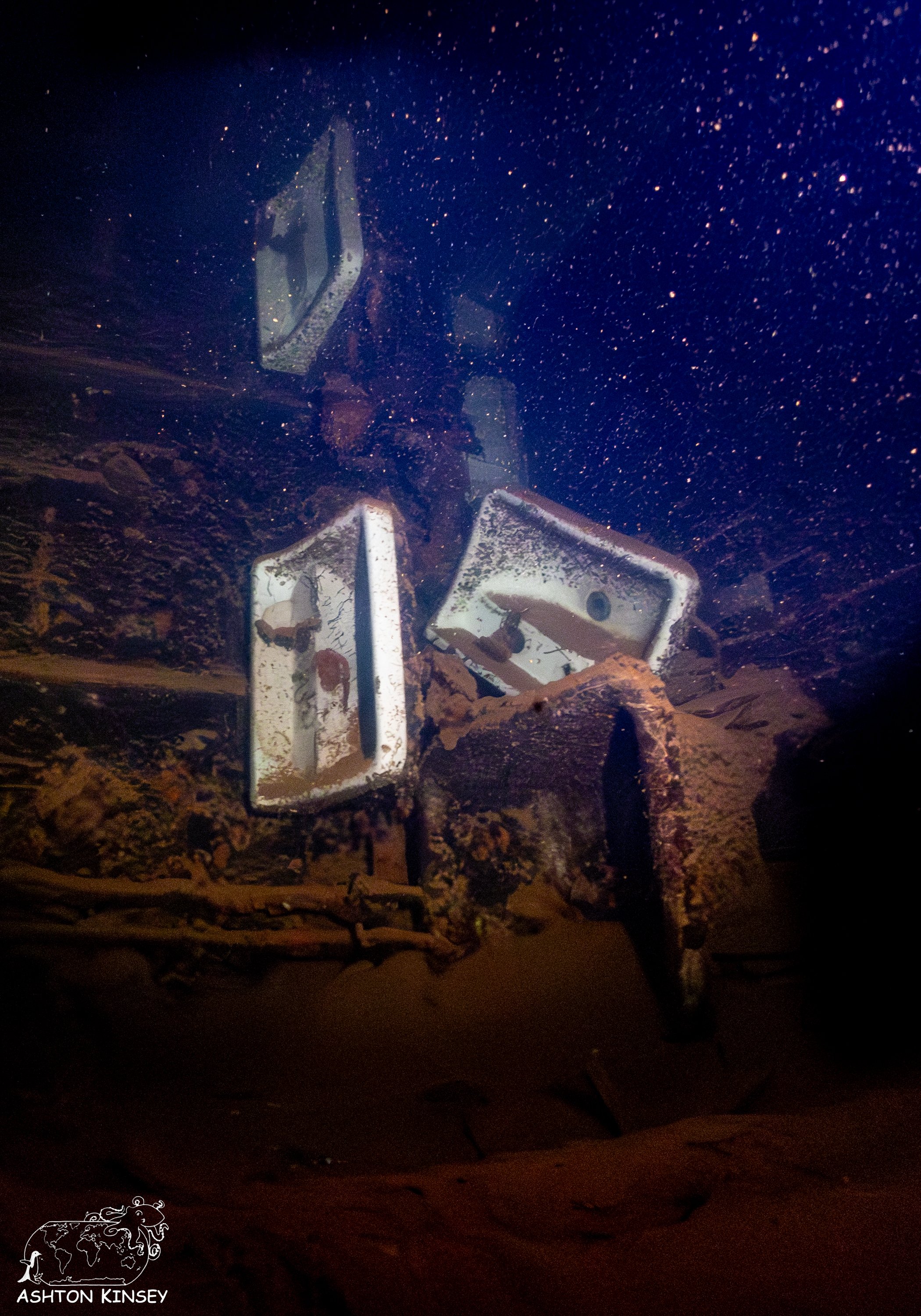
She now sits upright, covered in corals. There are a few guns remaining on her bow as well as a searchlight. The superstructure is still intact with an operating table, and tiled bathrooms. Most of the holds are full of oil and are not good for penetration. The large amount of coral growth on and marine life on the wreck makes it an especially beautiful and approachable night dive.
Wreck 7: Fujikawa Maru
丸 (Fuji – Wisteria) 川 (Kawa – River) 藤 (Maru – Circle)
104’ for 54 minutes and 100’ for 60 minutes (Dive 1,500)
Built: 1 July 1938 Sunk: 17 February 1944
GRT: 6,938 tons Length: 437’
Beam: 58.5’ Draught: 26’
Depth: 122’ Speed: 13.5 knots
Originally built as a 6-hold refrigerated freighter for the Toyo Kaiun Kaisha, and it was, like most other Marus, requisitioned and repurposed for the IJN in 1940. Its main purpose was an aircraft transport vessel starting in 1942.
It saw multiple battles and was present at the Battle of Midway, in September 1943 it was struck by a torpedo from the USS Permit and returned to Japan for repairs. After being damaged, again, in December, she was sent to Chuuk for minor repairs, where she was anchored during Operation Hailstone.
One of the most popular wrecks in Truk Lagoon, she sits upright and in mostly good condition, although the superstructure has collapsed in recent years. A small workshop with large tools, and a compressor is easily accessible and full of small things to see. The holds contain a mix of plane propellers, fuel tanks and barrels, as well two types of planes. There are eight A6M Zeros and the last known remaining A5M Claude. The first hold has goggles and shoes that are presumed to be related to aviation gear, though this cannot be confirmed.
On the bow is a large six-inch gun with the manufacturer’s plaque and information. It was produced by the Elswick Ordnance Company, a British based manufacturer, in 1899. A fueling cap, and a telegraph with clear writing can be found next to three commemorative plaques. One marks the 50th anniversary of the attack, one honors Kimiuo Aisek, founder of Blue Lagoon resort and one of the first divers on the wrecks, and the third dedicates the site to the Chuuk people and to peace.
Wreck 8: Betty Bomber (Mitsubishi G4M Navy Type 1 attack bomber)
一式陸攻 ((Isshikirikkō – Type 1 Land-based Attack Aircraft)
65’ for 63 minutes and 66’ for 62 minutes
Built: 1939 Retired: 1945
Wingspan: 82’ Length: 66’
Depth: 60’ Range: 2,800 – 3,750 miles
The Betty Bomber fleet was built by Mitsubishi between1939 and 1945. They were twin-engine and served as the primary land-based bomber for the Imperial Japanese Navy with 2,435 built during that period. The bomber was extremely lightweight, and thus was notable for its performance and range. However, the lightweight build and minimal extras on the plane meant that there was little to no protection for the crew. They were often called flying cigars due to the shape, but also because the fuel tanks were in the wings and would easily catch fire and explode when shot.
During raids they could typically carry 2,200 lbs of explosives as well as aerial torpedoes for anti-ship attacks. Typically crewed by 7 men pilot, co-pilot, navigator/bombardier, radio operator, flight engineer, and gunners. They were present at the attack on the HMS Prince of Wales and the HMS Repulse in December 1941.
Because the bomber is mostly intact and is close to Etten Island runway, it’s assumed it was flying low when it hit the water. The engines are roughly 200 feet away, at 110° from the front of the plane. It might have been shot down or may have had other mechanical problems when it crashed. Near the tail section, there are several artifacts that have been arranged, including the radio, captain’s chair and other debris. It is possible to swim through the body and exit out either sides of the plane or through a tight squeeze out of the back of the tail section.
Wreck 9: Nippo Maru
日本 (Nippon – Japan) 丸 (Maru – Circle/Perfection)
121’ for 42 minutes and 146’ for 48 minutes
Built: 16 Sept 1936 Sunk: 0310 on 18 Feb 1944
GRT: 3,764 tons Length: 353’
Beam: 50’ Draught: 23’
Depth: 155’ Speed: 16 knots
Originally built as a single screw merchant ship transporting fruit between Taiwan and Japan, she was refitted by the IJN in 1941. After that conversion, she primarily a water supply tanker for the Japanese army. She spent most of the early years of the war going back and forth between Japan, Taiwan and South Korea, but started patrolling the Pacific islands in 1943. She was attacked by the USS Skipjack in January 1944 and missed taking any major damage, later rescuing the crew of some of the other ships that were sunk.
During Operation Hailstone she was bombed by the USS Essex at 6:30 pm, in the cargo hold and engine room. This ruptured the port side hull and resulted in her sinking. A watch located in the engine room is forever stuck showing 6:30 on its face.
The Nippo is sitting upright with a heavy list to the portside, she is mostly intact, with the propeller buried in the reef. Gas masks, ammunition, cordite and antiaircraft ammo can be found in the first cargo hold. Outside of the 2nd hold is a Type 97 tank sitting upright, and a jeep chassis balancing on the edge of the port side. A second chassis sits on the seabed. Outside the 3rd hold are 3 howitzer guns, long ranged weapons still mounted for use. The 5th hold contains wheelchairs, and dual-purpose guns without their barrels. The wheel house is still intact, and the helm and telegraphs are still upright.
Wreck 10: Kensho Maru
見 (Ken – Seeing) 性 (Shō – True Nature) 丸 (Maru – Circle)
118’ for 51 minutes and 103’ for 56 minutes
Built: 1938 Sunk: 18 February 1944
GRT: 4,682 tons Length: 385’
Beam: 53’ Draught: 30’
Depth: 129’ Speed: 15 knots
Originally built in 1938 as a passenger and cargo ship. The Kensho Maru was later requisitioned by the IJN and was used to transport military troops and supplies to the Marshall Islands. She was present at the Battle of Midway and afterwards was converted to a hospital ship, whose primary duties were to ferry wounded soldiers back and forth to Japan.
During the attacks at Kwajalein in December 1943, she was struck and set ablaze. To try and save her, she was run aground, and the fires were put out three hours later. She was towed back to Chuuk by the Momokawa Maru for repairs and was anchored during the airstrikes.
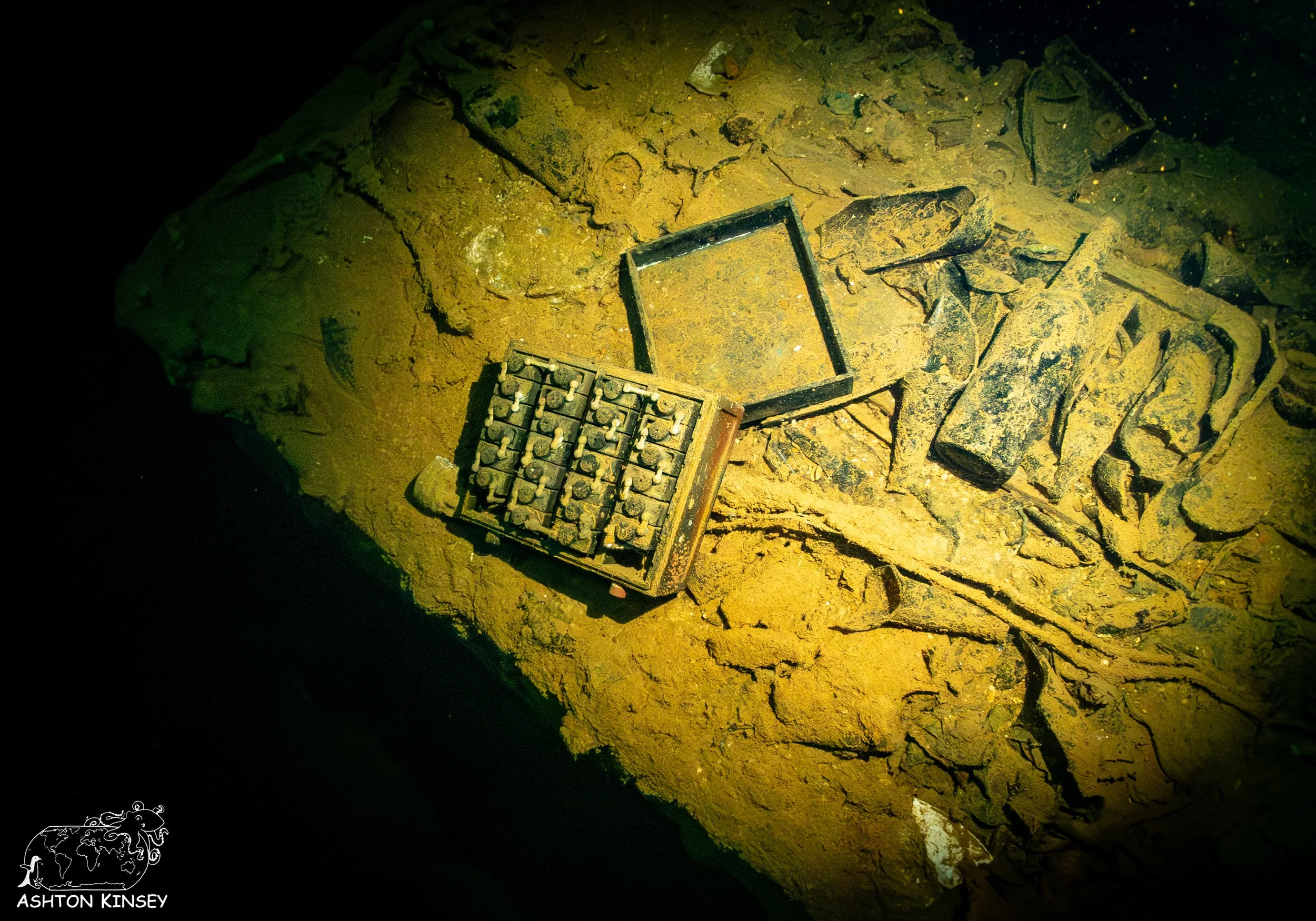
She now sits upright, with a slight list to the port side, and is mostly intact. Around the bow is now a cleaning station for eagle rays and on top of it sits a large gun. The super structure, and bridge are still standing along with the kingposts that are encrusted and covered with life. Most of the cargo holds were emptied out for the repairs, the fourth hold has some welding equipment, bikes and batteries. There is a salvage pump that looks like was used to try and help pump water out during the initial attacks in December before anchoring in Chuuk but this hasn’t been confirmed. Inside the engine room there are several sets of tools, switch panels, and various pieces of equipment all still hanging ready for use. On the way out, the galley is open with utensils, hanging on the wall and a wok still on the stove. Unfortunately, someone forgot to shut off the taps and the kitchen has over flowed and everything has gotten very wet.
Wreck 11: Hoki Maru
法具 (Hoki - Buddhist instruments) 丸 (Maru – Circle)
135’ for 46 minutes and 151’ for 45 minutes
Built: Scotland, 1921 Sunk: 17 February 1944
GRT: 7,124 tons Length: 450’
Beam: 58’ Draught: 31’
Depth: 164’ Speed: 13 knots
Originally named the M/V Hauraki, she was built in Scotland for the Union Steamship Corporation in New Zealand in 1921. In 1942 she was traveling to Colombo, Sri Lanka from Australia and was captured by the Aikoku and Hokoku Marus and forced to help the IJN. However, due to the fact she was a steamship and the Japanese were unable to sail her themselves, they forced the crew of 50 engineers to operate her as POWs. In retaliation, the engineers would throw spare parts overboard while at sea. All of the crew members survived capture and were rescued after the war ended.
In January 1944 she was headed to Truk to deliver supplies that included coal, aviation fuel and defense materials. She arrived in Truk, just in time for the attack, and none of the cargo was unloaded. She was bombarded by the USS Essex and USS Yorktown, and had torpedoes dropped on her from USS Bunker Hill. As the bombs detonated, they ignited the large amount of aviation fuel in her forward holds, and the resulting explosion caused most of the fore-ship to be ripped open and now sits twisted and broken.
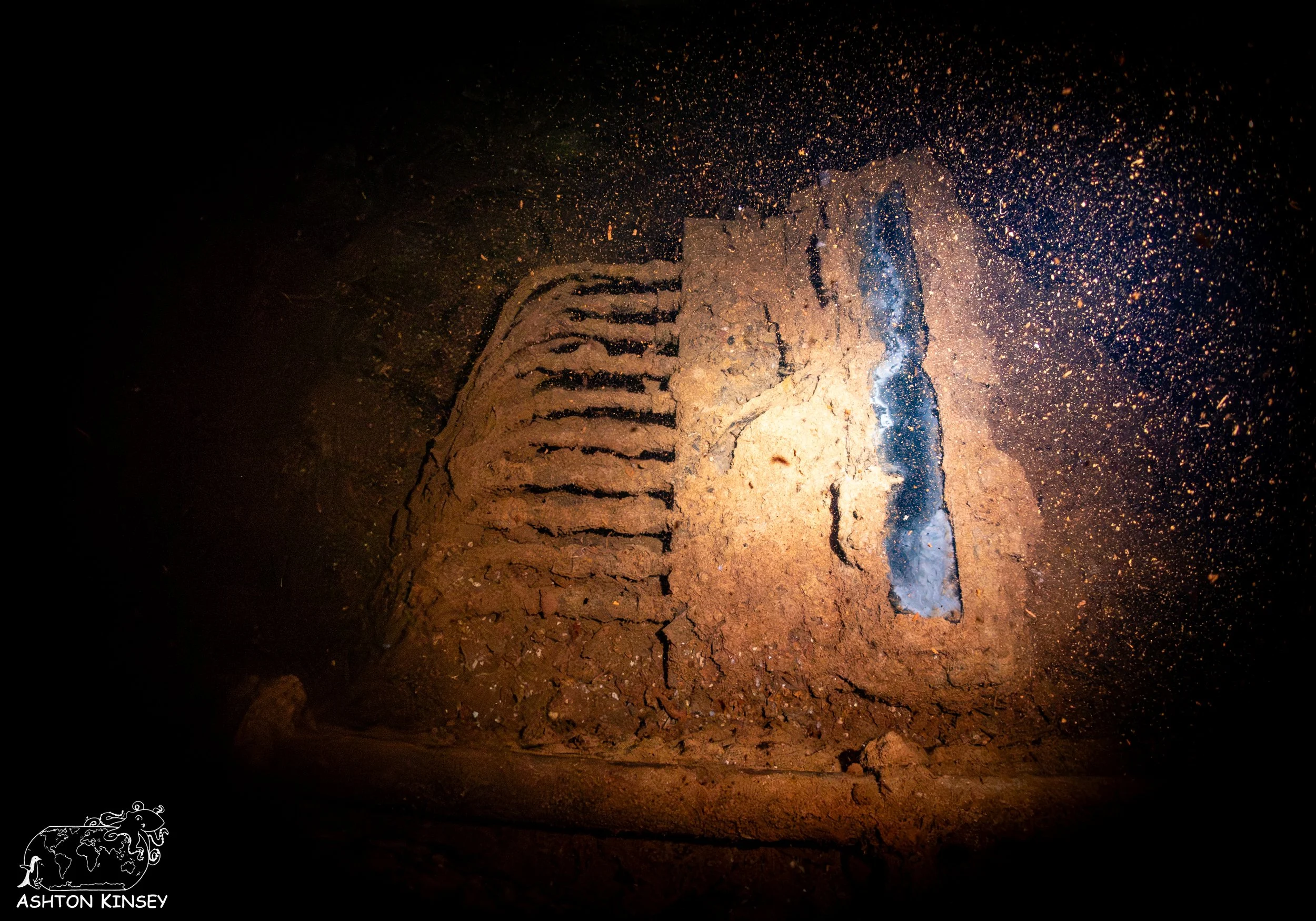
On the stern deck sits two spare propeller blades, and down below the holds are full of cargo; four Isuzu Type 94 trucks, two bulldozers, a prime mover and several spools of barbed wire. There are two tractors whose treads appear to be on “backwards”, it is assumed that they were mainly used for towing other machines instead of pushing. The bow has been heavily blown apart with not much remaining except the twisted and melted ribs leading up to the very tip of the bow.
