Bonaire: Divi Flamingo Resort
Divi Flamingo Beach Resort & Casino
Underwater Safaris
November 23rd - 30th, 2019
Guide Lead: Carlos and Laurel
27 Dives; 22 hours 16 minutes
Surroundings and Diving descriptions taken from “Dive Guide Bonaire” written by Marloes Otten.
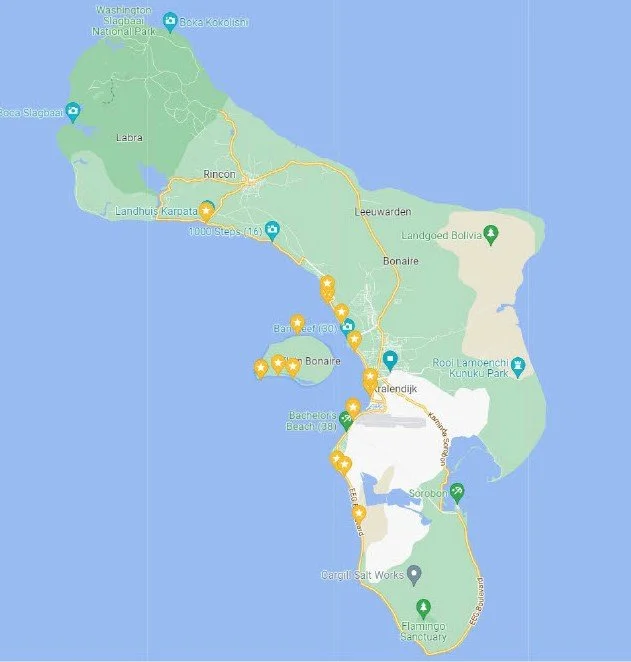
Calabas Reef (House Reef)
Surroundings
This dive site is located off a large resort (Divi Flamingo), meaning that restaurants and other facilities are available. This is a great spot at which non-diving family members can spend the day.
Dive 1: 57’ for 22 minutes Dive 2: 68’ for 22 minutes Dive 4: 71’ for 36 minutes
Dive 5: 71’ for 38 minutes Dive 9: 43’ for 30 minutes Dive 10: 50’ for 43 minutes
Dive 16: 100’ for 30 minutes Dive 18: 41’ for 35 minutes Dive 19: 57’ for 36 minutes
Dive 22: 100’ for 30 minutes Dive 36': 36’ for 61 minutes
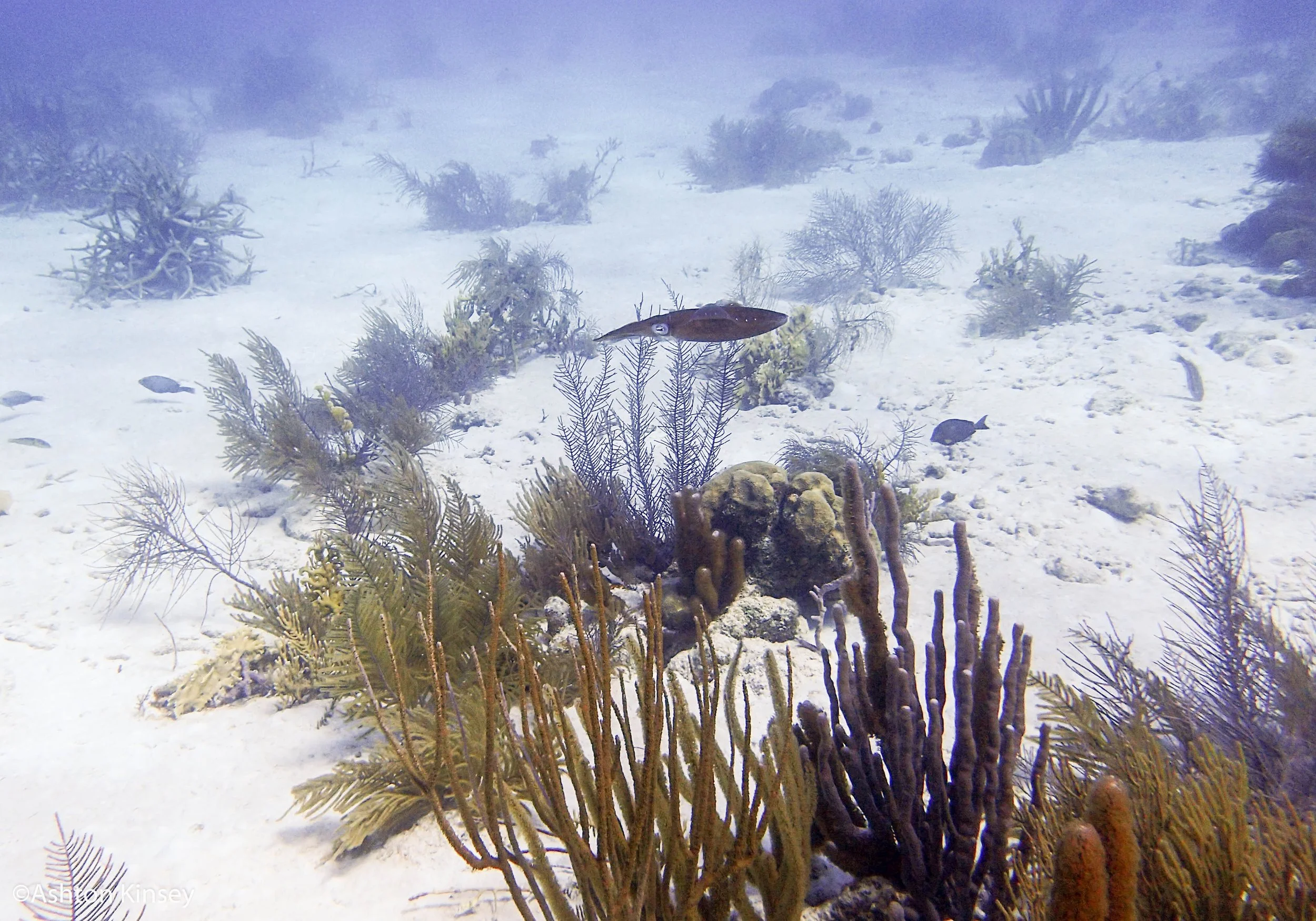
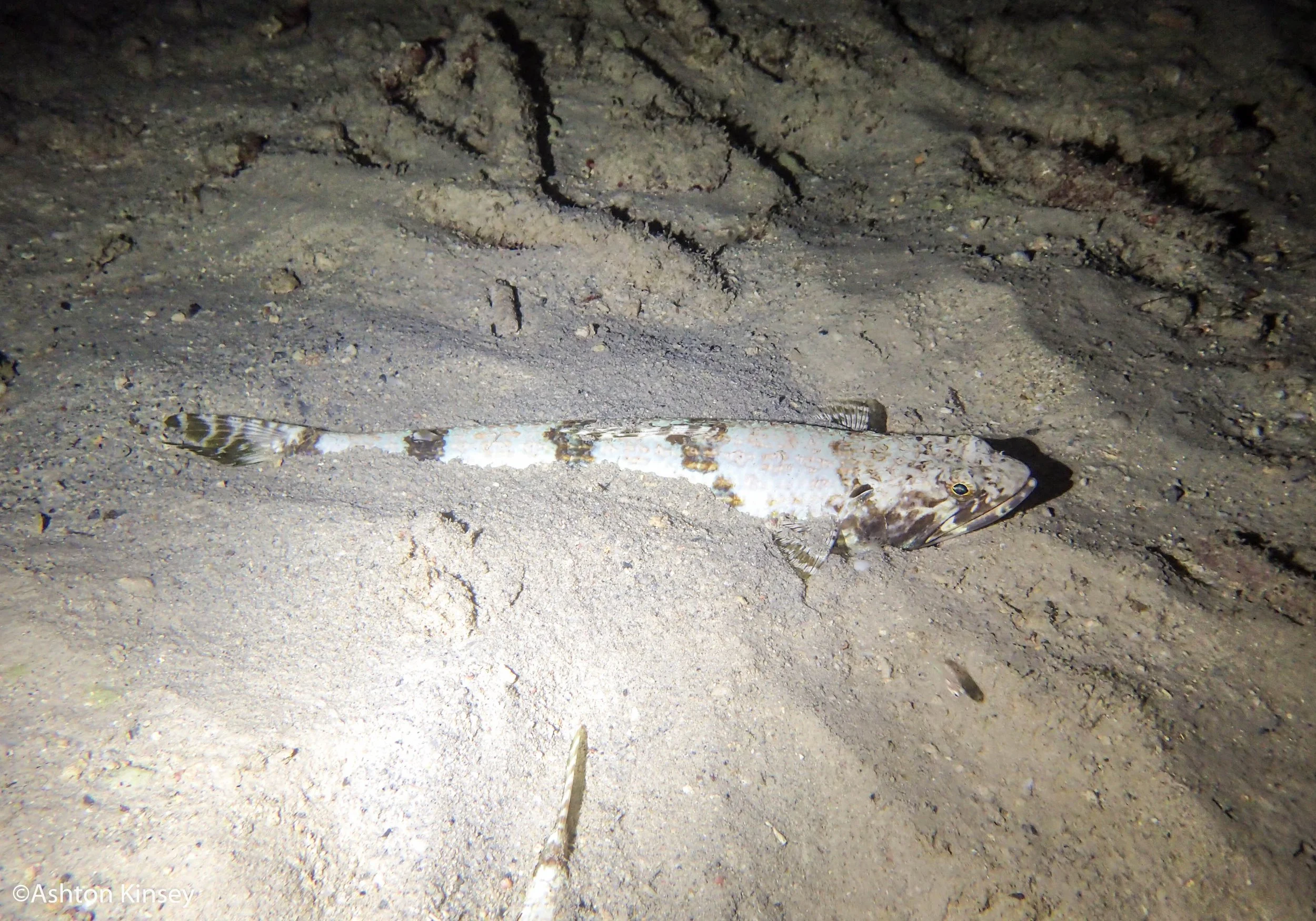
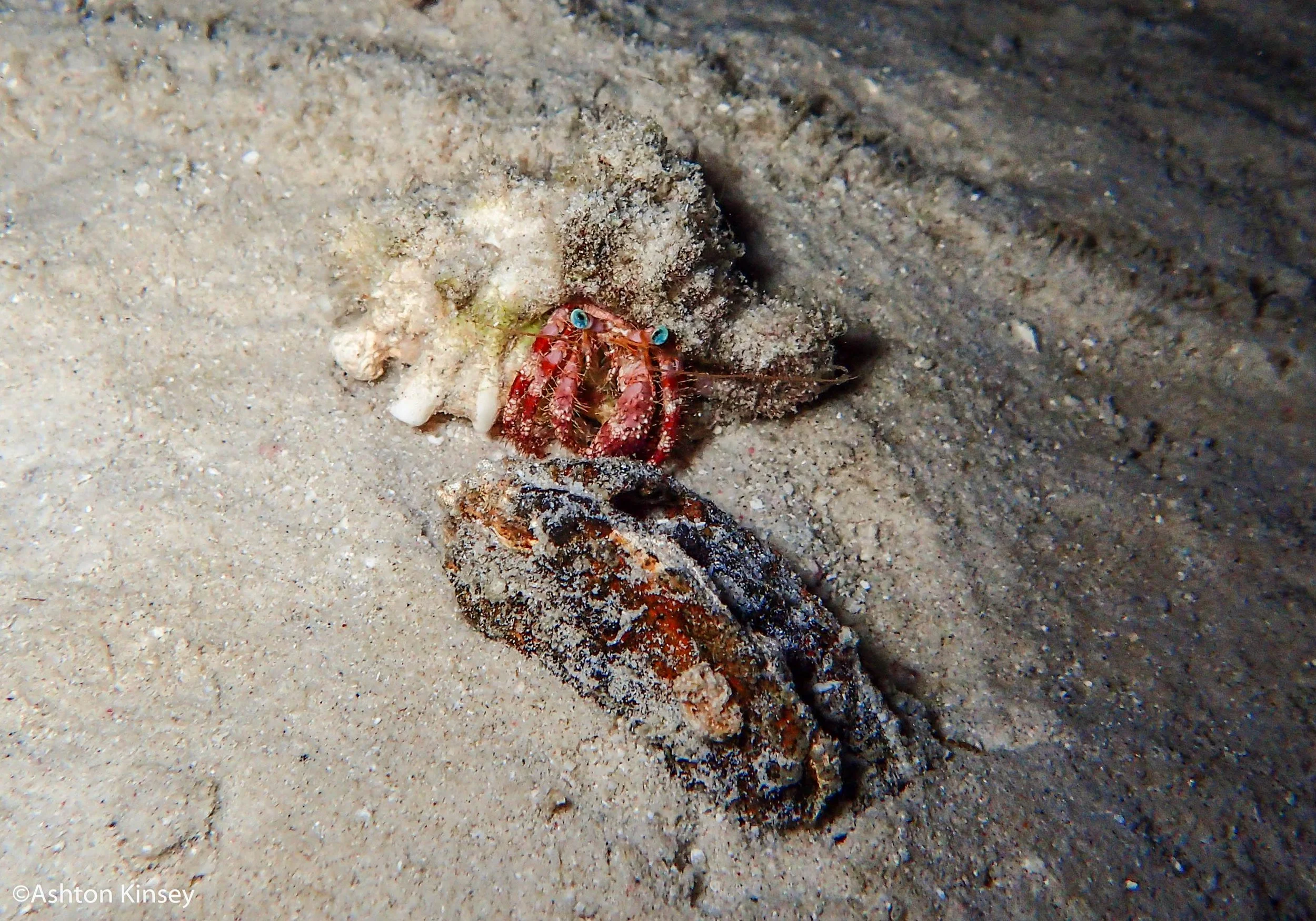
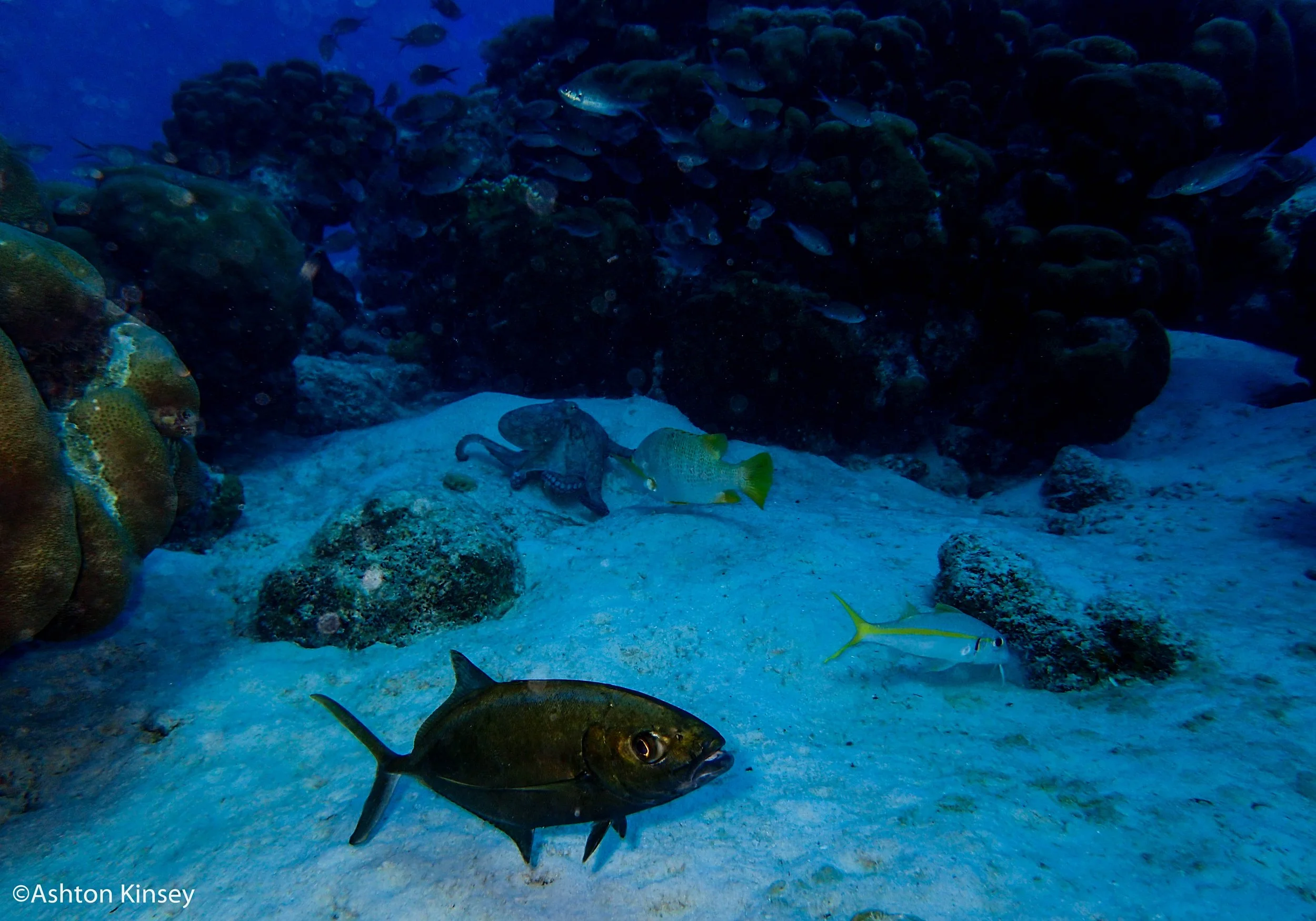
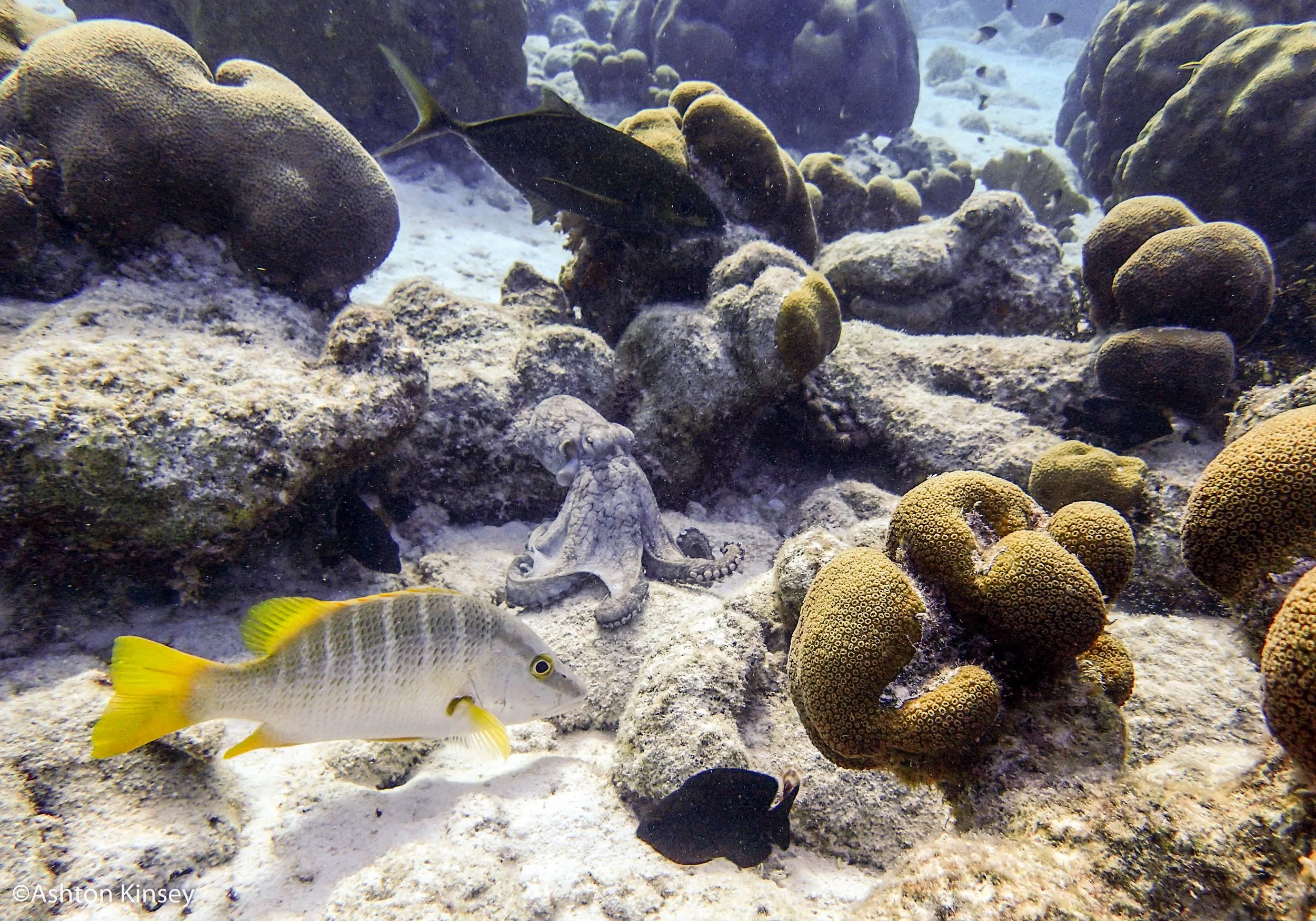
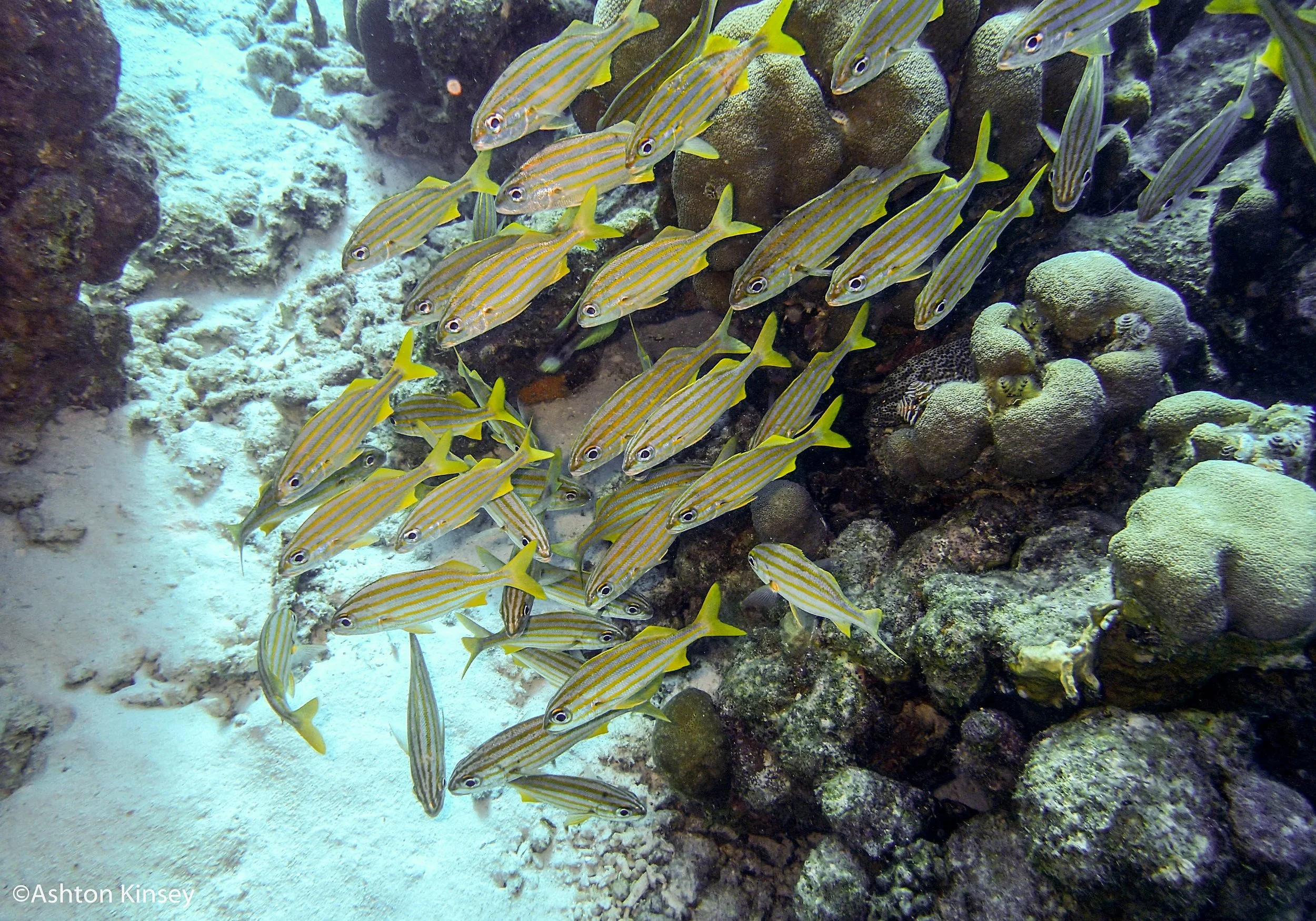
There are two jetties at Divi Flamingo, making it easy to enter the water. You can dive to the left or the right sides of both jetties, making many different dive routes possible. This means that you could stay here all day and make two dives. It's also easy to enter the water from the beach next to the Carib Inn. This is also a great snorkeling site. In the shallows, there isn't much coral, although there is a large variety of fish species. At this site, snorkelers can spot Goatfish, Grunts, Bone Fish, and Lizardfish. Schools of squid often swim just below the water's surface.
From a depth of 5 meters (16 feet), the reef wall descends to a depth of 30 meters (98 feet), where it again gives way to a sandy floor. From a depth of 4 meters (13 feet), the reef wall is overgrown with coral and starts to drop from a depth of five meters (16 feet), although the true drop-off is located at a depth of 11 meters (36 feet). This is not a dense reef. Patches of sand are scattered throughout it, but the northern reef is denser than the southern reef.
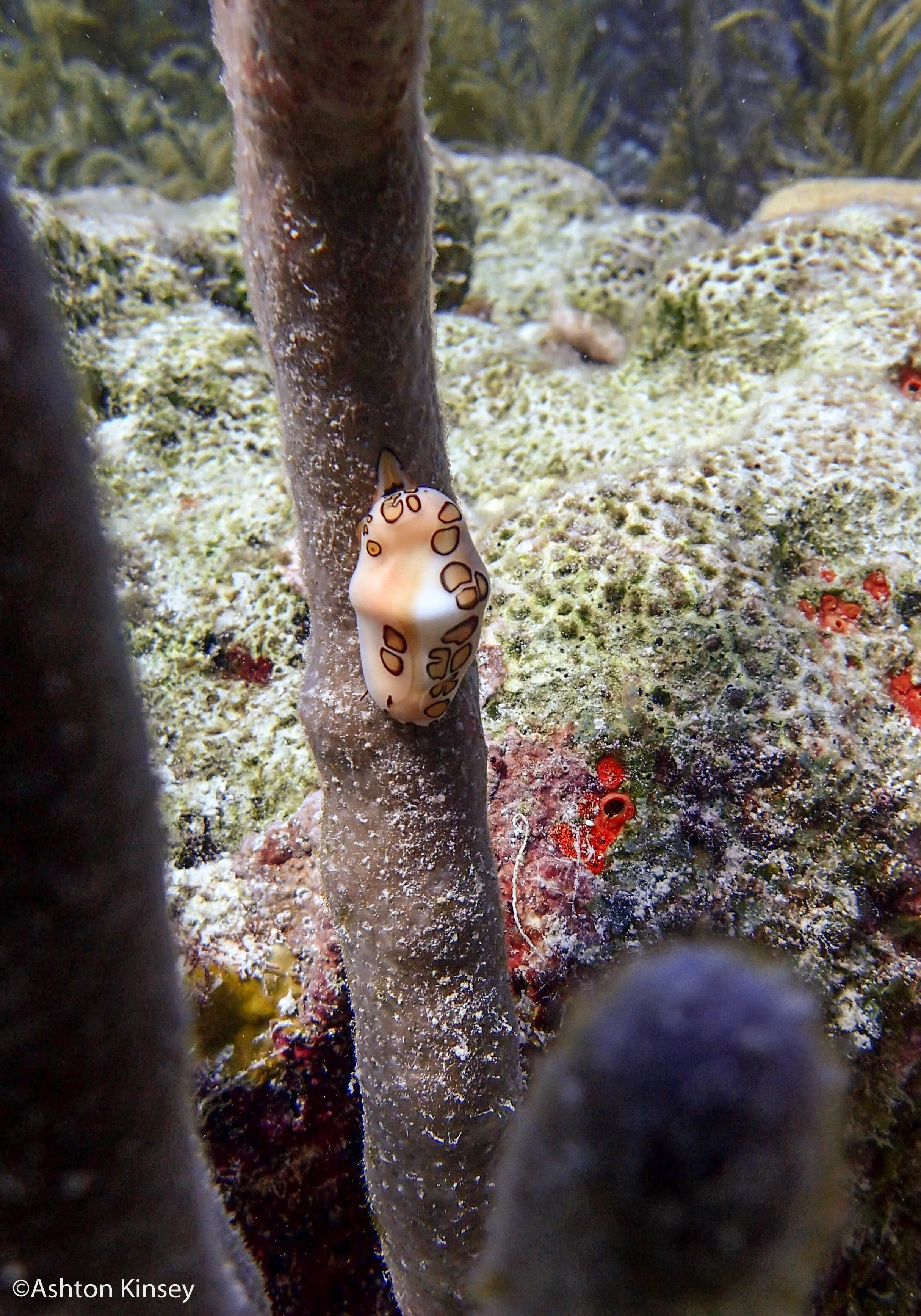
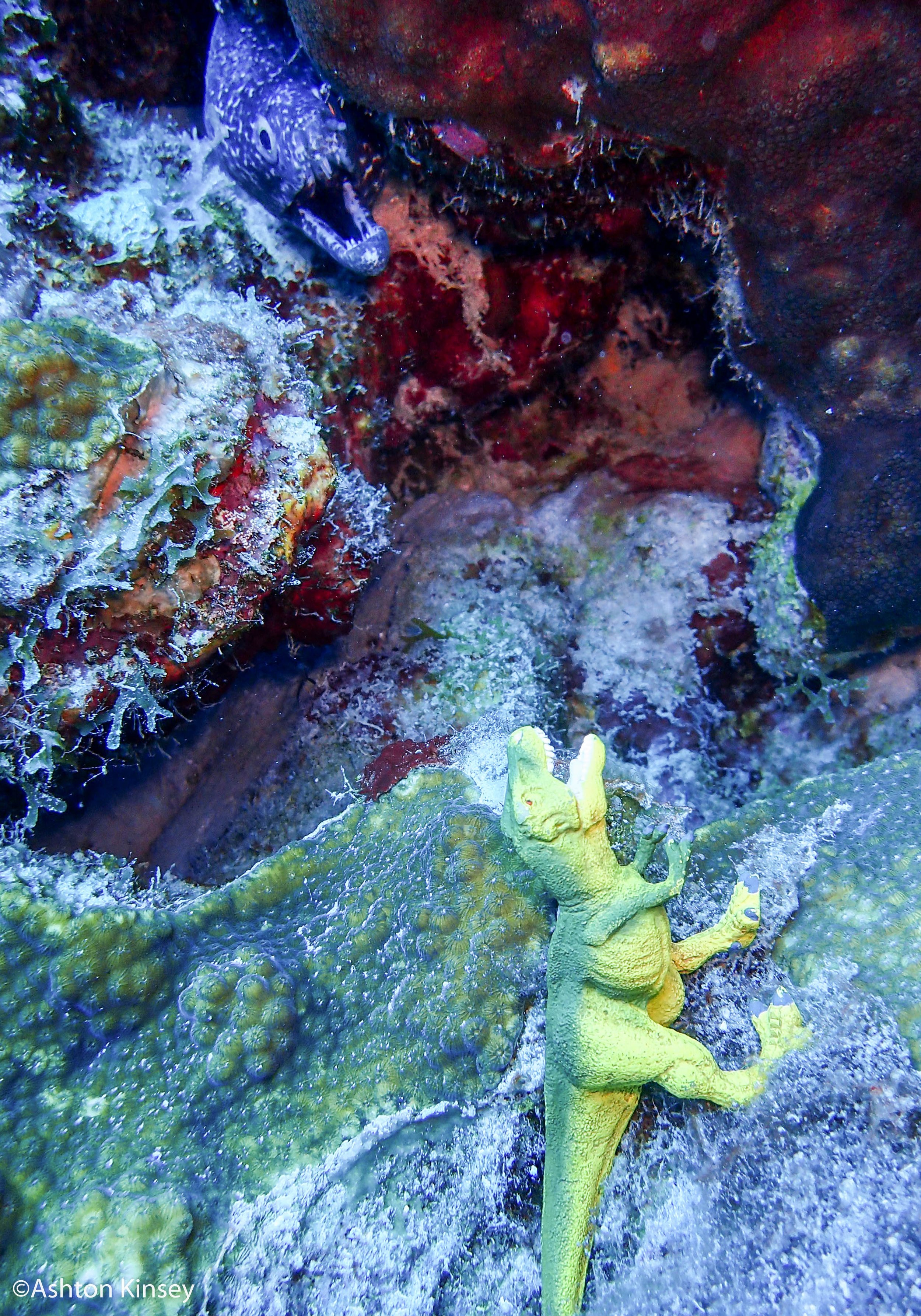
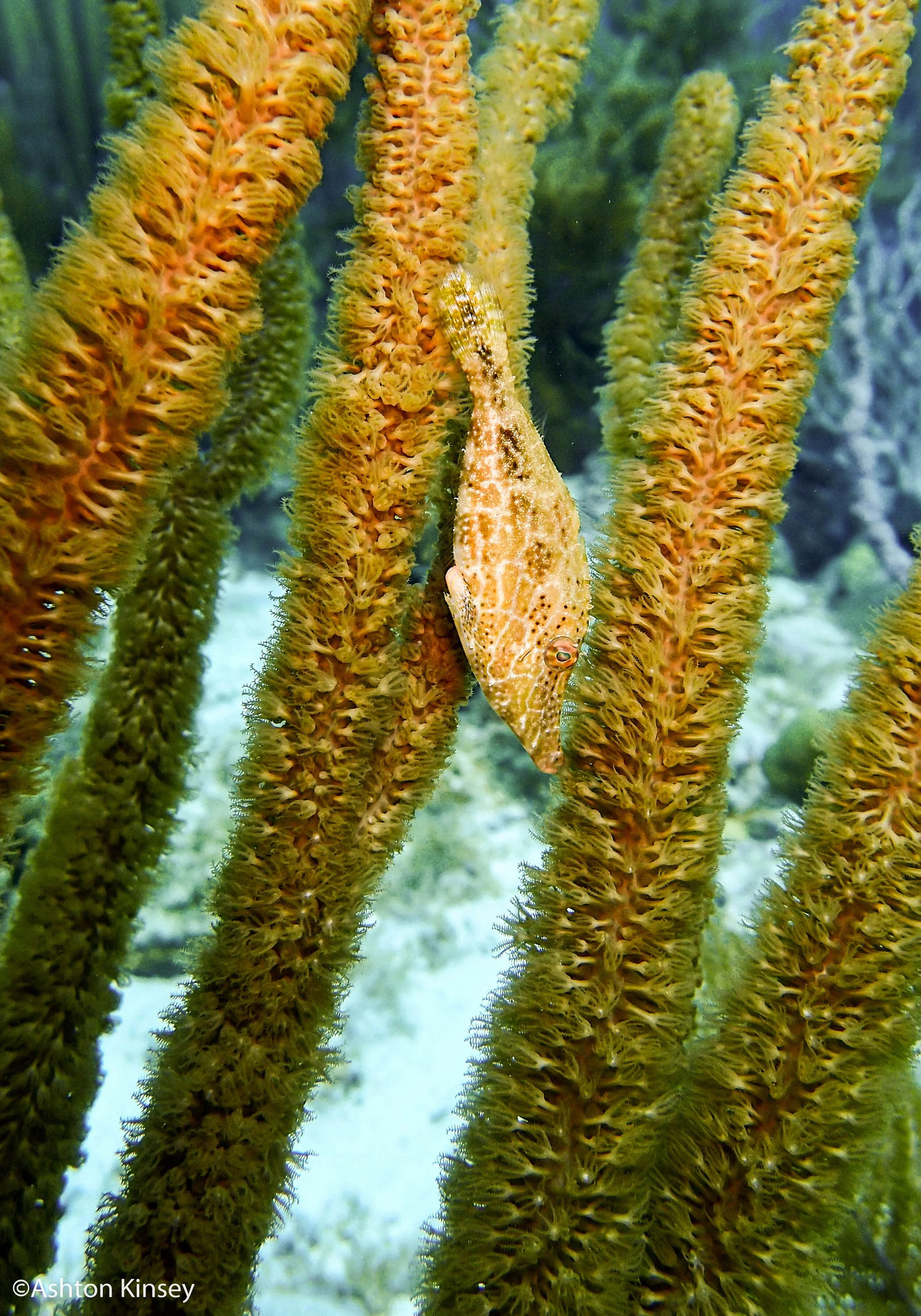
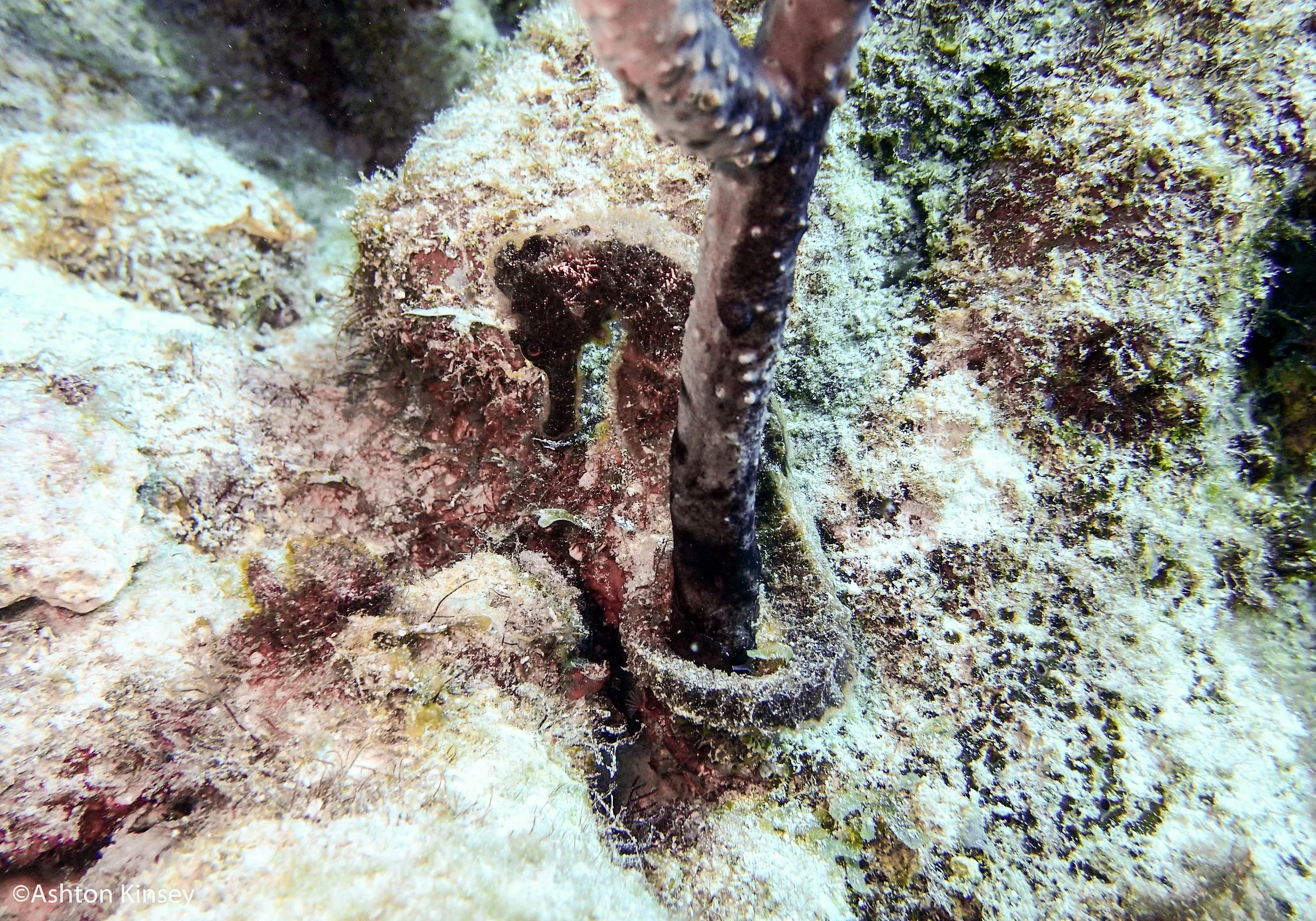
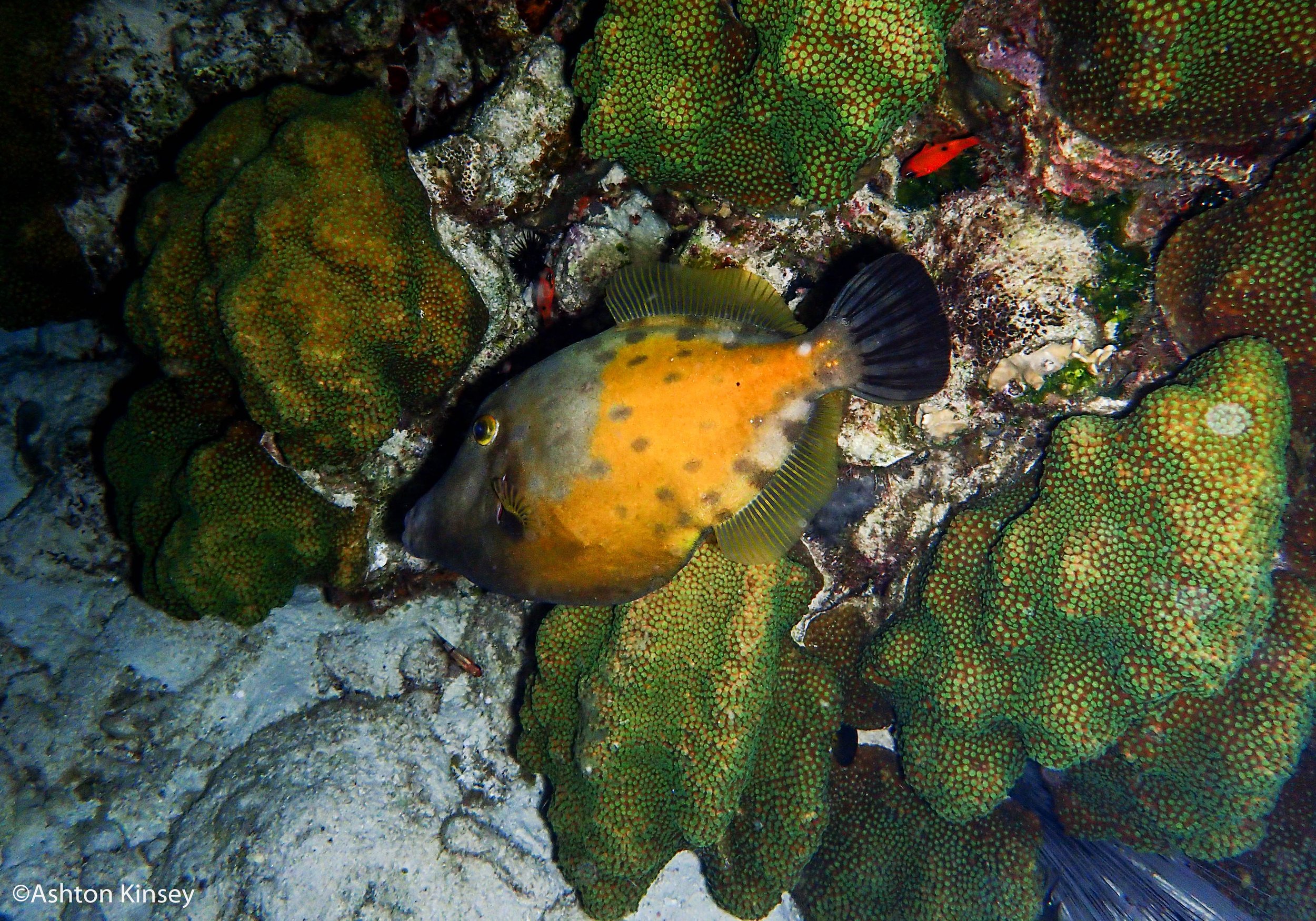
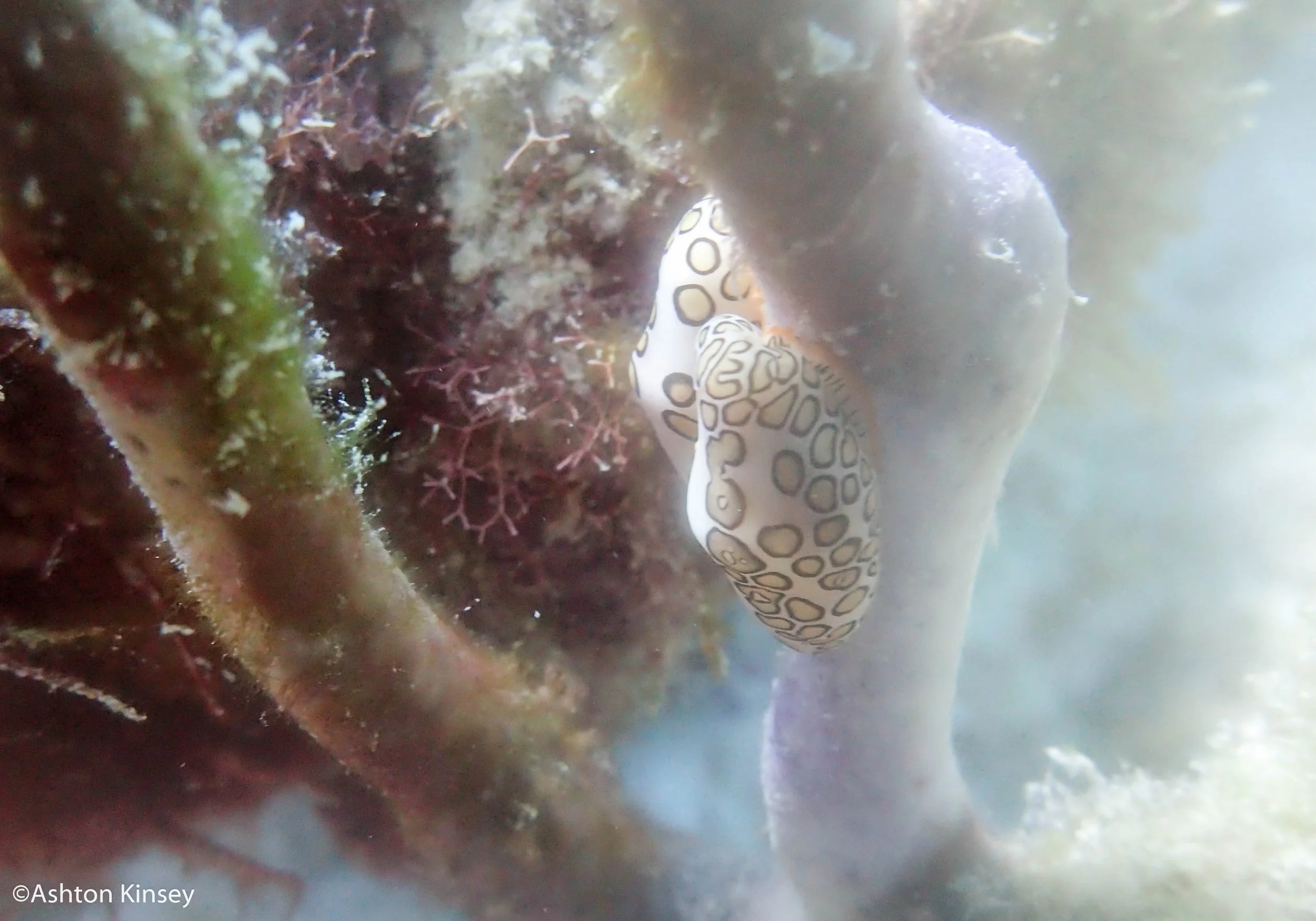
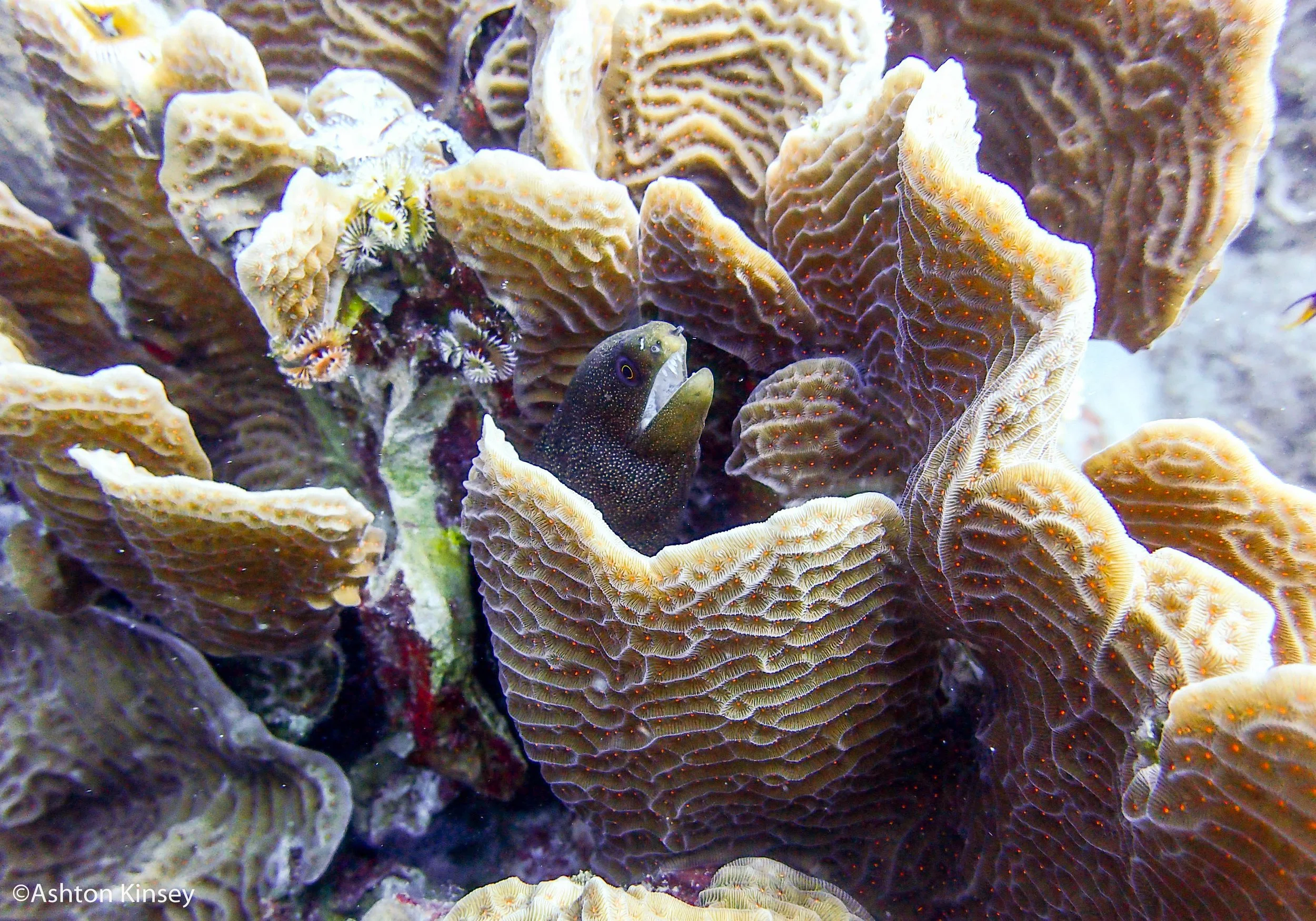
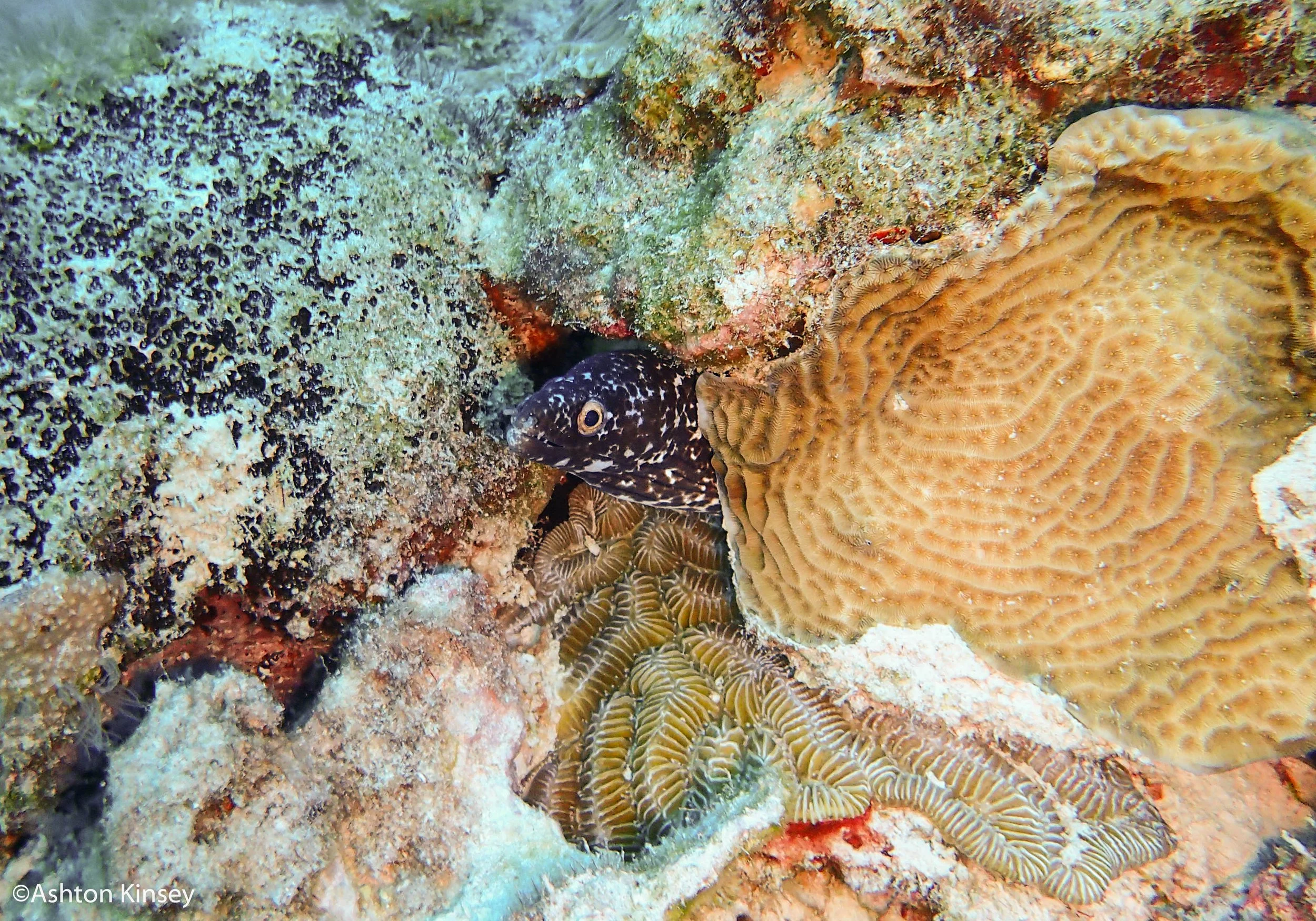
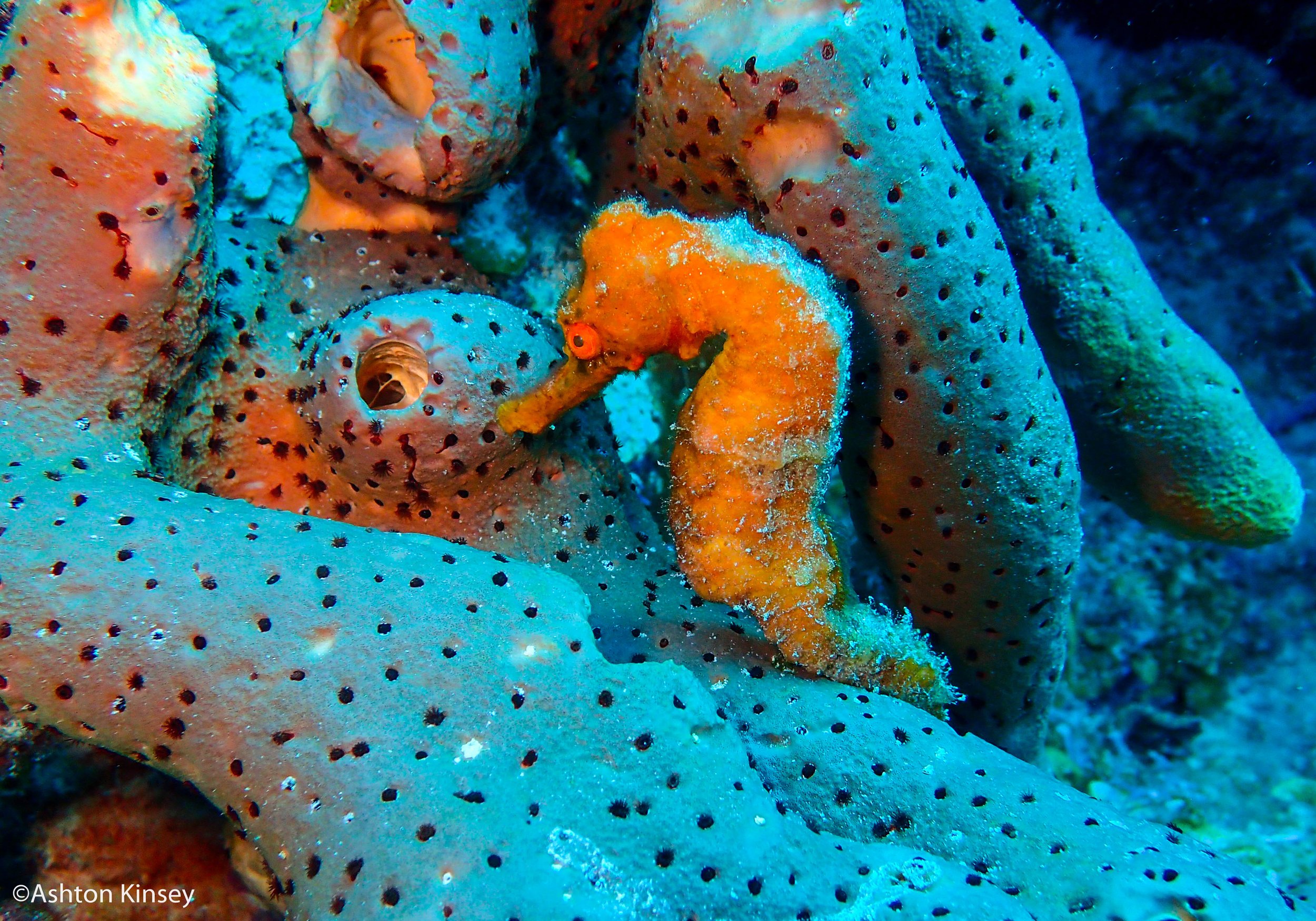
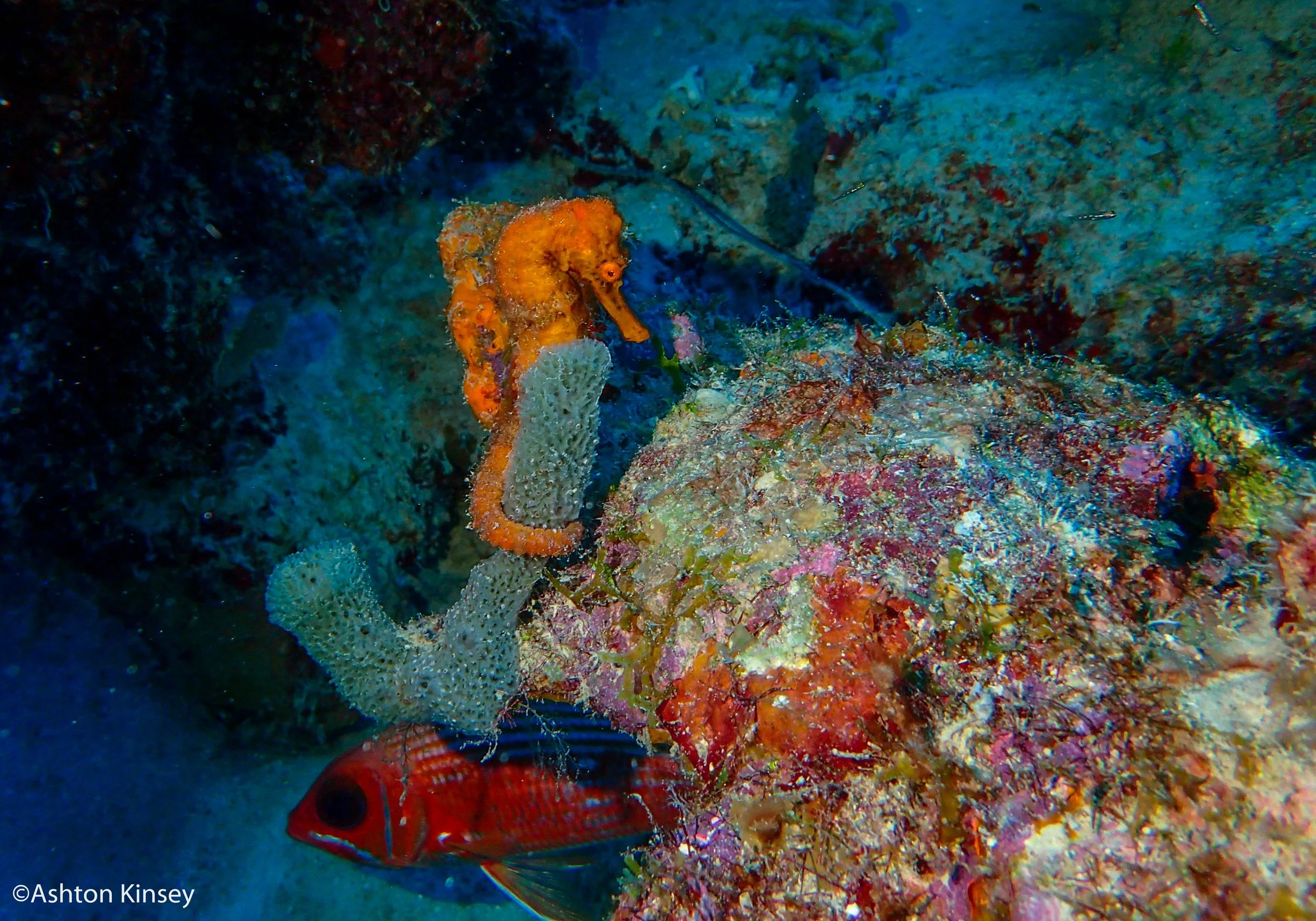
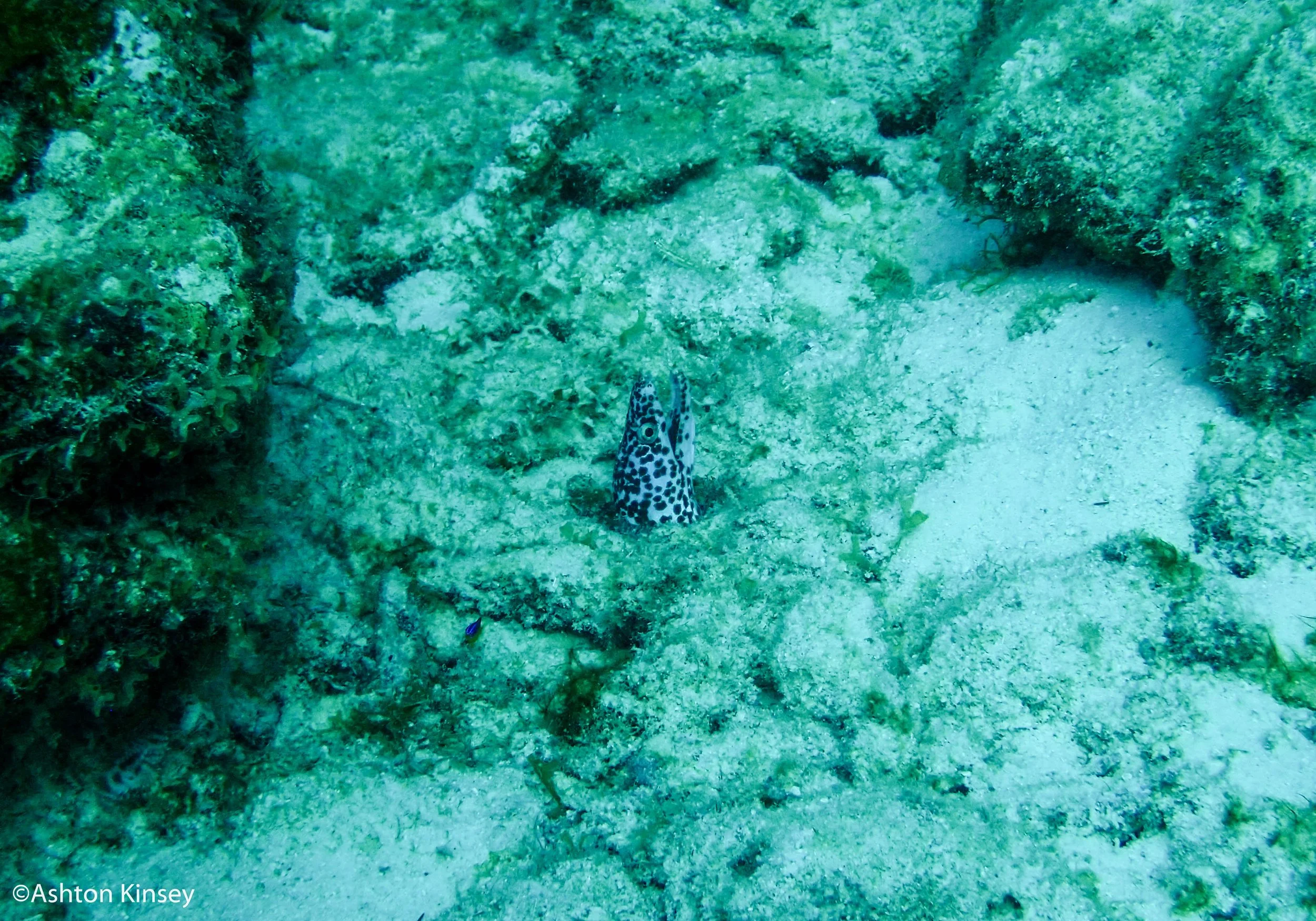
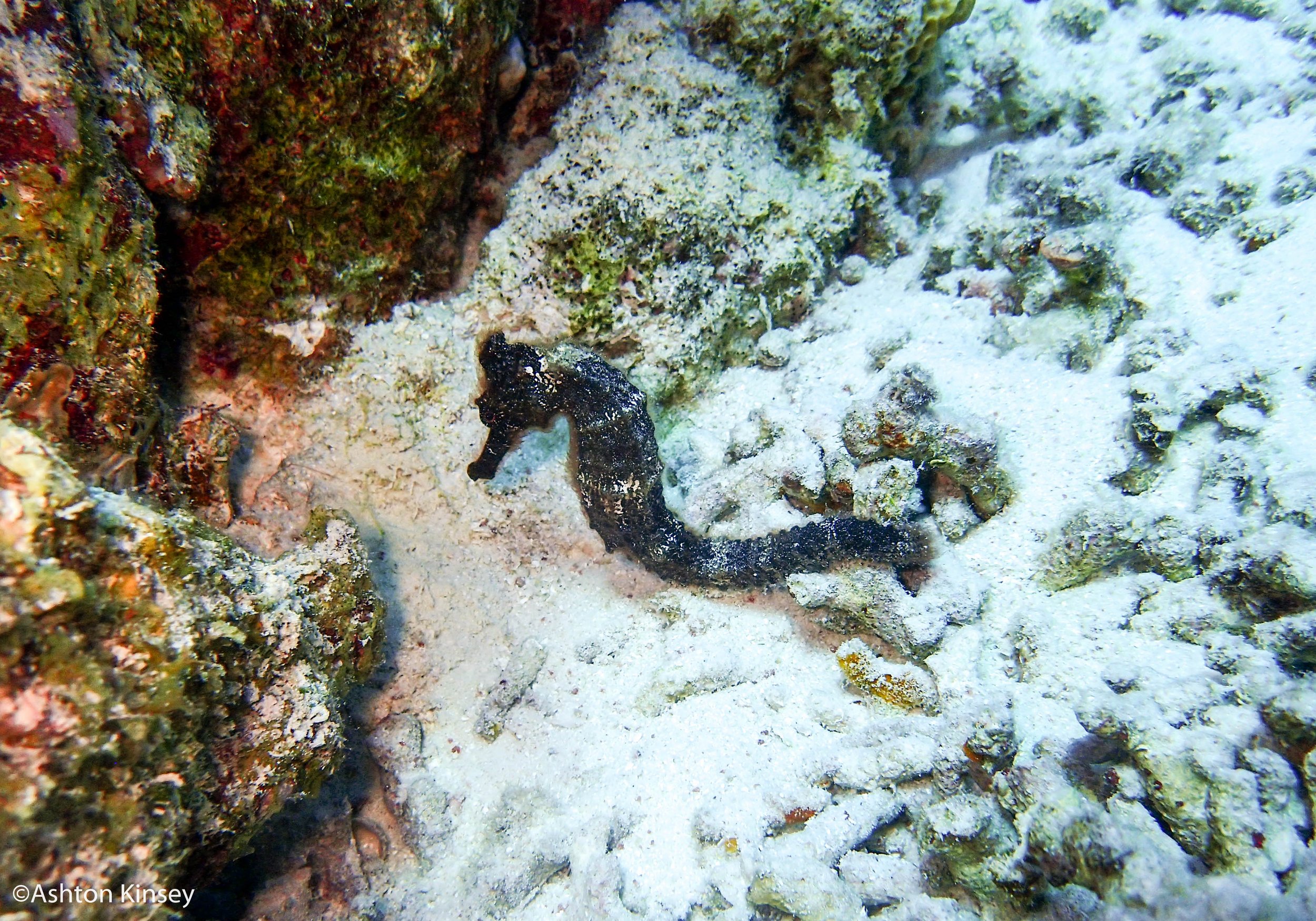
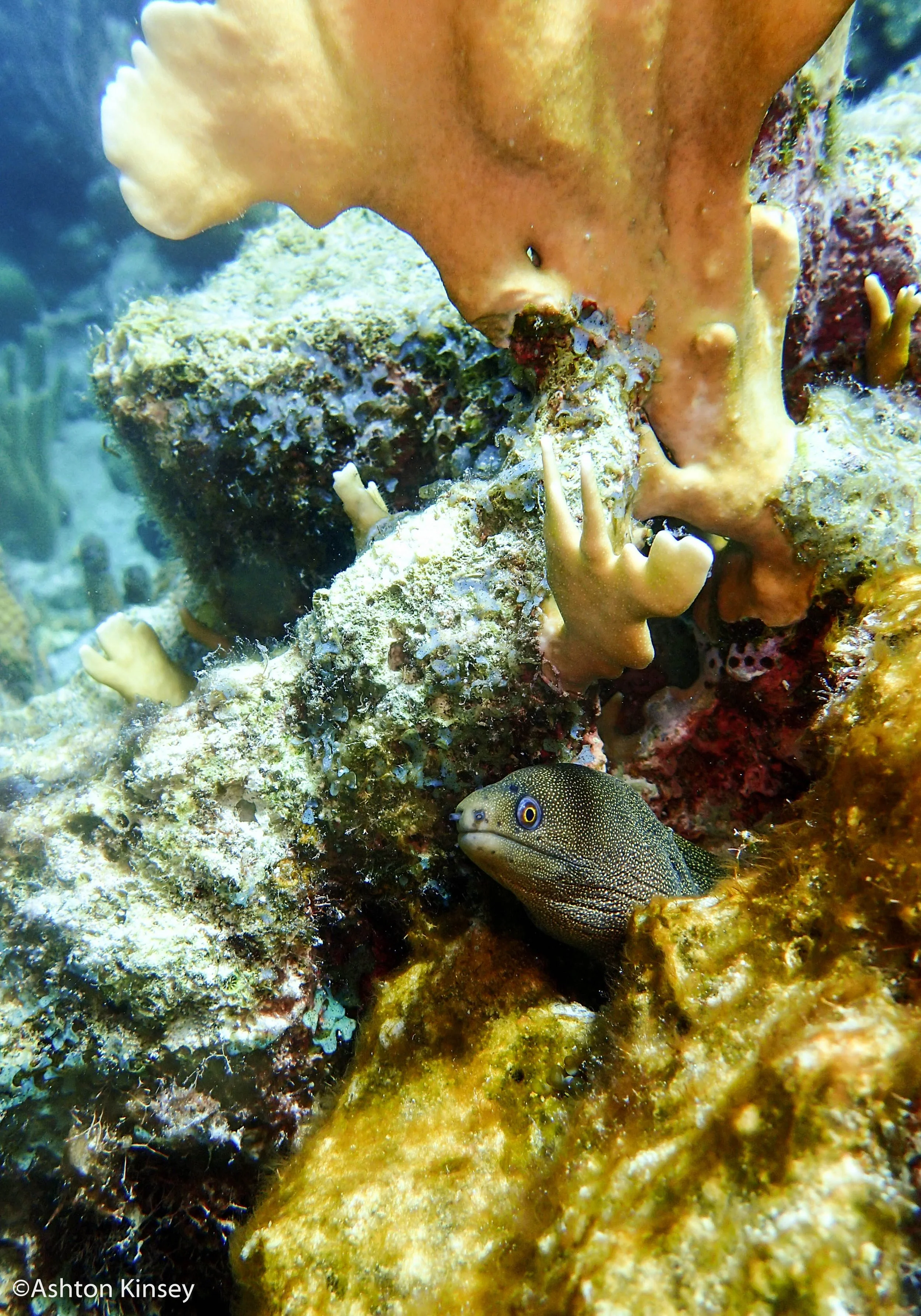
The southern side of the reef has more soft coral than the northern side, although mostly of it consists of hard coral. In shallower waters, Flamingo Tongue Cowries and juvenile Filefish can sometimes be sighted amongst the soft coral. Seahorses are also often spotted amongst the soft coral. They like to grab onto the harder, inner sections of the soft coral that keep them well hidden. Spotted Drums (look for juveniles underneath the coral formations) and various Moray species can be found along the reef wall.
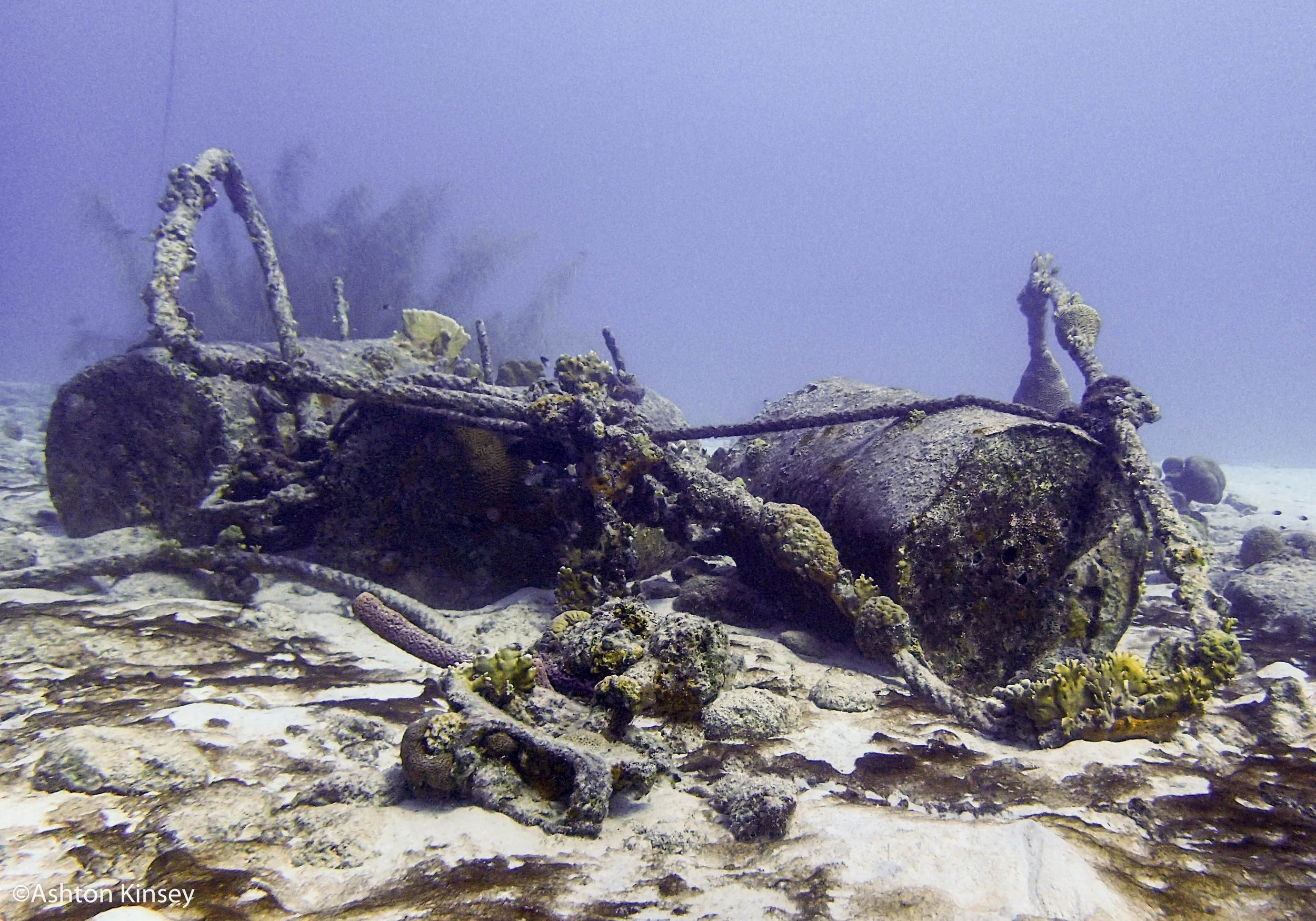
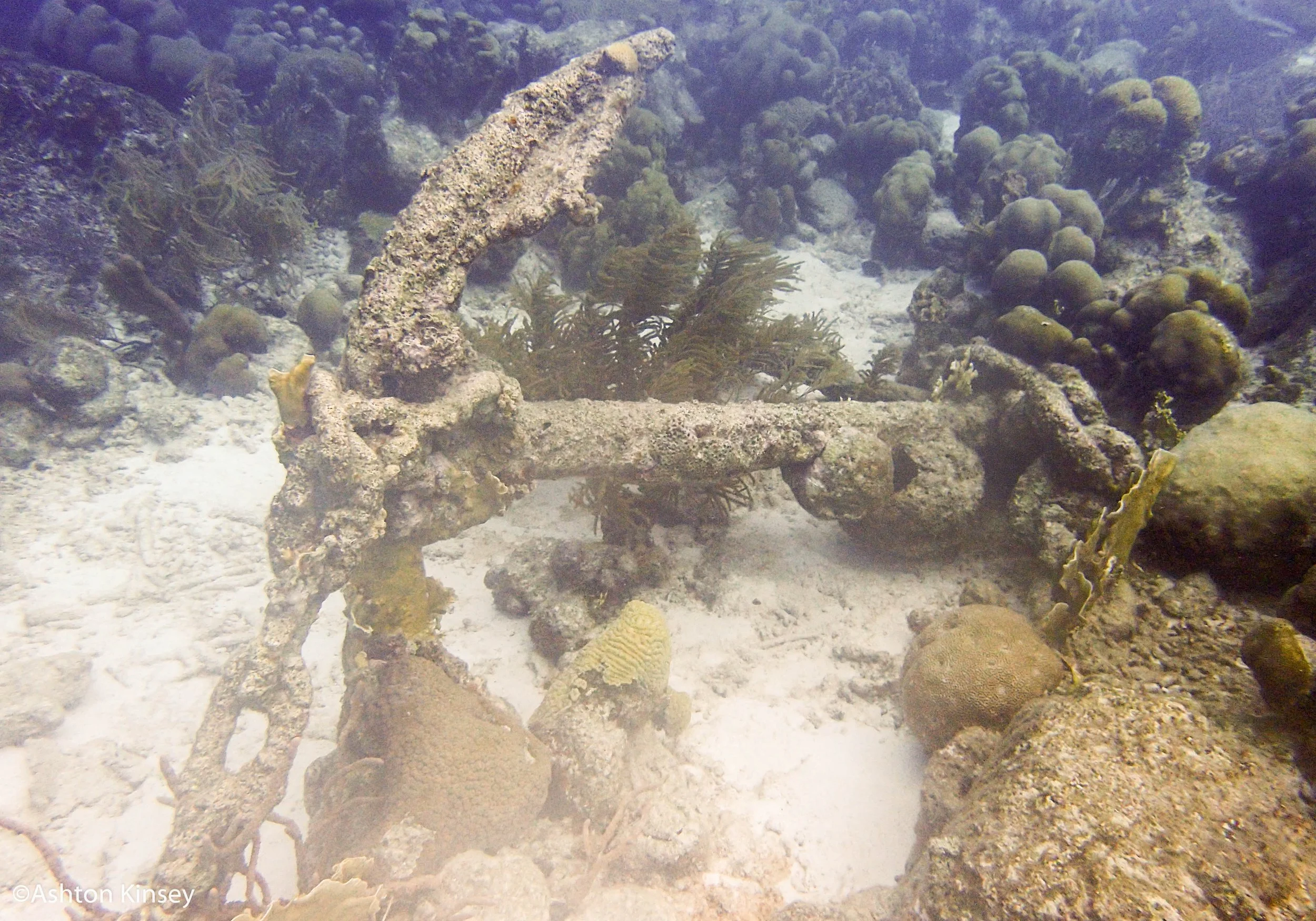
Several anchors lie on the sandy floor of the shallow bank. A large anchor lies just next to the white buoy off the beach at a depth of 5 meters (16 feet), while a smaller anchor lies next to it at a depth of 4 meters (13 feet).
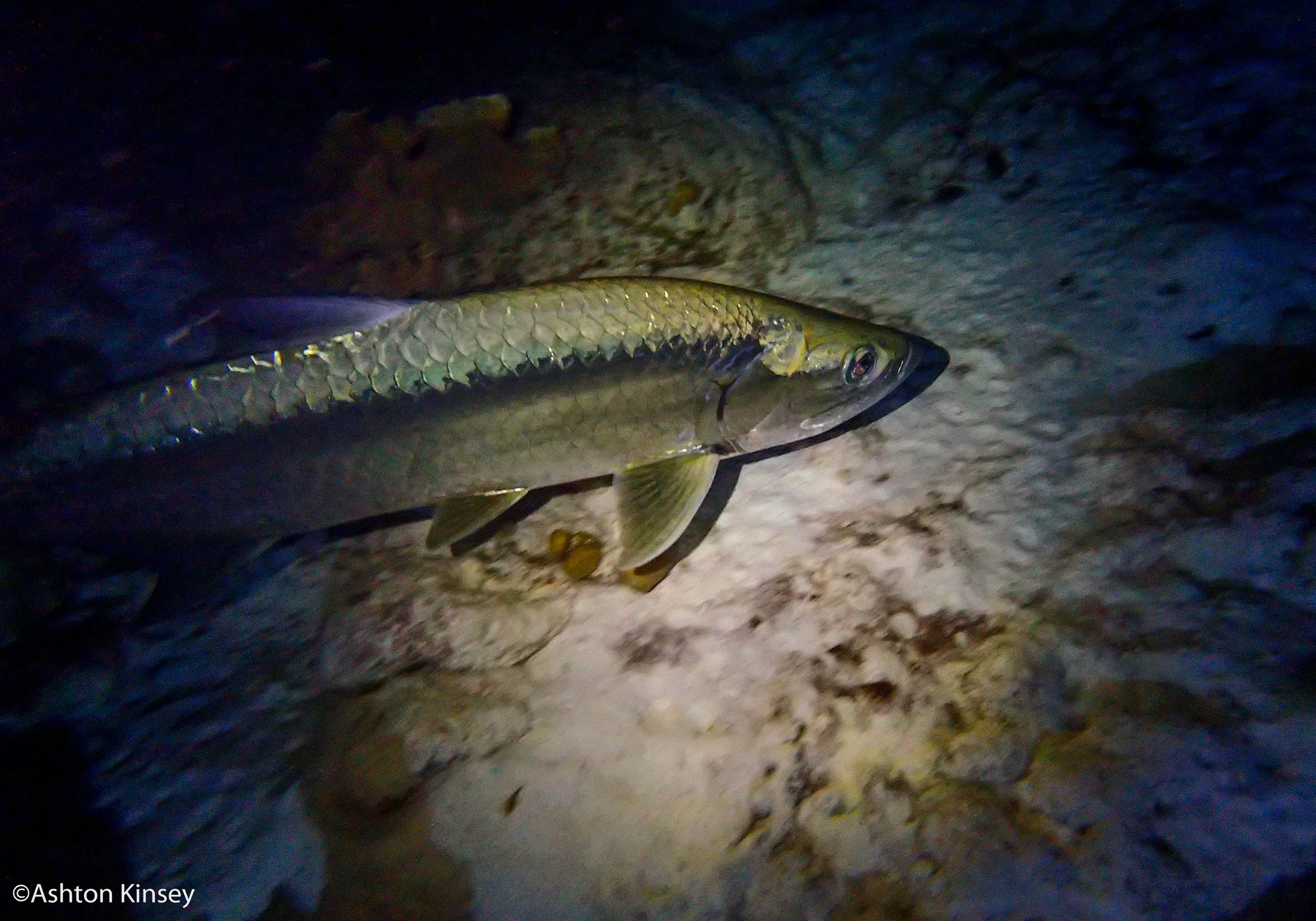
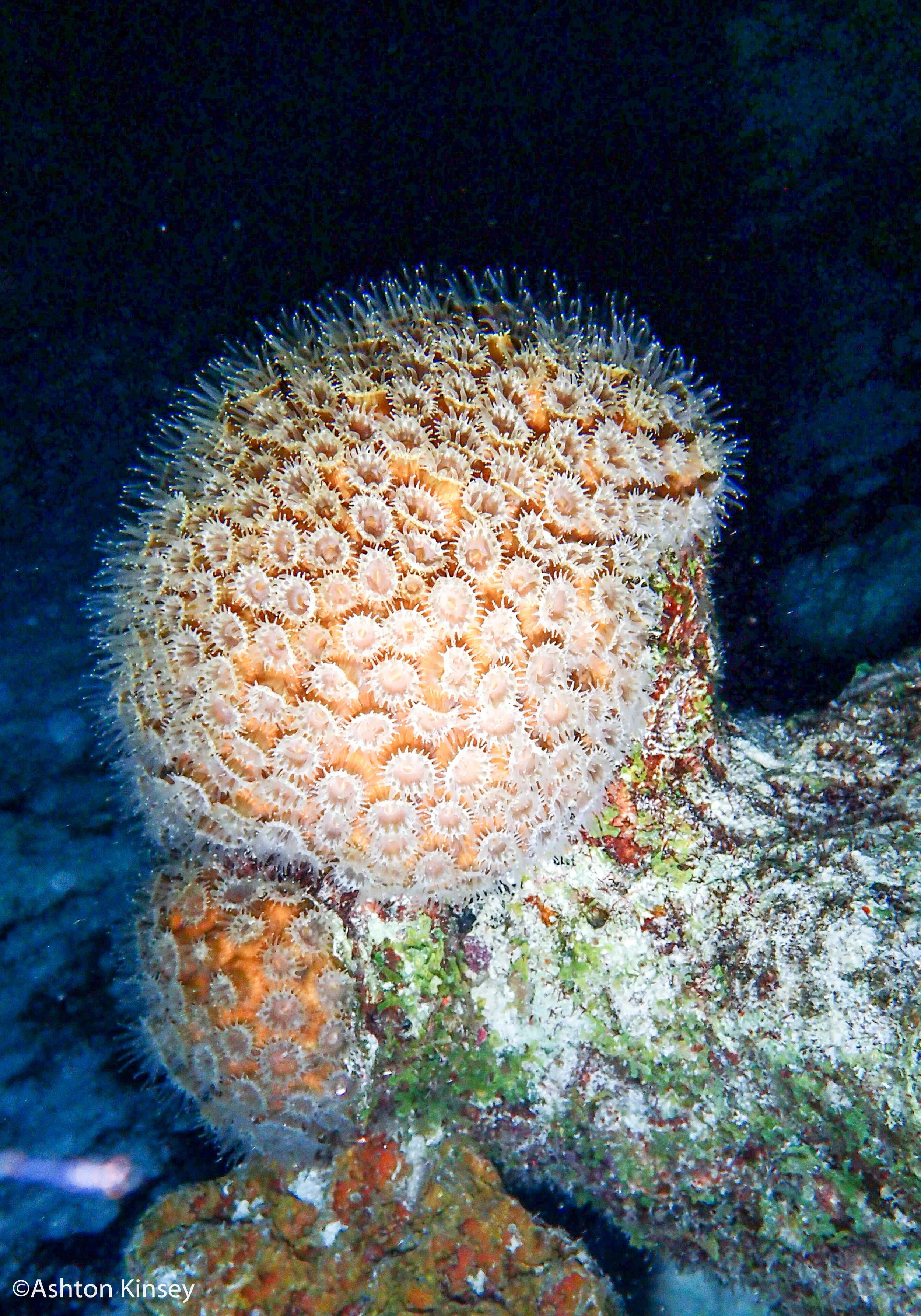
The wreck of a small sailboat lies at a depth of 23 meters (75 feet) on the Flamingo side of the reef. Only the hull remains with its bow facing the shore. Different species of Shrimp and Sea Slugs hide here, as do Black & White Crinoids, Spotted Morays, Tarpon and Barracuda. Somewhat northwards, you'll find an enormous anchor -which serves as a memorial- at a depth of 8 meters (26 feet).
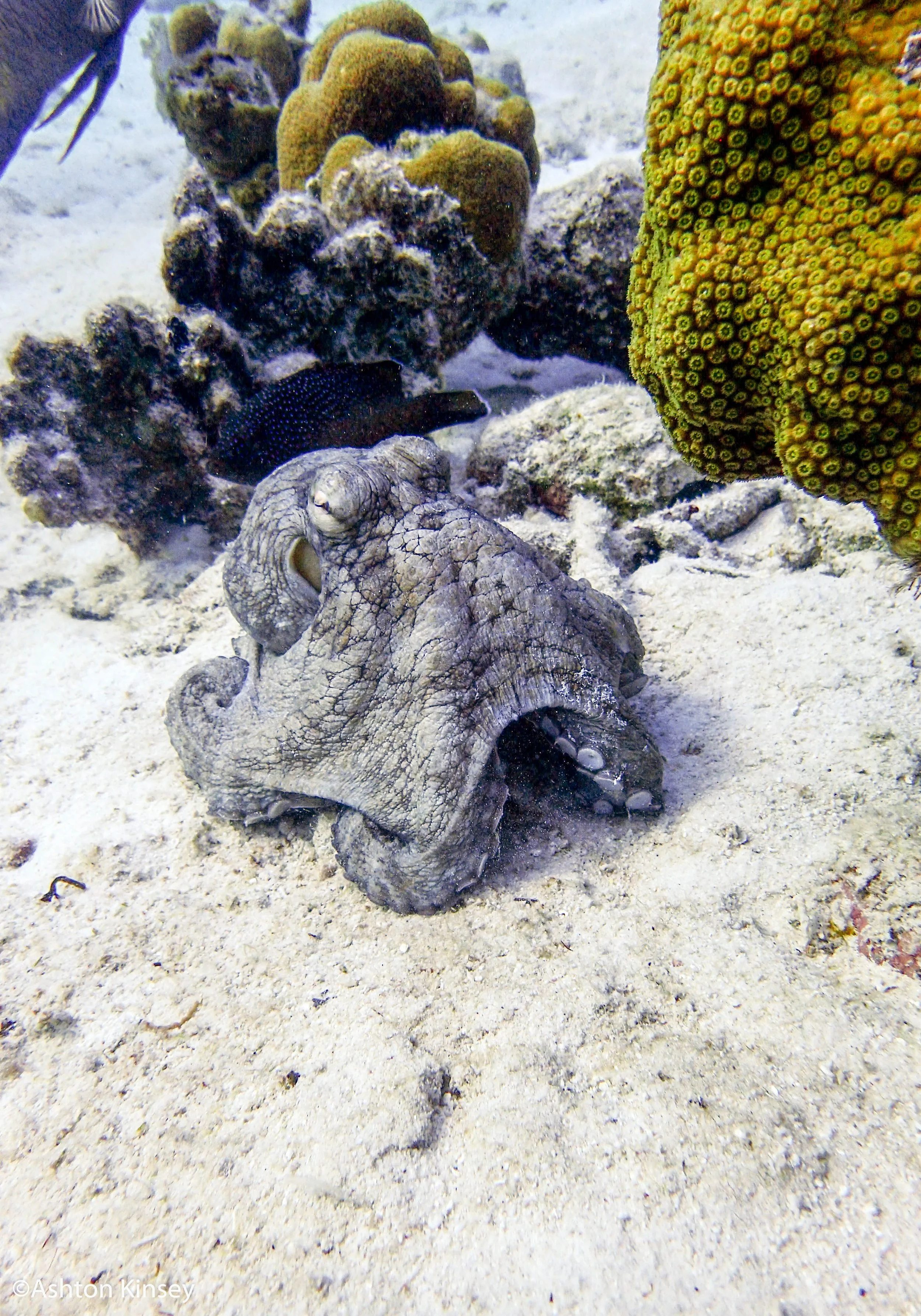
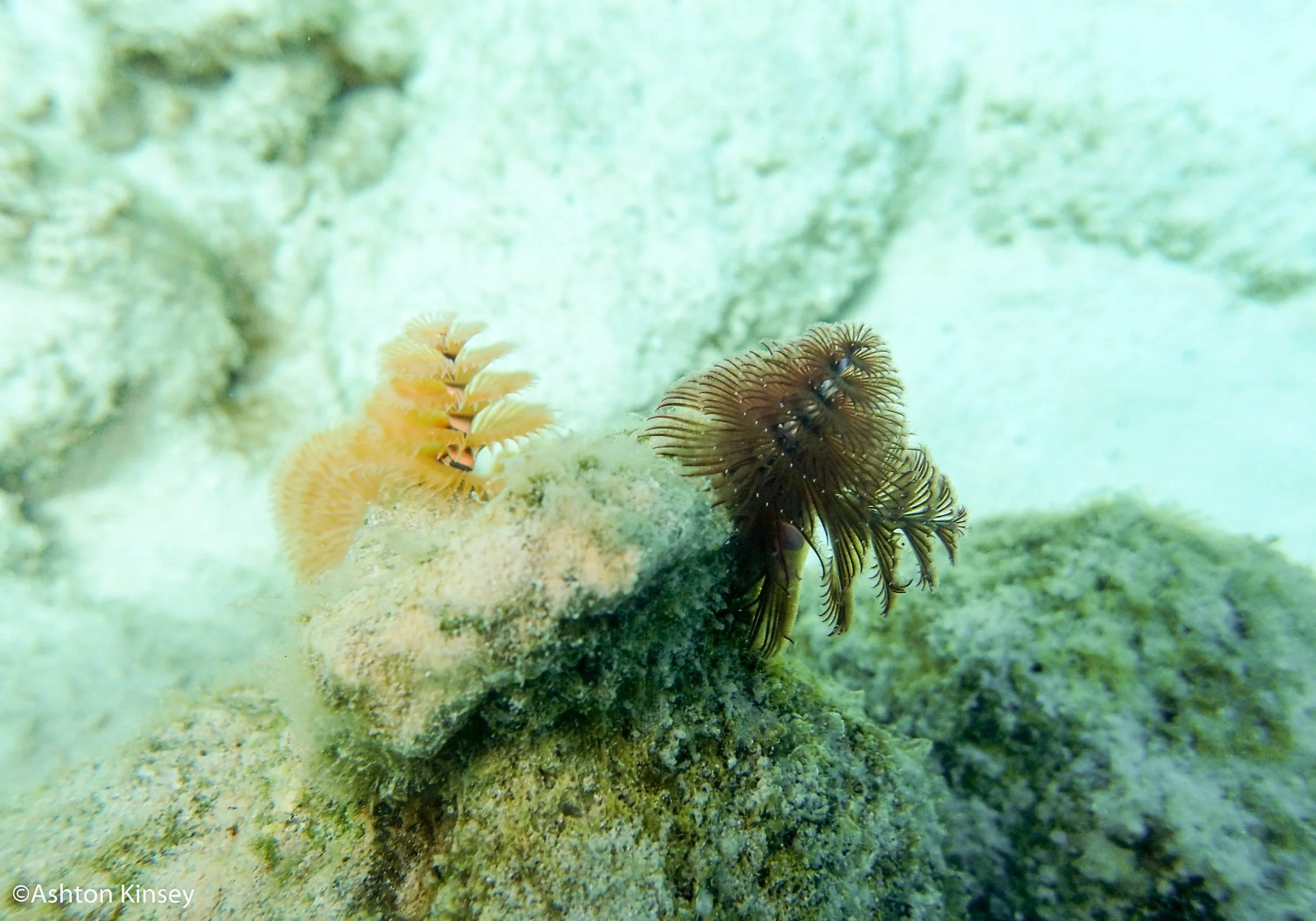
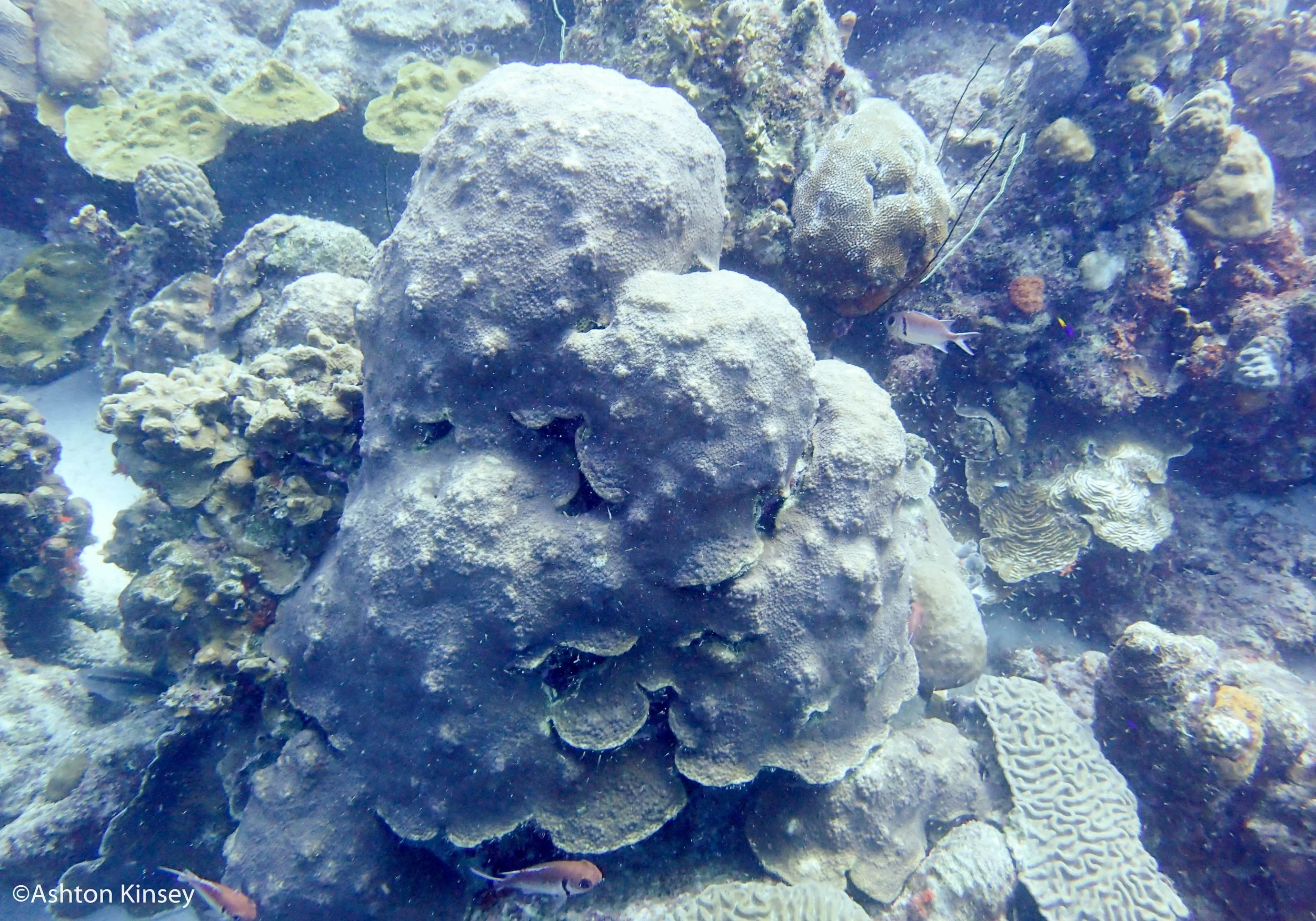
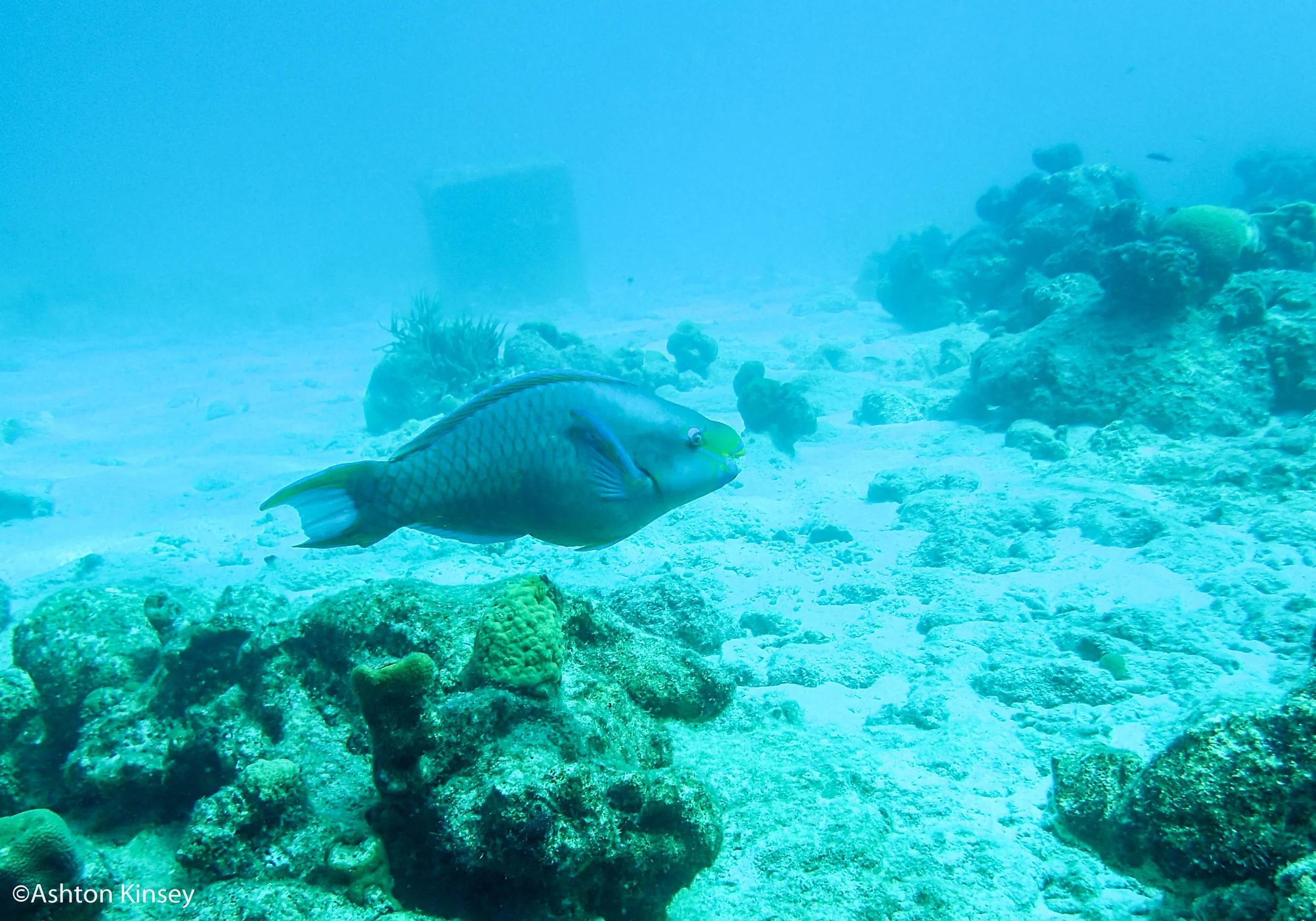
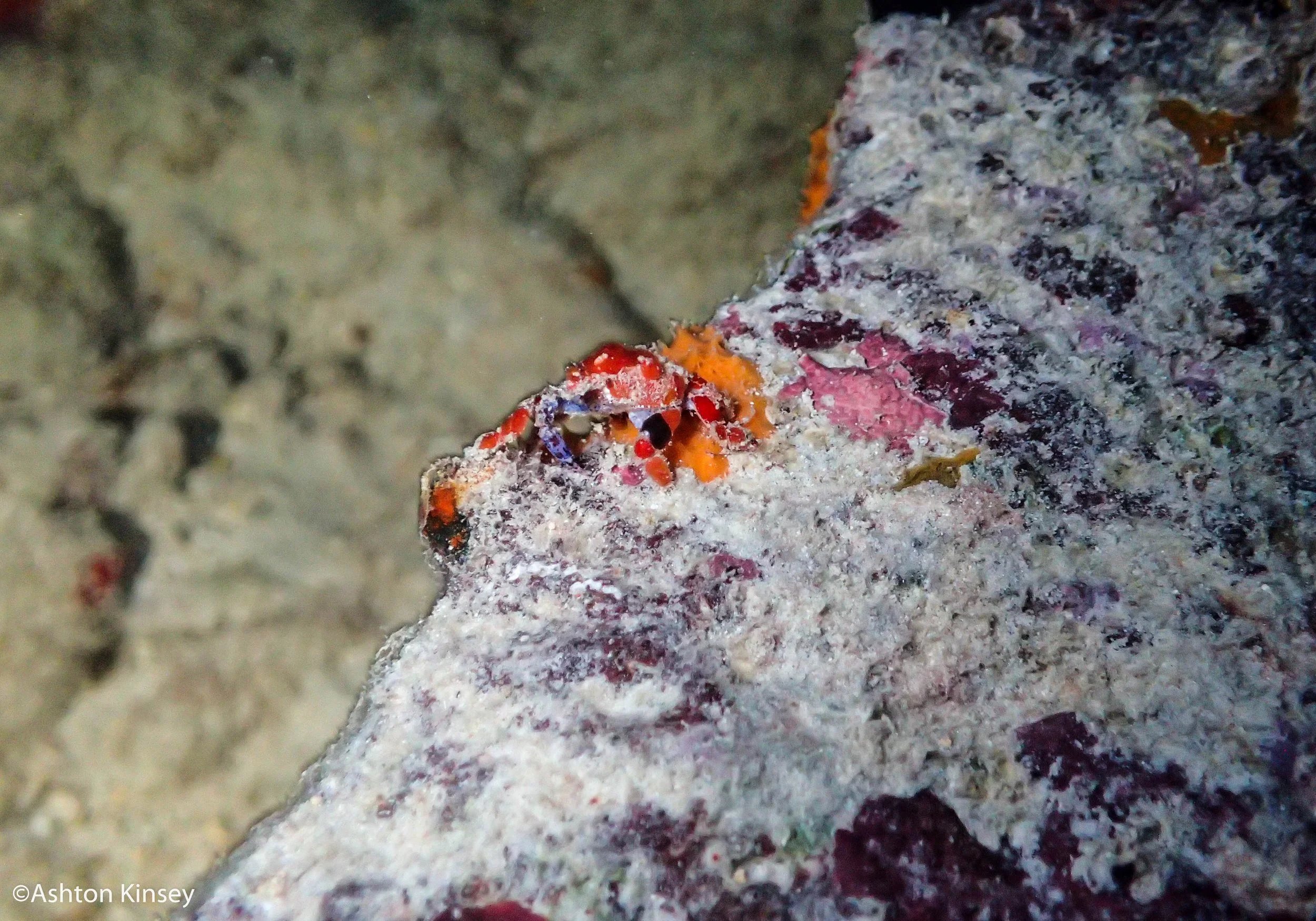
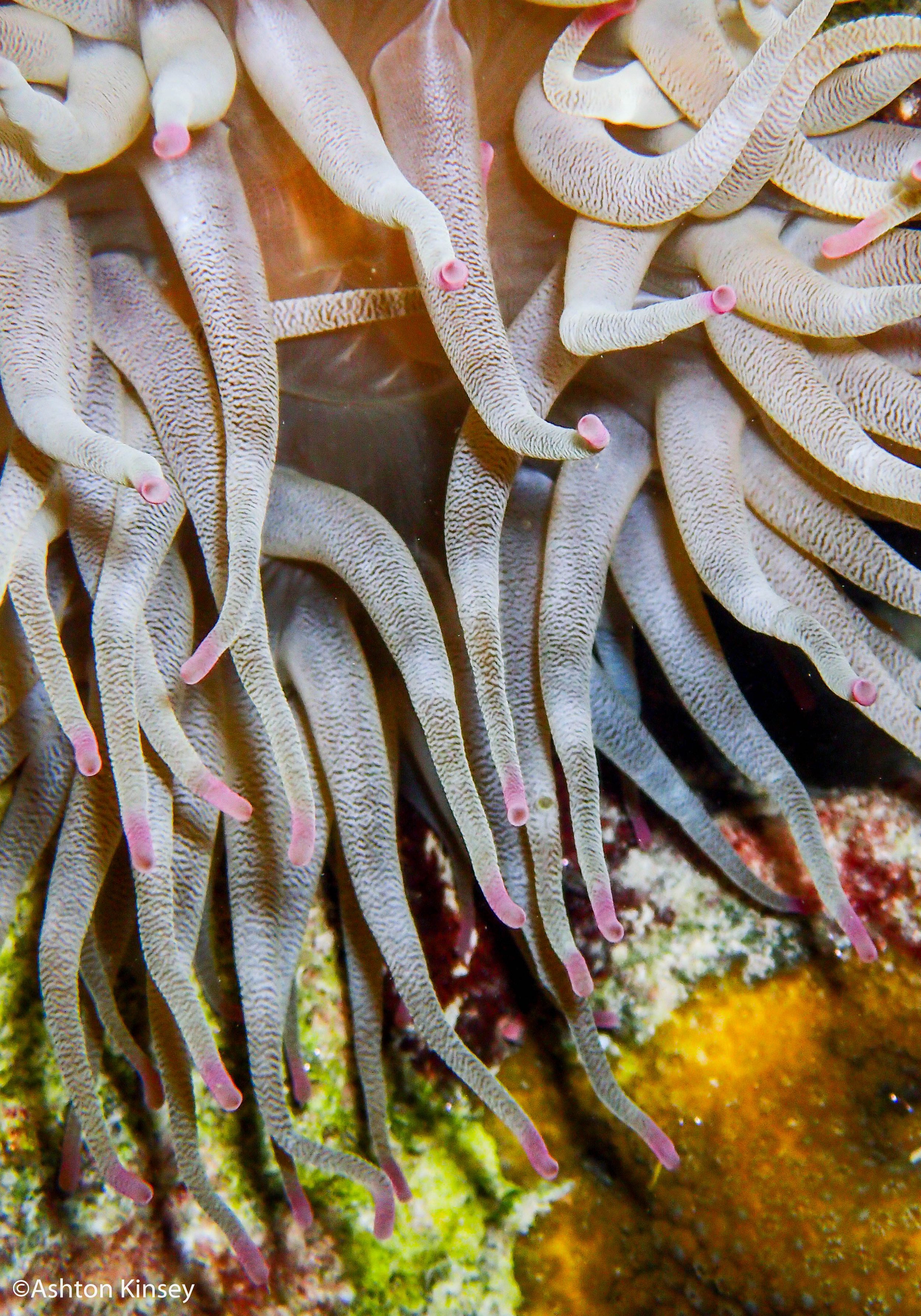
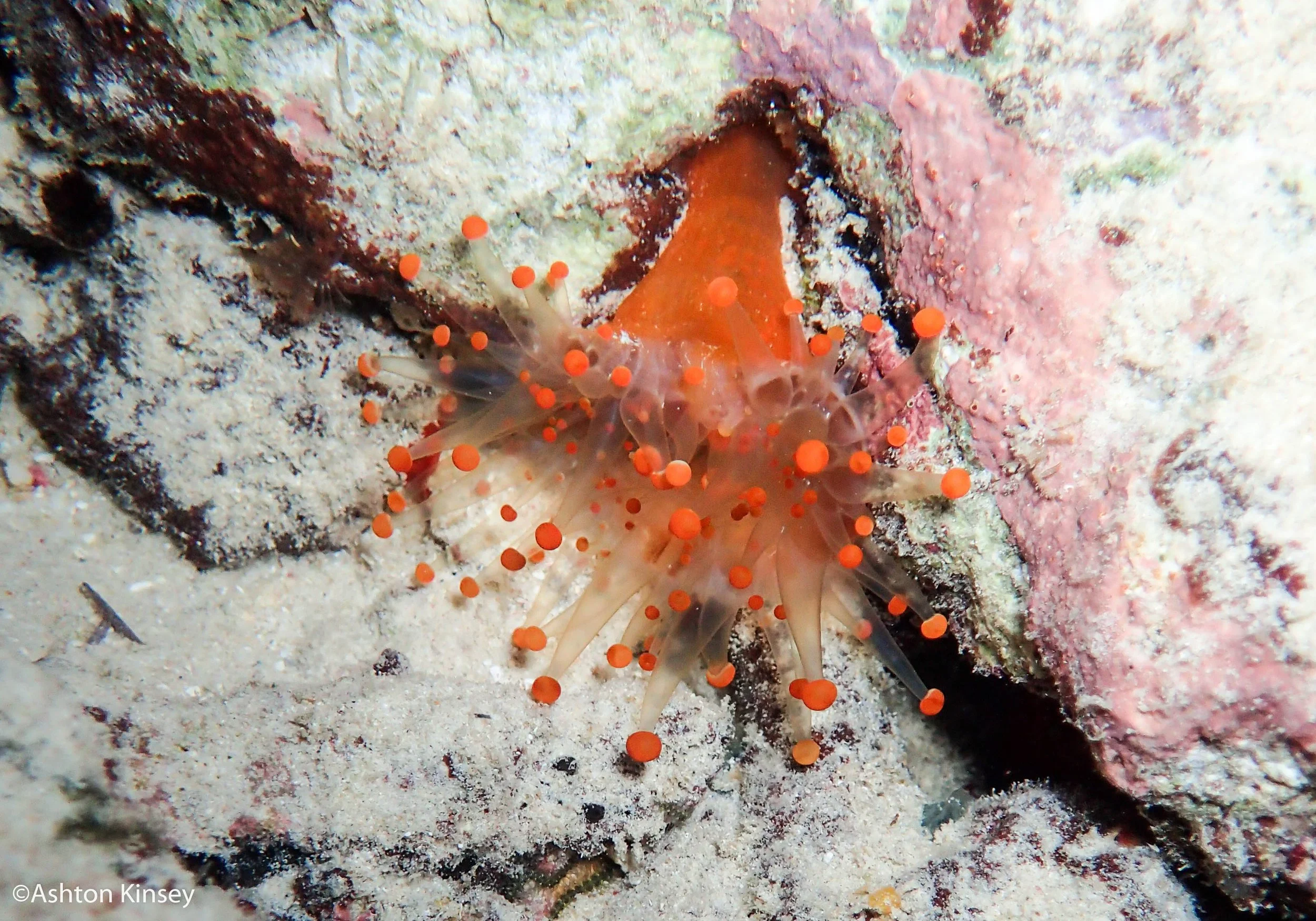
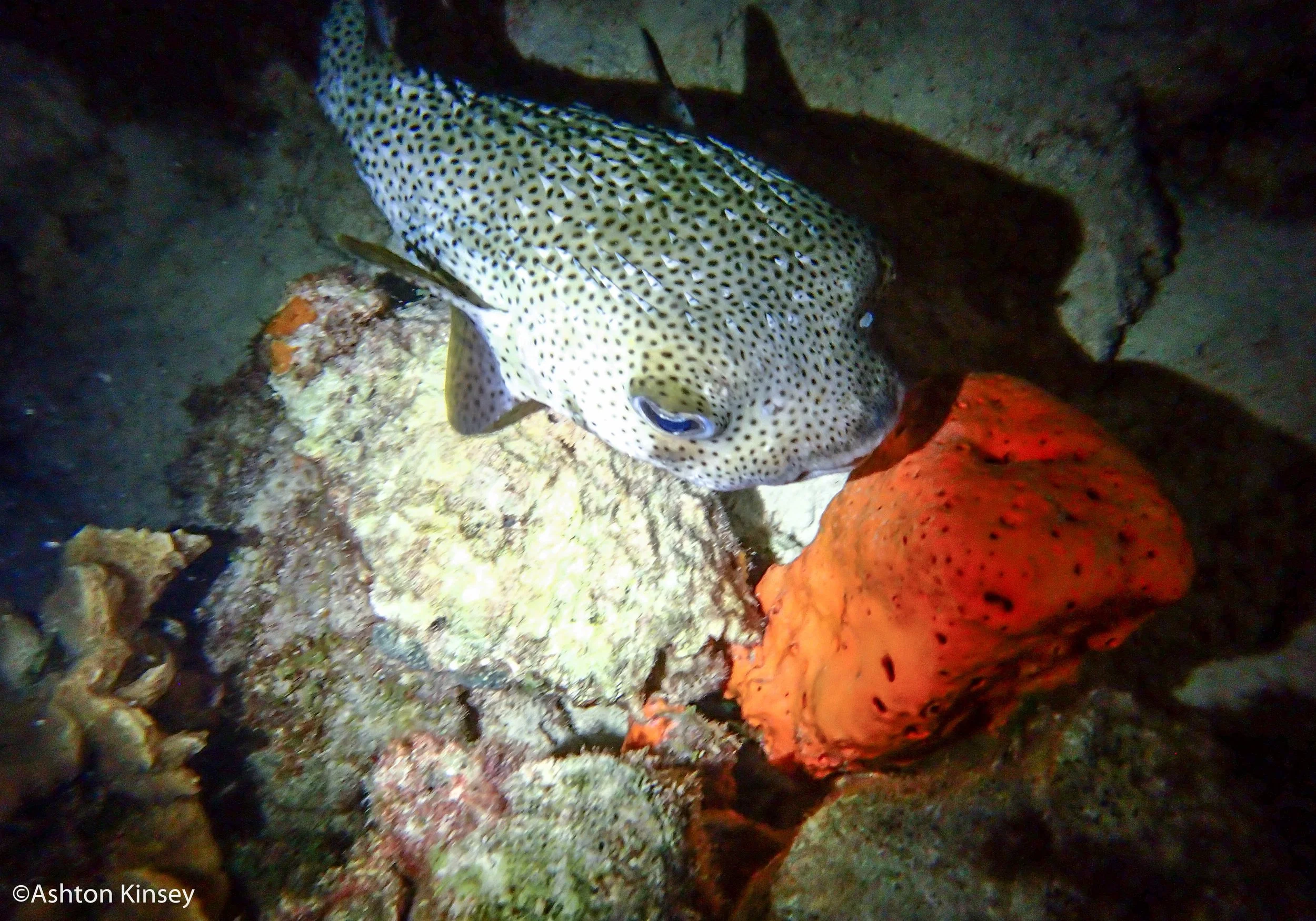
Joanne’s Sunchi
Surrounding
Joanne's Sunchi is located on the southern coast of Klein Bonaire. Its name means "Joanne's kiss" in Papiamento. According to local guides, all the dive sites with women's names are named after ex-girlfriends of Captain Don, although he hasn't voiced his opinion on the matter ... There's no beach here.
Dive 3: 69’ for 60 minutes
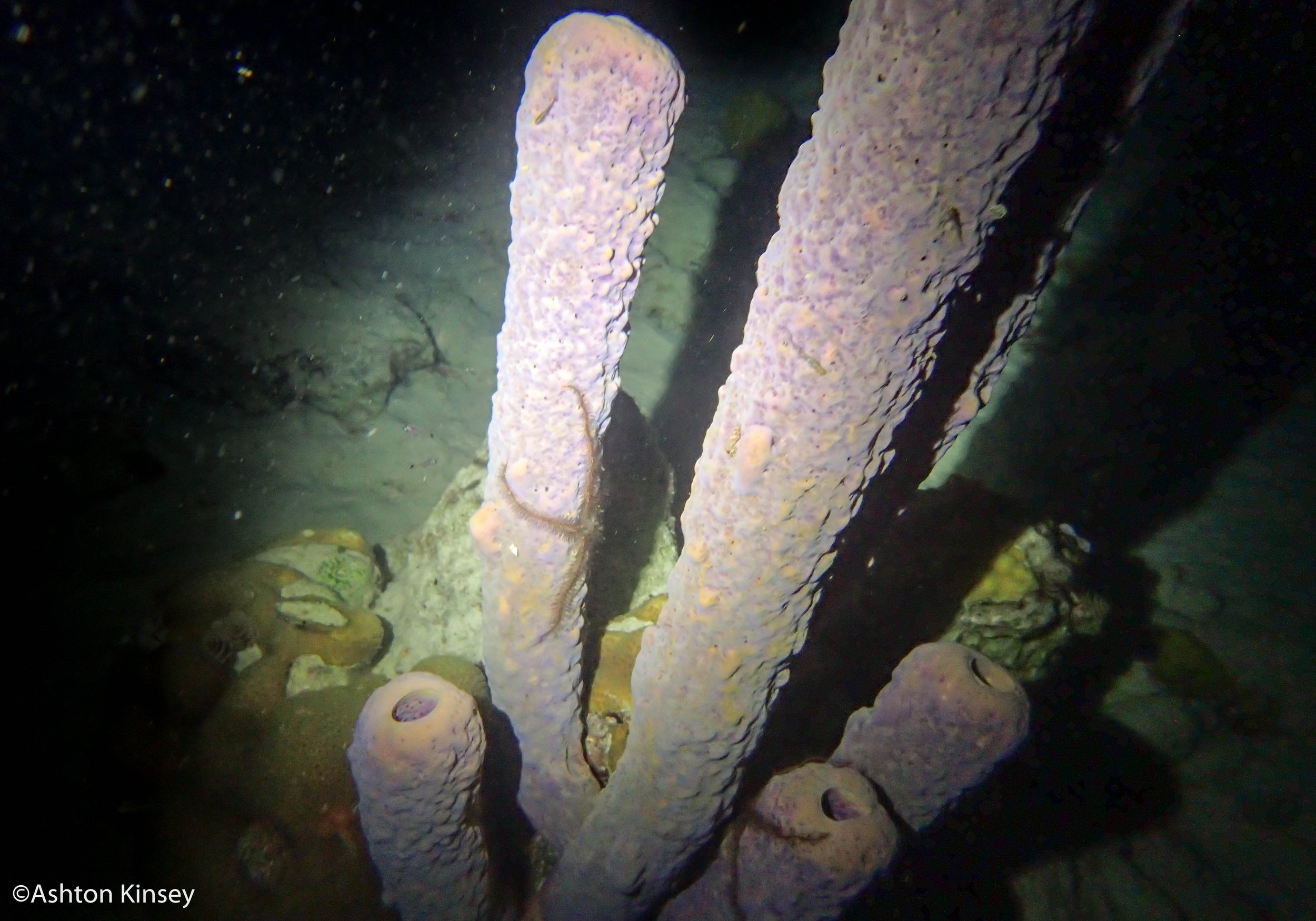
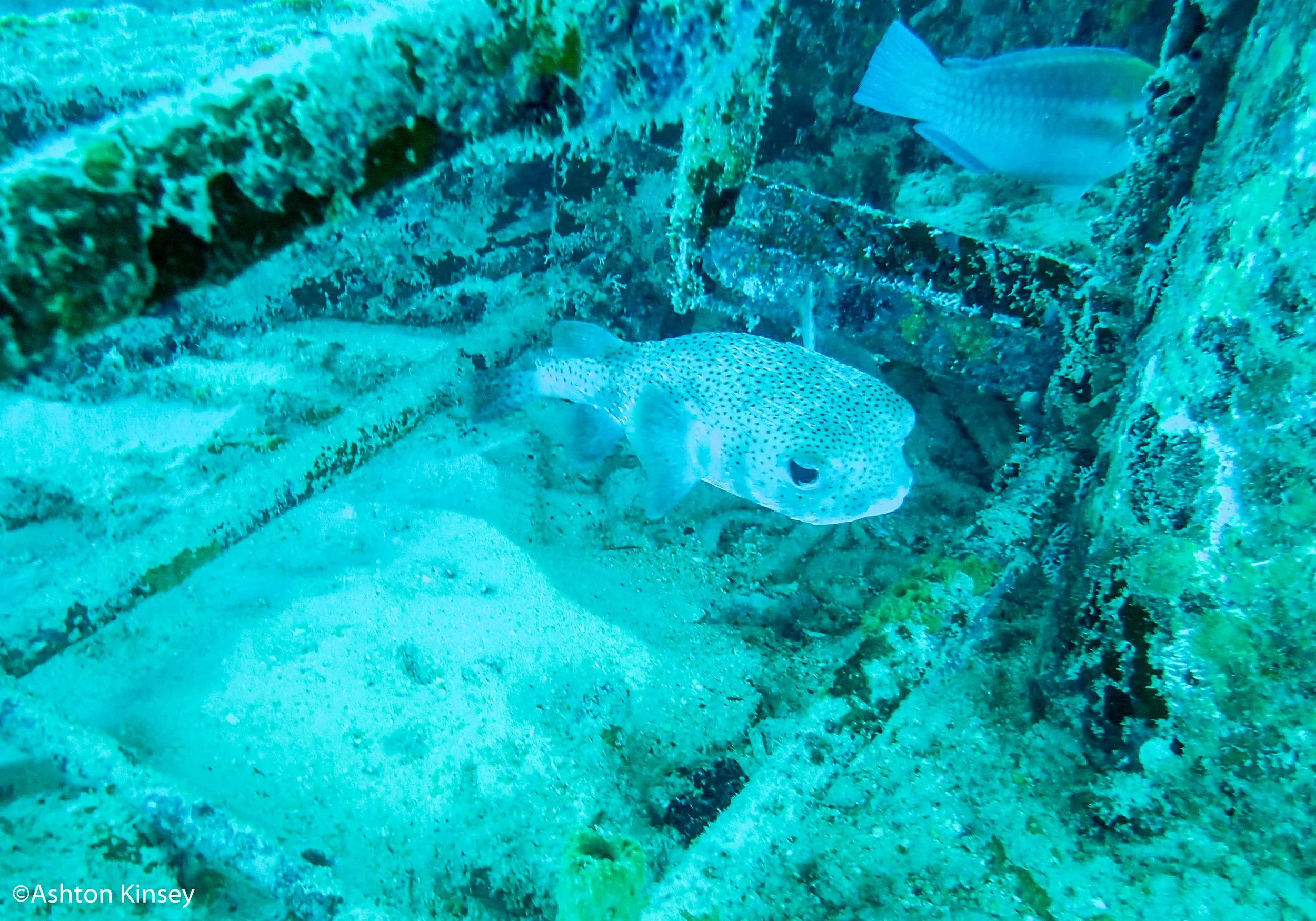
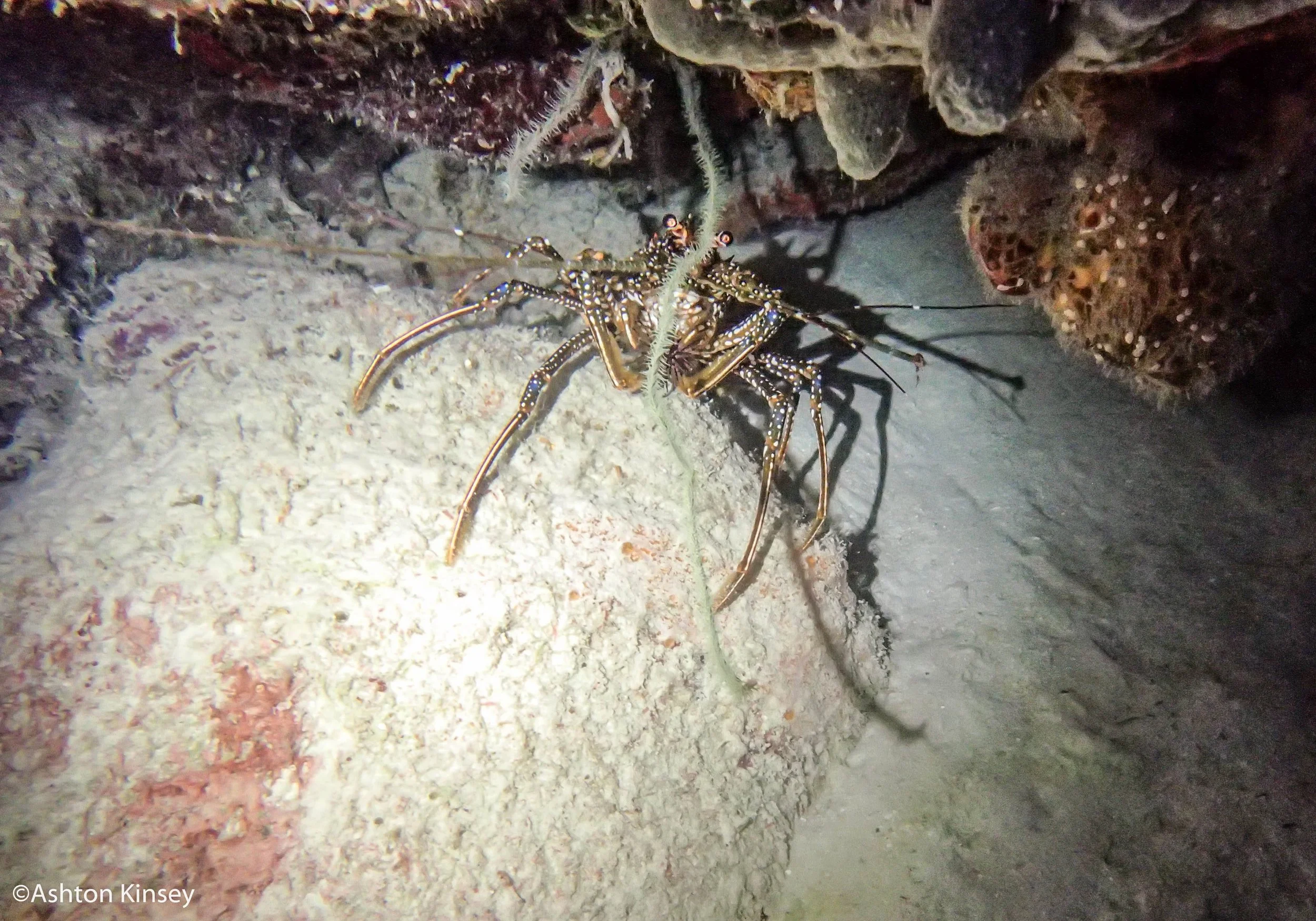
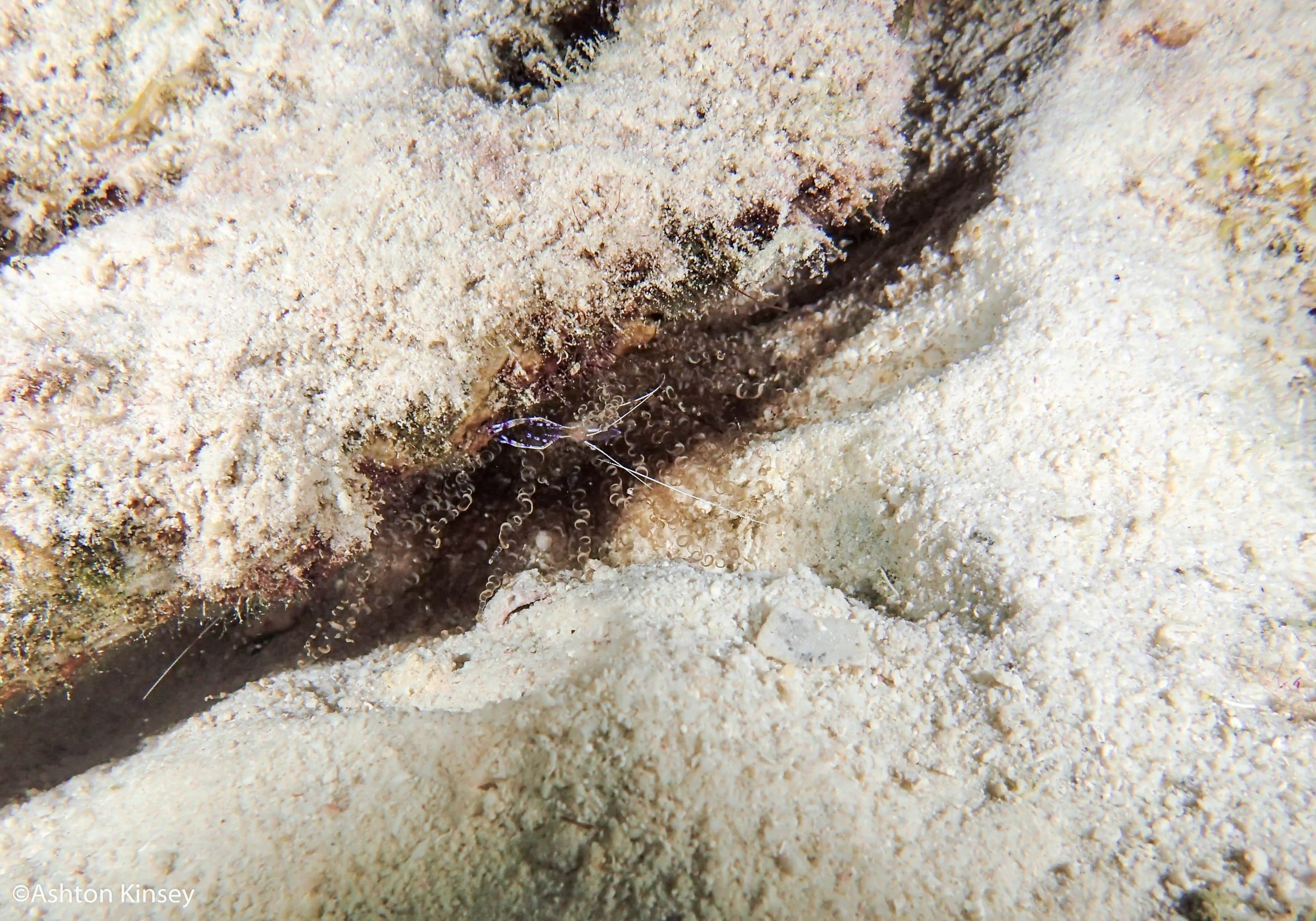
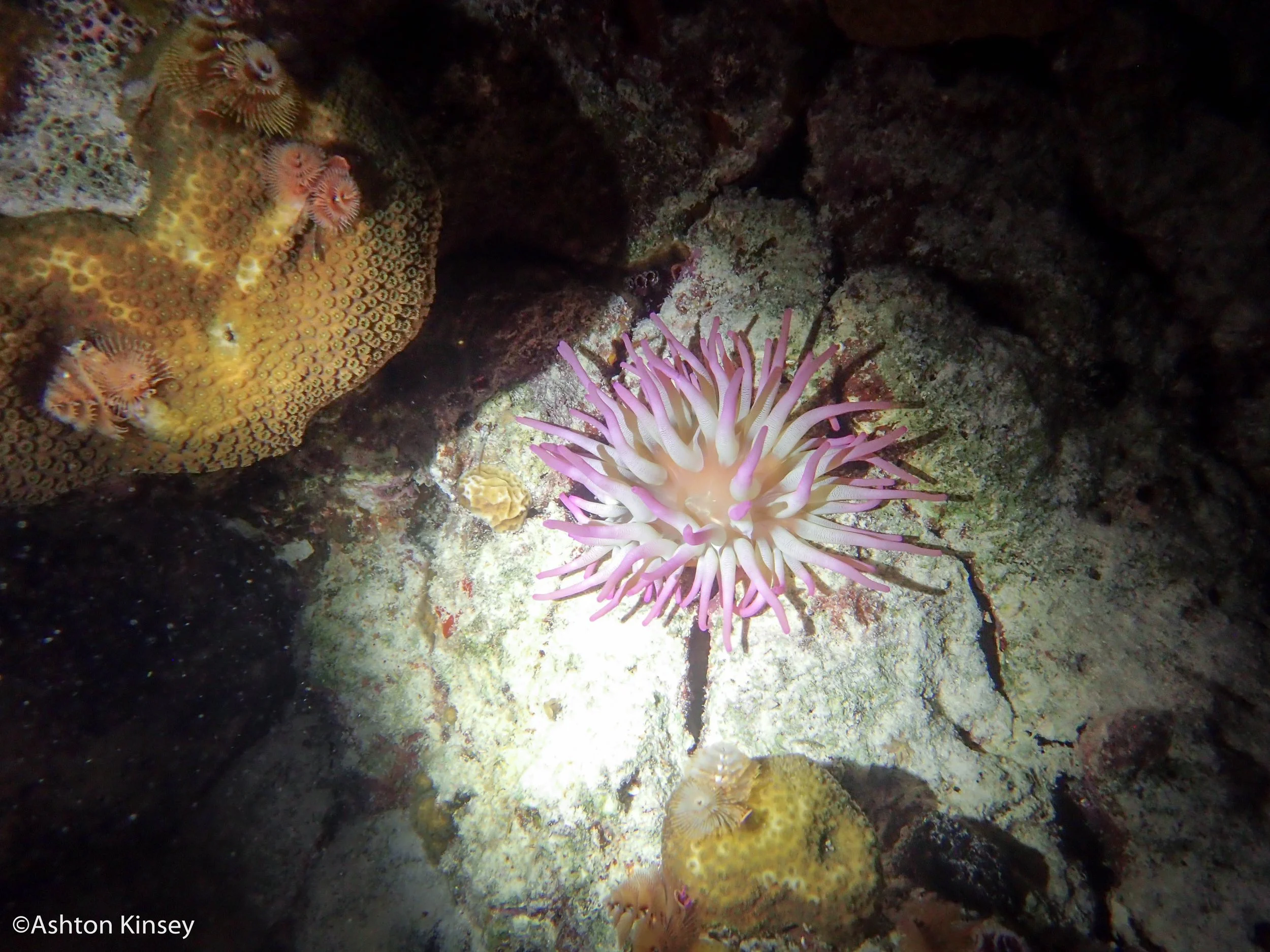
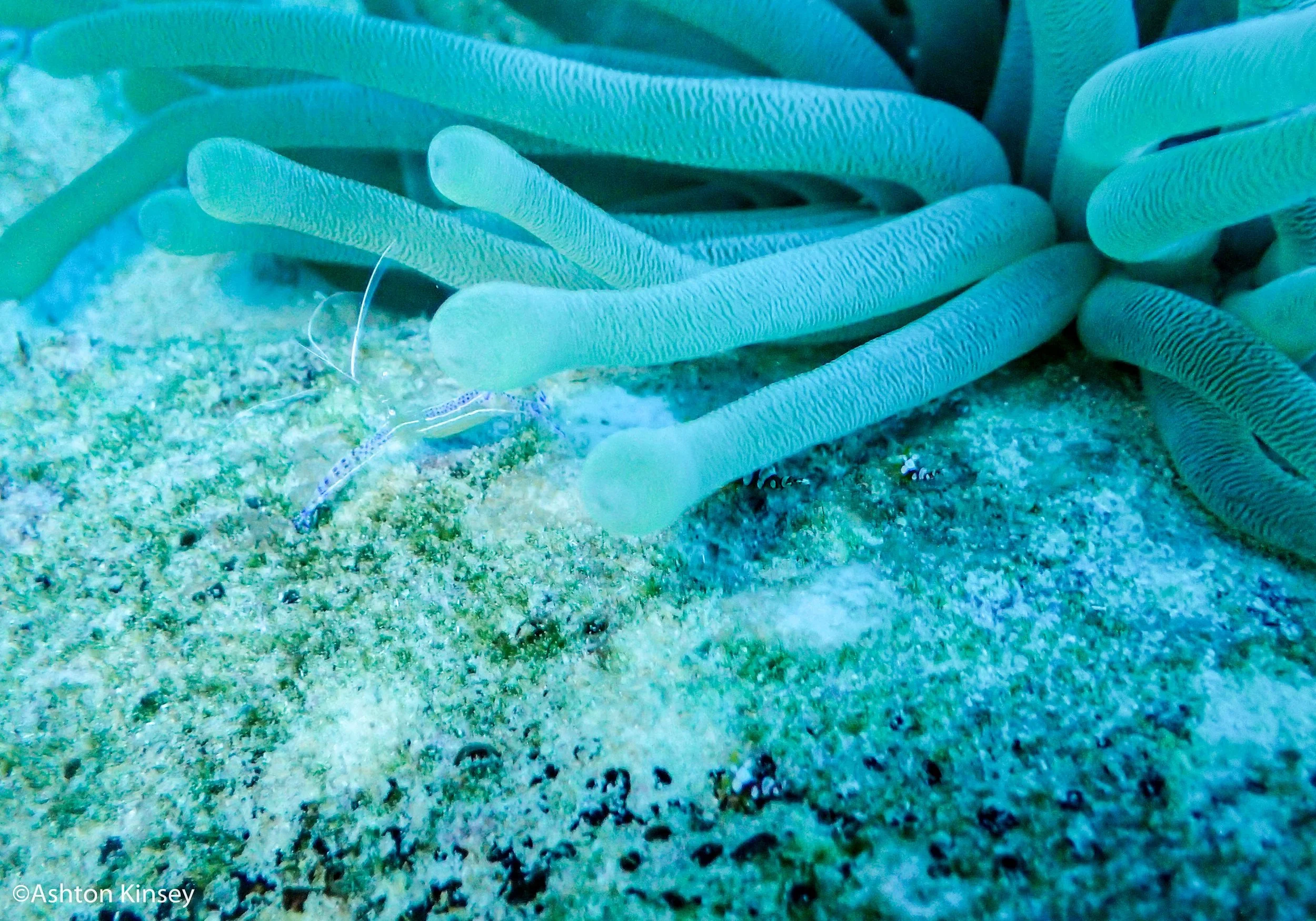
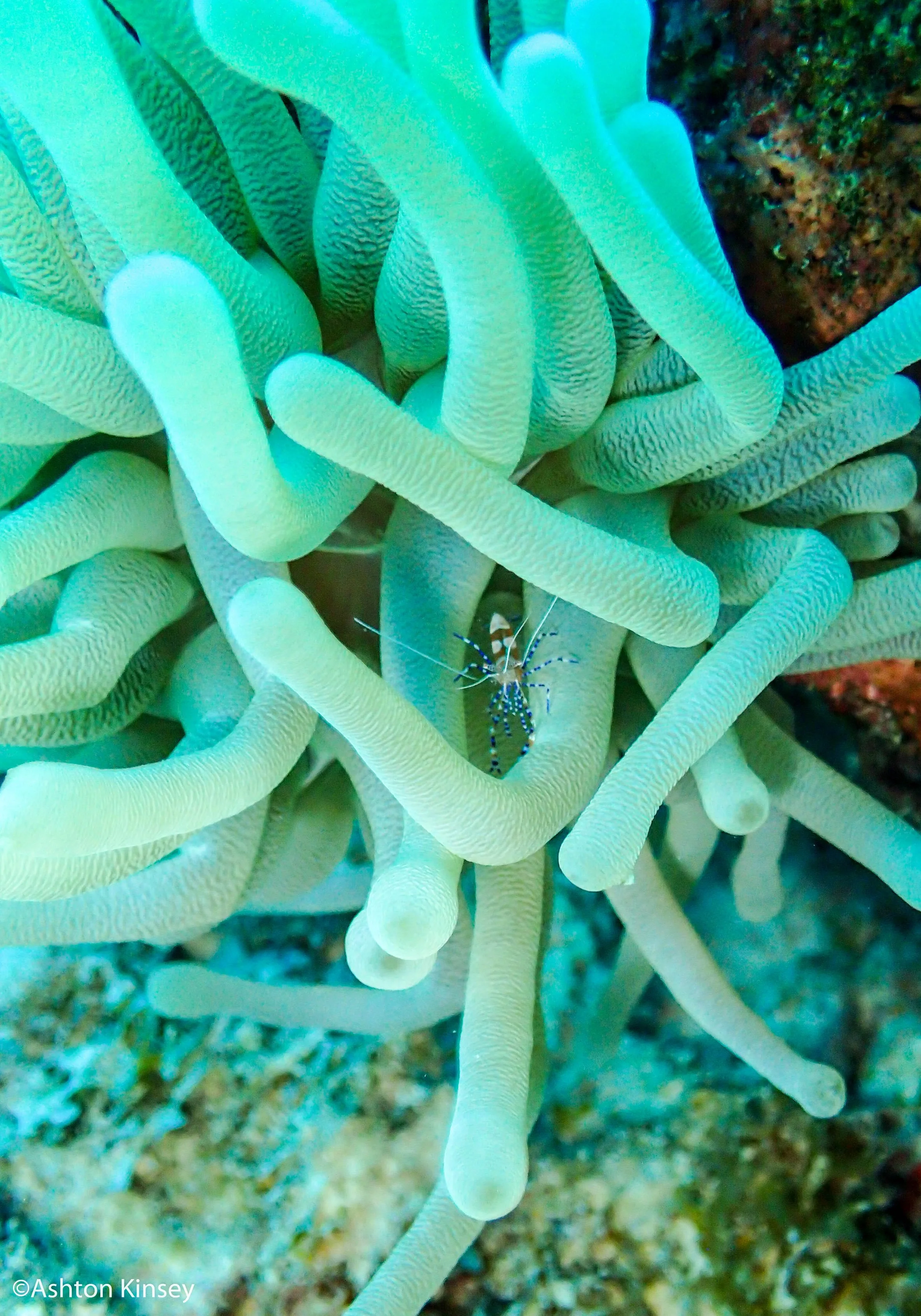
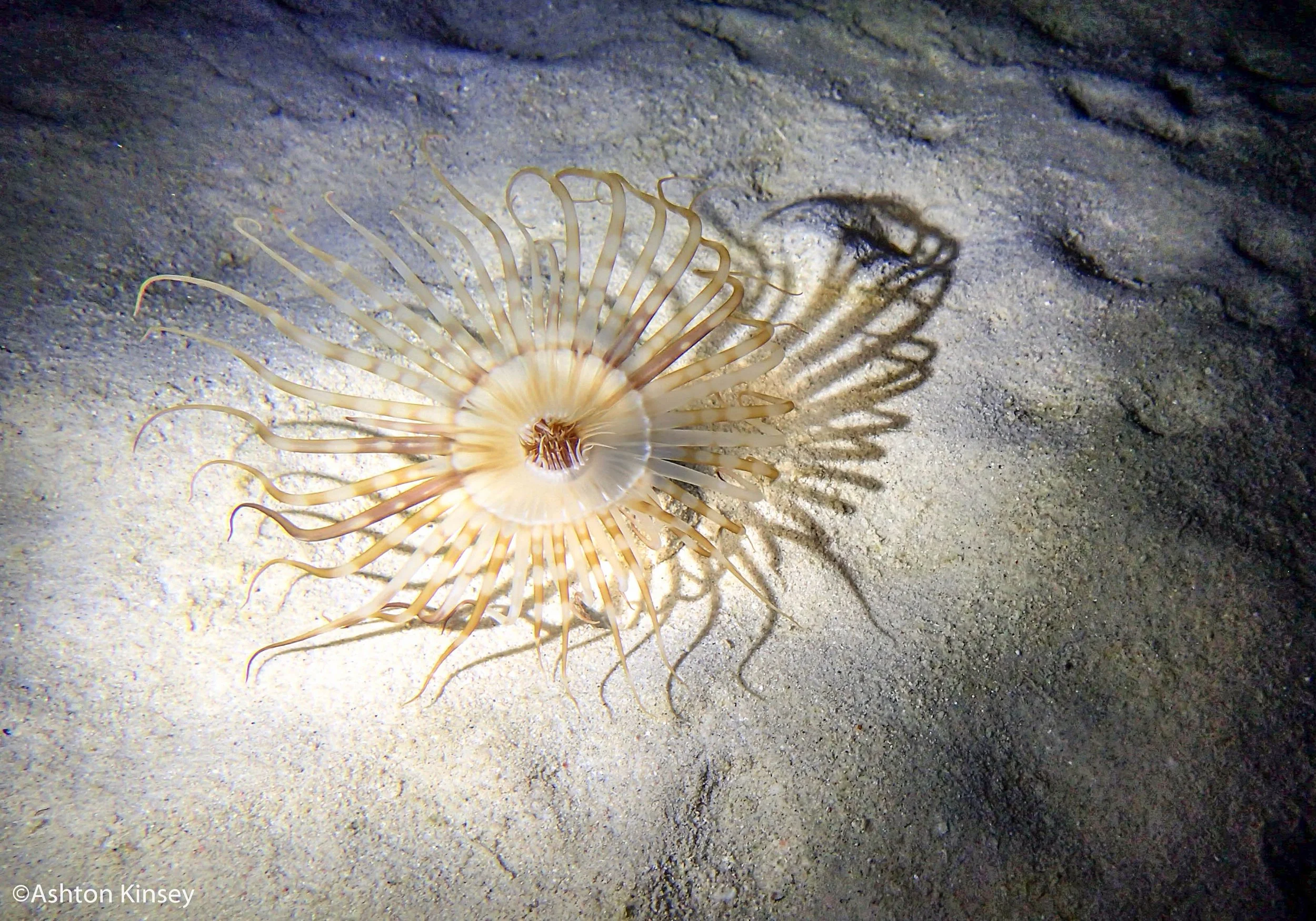
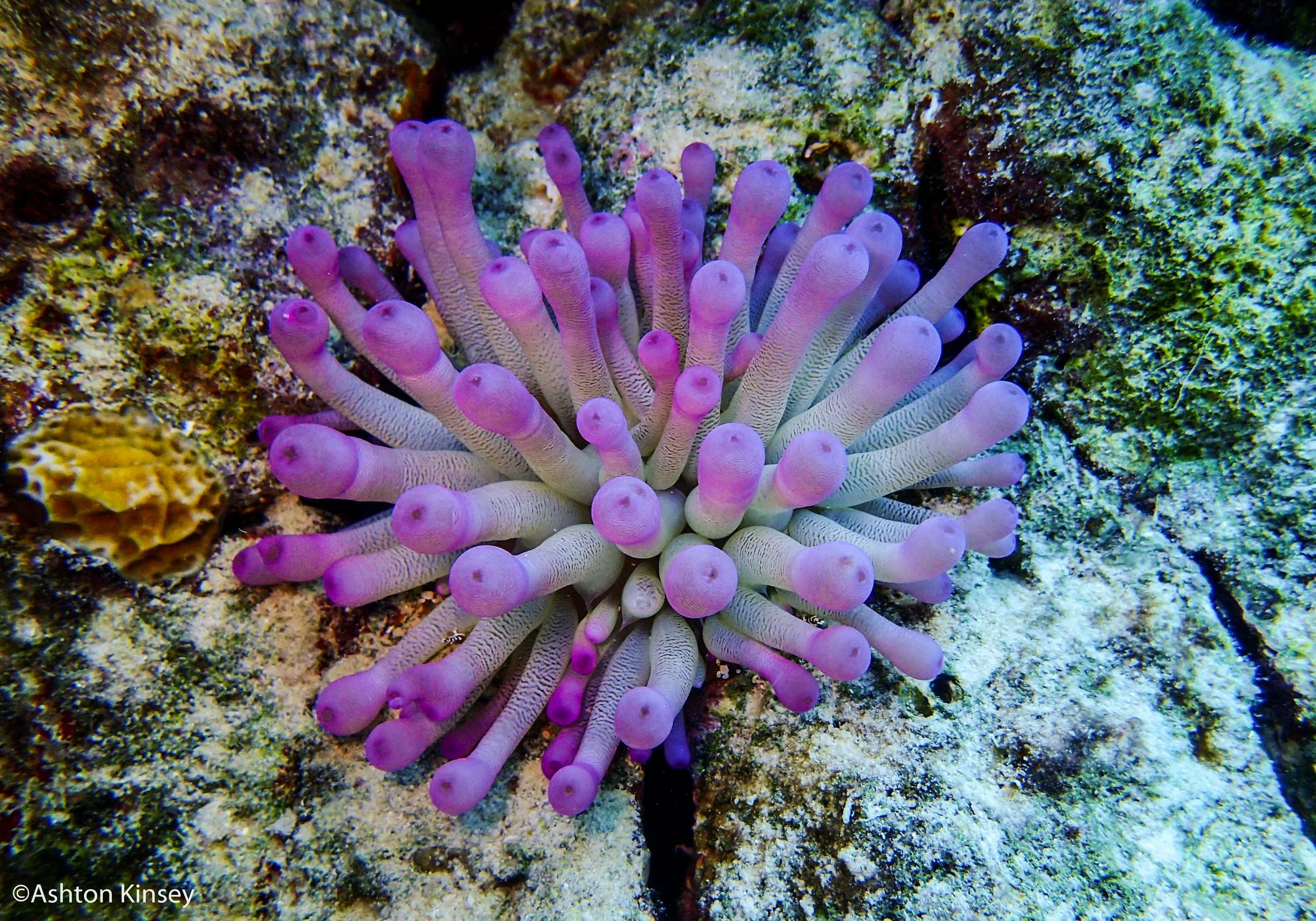
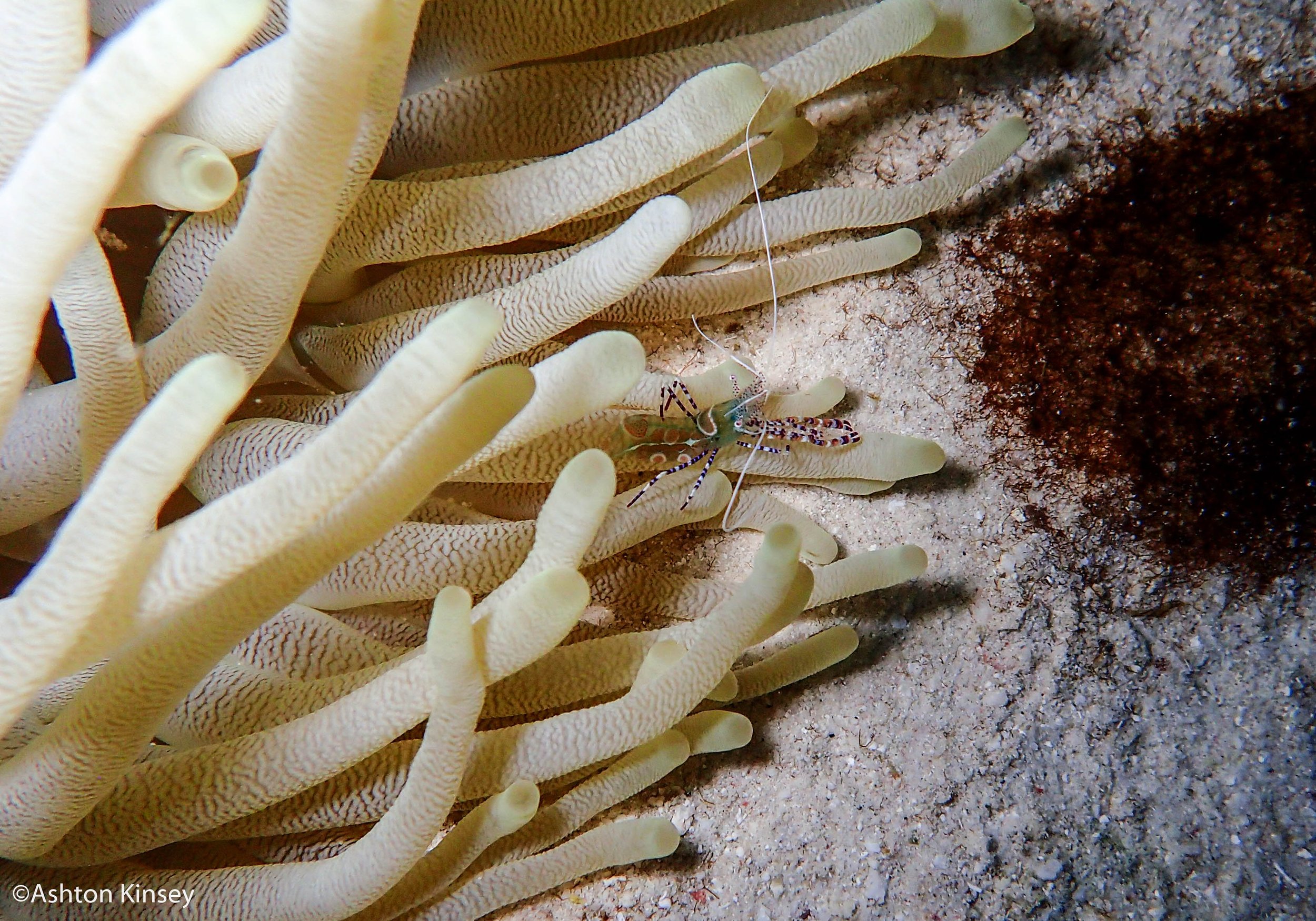
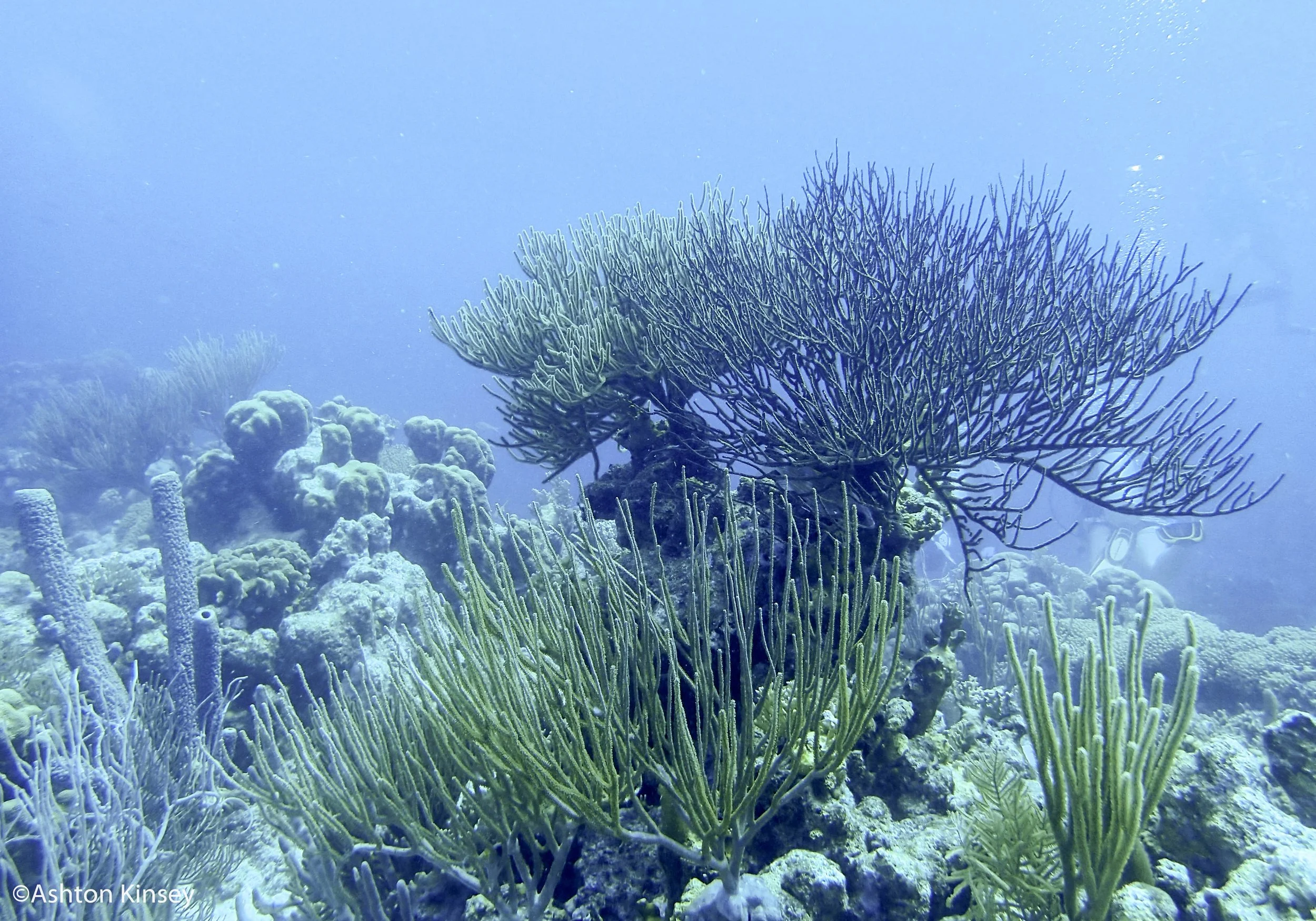
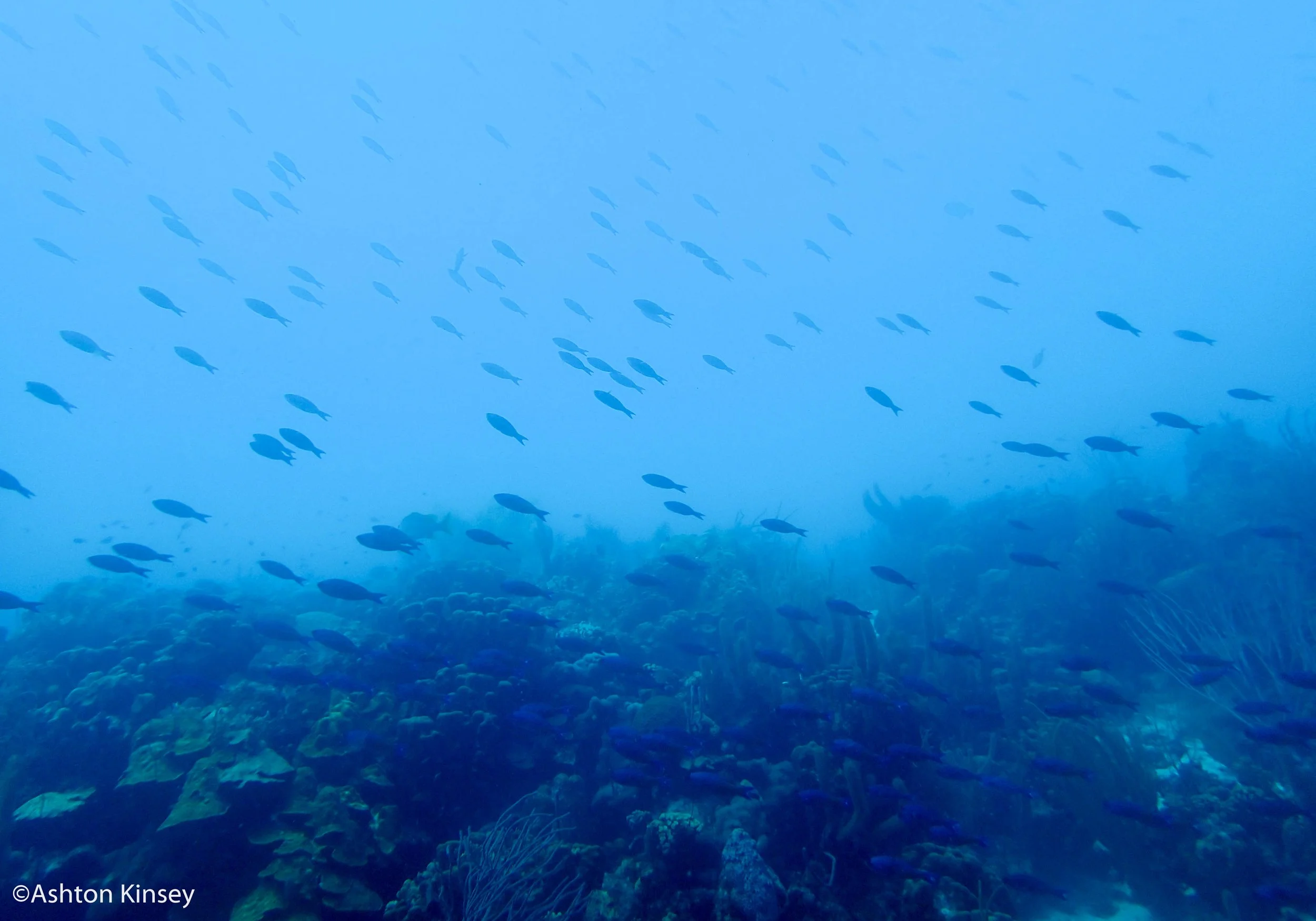
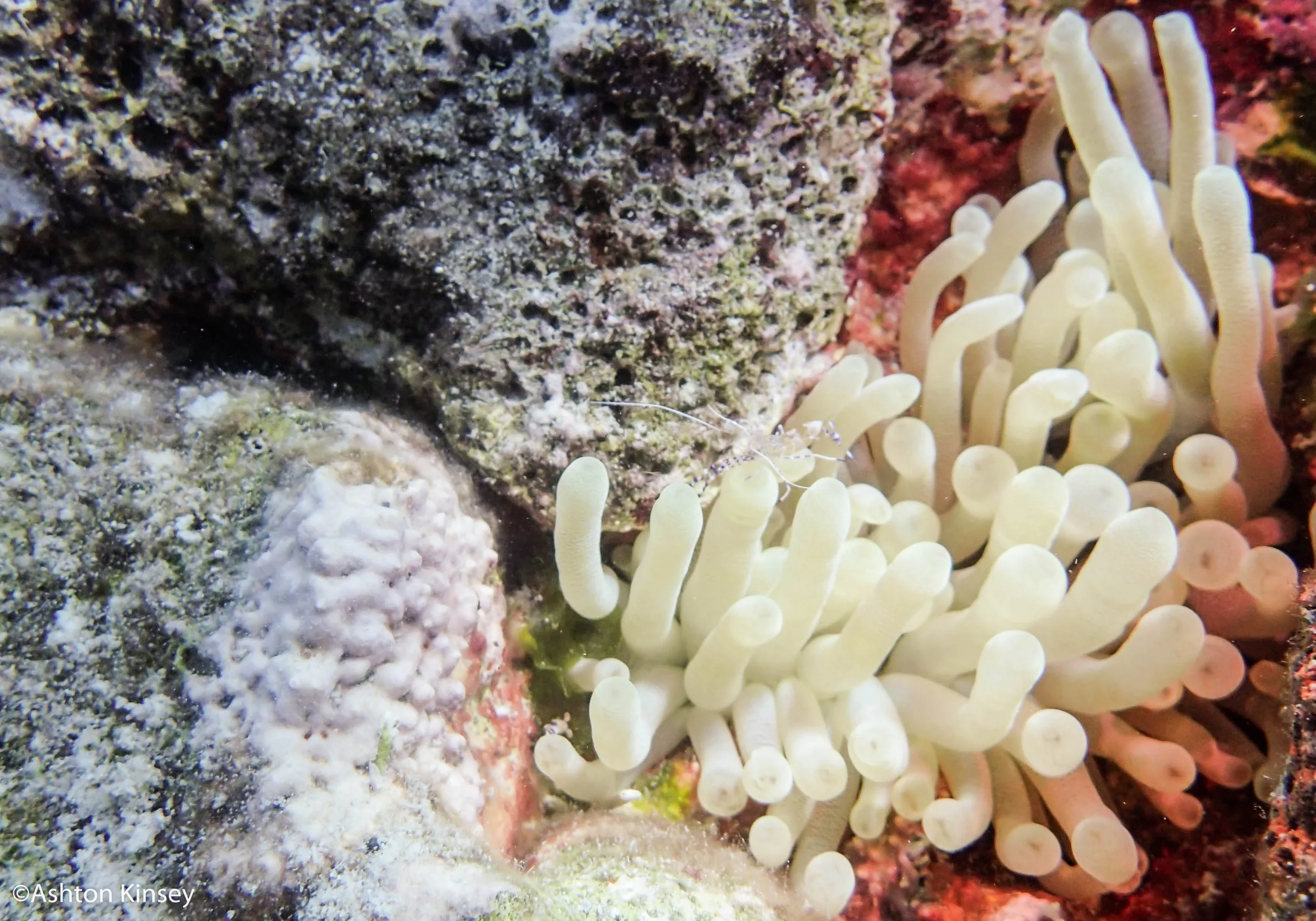
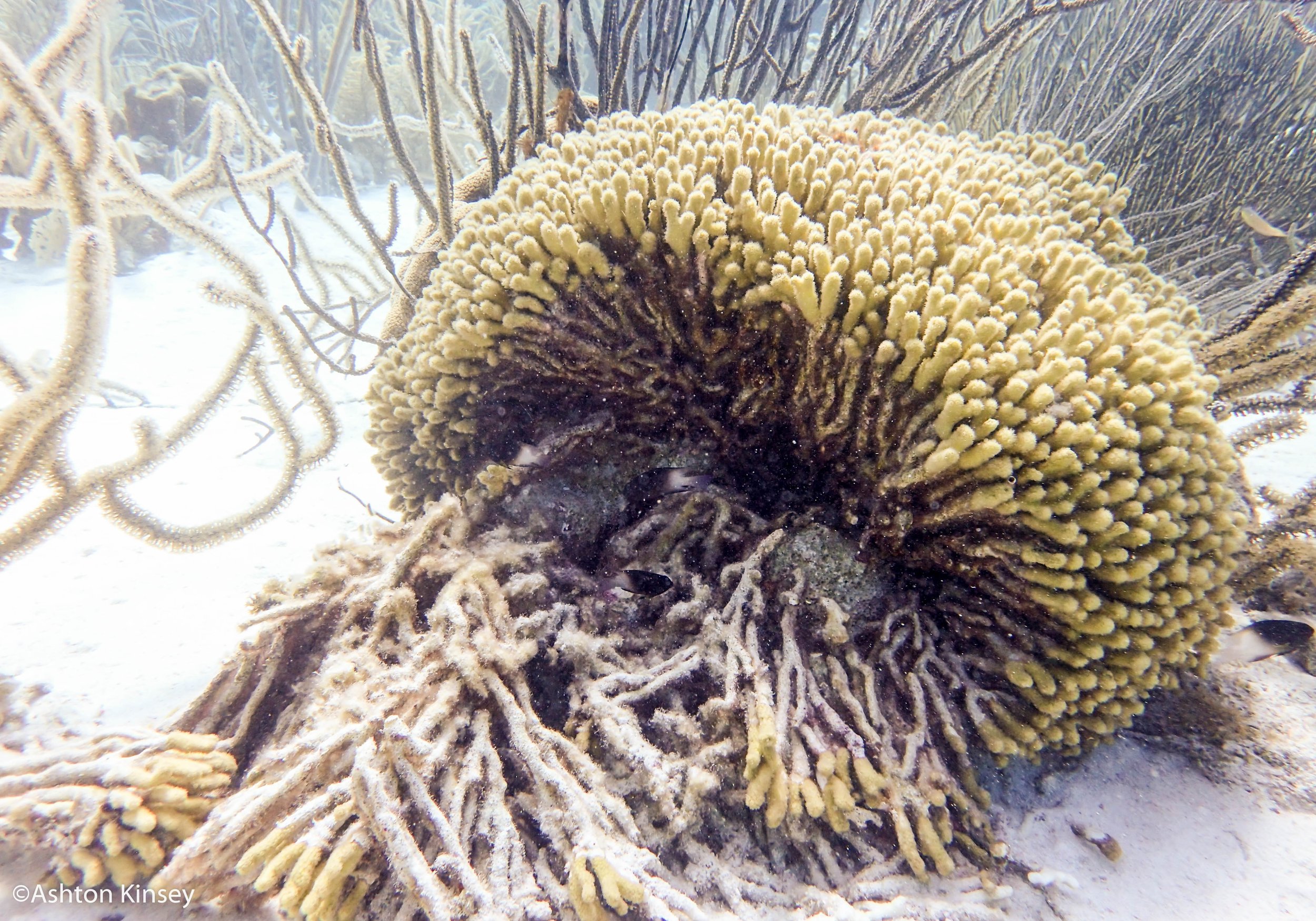
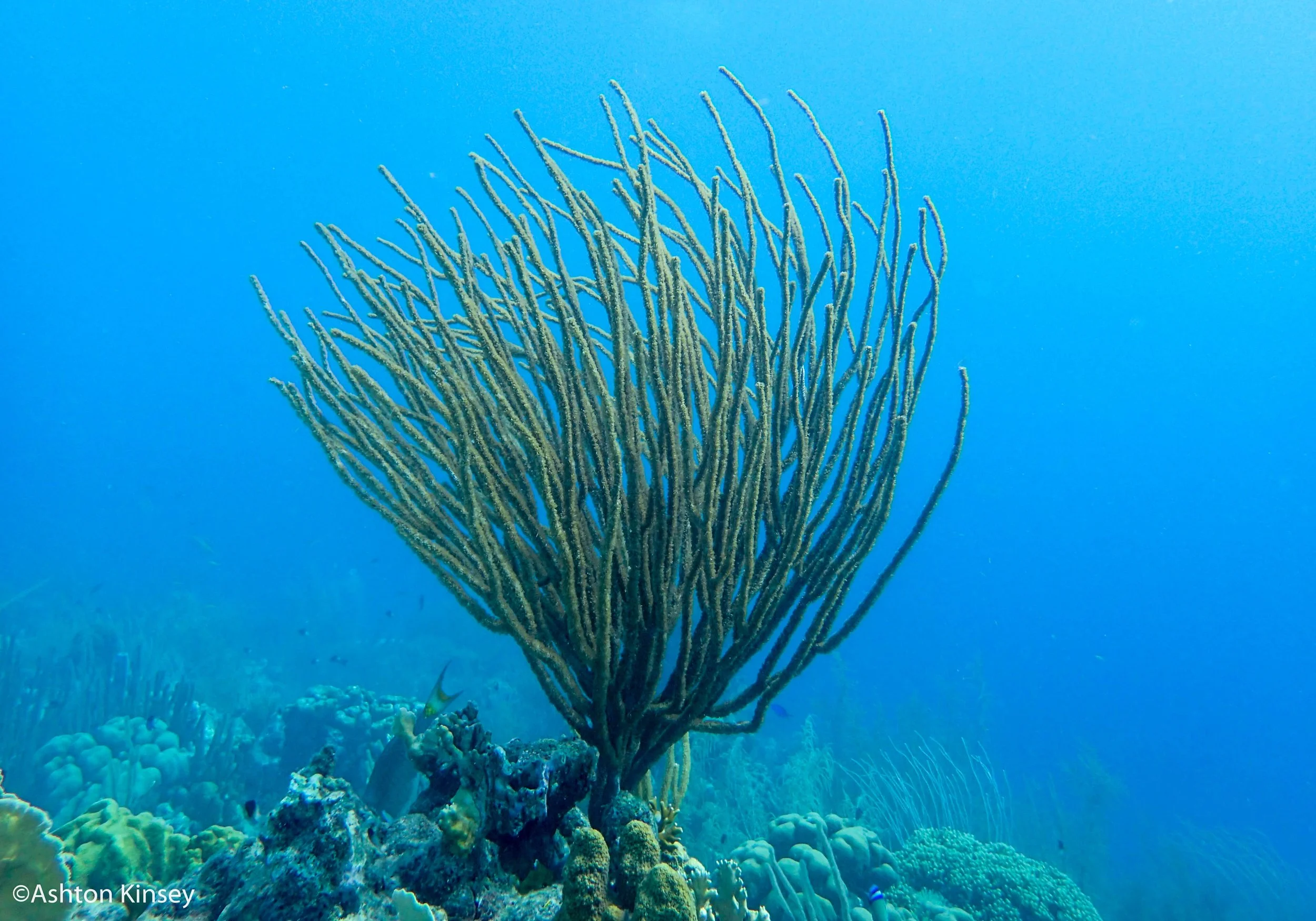
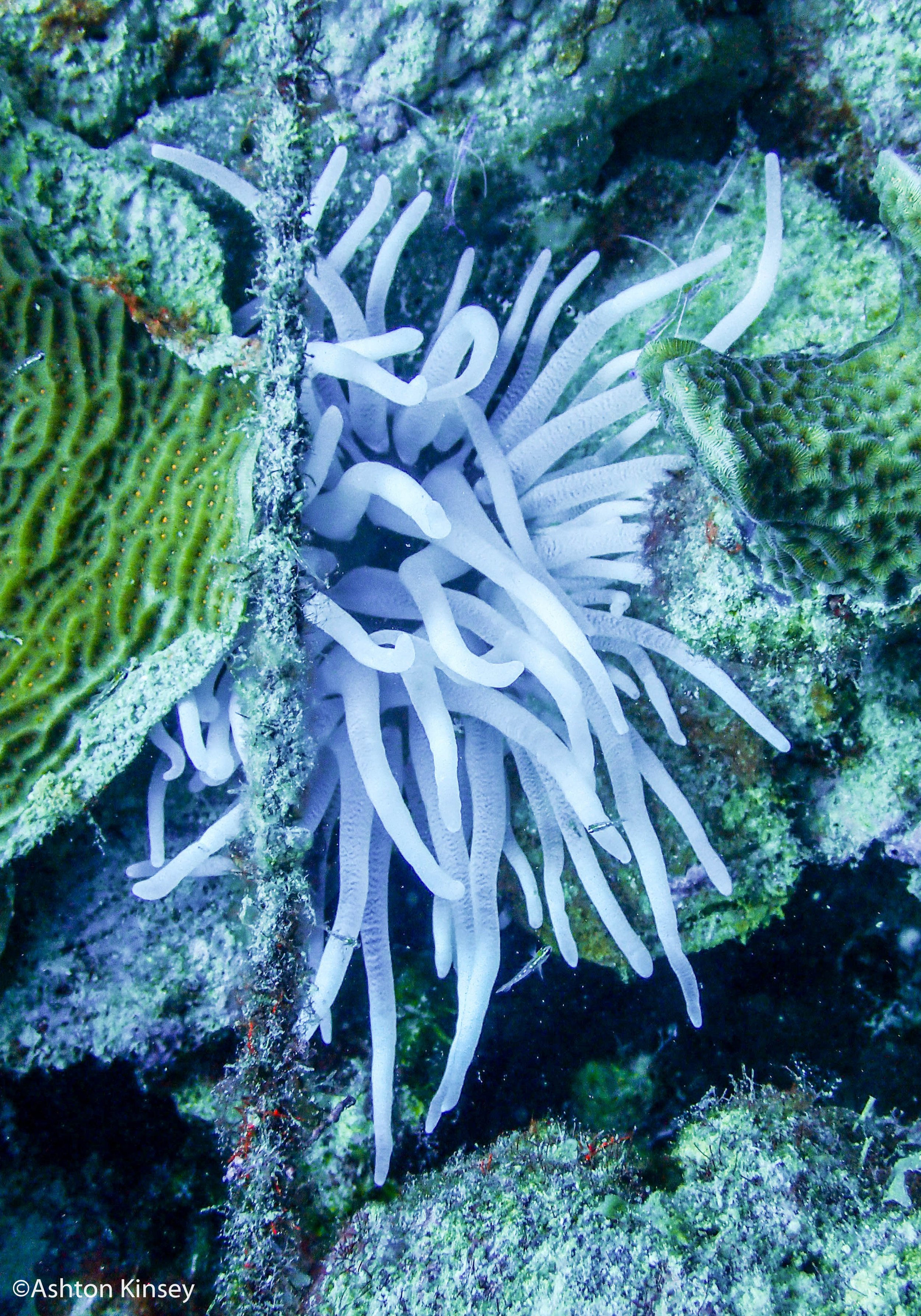
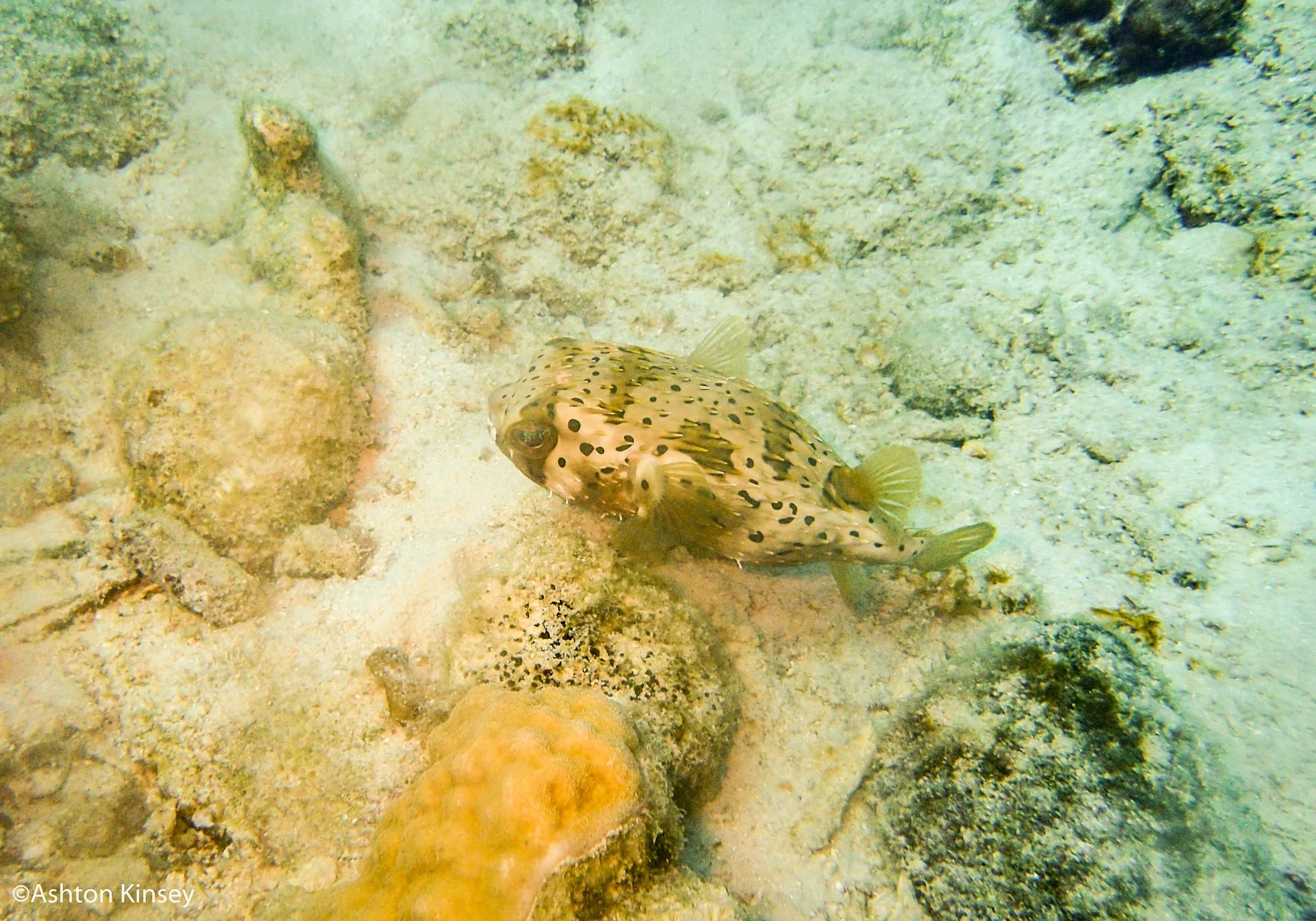
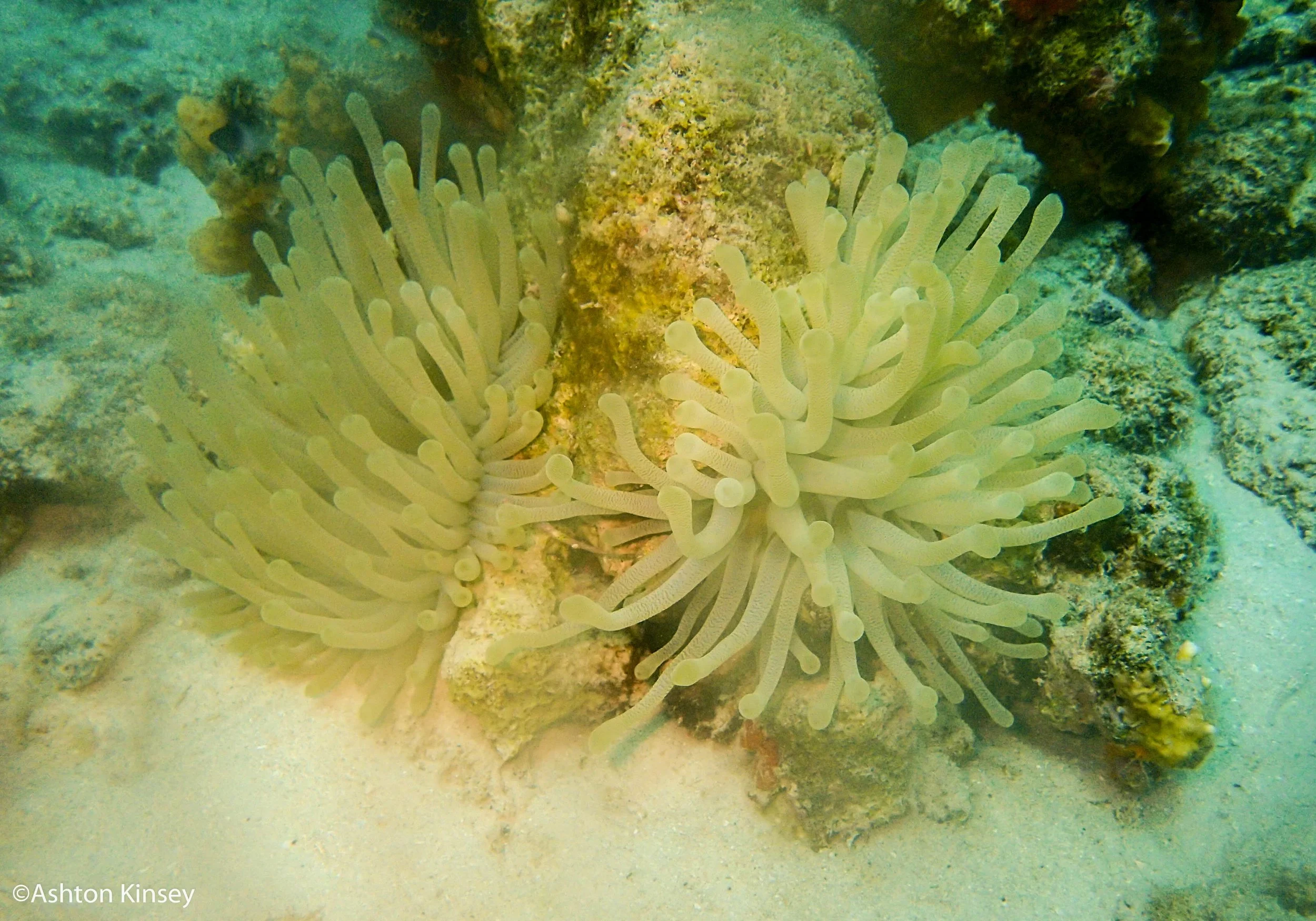
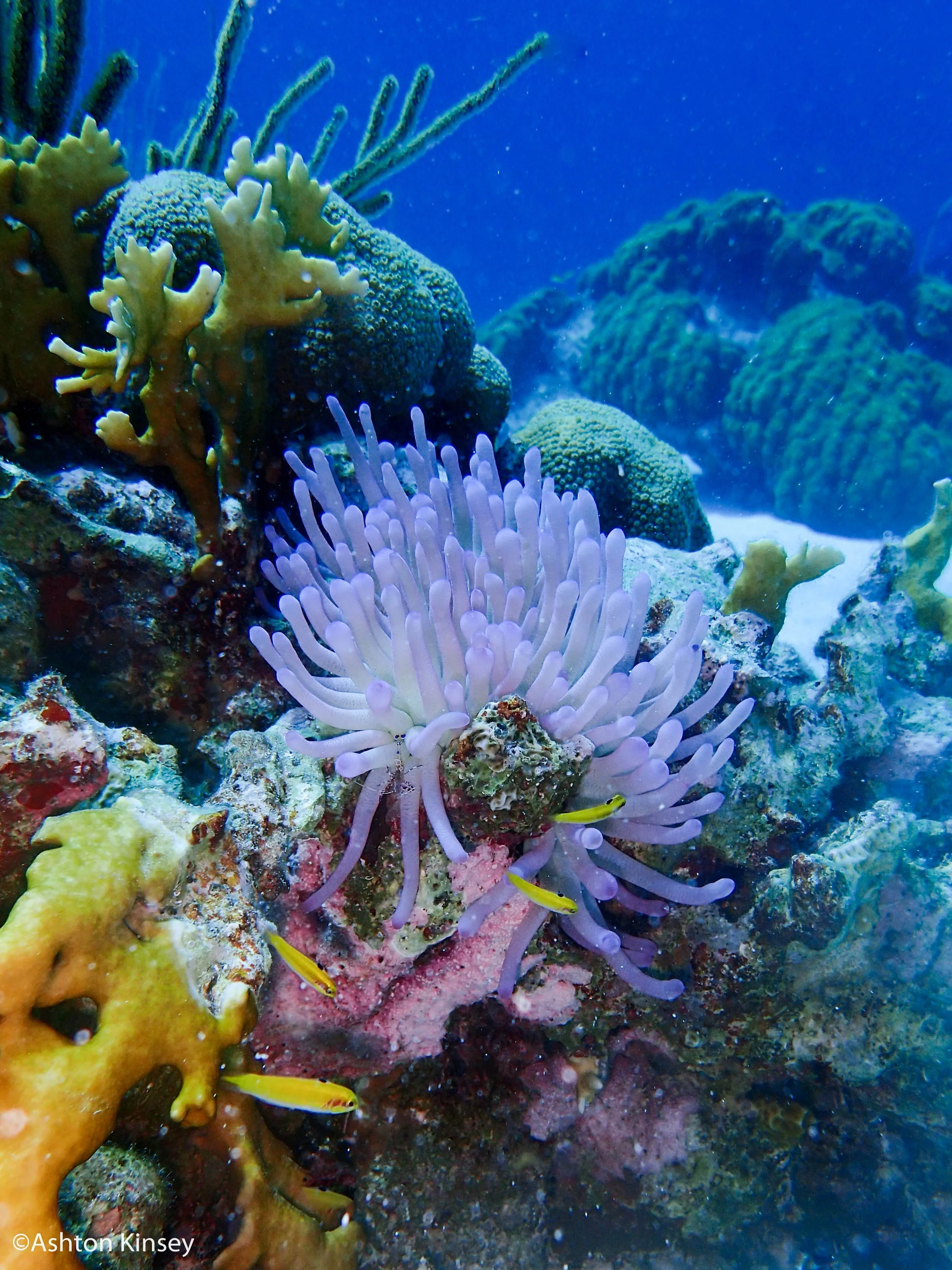
The buoy is anchored to the sandy floor at a depth of 3 meters (10 feet), so it's easy to dive down along the buoy line. Down to a depth of 6 meters (20 feet), the floor consists mainly of sand with some Brain Coral formations. As you get closer to the drop-off, the amount and variety of soft coral become greater until a dense soft coral landscape develops. Small Sharpnose Puffers like to shelter amongst the soft coral and are so well-camouflaged that they can be hard to see. These are beautiful but oddly-shaped fish, and it'll be well worth your while to look for them as an ideal way of spending time during a safety stop. Amongst the soft coral, you'll also find more and more Longspine Sea Urchins, as well as several Giant Anemones with the usual cleaner shrimp. Many Graysbys and Coneys swim around the area just above the drop-off. The most fish activity is found around the drop-off area.
The reef descends steeply to a depth of 45 meters (148 feet), where the coral gradually gives way to sand. Wide sandy channels run through the reef into the sandy floor at maximum depth. The channels and ridges aren't steep, creating a wavy reef landscape.
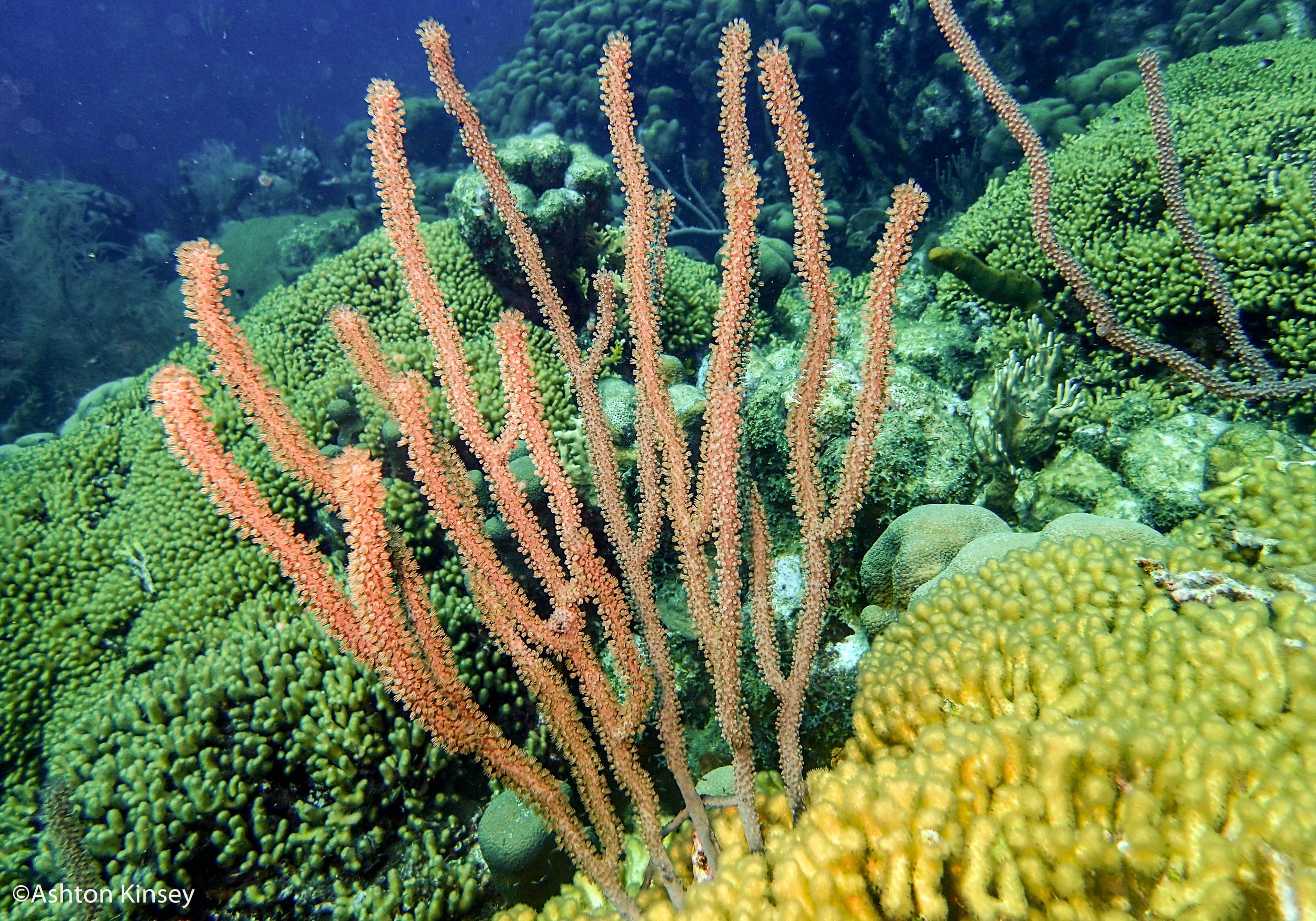
Down to a depth of 13 meters (43 feet), you'll find a lot of soft coral, and many basslets, Black Durgons, Porcupine Fish, Horse Eye Jacks and Trumpet Fish swim around here. As you go deeper, you'll find mainly Boulder Star Coral down to a depth of 28 meters (92 feet). Wire Coral and a few Devil's Sea Whips grow amongst the Boulder Star Coral. The Sea Whips range in color from orange to red and can grow up to 2½ meters (9 feet) tall.
This is one of the dive sites around Klein Bona ire where turtles are often sighted and where you're likely to see extraordinary underwater sights.
Sampler
Surroundings
Sampler is the northernmost dive site on Klein Bonaire and is also one of the most popular sites on the island. This dive site received this name because it was discovered with a small flat piece of rock on top of a pillar that was covered with small colonies of many coral species. It looked like a tray that presented samples of all the coral species at the site.
Dive 6: 72’ for 61 minutes
The current at this dive site is usually light to moderate, making it ideal for beginner divers.
The shallow bank is narrow and sandy with several scattered colonies of hard coral, like Staghorn- and Elkhorn Coral, Mustard Hill Coral, as well as some soft coral. Snorkelers can find an enormous variety of fish species here. In the past, these fish were regularly fed, so they still curiously approach divers and snorkelers. Many Bermuda Chubs, Parrotfish, Red Hinds and Coneys can be found on the shallow bank. Palometas and Hawksbill Turtles are often spotted to the east of the buoy.
The buoy is anchored at a depth of 5 meters (16 feet), where the floor gradually starts to descend. However, the true drop-off is found at a depth of about 12 meters (39 feet). From here, the floor descends steeply to a depth of 30 meters {98 feet) and then continues downwards more gradually to a depth of 40 meters (131 feet).
The best diving here is down to a depth of 20 meters (66 feet). At depths greater than 25 meters (82 feet), there's a lot of Encrusting Fan Leaf Algae on the coral, although there is less of this towards the west.
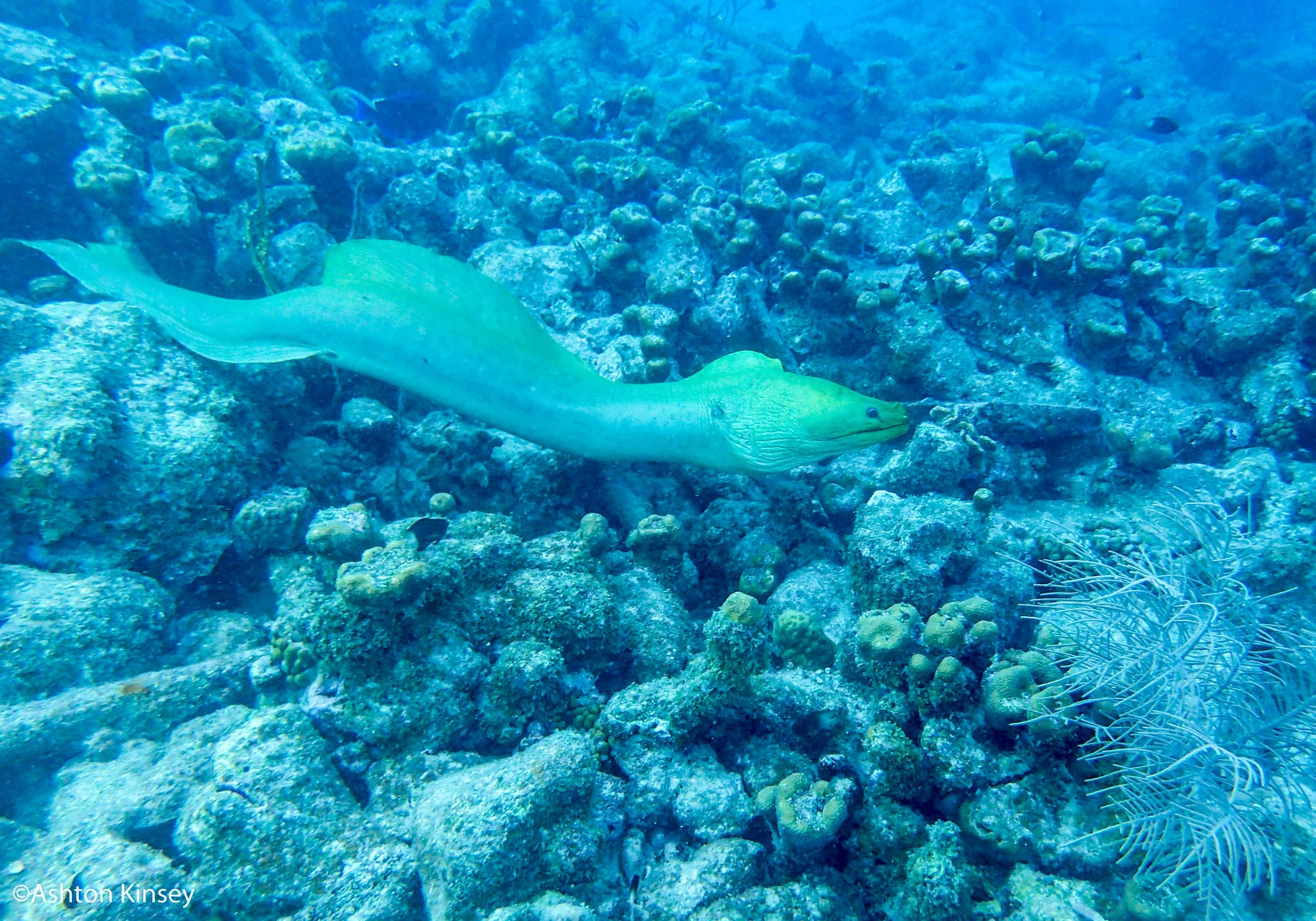
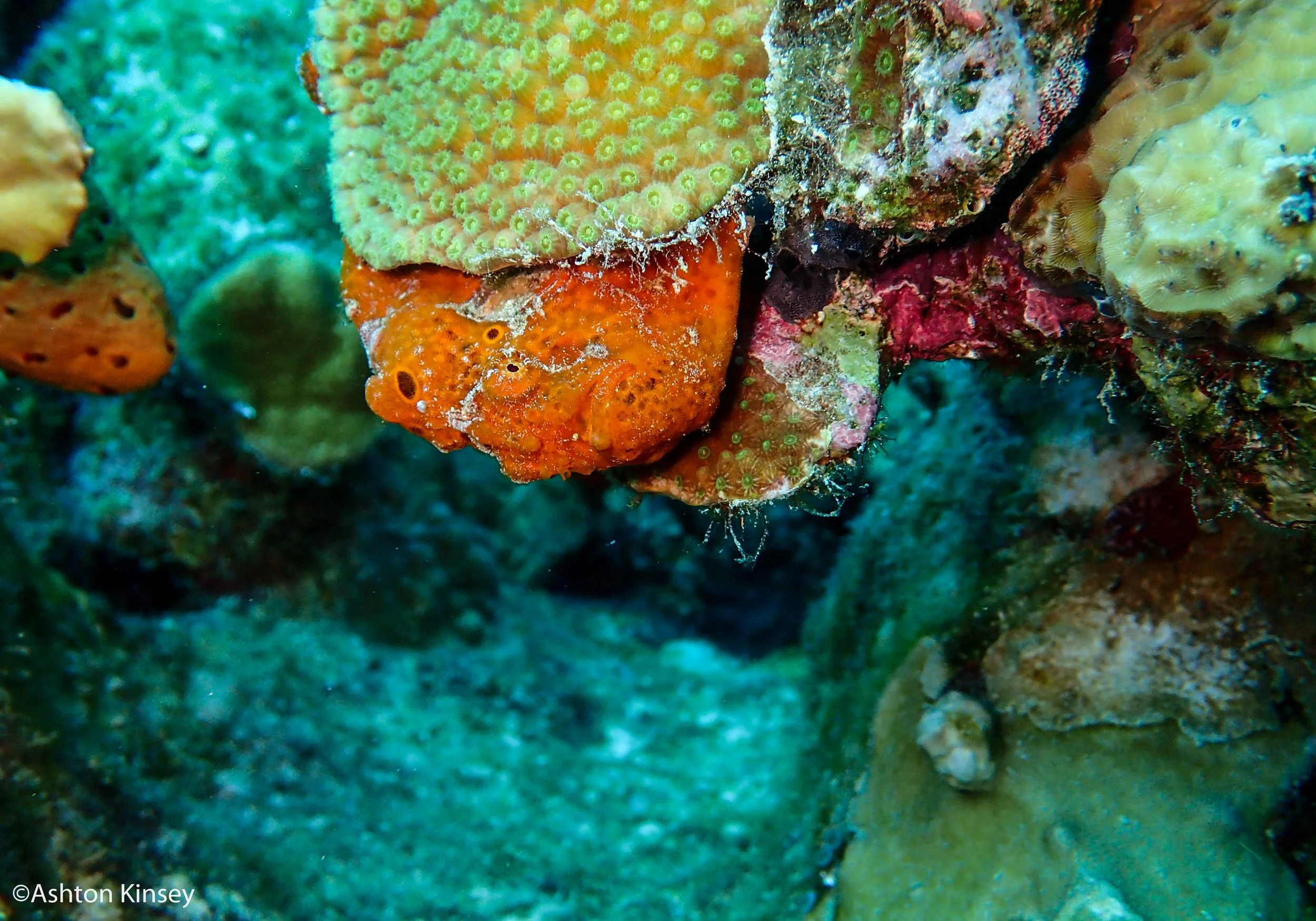
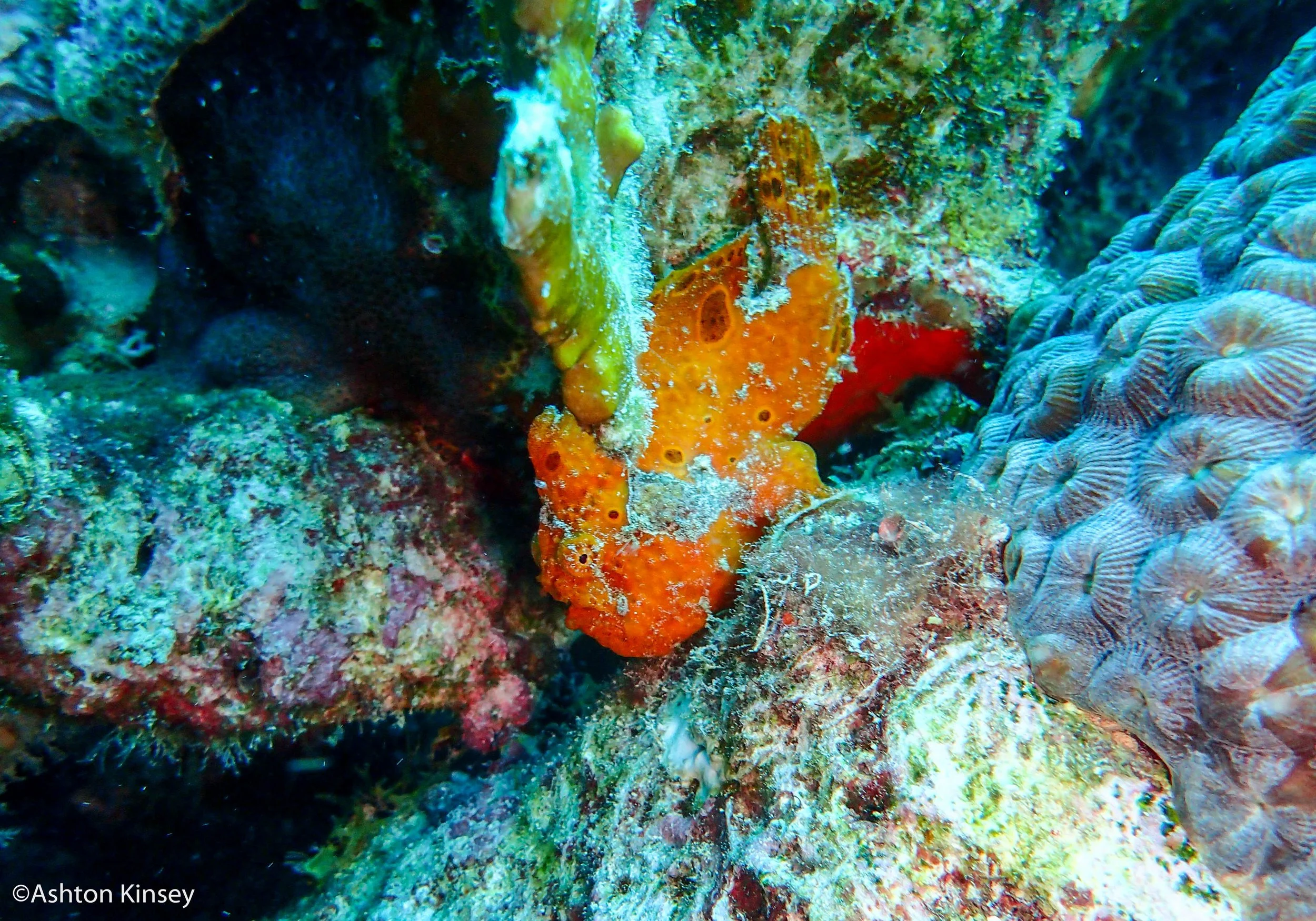
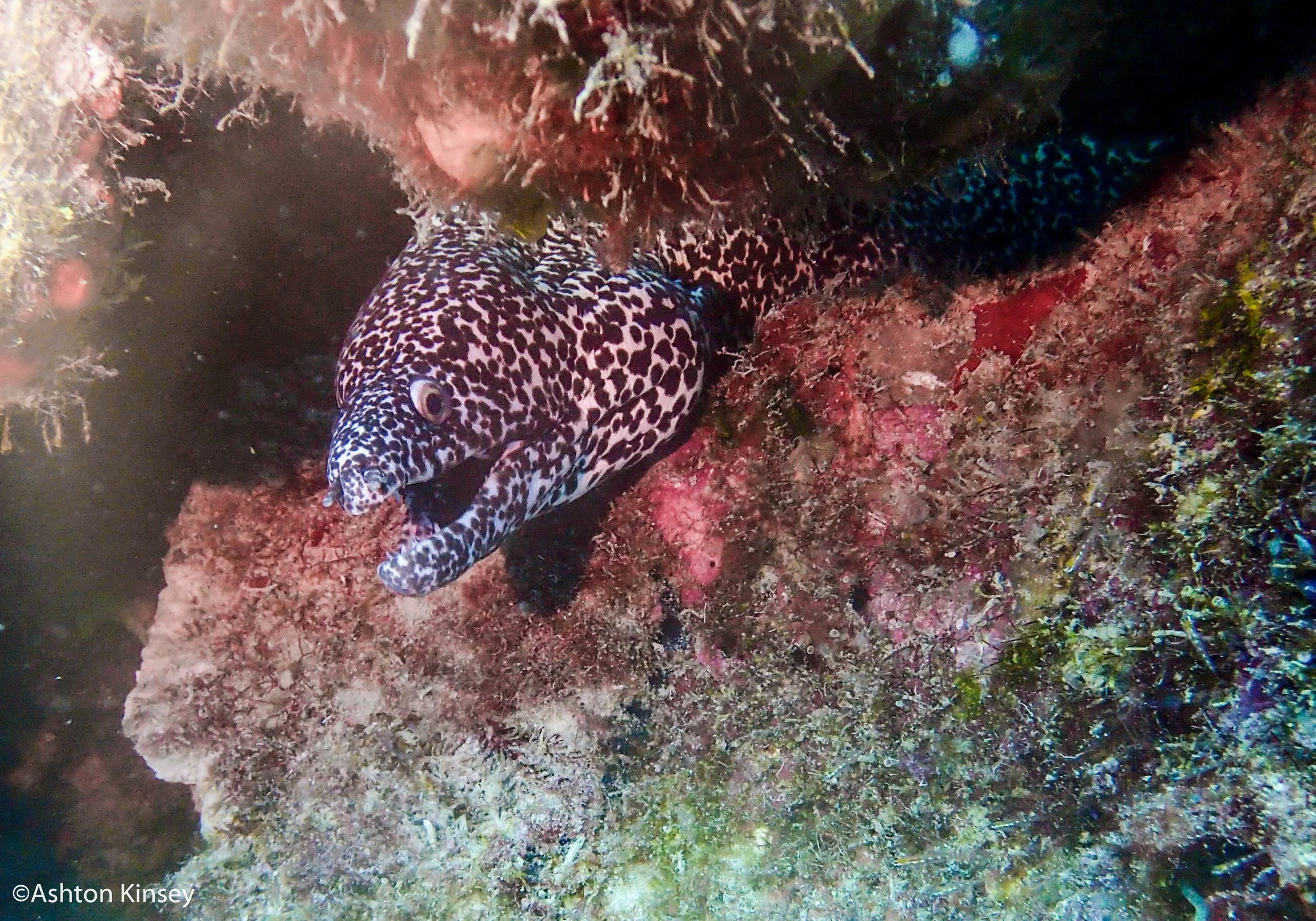
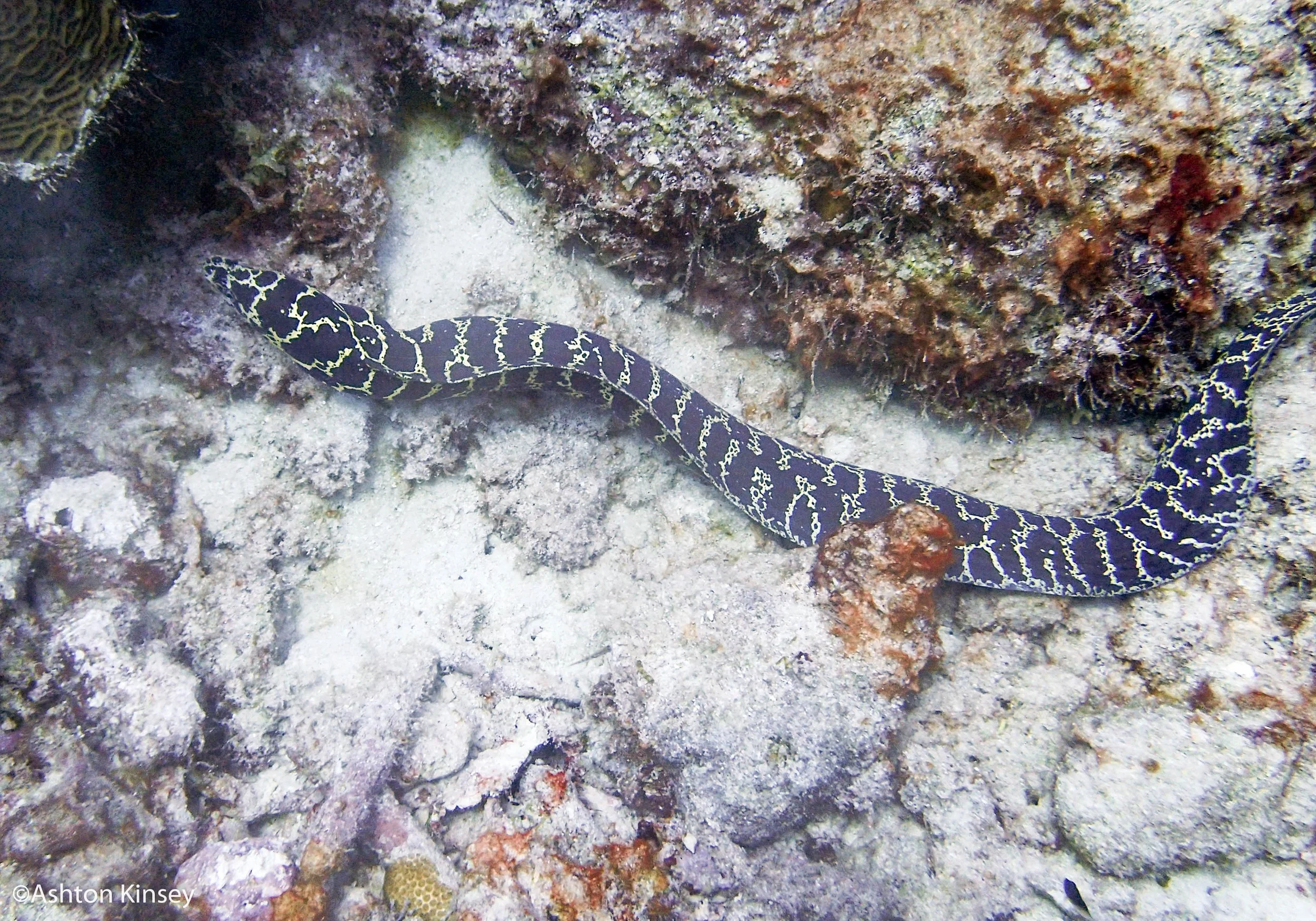
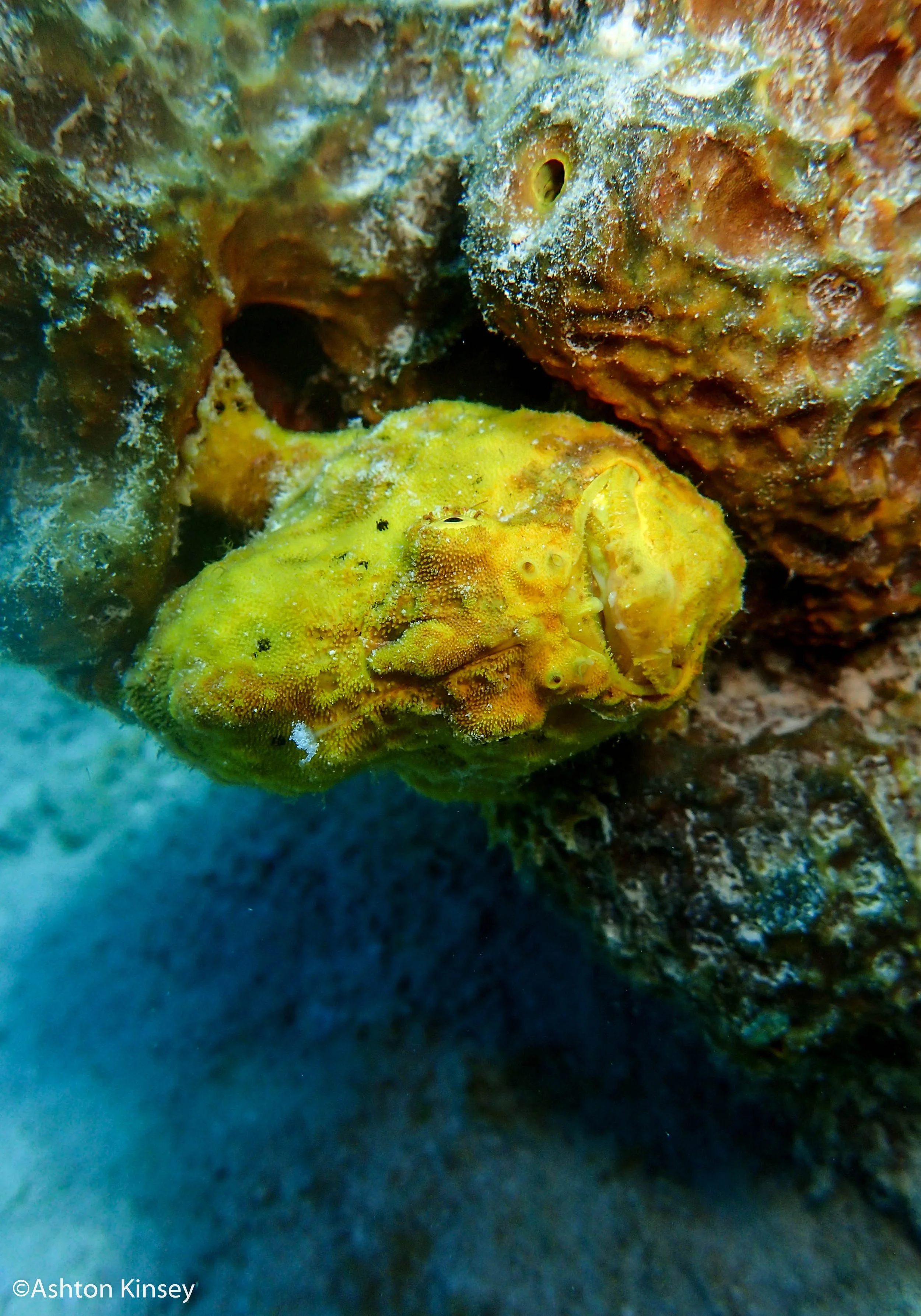
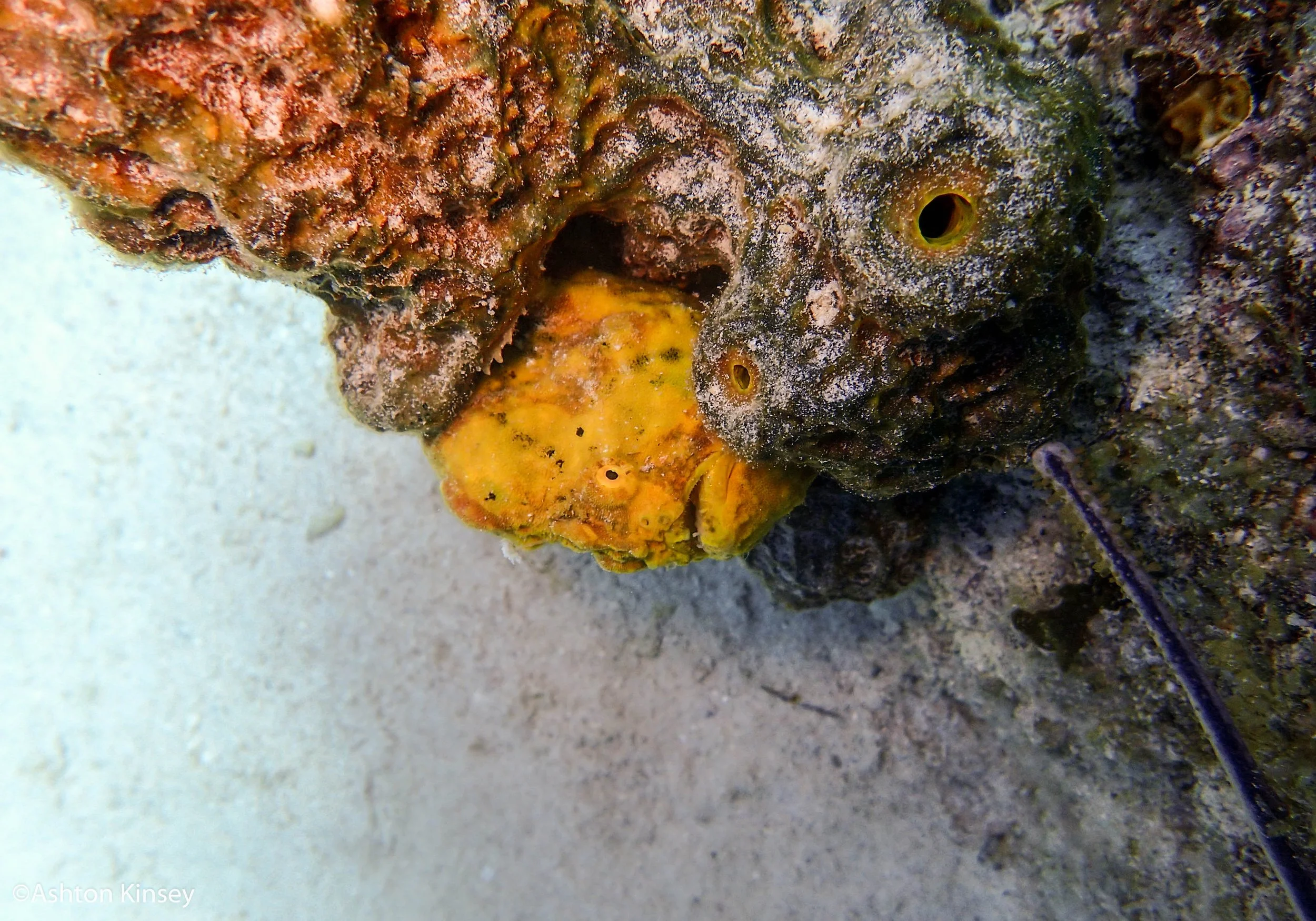
The number of morays at this dive site is remarkable. You might find Green-, Spotted-, and Chain Morays in crevices in the reef. Various species of frogfish live on the sponges here, although these can be hard to find thanks to their excellent camouflage abilities.
Frogfish are easier to find during night dives. When night diving at Sampler, you may even see lobsters, crabs and sleeping turtles. This is also where an enormous Loggerhead Turtle was observed a few years ago. Photographers are advised to bring along macro lenses when diving at Sampler.
Petrie’s Pillar
Surroundings
This is recommended as a boat dive. It is difficult to enter the water and the right spot isn't marked. There is also nothing of interest in the area for non-divers.
Dive 7: 66’ for 54 minutes
This dive site was named by Captain Don - as a wedding gift - after its characteristic coral (Pillar Coral) and a friend (Petri).
The reef starts right at the shore, making it difficult to enter the water. You can carefully walk into the water through the Elkhorn Coral from the rocky beach. During heavy seas, it would be wise to look for a different dive site, since you're sure to damage yourself and the coral as you enter the water.
Pillar Coral is the characteristic feature of this dive site. This coral grows immediately off the shore. Green- and Stoplight Parrotfish and schools of Blue Tangs swim amongst this coral. Schools of squid are also regularly seen near the surface. To the north of the buoy at a depth of 6 meters (20 feet), there's a particularly big Pillar Coral formation.
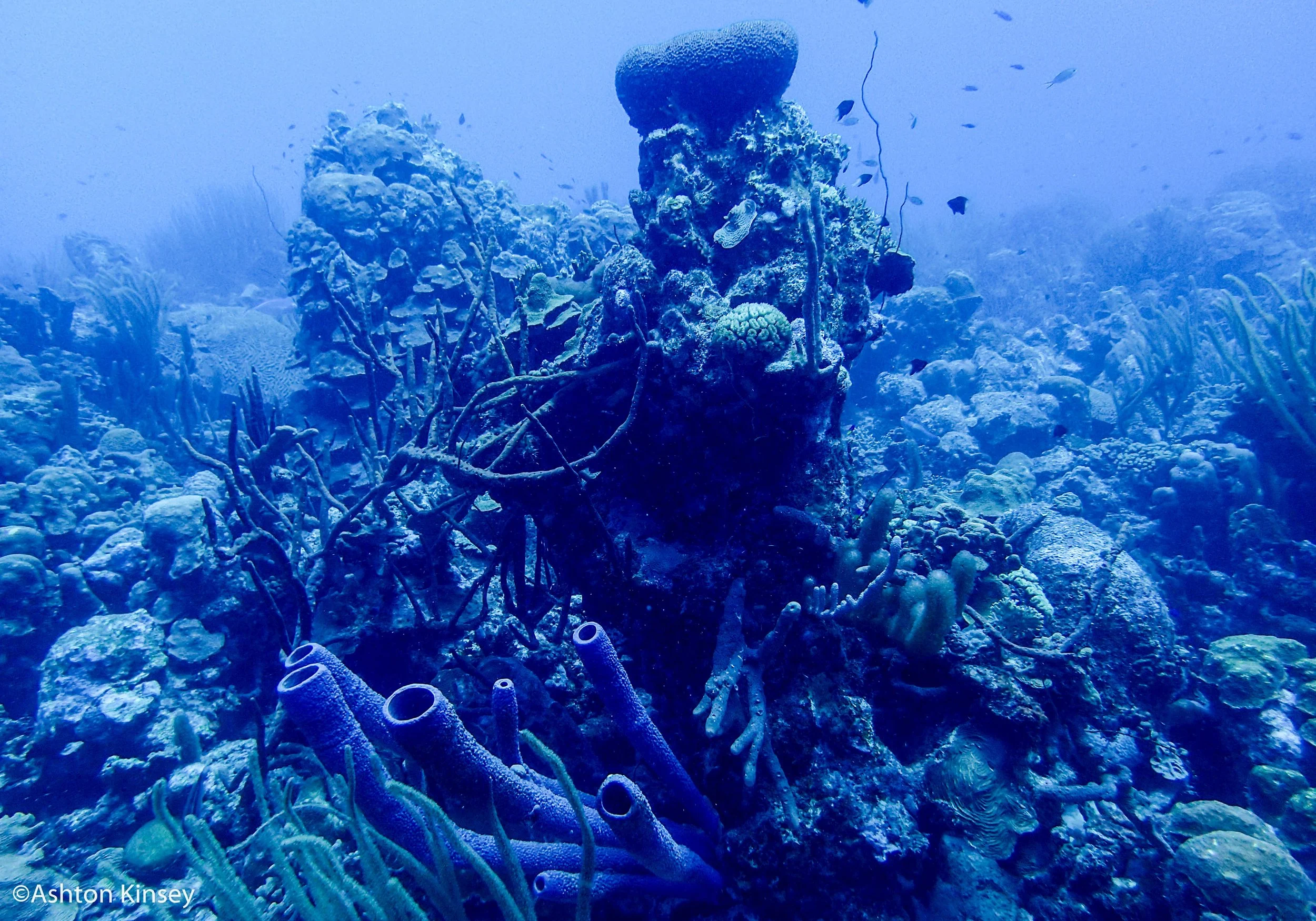
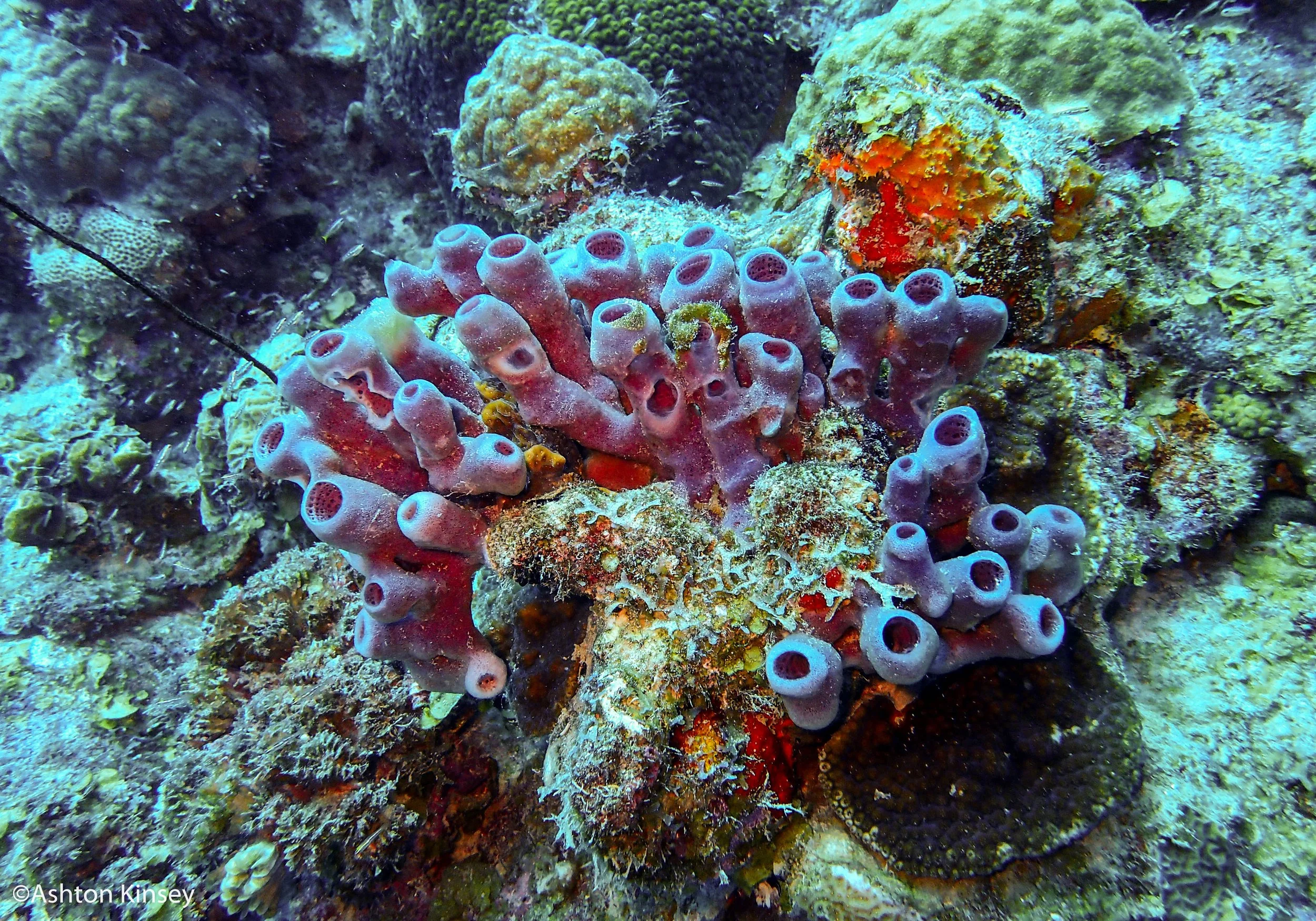
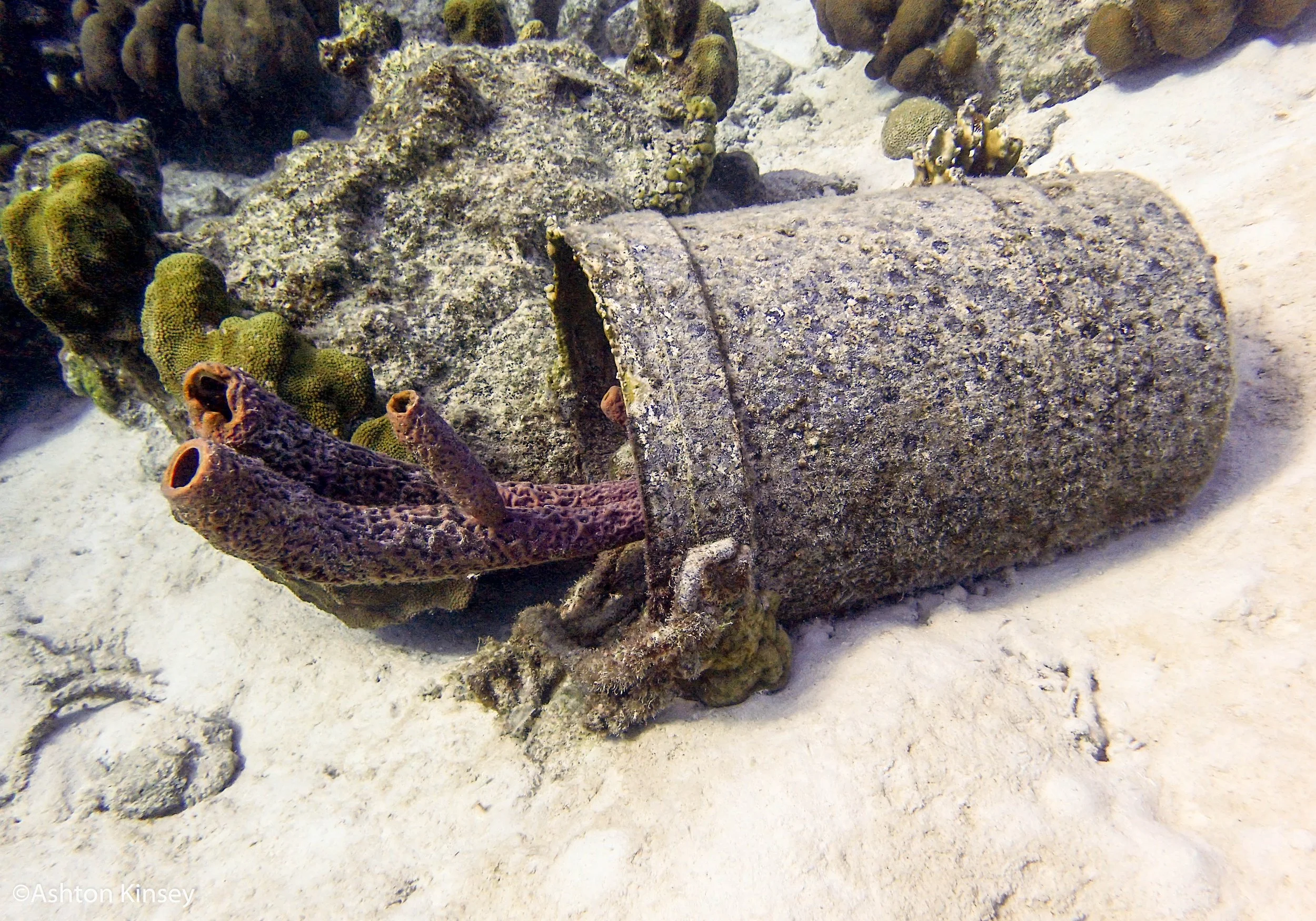
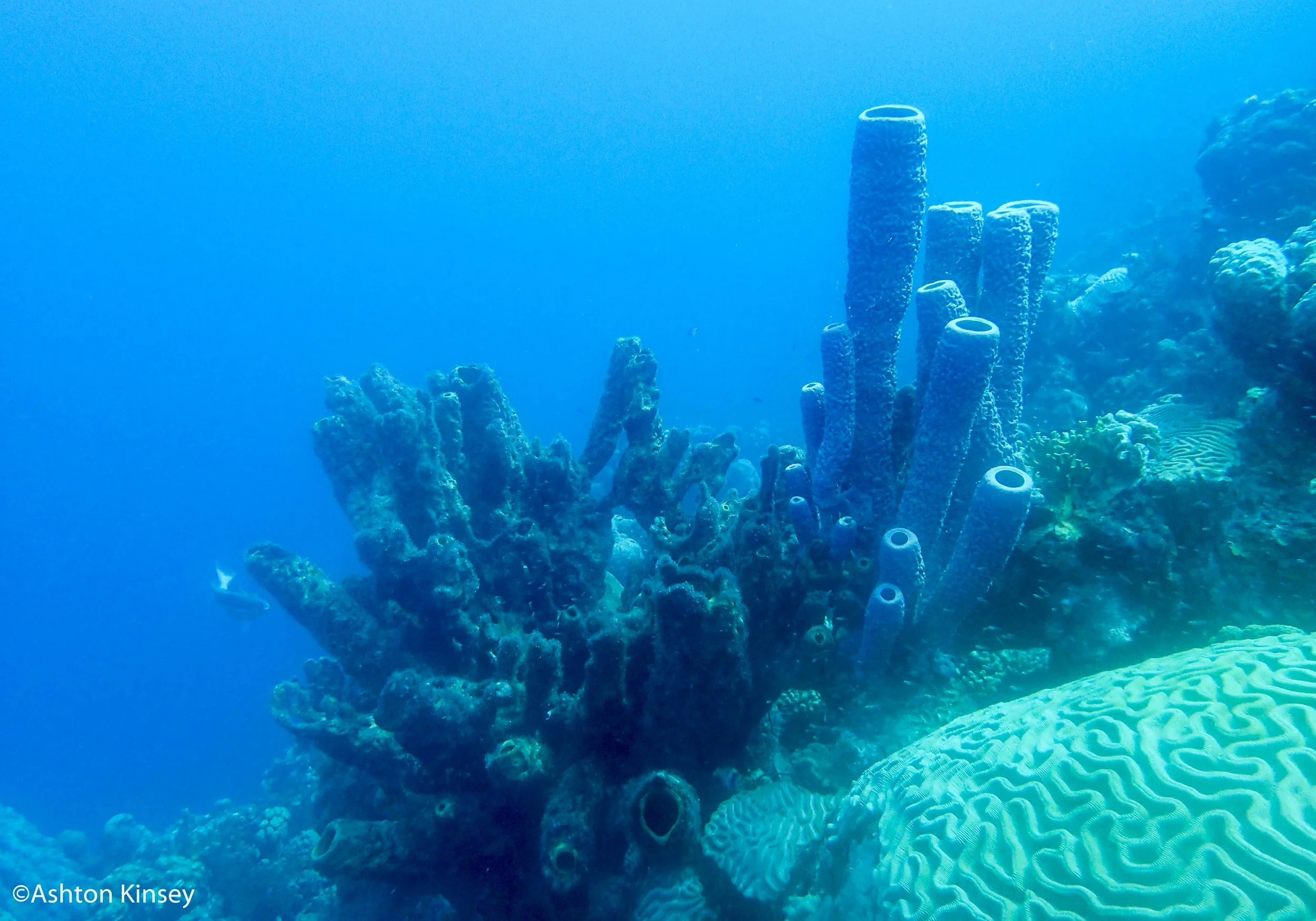
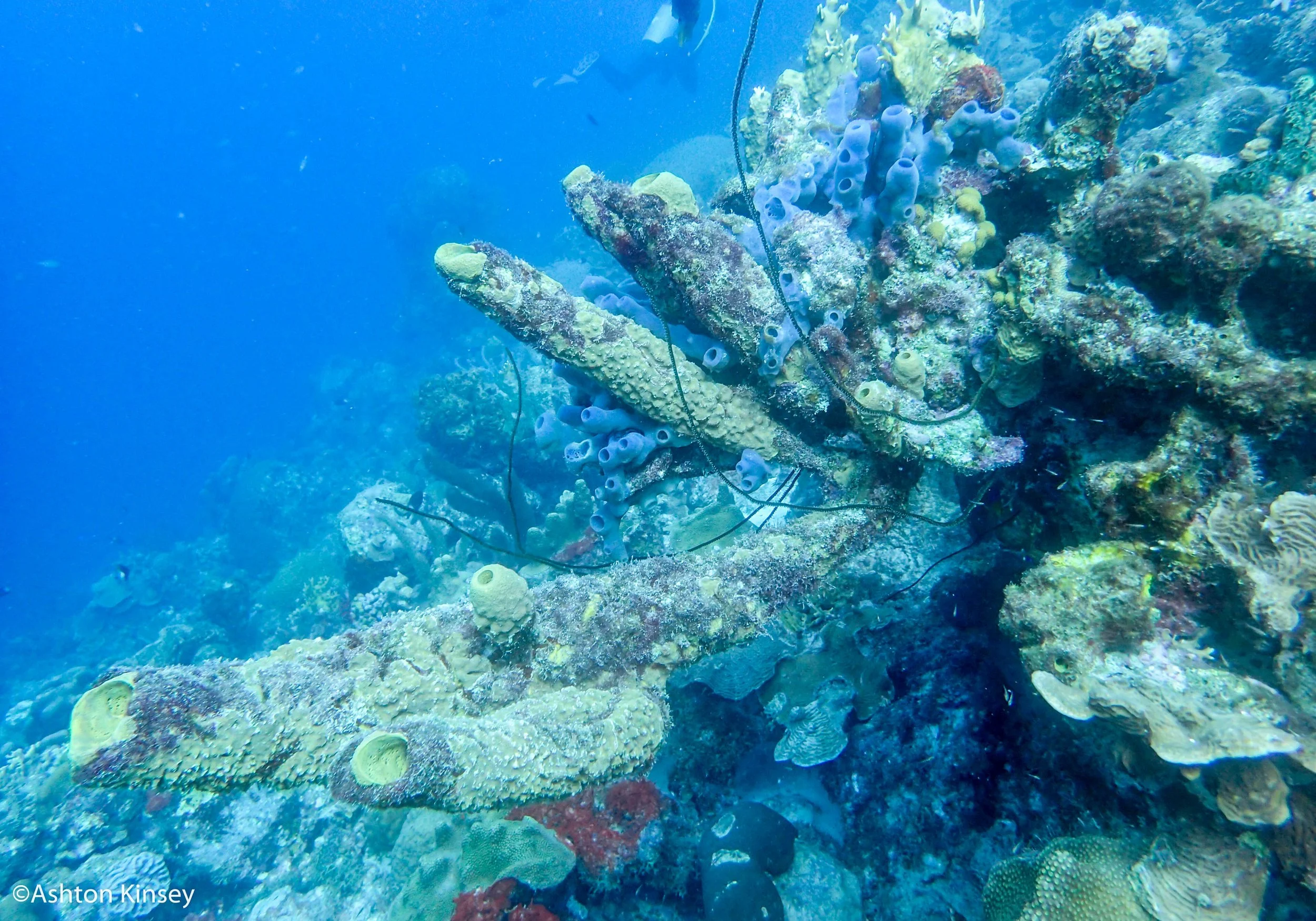
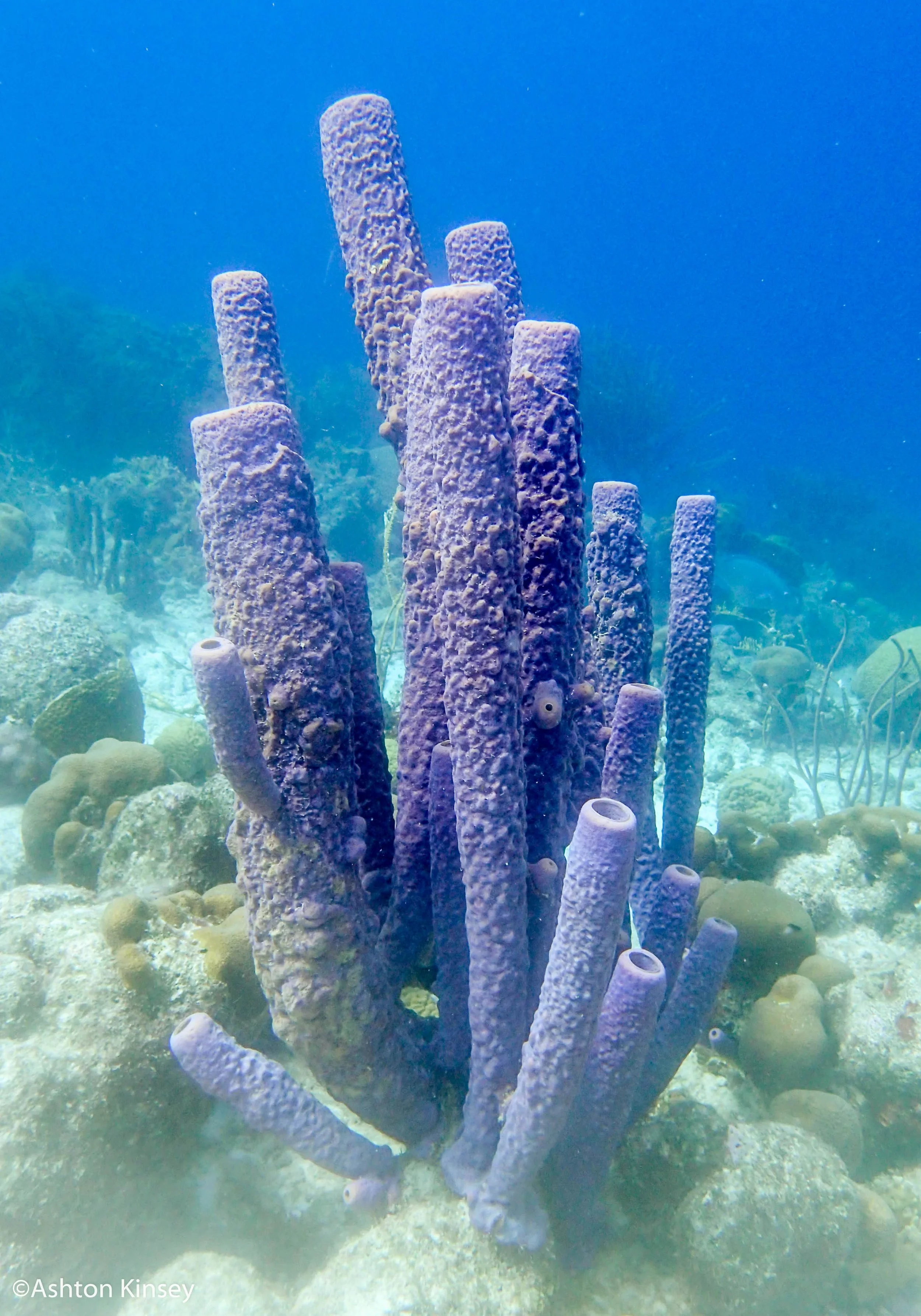
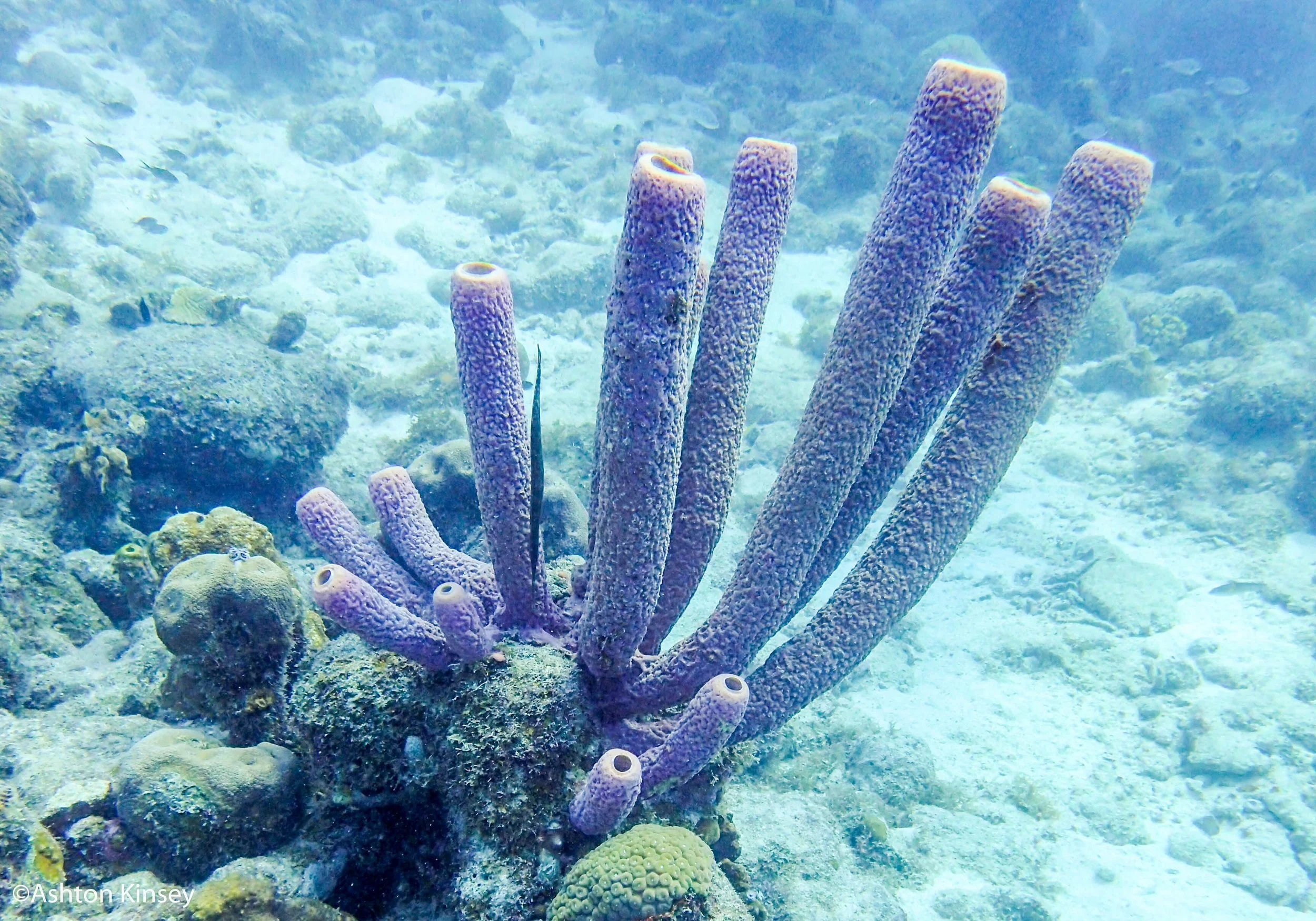
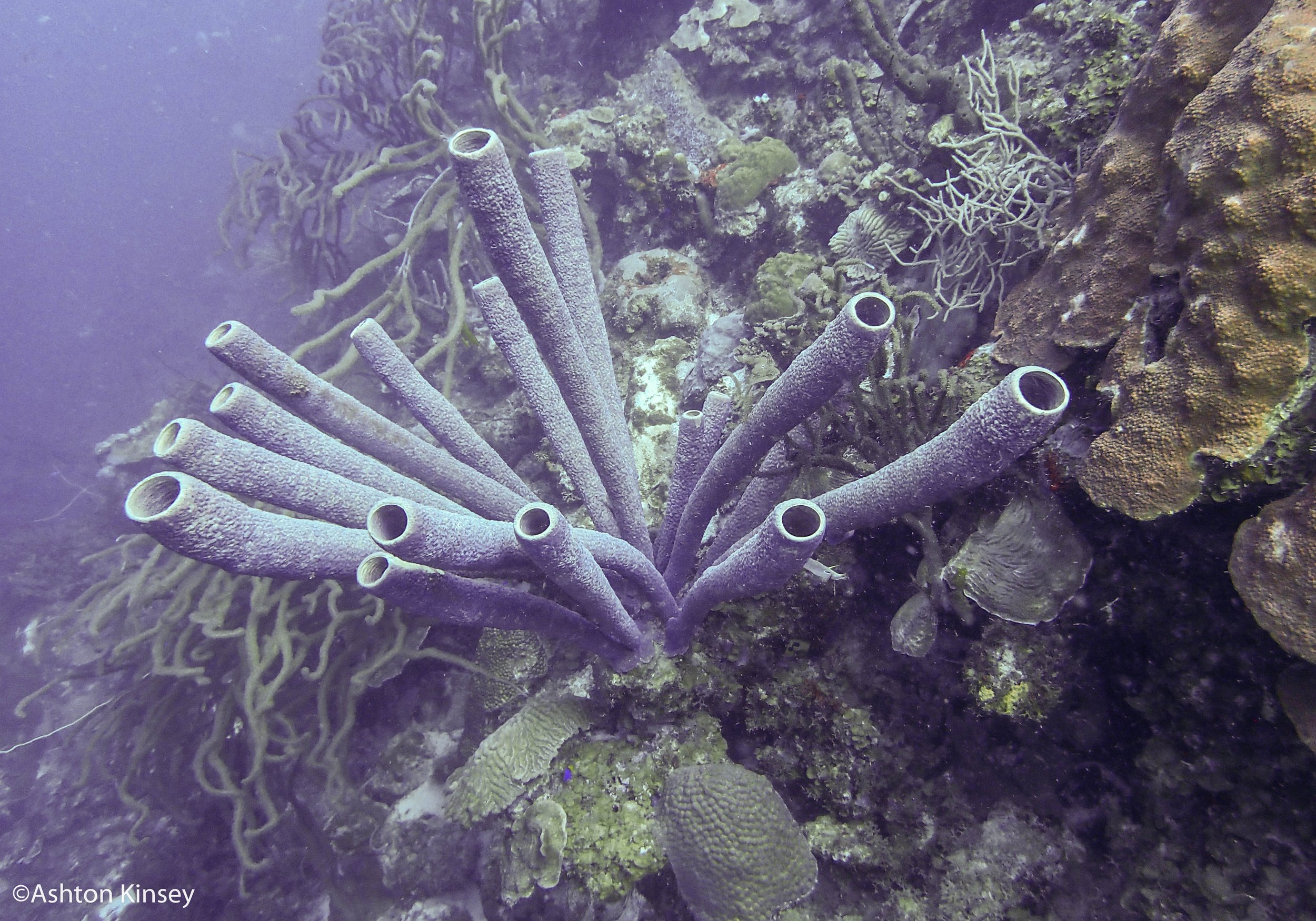
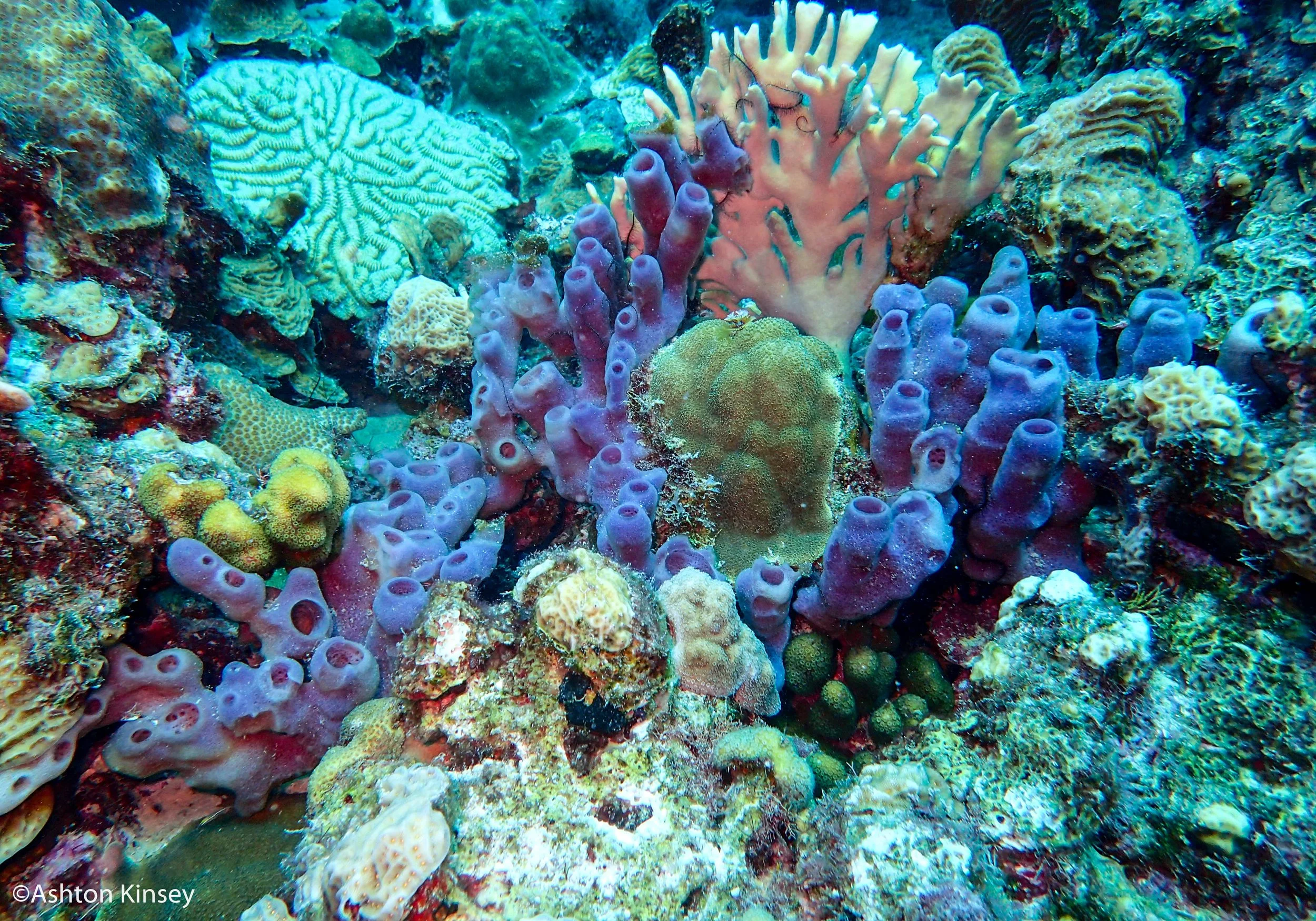
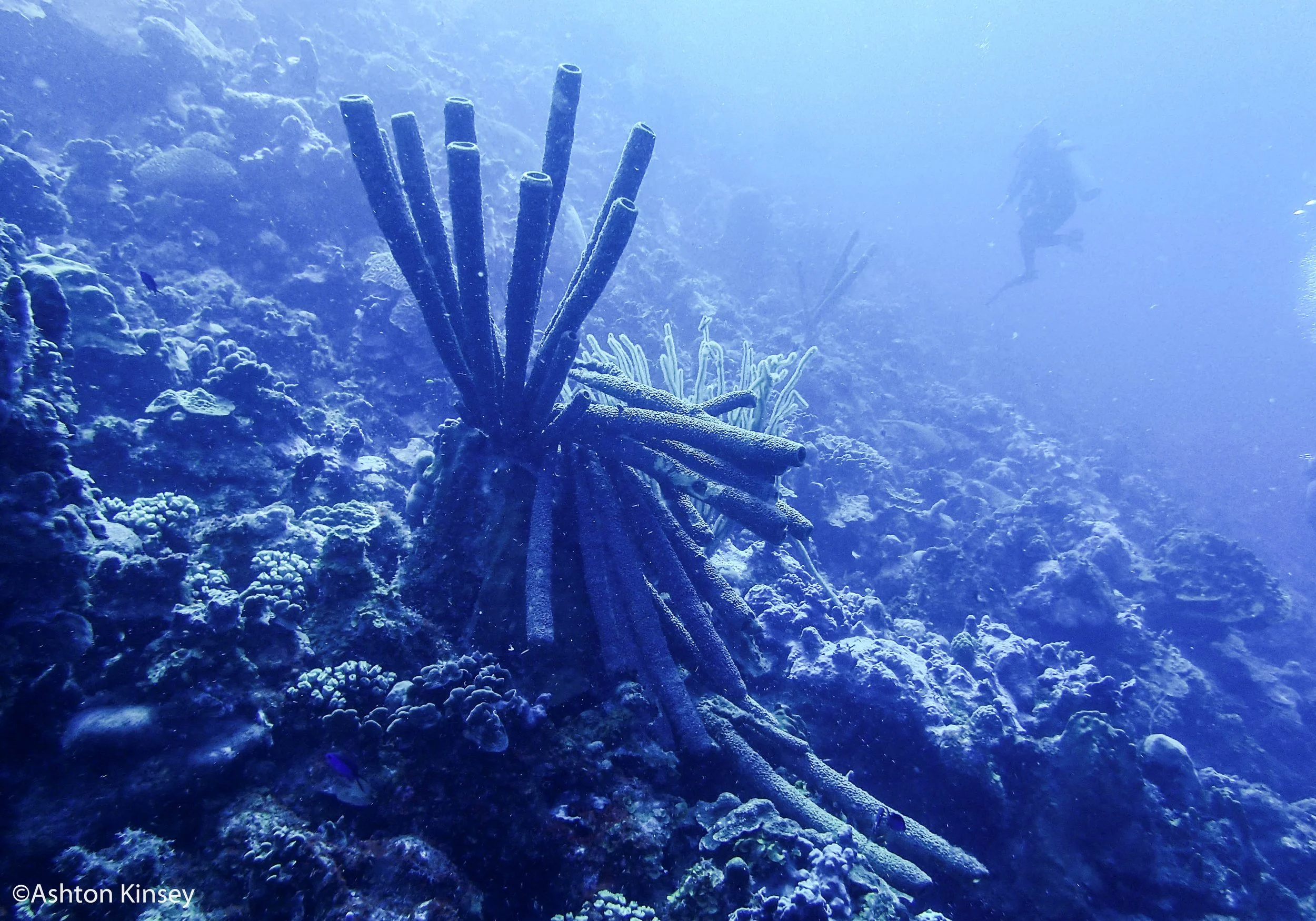
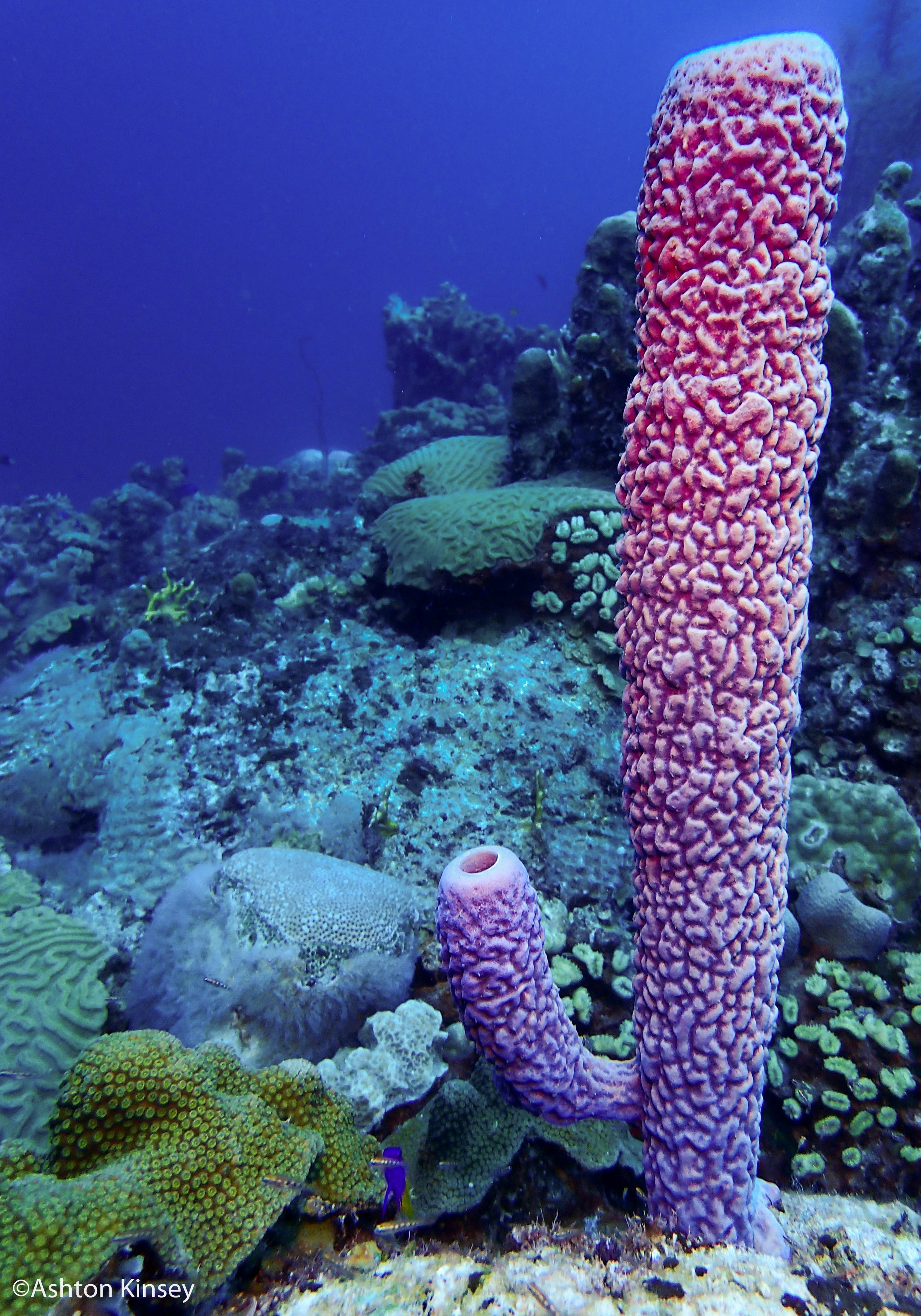
The buoy is anchored at a depth of 7 meters (23 feet). Here, the reef starts to descend at an angle, although the drop only steepens from a depth of 14 meters (46 feet). The reef consists mainly of soft and hard coral, such as coarse Star Coral and Star Boulder Coral. Not many sponges grow here, although the purple and yellow Tube Sponges and Green Finger Sponges that do grow are remarkably large.
The best diving depth here is between 6 and 14 meters (20 and 46 feet), and you can look for Glassfish and Soapfish. The reef continues downwards to a depth of 43 meters (141 feet), where it gives way to a sandy floor. Scrawled- and White spotted Filefish and turtles are often seen swimming along the reef. Encrusting Fan-leaf Algae covering the coral is found along the deeper part of the reef.
Thanks to the reefs' proximity to the shore and its variety of underwater life, this is a great snorkeling site. Divers who prefer long and shallow dives will also enjoy this site.
Salt Pier
Surroundings
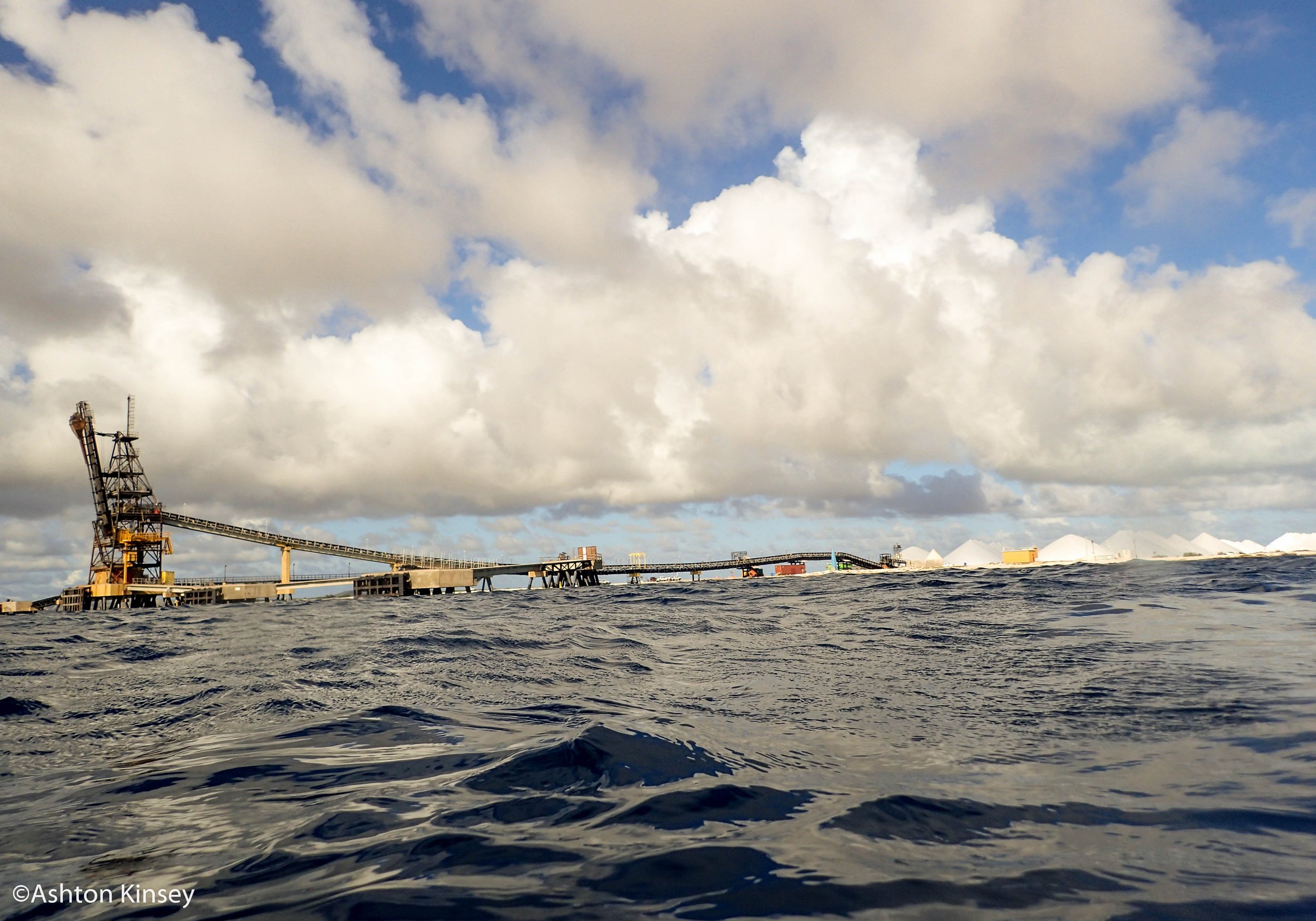
The Salt Pier is the pier from which the salt extracted from the saltpans is shipped. A conveyer belt is used to carry the salt over the road and onboard the vessels. When ships are docked at the pier, diving is not permitted. Despite all the activity, there's always something to see here. Pelicans like to sit next to the conveyer belt to wait for careless fish. There are often a lot of pelicans here. Flamingos prefer the peaceful atmosphere farther away in the saltpans.
Dive 8: 57’ for 39 minutes
A possible ban on diving has been the topic of heated discussions for many years and various rumors abound. Enquire at the local dive center to make sure.
If any vessels are moored to the pier or are in the vicinity, then diving is certainly not allowed. Other than that, it seems that the authorities turn a blind eye, and you dive here at your own risk. Diving here is more than worth the effort. It's easy to enter the water from the right (northern side) of the pier. In around 5 minutes, you'll swim across a gradually descending, wide sandy floor to the pillars underneath the pier.
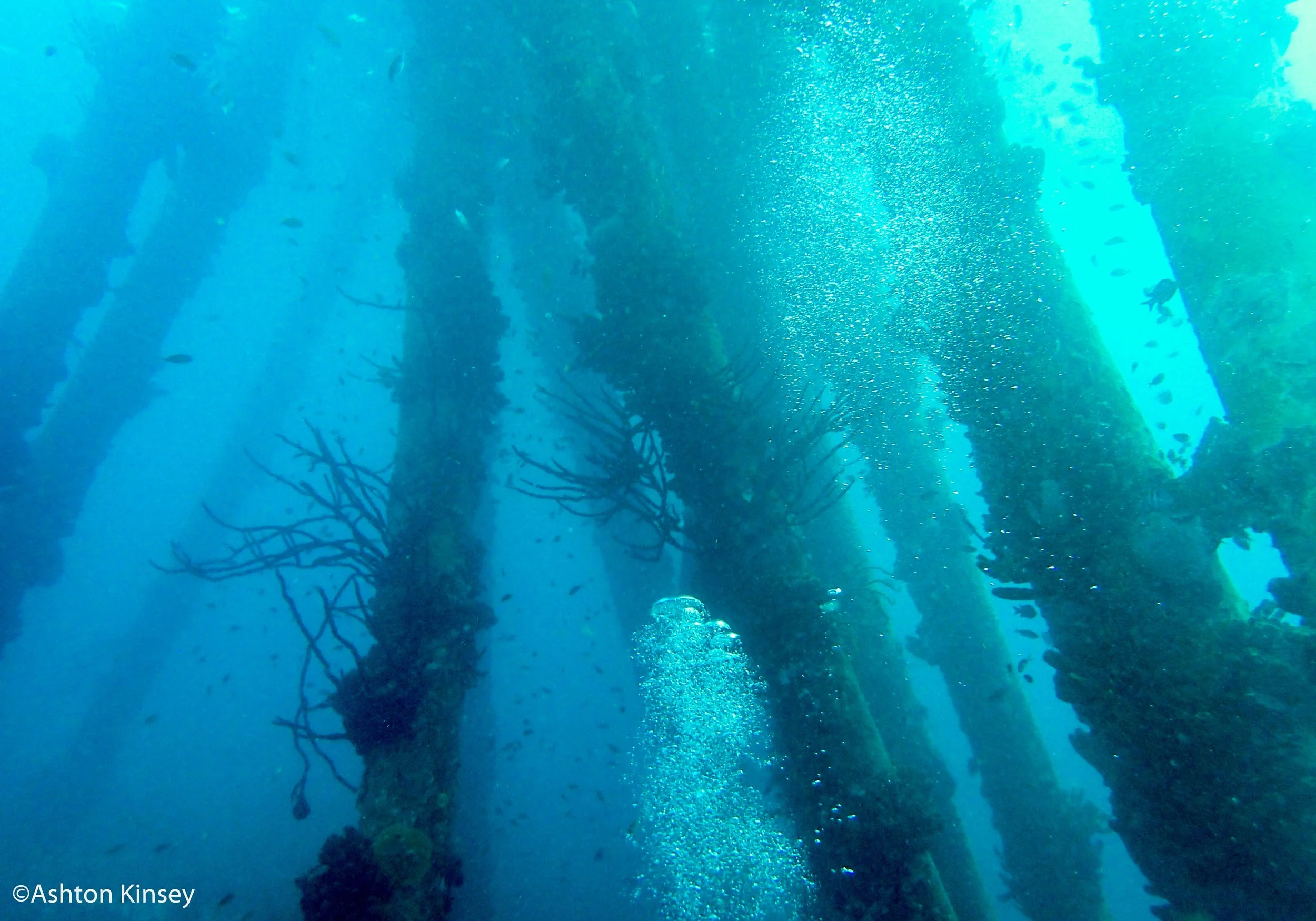
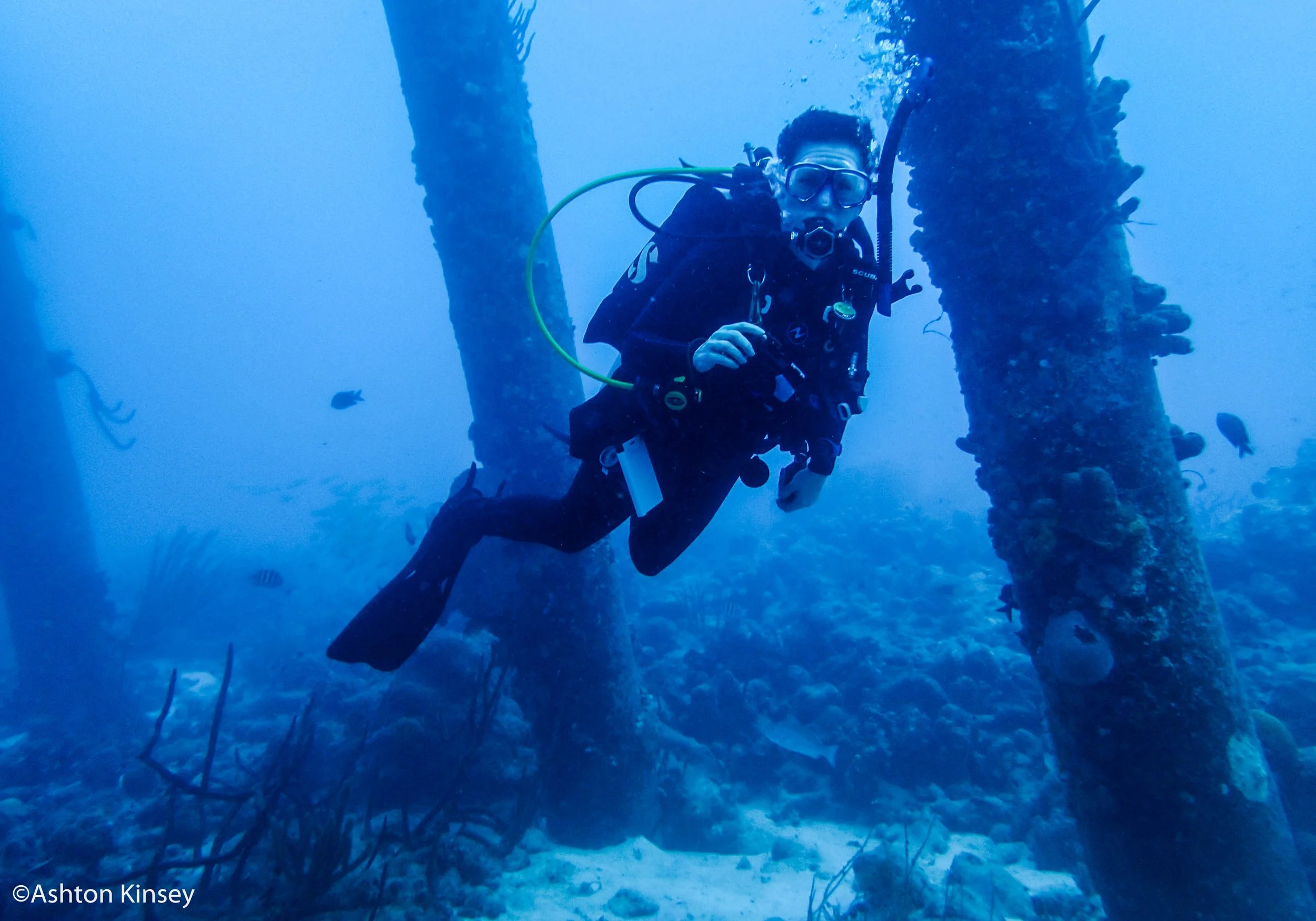
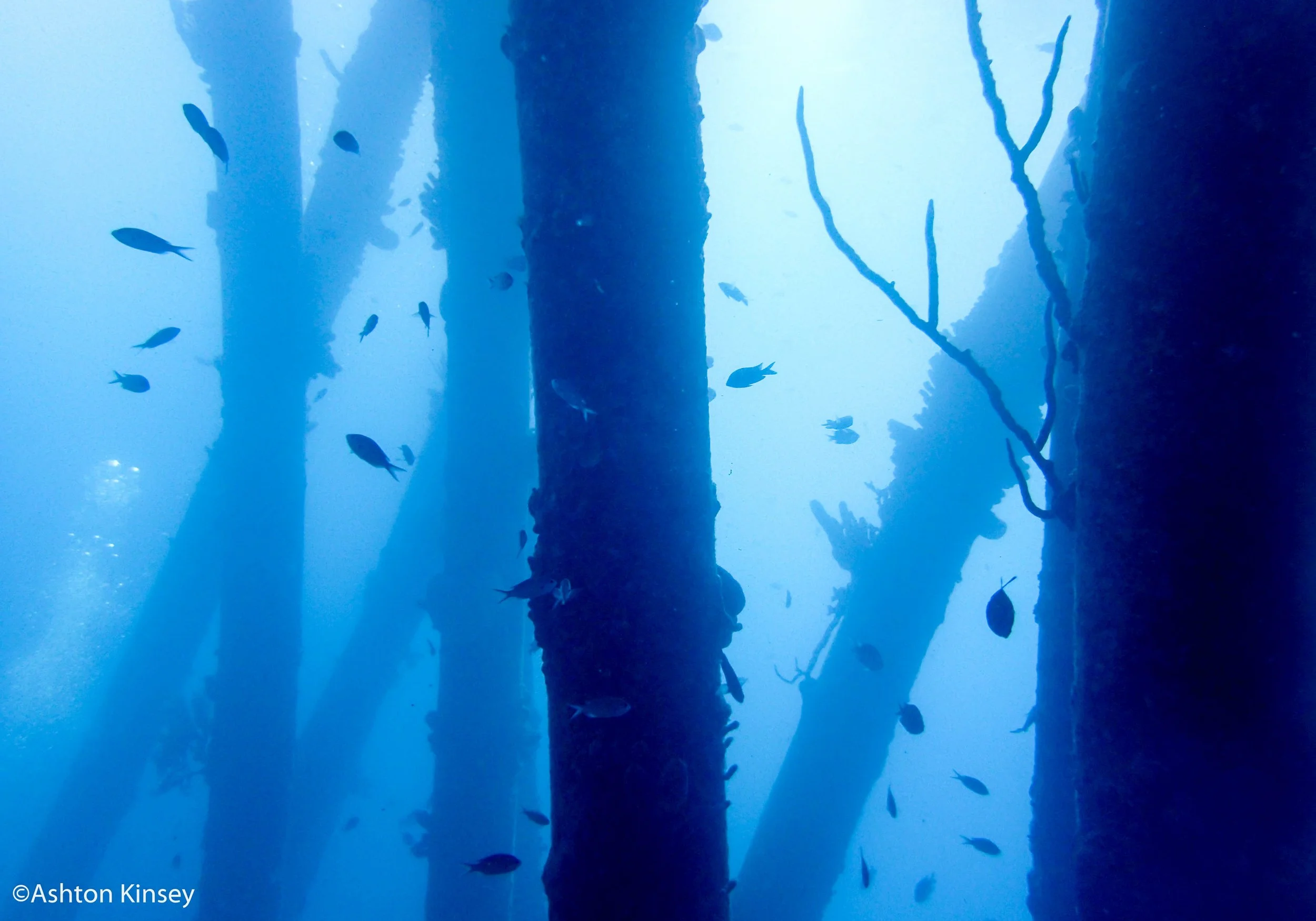
The pier has been constructed in a T-shape. The long section with the conveyer belt is perpendicular to the shore, while the cross section at the end protrudes about 50 meters (164 feet) to either side and runs parallel to the shore. The many pillars that support the pier are covered in superb coral and sponge growth. After 2 pm, this is a fantastic dive site, presenting wide angle photographers with endless photo opportunities thanks to the light that shines through the pillars.
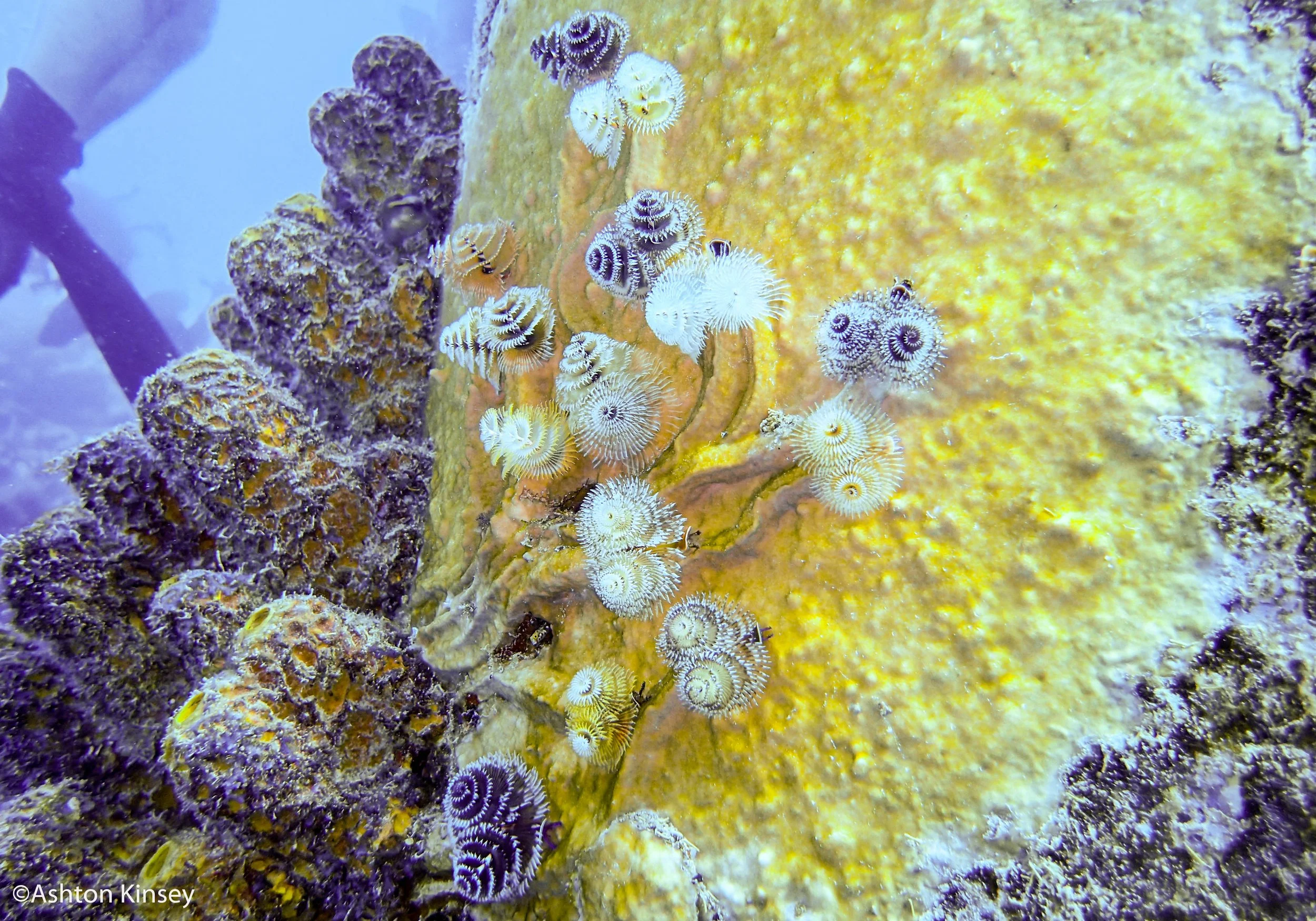
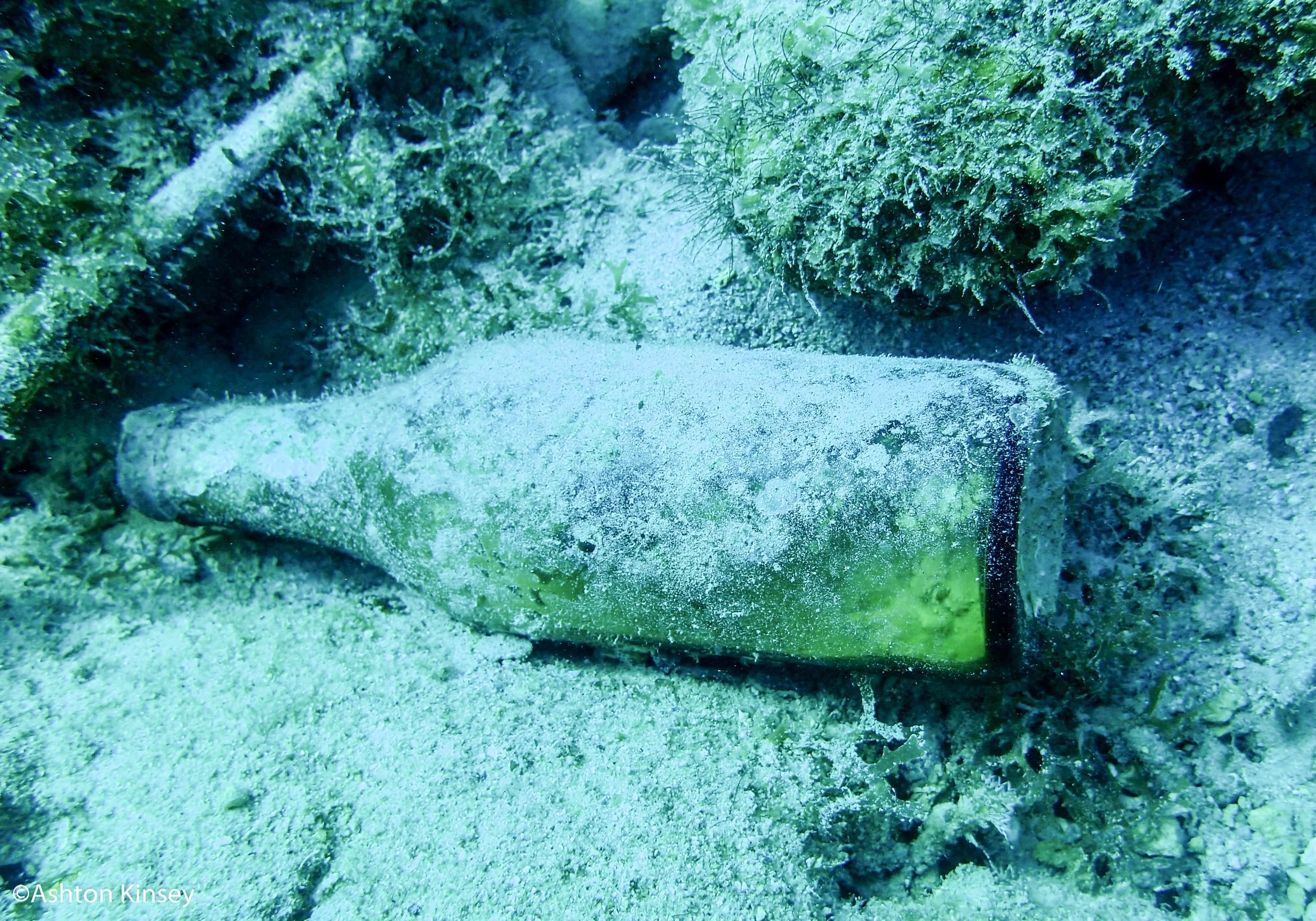
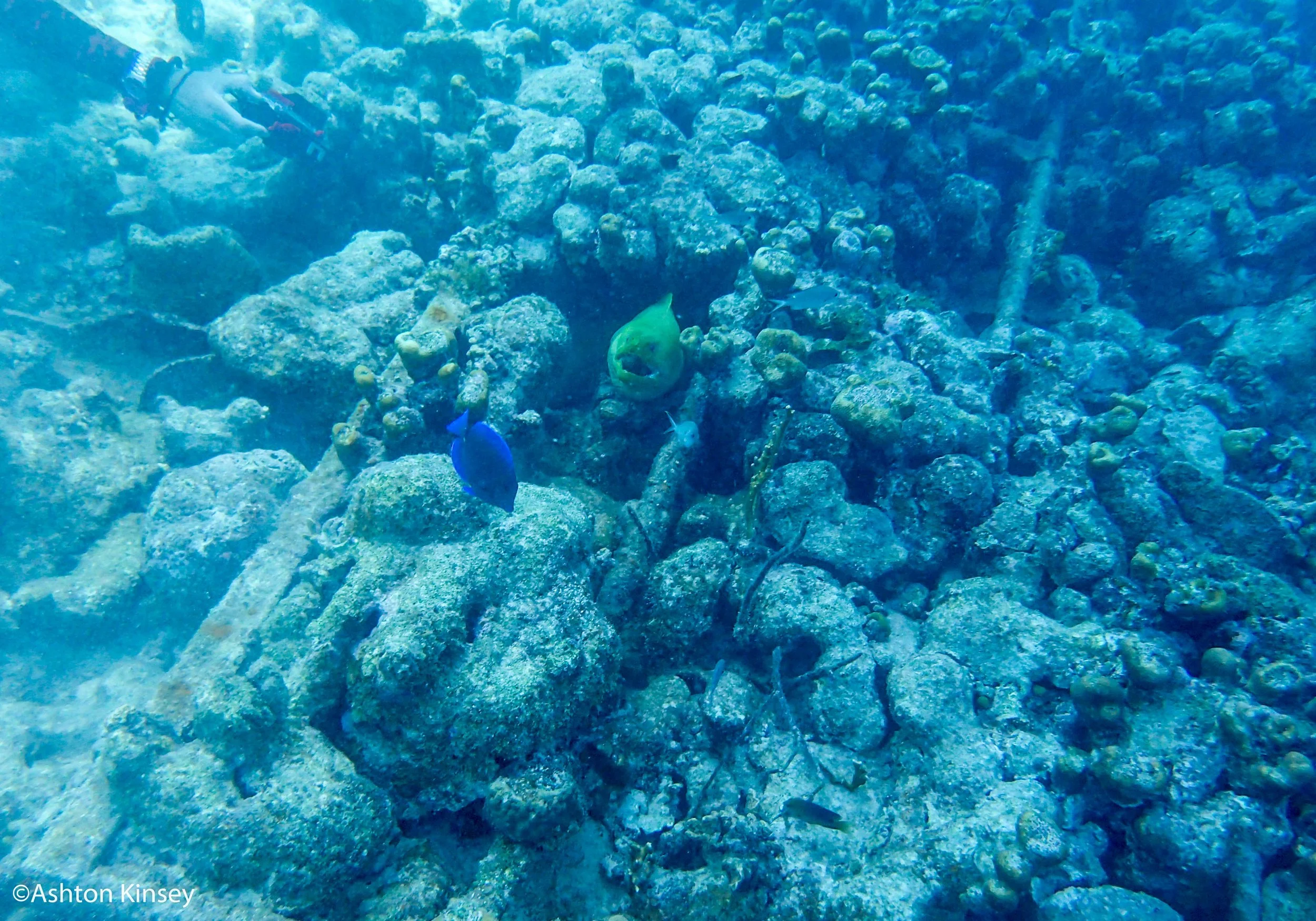
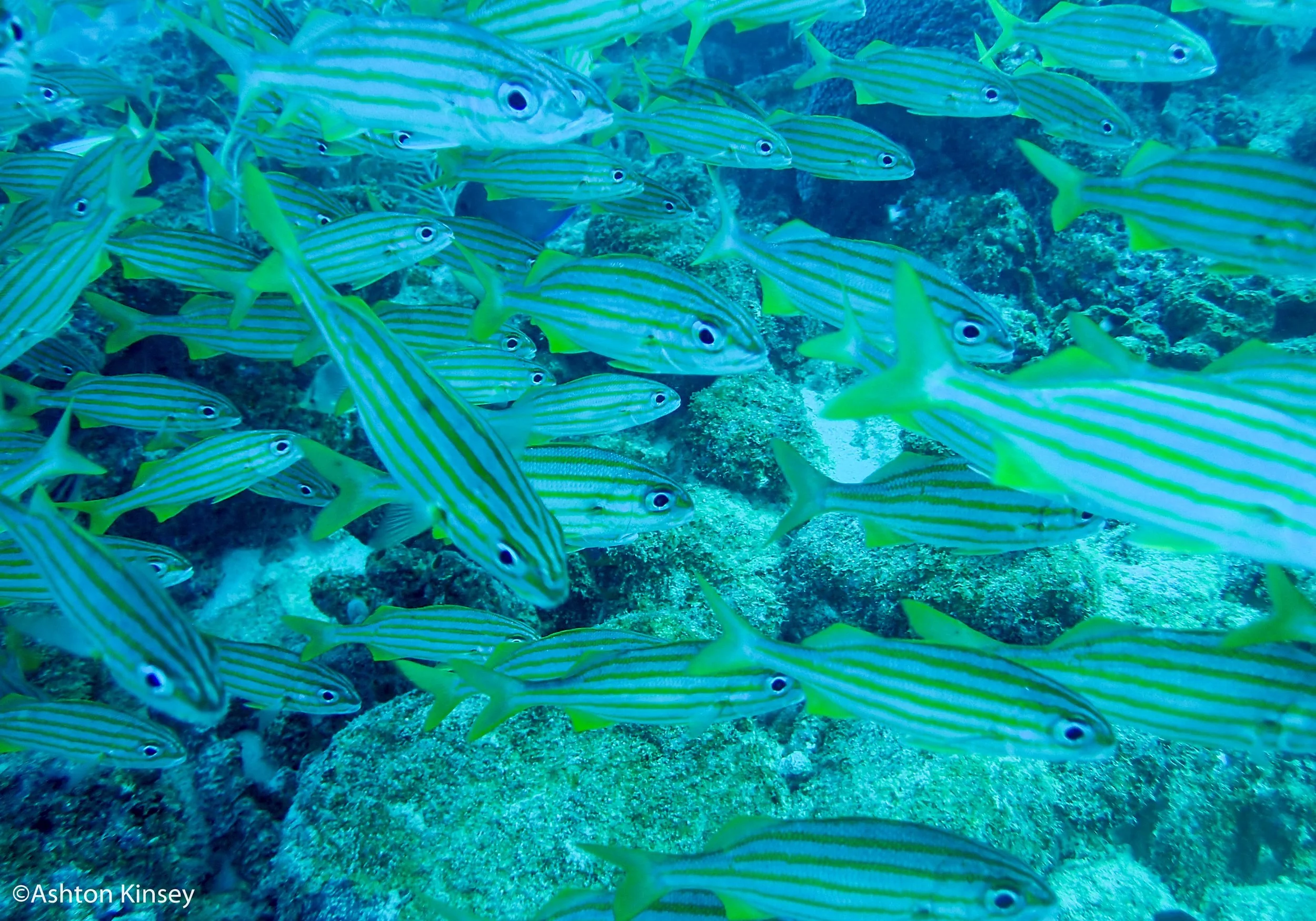
A huge number of fish swim amongst the pillars. Schools of Creole Wrasses, Goatfish, Snappers, and Grunts drift between the pillars, as do some large Barracuda. Plenty of macro underwater life is also found on the pillars themselves including small crabs and shrimp, various species of Blennies, Frogfish and sometimes even ---seahorses. Construction and shipping waste lies on the floor beneath the pier, and this has meanwhile become overgrown with coral, offering shelter to Morays and Octopuses. The outer pillars of the pier are at a depth of 15 meters (49 feet), making this a shallow dive and allowing you to take your time to enjoy it. Currents are virtually absent here, so this dive is also ideal for beginner divers. Make sure that you keep an eye out for sharp objects jutting out from the pillars.
Salt
Salt has been extracted on Bonaire for centuries. By leaving seawater in saltpans and allowing the water to evaporate, salt is extracted using a simple procedure. These activities mostly take place on the southwestern part of the island. Salt is also extracted at the Slagbaai plantation, but this is mainly used to salt the goat's meat destined for Curacao.
During the 14th century, the demand for salt in Europe increased drastically when Willem Beukelzoon, from Biervliet, The Netherlands, discovered how to properly gut herring. He found that if a herring was relieved of its gills and intestines, but not of its pancreas, and then salted it remained fresh for much longer. This was a major step forward in food processing and the demand for salt also shot up. Especially the cities of Enkhuizen, Medemblik and Hoorn in North Holland required a lot of salt for the processing of fish. Large amounts of salt were imported from Spain and Portugal until this became impossible because of the Eighty Years' War (1568-1648). After 1600, more than 100 Dutch ships set sail for the Caribbean every year, returning with more than 300,000 tons of salt between them.
Until 1840, salt extraction was controlled by the colonial government, which commercialized production in 1837. The southern brine lake was fitted with a system of sluices and dams in order to better regulate and distribute the harvest. A system of colored flags and obelisks was also implemented to mark the spots where ships could load salt. Four obelisks were erected around the salt pans, named Rode (Red) Pan, Witte (White) Pan, Blauwe (Blue) Pan and Oranje (Orange) Pan after the colors of the Dutch flag and the color (orange) of the Dutch royal household.
After 1840, salt extraction operations were taken over by the Zoutexploitatie en Cultuuronderneming Bonaire (Salt Exploitation and Cultural Company). However, slavery was abolished in 1863, making salt extraction much less feasible and virtually putting an end to it. In 1966, Akzo Noble restarted the production of salt, albeit a more modernized version. In 2000, salt production rights were sold to the American Cargill Corporation. Current production processes entail the pumping of seawater into salt beds, where the water evaporates. From here, the salt continues onwards to crystallization basins. The salt forms small crystals that slowly grow larger. After about a year, the salt is swept together and forms the familiar mountains of salt.
Today, a scene on the EEG Boulevard (the coastal road to the south) depicts slaves carrying bowls of salt on their heads to ships through the saltpans. However, salt is now transported along a long conveyer belt that runs over the road. Large mountains of salt are visible between the salt pans and ships moor at the pier to load salt on almost a daily basis.
The saltpans vary in color from bluish to red and brown. The colors are created by different bacteria that can survive in varying salt contents. These saltpans are an excellent example of economic and ecologic harmony. The area is a flamingo reserve and is the most significant flamingo breeding area in the southern Caribbean.
Karpata
Surroundings
Karpata is the northernmost dive site that can be accessed with relative ease. Further north are the dive sites within the Washington Slagbaai National Park. Opposite this dive site, you'll find the Karpata Ecological Center run by Stinapa. There's no beach here.
Dive 11: 83’ for 44 minutes
Entering the water here can be difficult, especially during high seas. Enter the water to the right of the concrete platform. You can use it as a support. Put on your mask, turn on your regulator, and put air into your BCD. Wait for a set of smaller waves and walk along the platform to its end and quickly put on your fins. Allow the backwash of a wave to carry you into the ocean and over the shallow reef at the end of the platform. When you reach the shallow bank, you will find that all the effort was well worth it.
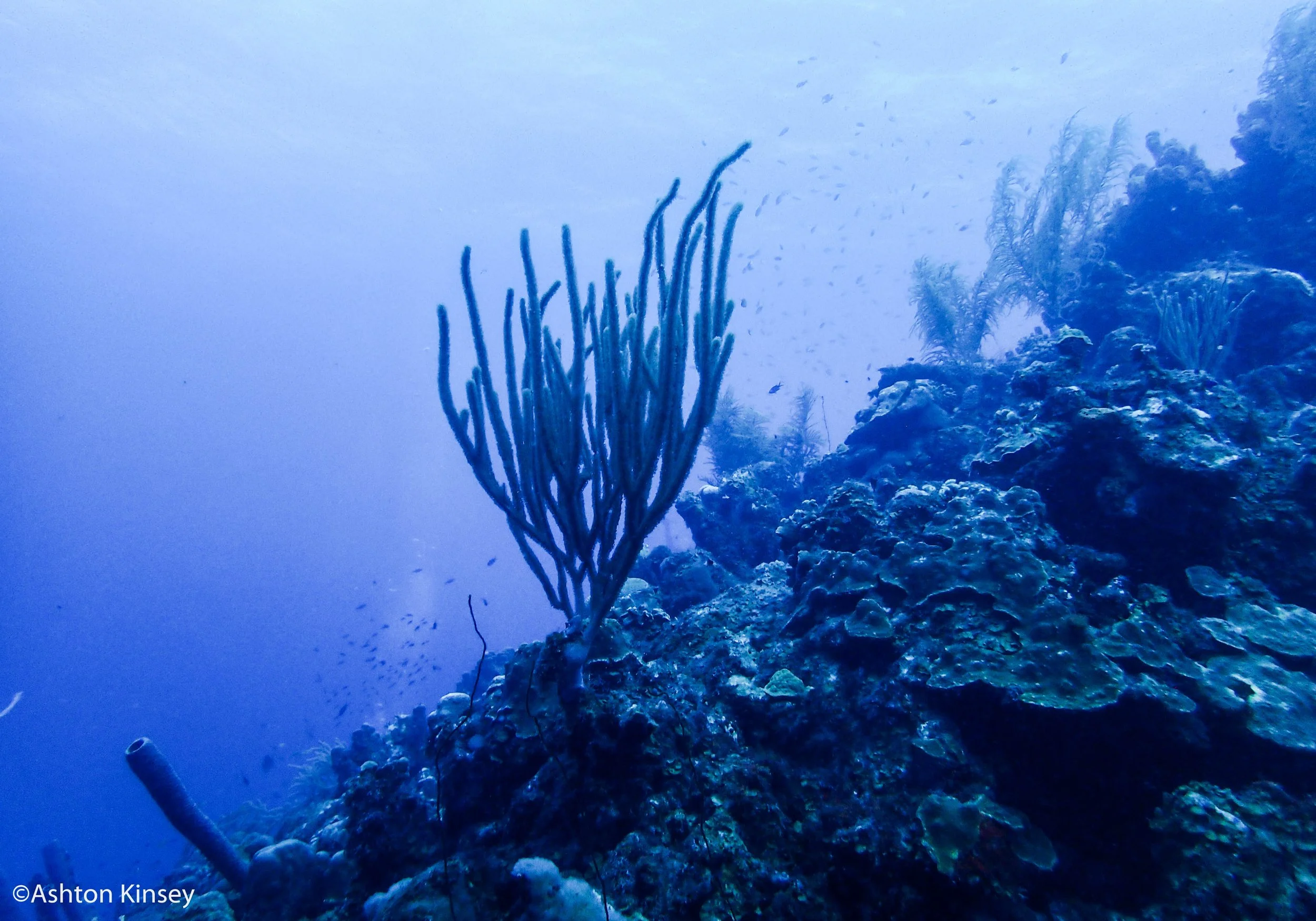
The shallow bank is overgrown with Elkhorn Coral and lots of Sea plumes, Sea fans and Corky Sea Fingers. Large Parrotfish and - occasionally- turtles eagerly visit this soft coral zone.
The buoy is anchored at a depth of 4 meters (13 feet) near one of the old anchors that lie here. There is a total of three old anchors at this dive site, probably from ships that moored here some time ago to take on goods from the plantations. To find the largest anchor, swim straight from the buoy to the drop-off at around 10 meters (33 feet). Now swim towards the left (eastwards) and keep following the drop-off. At a depth of 11 meters (36 feet), you'll find the biggest of the anchors, which is partially overgrown with coral. An old anchor chain lies in a more southerly direction at a depth of 8 meters (26 feet), while a smaller anchor can be found just beyond the buoy at a depth of 17 meters (56 feet).
The reef here is hilly, with long, vertical ridges that descend to the bottom of the reef. From a depth of 30 to 40 meters (98 to 131 feet), the reef starts to slope more gradually until it eventually gives way to a sandy floor. Most of the soft coral is found down to a depth of 19 meters (62 feet). Once the water gets deeper than this, the reef consists mainly of hard coral and sponges. The best diving here is enjoyed at depths reaching to 24 meters (79 feet). Towards the east, Stinapa is carrying out a study. Here, the reef is divided into squares with string, small buoys and tags. Do not disturb this research area.
Small Wall
Surroundings
This dive site is located to the north of Kralendijk and is currently only accessible by boat.
Dive 12: 66’ for 54 minutes
They name of this dive site - Small Wall - describes it well. Although it is indeed not a large wall, this is a stunning wall dive that's also suitable for beginners and night dives.
The wall lies to the south of the buoy at only 30 meters (98 feet) from the shore. This means that not much swimming is necessary. The buoy is anchored at a depth of 6 meters (20 feet), while the wall spans a depth of between 12 and 22 meters (39 and 72 feet). It doesn't run completely parallel to the coastline, but has a slightly rounded shape, and its center is farther from the shore than its sides. The wall is made up of a range of hard corals.
A lot of Rope Sponges grow here, and Trumpet Fish like to hide amongst them. There are many Blackbar Soldier Fish and Squirrel Fish along this reef, and French Angelfish and Reef Butterfly Fish are also often spotted.
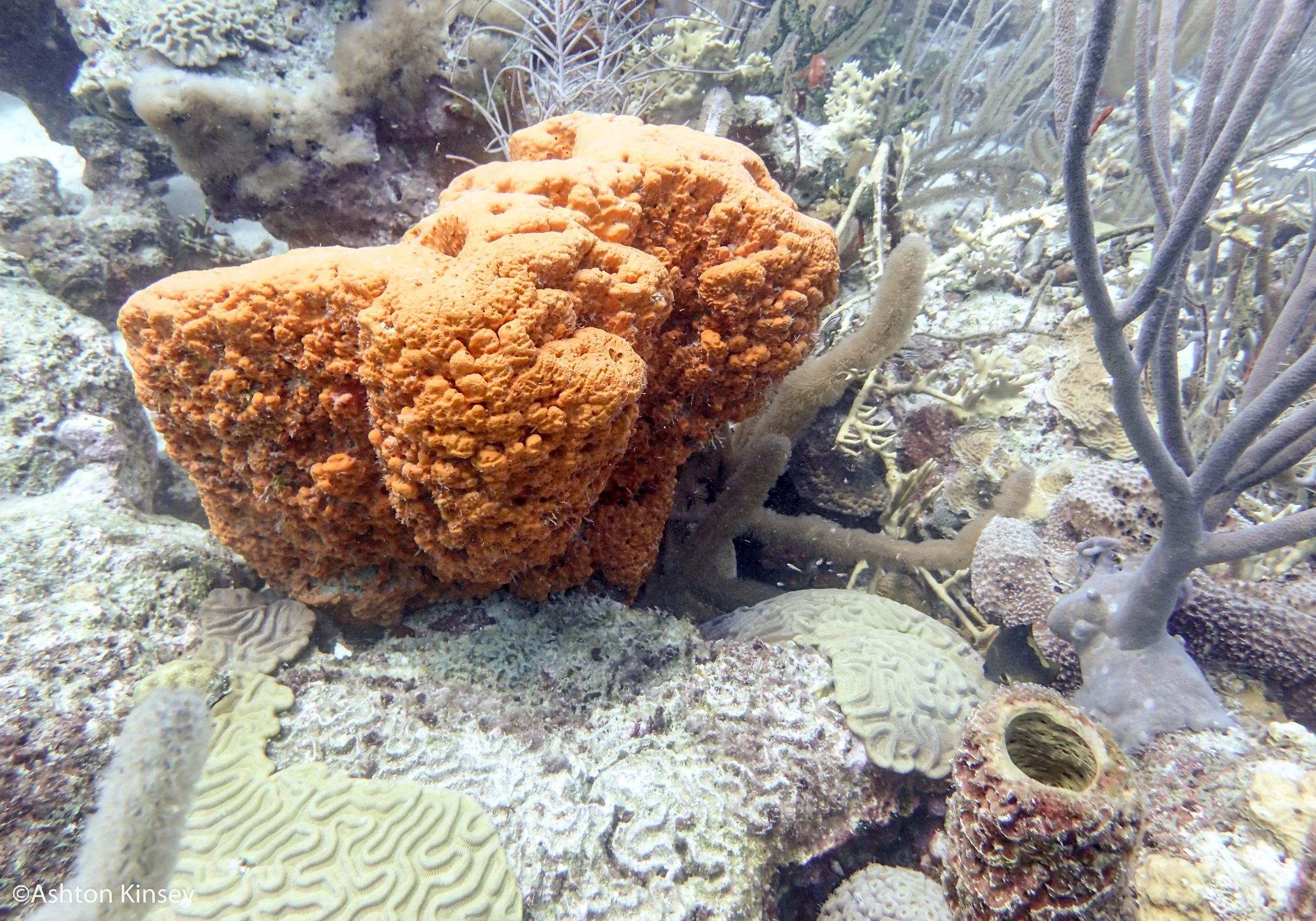
There's a shallow cave at a depth of 18 meters (59 feet) that is sometimes home to sleeping Nurse Sharks. Several enormous orange Elephant Ear Sponges grow beneath the cave. From the 22-meter (72-foot) mark, the reef gradually descends to a depth of 40 meters (131 feet), where it gives way to a sandy floor. Many Garden Eels can be seen on the sand, while a lot of Blade Coral can be found at a depth of 30 meters (98 feet).
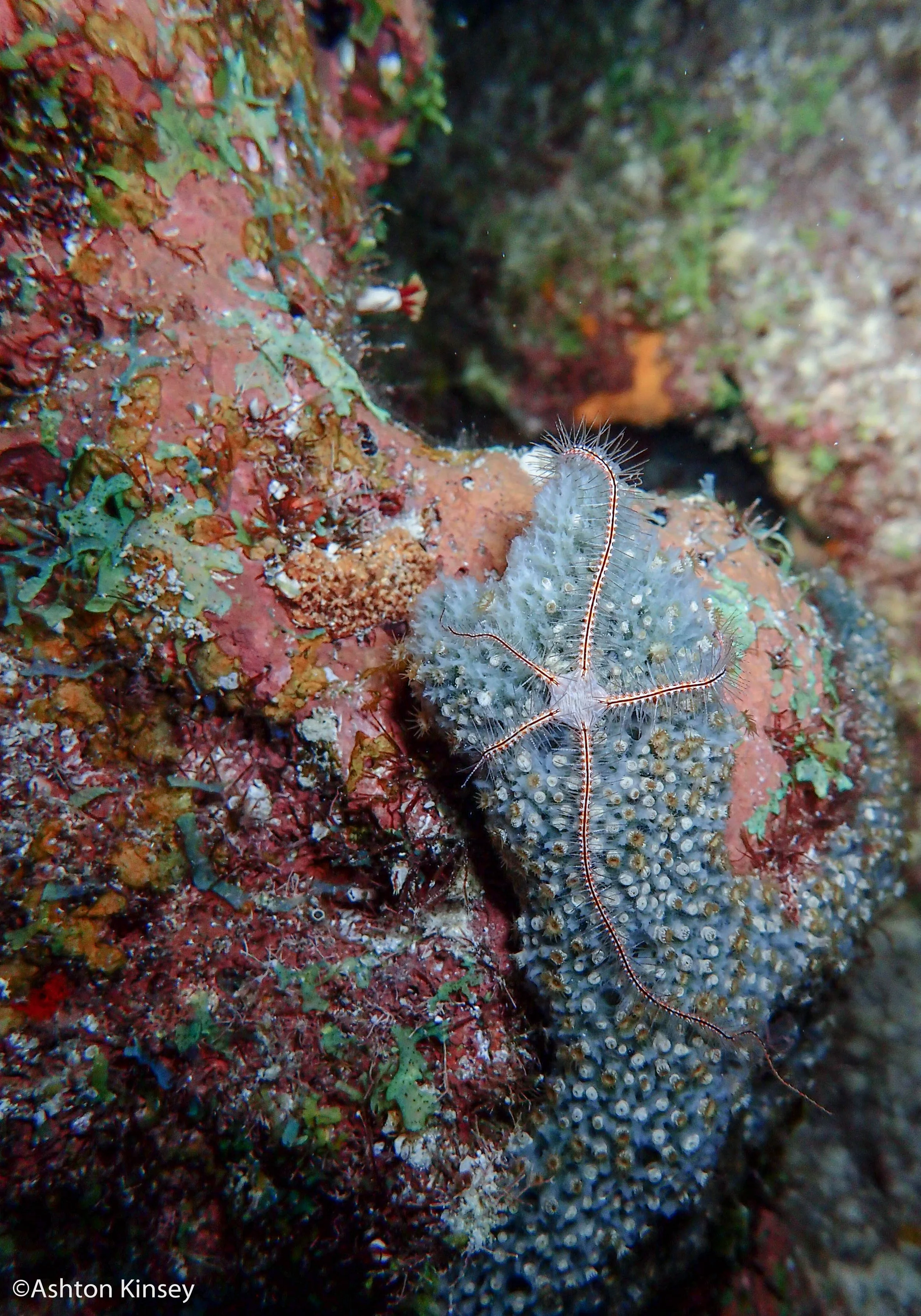
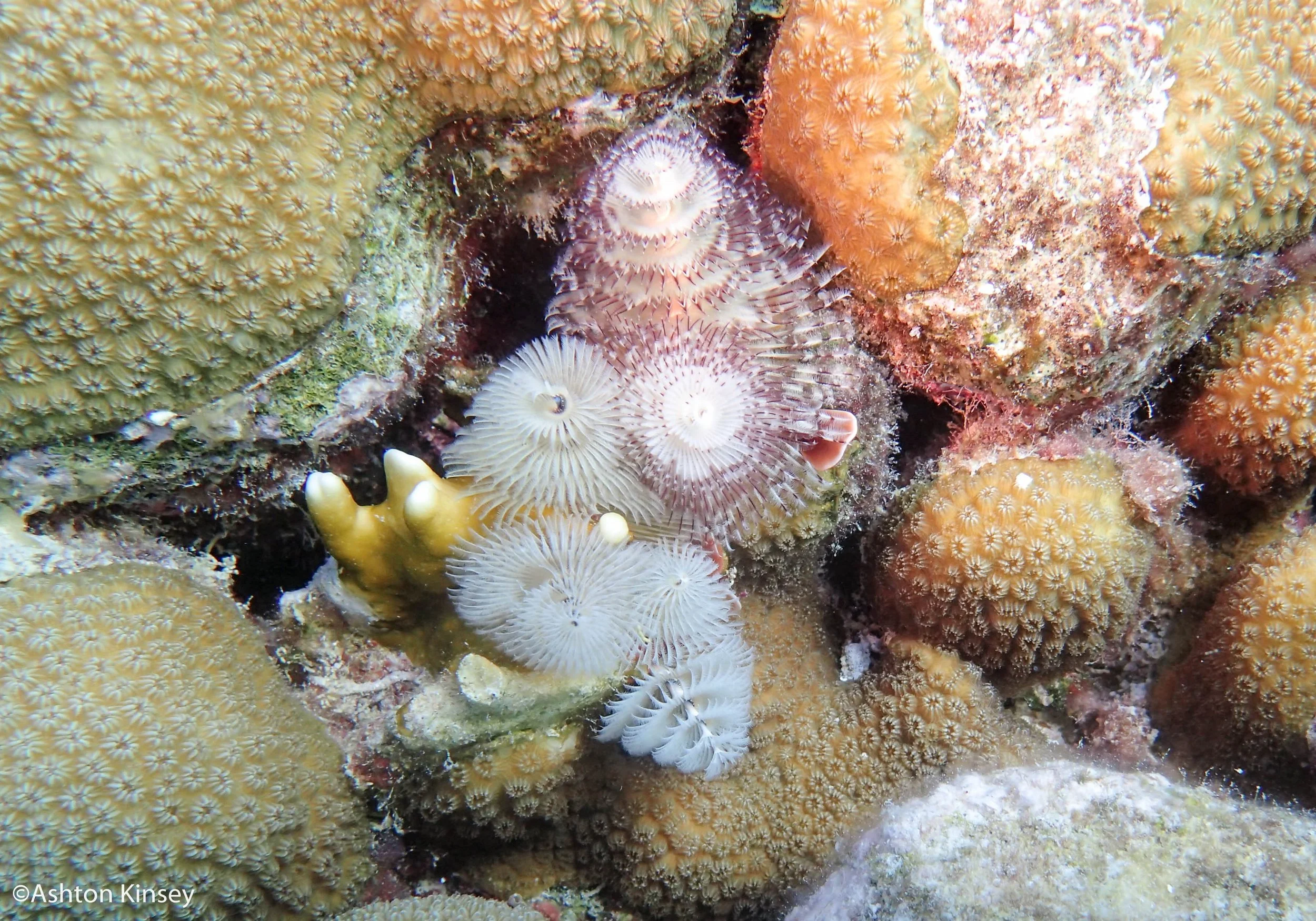
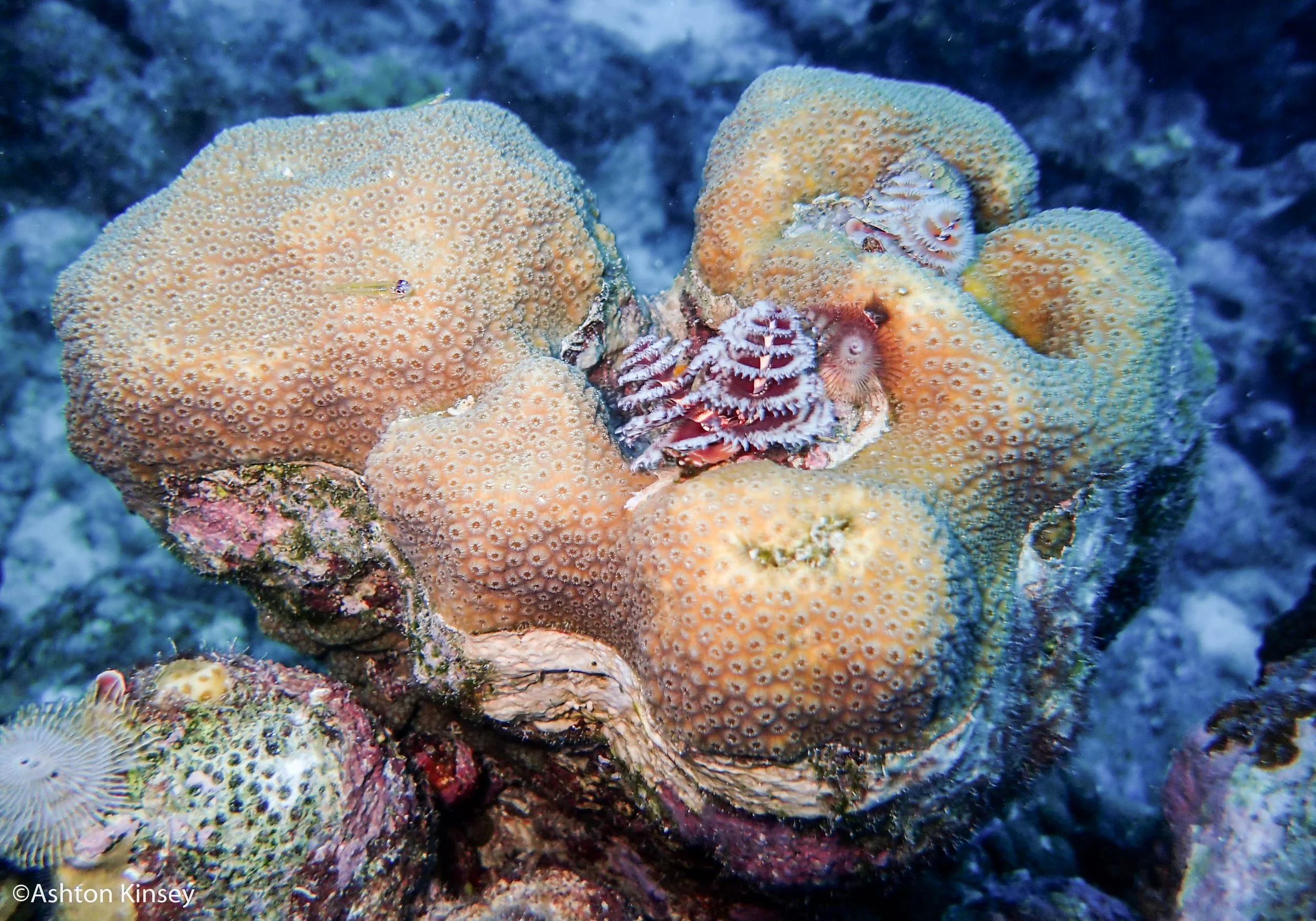
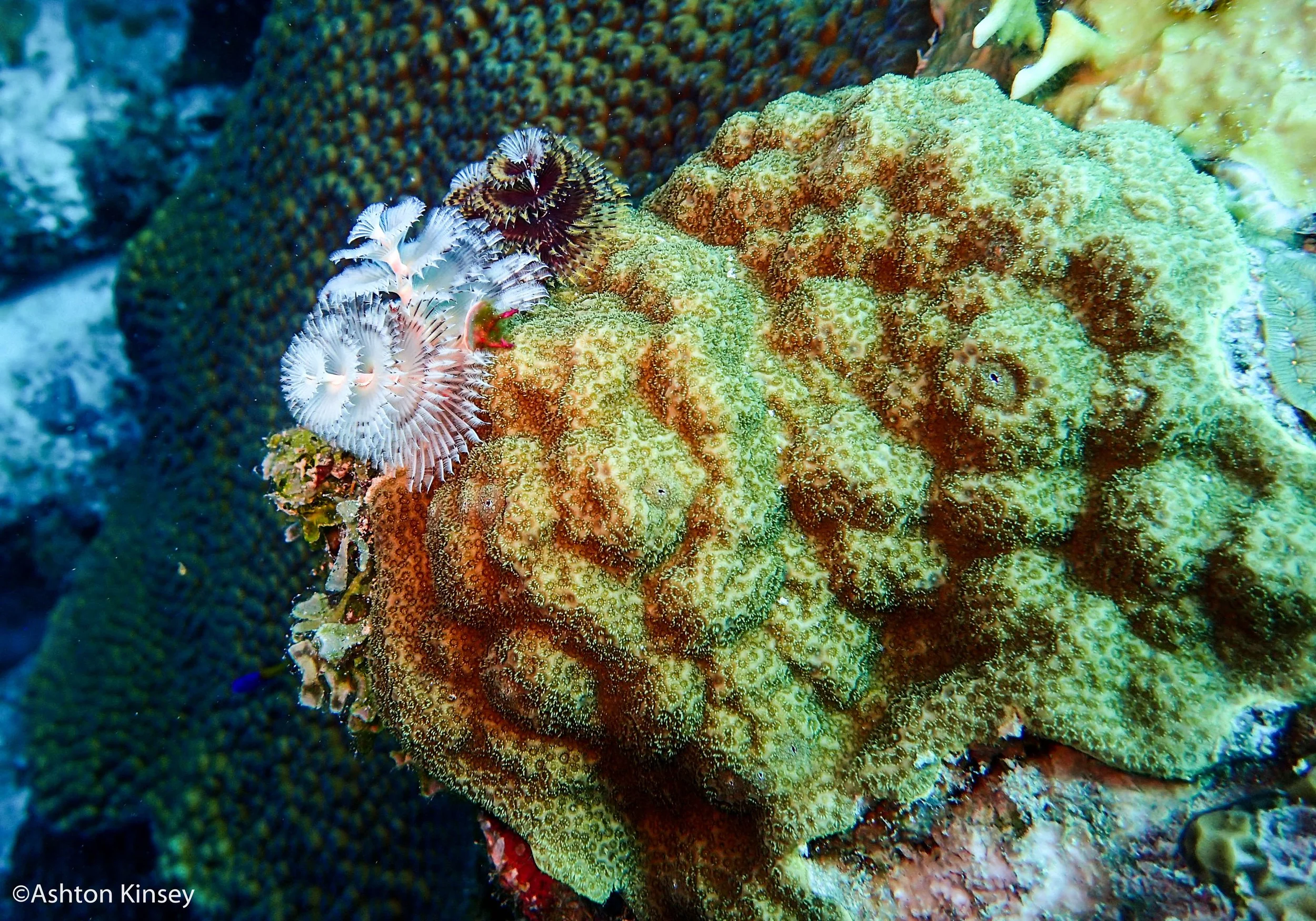
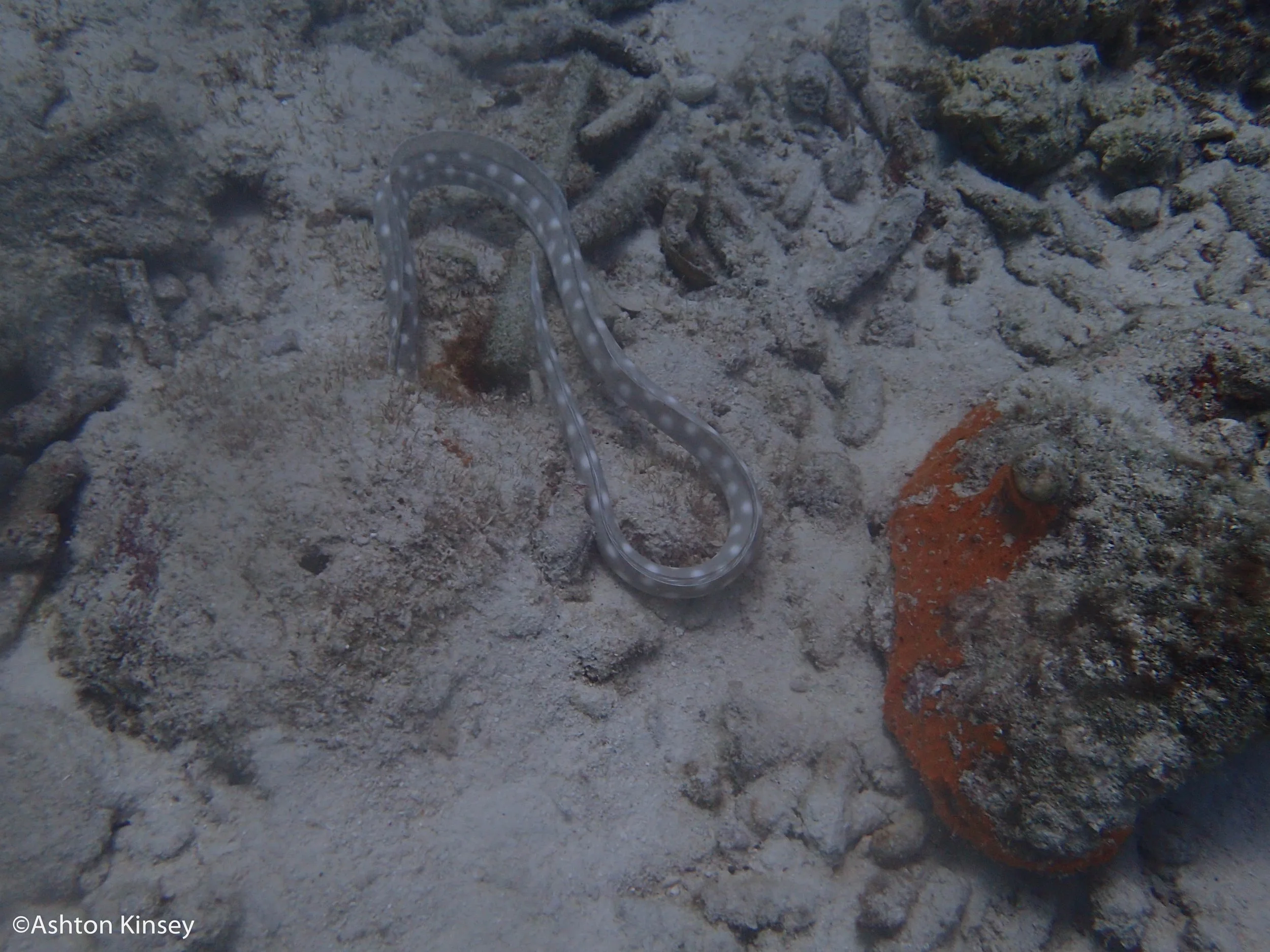
This dive site is a favorite amongst underwater photographers and is ideal for macro photography. Corkscrew Anemones and Giant Anemones are home to various species of Cleaner Shrimps; Christmas Tree Worms in many different colors can be found in Brain Coral; and Brittle Starfish provide great photo opportunities. Spotted Morays and Snake Eels can be found in fissures in the reef wall, and you might find an octopus if you look hard enough.
Elkhorn-, Brain- and a lot of Fan Coral grows along the upper part of the reef, where Seahorses are often sighted. Bristle worms also like to live amongst the Fan Coral. The shallow bank on the shoreward side of the reef is also great for snorkeling, where schools of Grunts, Sand Tilefish, Stoplight Parrotfish and Princess Parrotfish can be seen. Because the wall is close to the shore and is in relatively shallow waters, this is also an ideal dives site for night diving. At night, Lobsters and Barracuda are often spotted.
Corporal Meiss
Surroundings
This dive site is also known as North Belnem and Dick's Place. There's a long, narrow beach here with quite a lot of sand and some shade from overhead trees. On weekends, many locals visit this beach.
Dive 13: 73’ for 60minutes and Dive 15: 100’ for 30 minutes
In order to enter the water here, you'll have to climb down a ledge. The best place to do this is at the rock that marks the dive site. You'll then find yourself on a small beach that consists of dead coral and rocks. Less able divers should not visit this dive site. The floor beneath the water's surface is also uneven and there are several drops. You should be careful when entering the water. Make sure that your BCD is inflated in case you stumble.
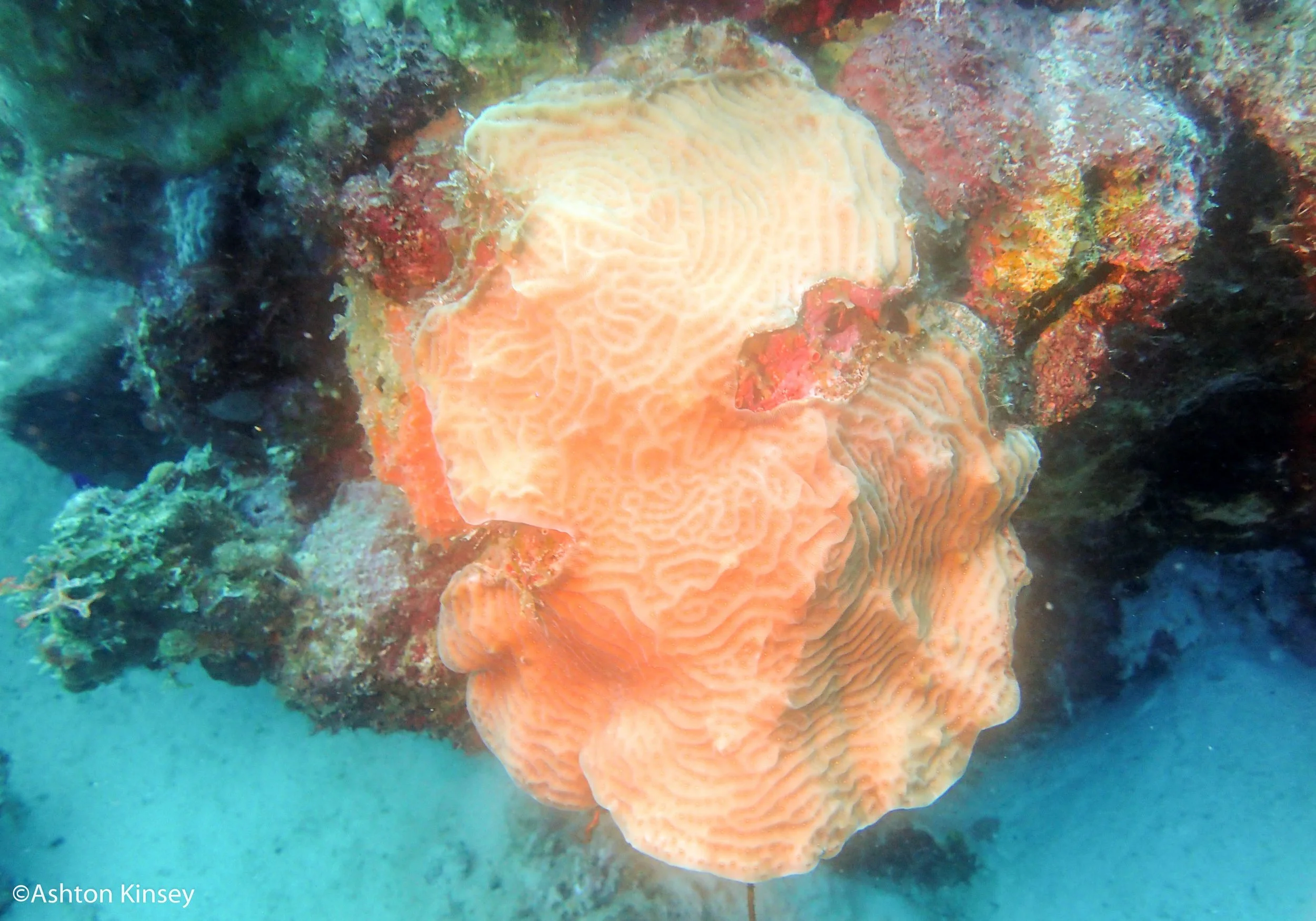
The shallow bank is made up of sand with some Fire Coral and small formations of other hard coral species. The buoy is anchored at a depth of 5 meters (16 feet), from where the floor starts to drop, and the coral grows somewhat more densely. The true drop-off starts at a depth of 10 meters (33 feet), with the reef consisting of Star Coral, several beautiful, large Brain Coral formations, and Fan Coral. Orange and purple Tube Sponges grow on the reef, as do large orange Elephant Ear Sponges. Parrotfish, Filefish and Trunkfish swim along the reef. Soft corals are mainly found in the drop-off zone down to a depth of around 12 meters (39 feet). As you go deeper, the soft coral growth clearly becomes less abundant.
The reef ends at a depth of 30 meters (98 feet) and gives way to a gradually descending sandy floor. Several remarkably large Vase Sponges and long Sea Whips grow on this sandy floor between depths of 36 and 38 meters (118 and 125 feet). These sponges have long, sharp spines that are very fragile and can irritate the skin. Two good reasons why you shouldn't touch them!
From a depth of 40 meters (131 feet), the floor suddenly drops more steeply to greater depths. Blade coral and Sea Whips are the most common coral species here.
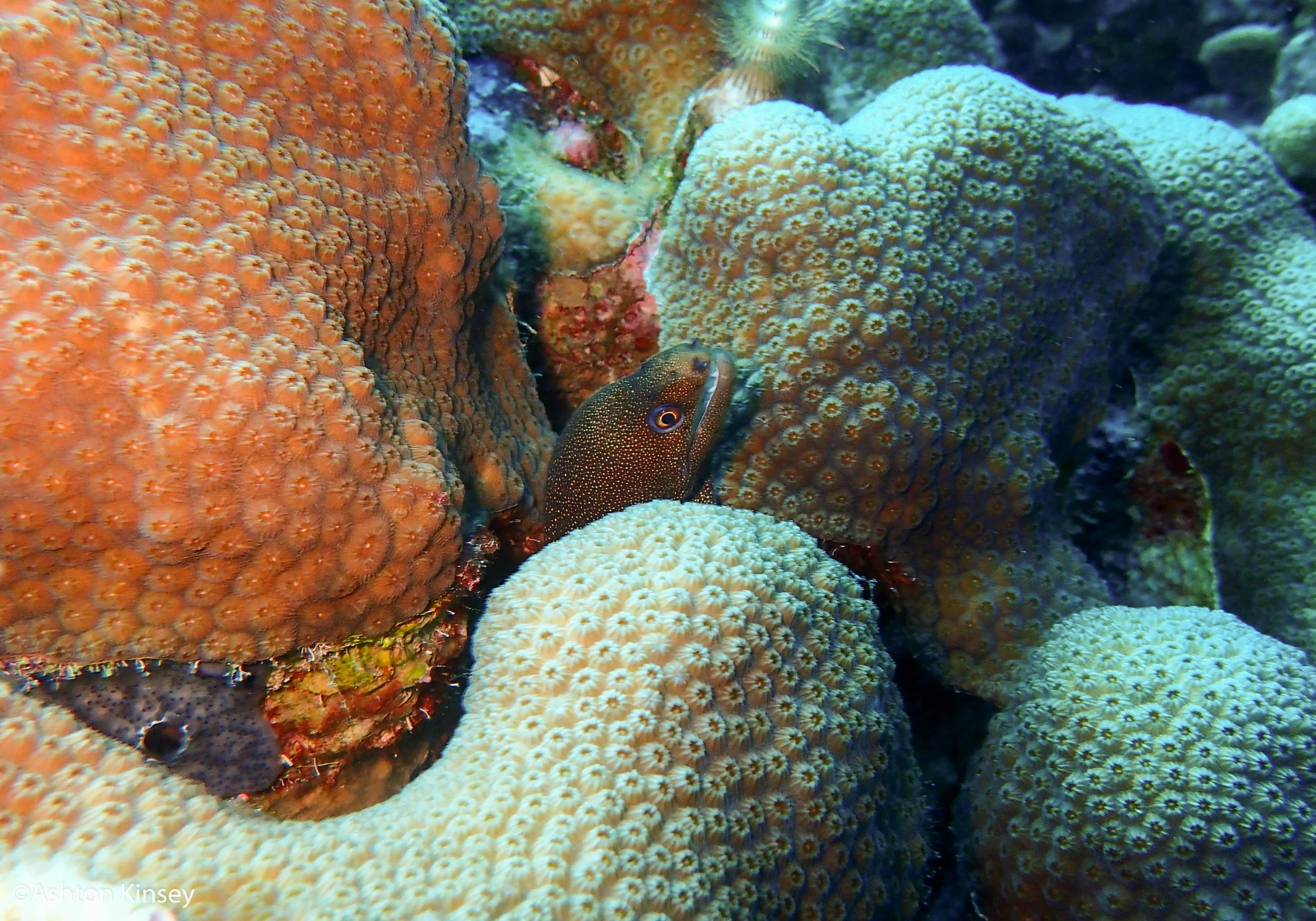
The best diving is between depths of 10 and 20 meters (33 and 66 feet). The greatest variety of corals and sponges is found in this area. The shallow bank seems to be the most uninteresting part of this dive. However, Sharp-tail Eels, Goldentail Morays and various Gobies can be found here. Bicolor Damselfish also aggressively defend their territory in this zone.
Hilma Hooker
Surroundings
This dive site is located along the southern coastal road. There's a lot of parking here, but you will seldom be the only divers. This is the only dive site that has more than 1 buoy, so more boats may be present at this dive site, since only 1 boat can moor at a buoy.
Dive 14: 86’ for 60 minutes
Two piles of coral mark the best spot for entering the water for a shore dive. Loose rocks and a high drop can make this difficult if there are breakers. It would be wise to enter the water with your buddy, so that you can support one another. There are three buoys on the surface that are anchored diagonally to the right of the water entry point. The closest buoy is anchored to the reef at a depth of 7 meters (23 feet). The other two buoys respectively mark the bow (26 meters (85 feet)) and the stern (21 meters (69 feet)) of the wreck.
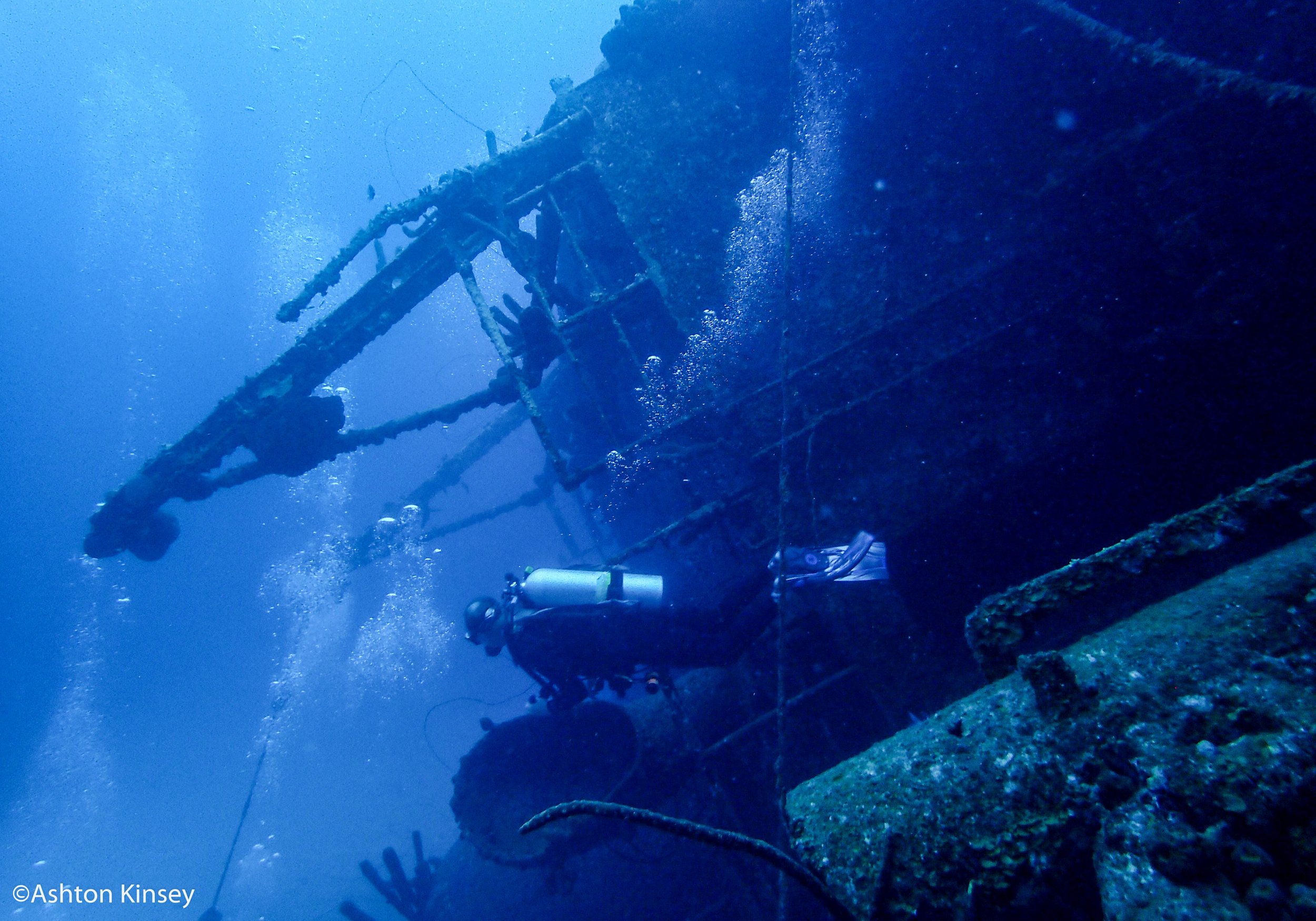
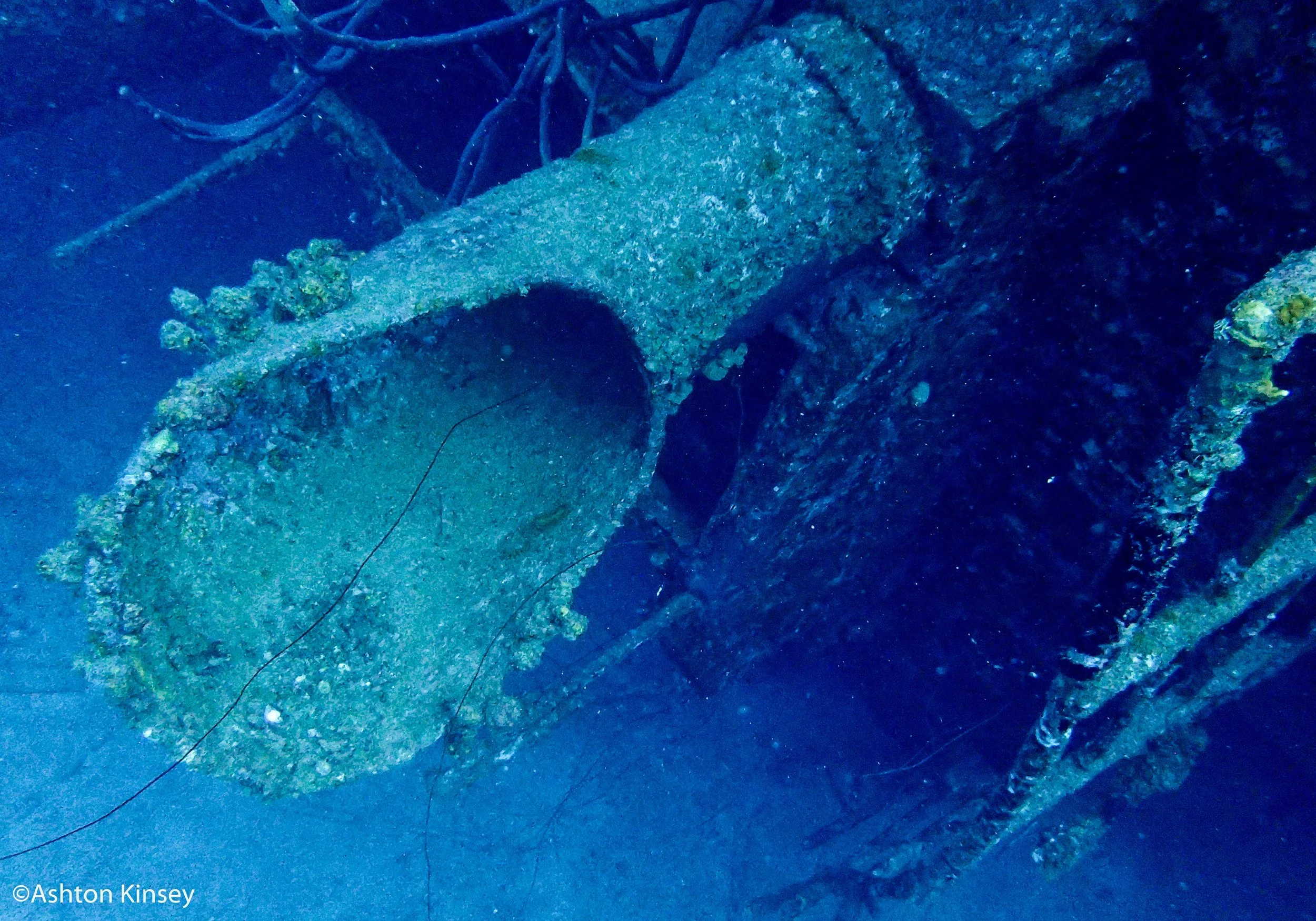
The wreck lies on its starboard side with its stern on the reef and its bow somewhat deeper on the sandy floor. The mast, which lies on the sandy floor, is the deepest point of the wreck. The wheelhouse and bridge are located mid-ship with a deckhouse behind them.
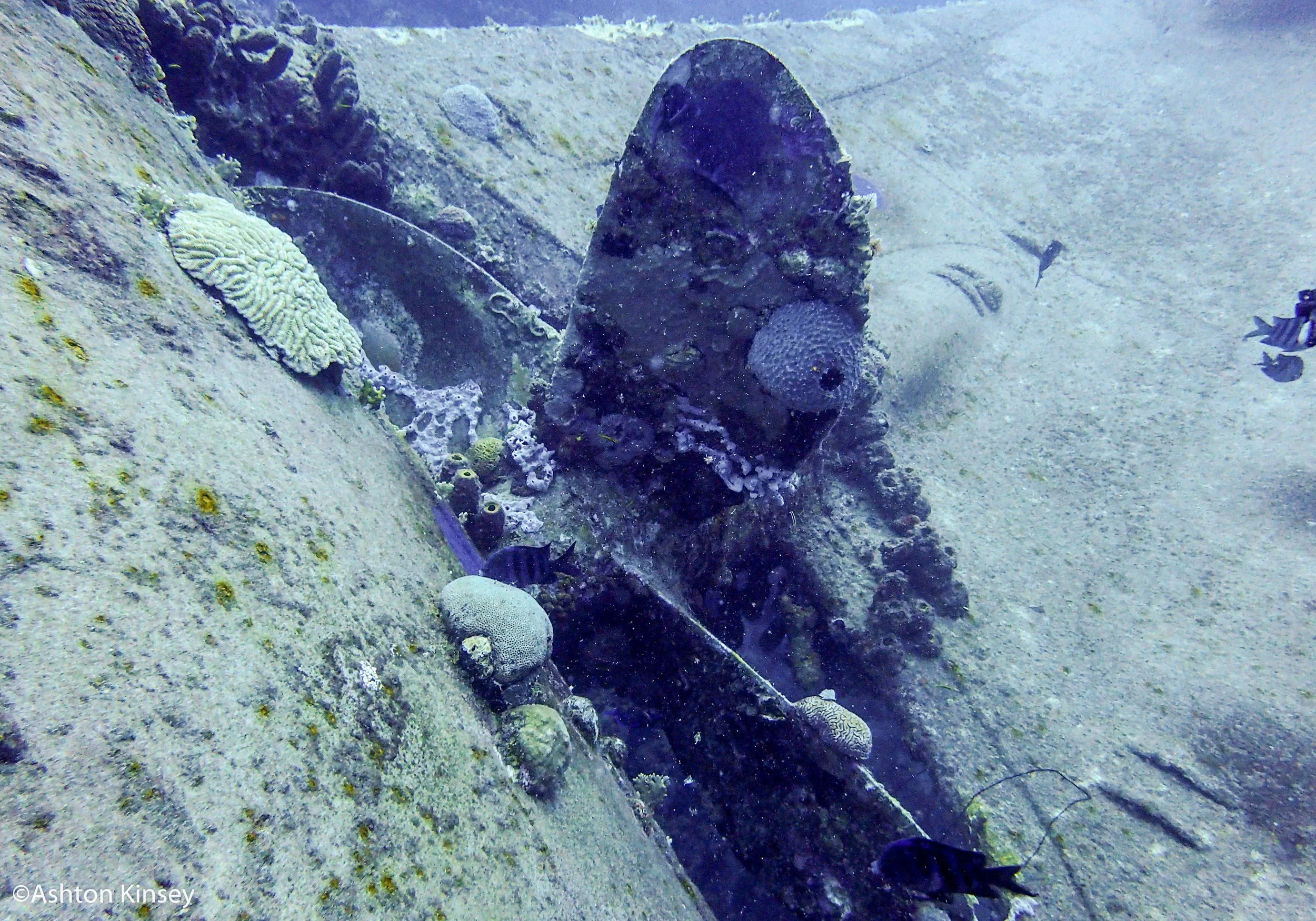
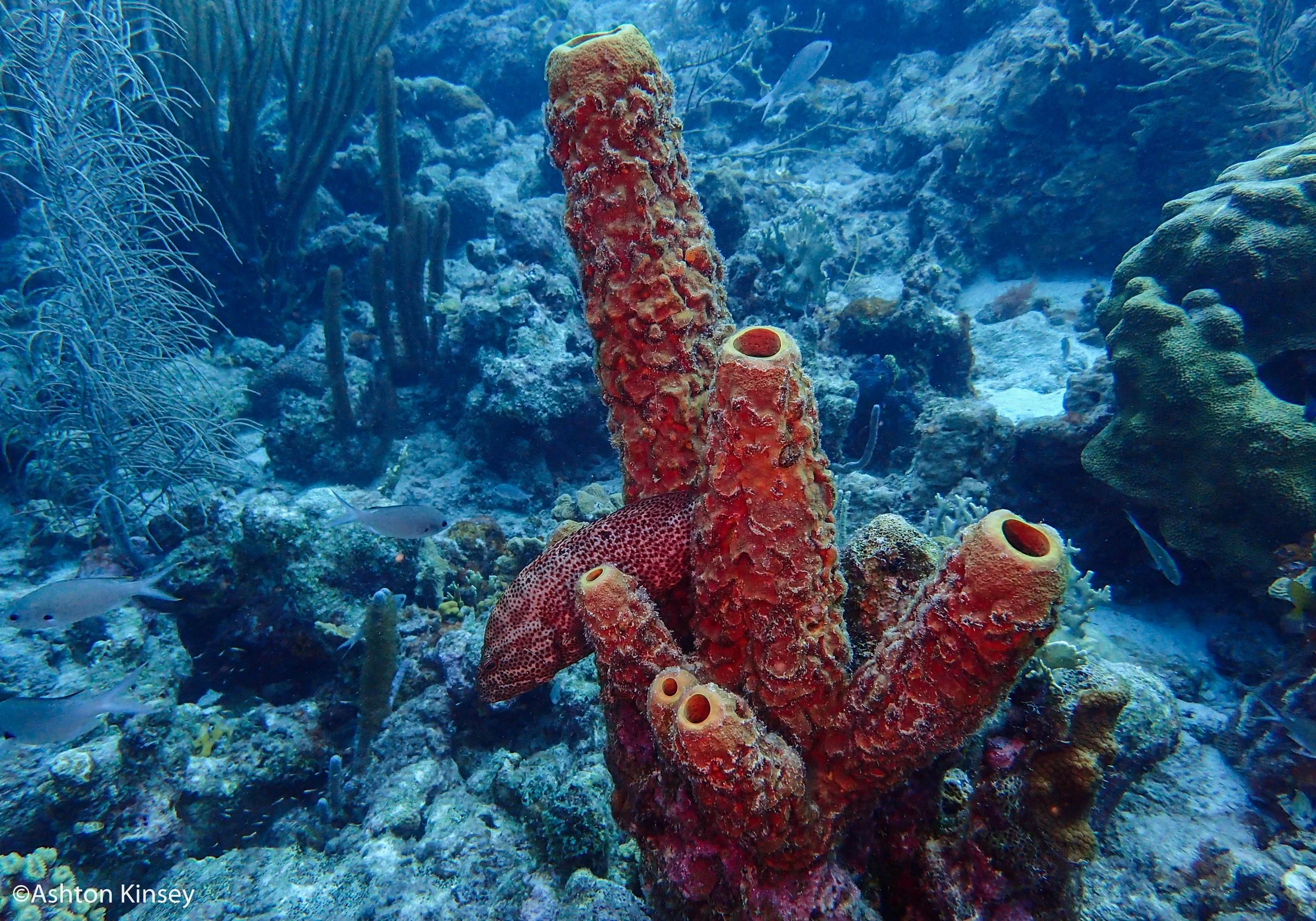
Some coral grows on the davits and the railings on the stern, but most divers find the rudder and the propeller the best parts of this wreck. Thanks to large purple Tube Sponges and red and yellow encrusting sponges, this side of the wreck is incredibly colorful.
The wreck has 2 large, open holds. Because it is on its side, these create a kind of an overhang. Most of the hatches and trapdoors on the wreck are open, although entering the wreck should only be done by experienced wreck divers.
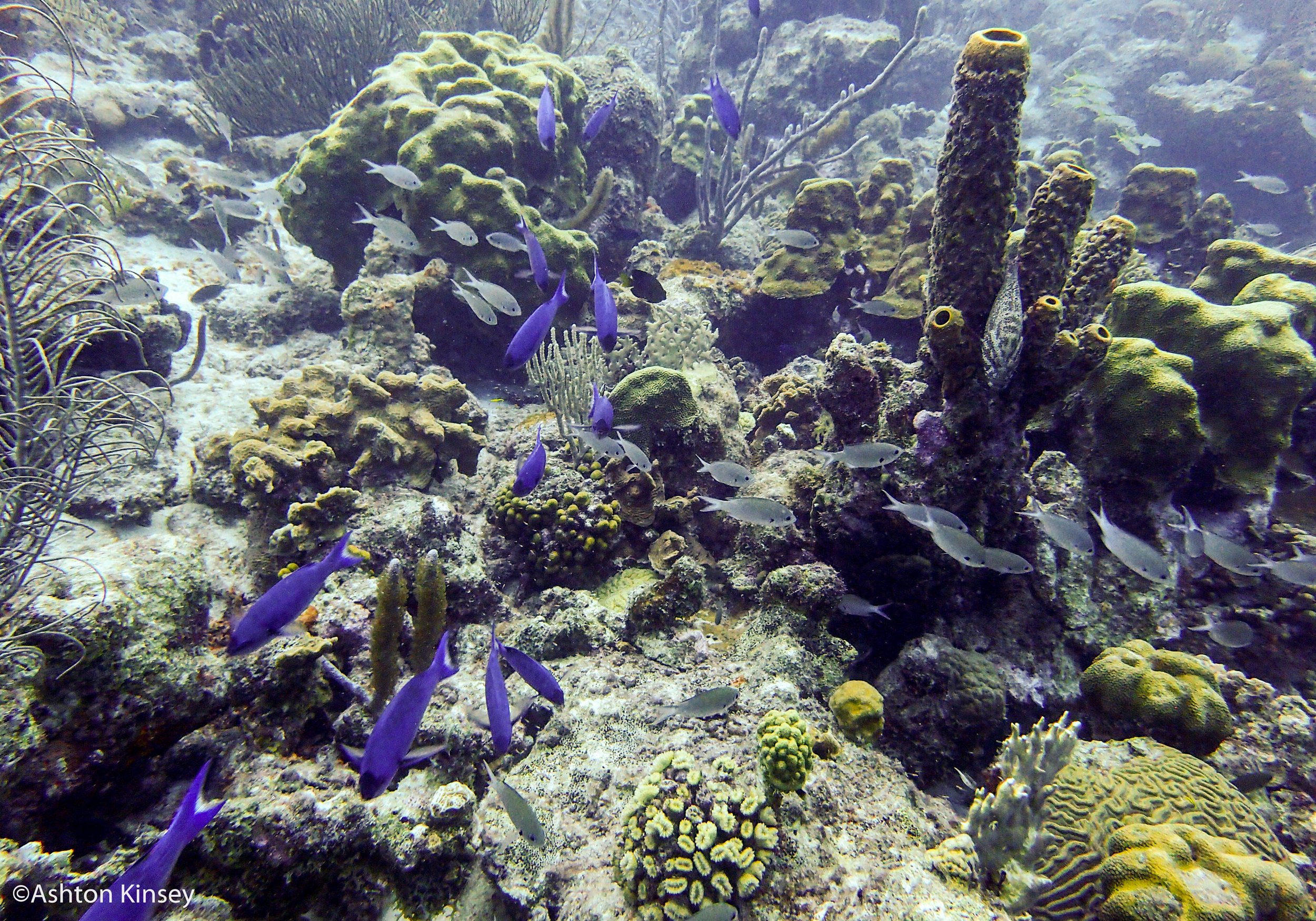
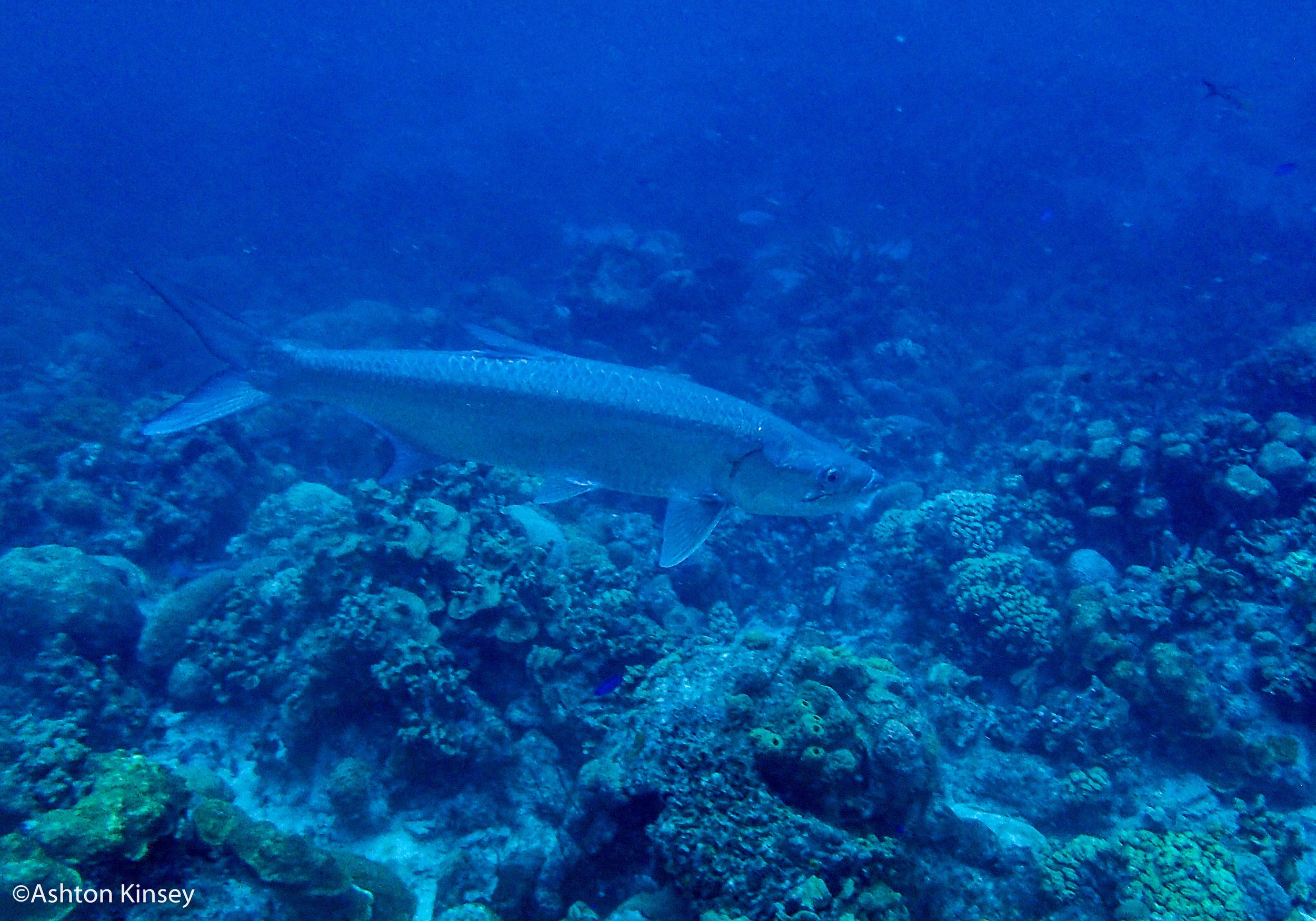
Many sponges grow on the bridge and several Tarpon can be found here, while barracuda seem to prefer the area around the mast, which rests on the sandy floor. A large colony of Garden Eels lives on the sandy floor beyond the wreck. In order to get the most out of your diving time, it's best to swim along the surface to one of the buoys and to descend via the buoy anchoring line. First explore the deck and perhaps the hold, mast, and wheelhouse while making your way around the wreck. Halfway through your dive time, ascend a little to swim back along the railing on the starboard side (now the upper part) towards one of the buoys and surface via the anchoring line. Make a decompression stop along the line. You could also swim back to the shore from the stern of the wreck via the reef, making your decompression stop at the reef. Despite the wreck being this dive site's major attraction, the reef is also definitely worth a visit.
When diving on this wreck, keep the no compression limit in mind!!! Keep a close eye on your dive computer and on your air supply.
This is also a great site for night dives, especially for divers with more experience (given the depth of the wreck). Tarpon will swim with you throughout your dive and will hunt in the light of your dive light, and the orange Tubastrea coral looks beautiful at night. On the shallow bank, thousands of small fish will congregate around the light from your lamp, giving you something to watch during your decompression stop.
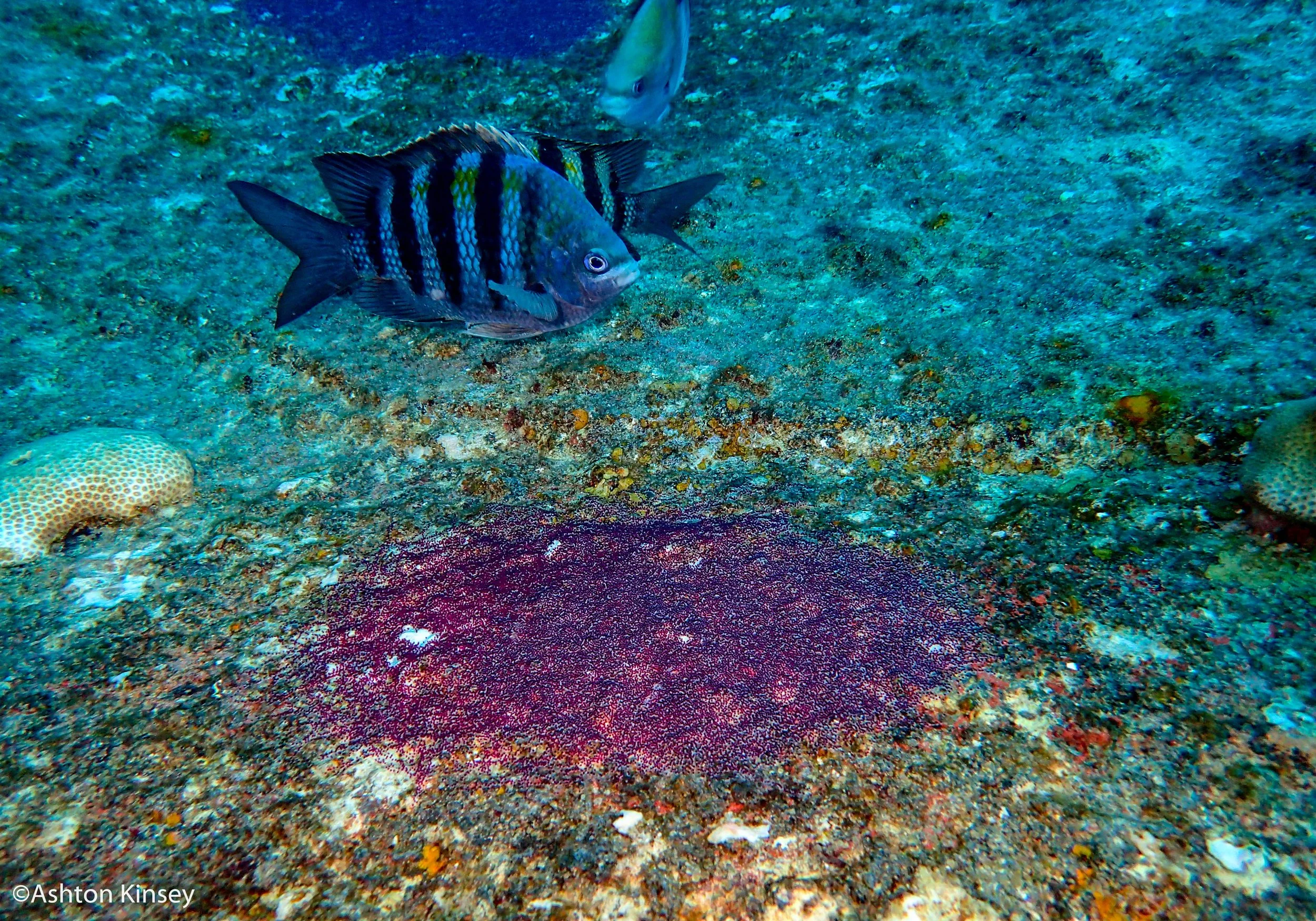
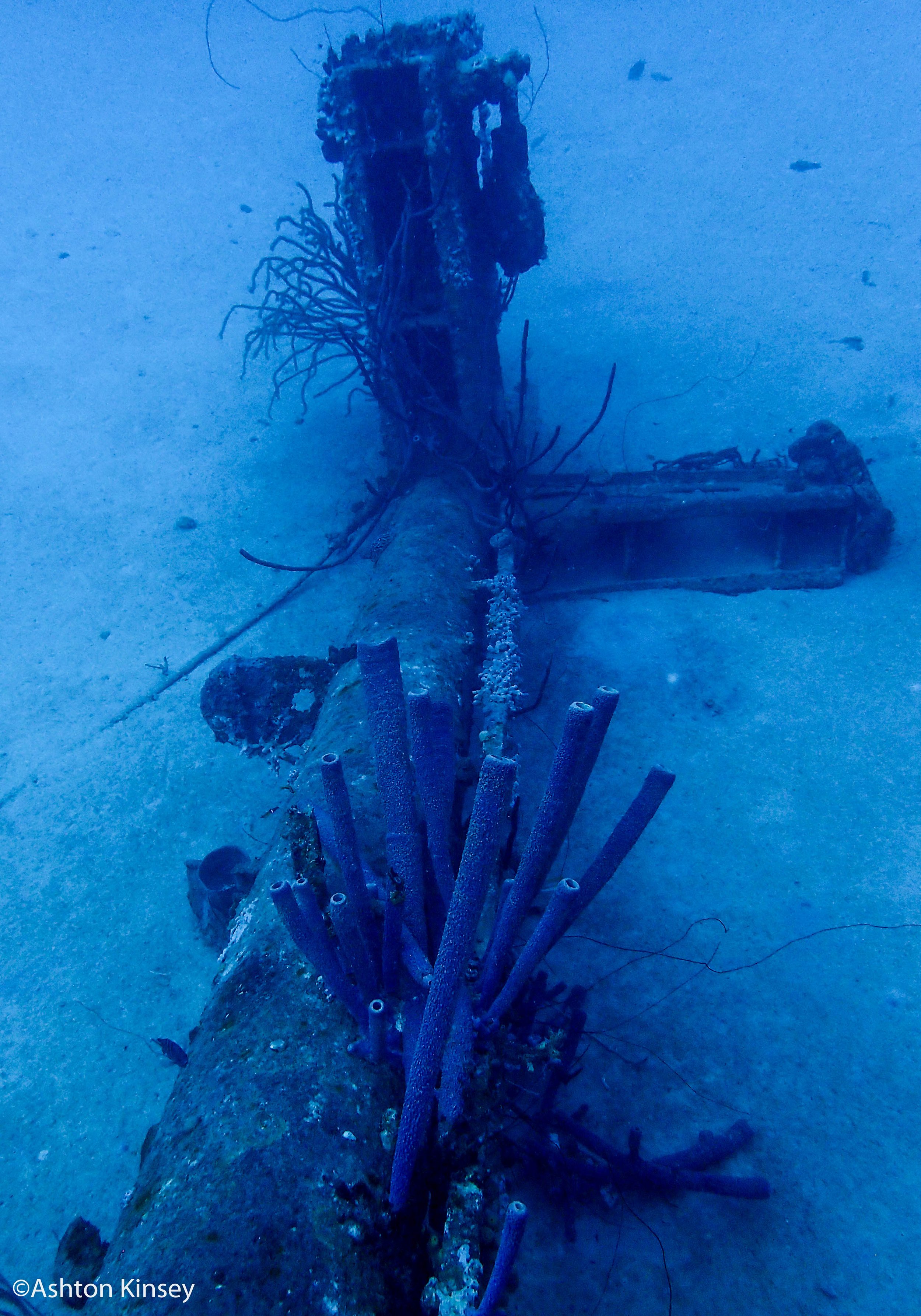
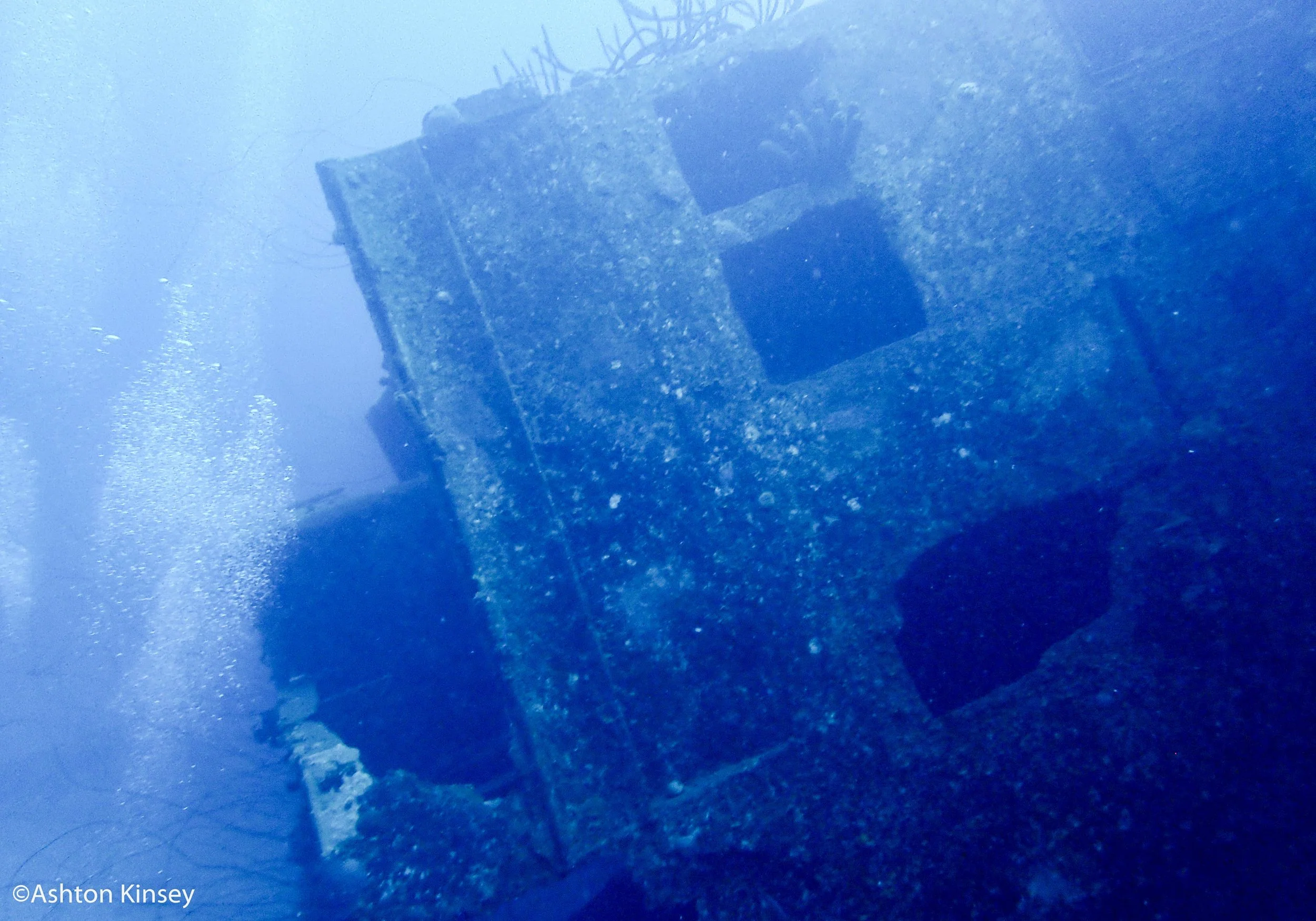
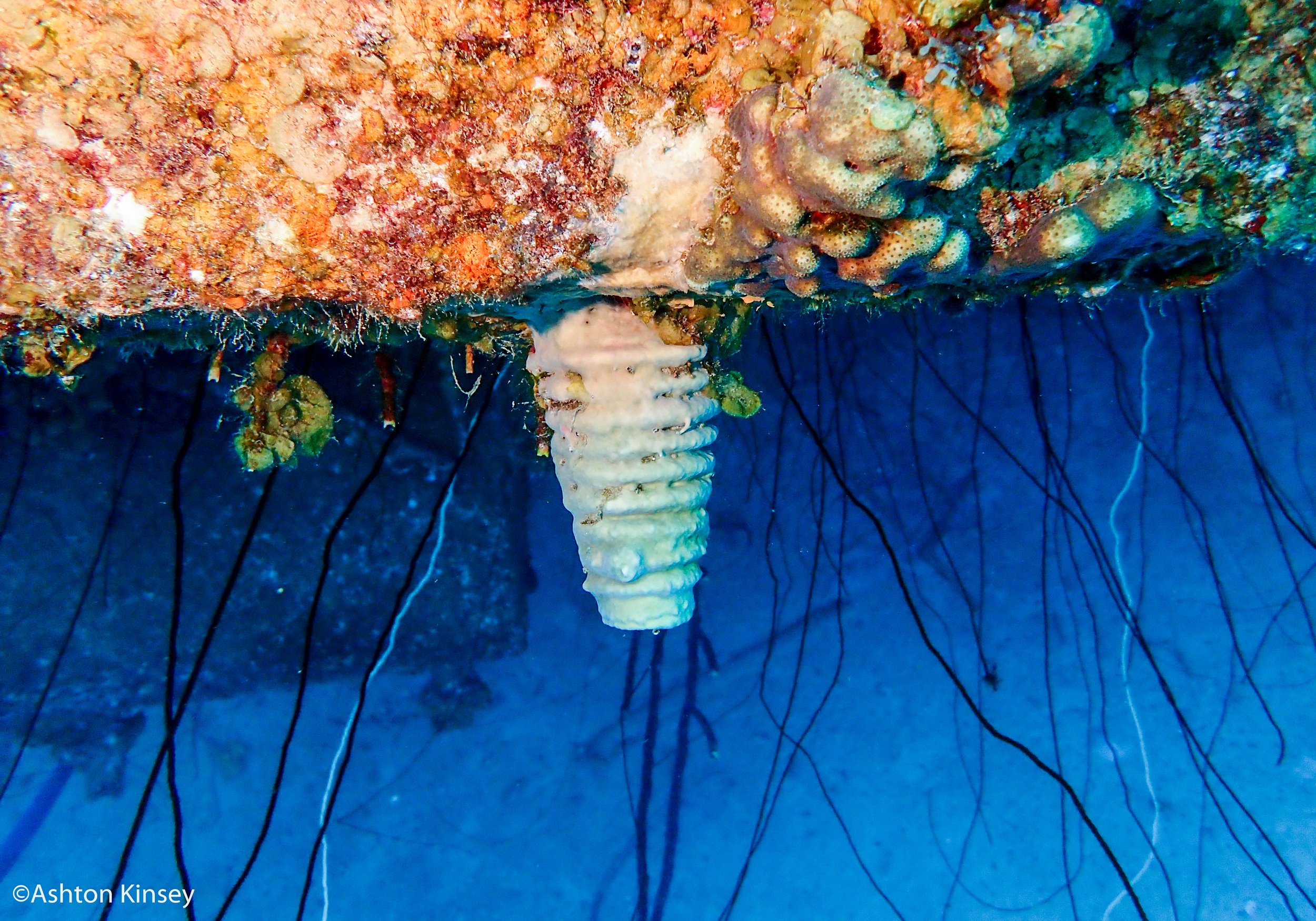
Wreck history
The Hilma Hooker was built by a Dutch shipyard in 1951. At the time, she was named the MS Midsland. Over the years, she received four other names, these being MS Mistral, MS William Express (still legible on the hull of the wreck), MS Anna, and - when she sank MS Doric Express. The vessel was 72 meters (236 feet) long, 11 meters (36 feet) wide and had a displacement of 1027 tons.
The vessel's final owner used her to transport any imaginable cargo, not all of it completely legal. These 'wide-ranging contacts' probably led to her being dubbed the Hilma Hooker. During the summer of 1984, the vessel experienced rudder problems off the Bonaire coast. When the problem couldn't be solved at sea, the vessel was towed into Bonaire's harbor. When standard customs checks were carried out, the captain couldn’t produce any of the vessel's documents. Further extensive checks revealed that the vessel was under FBI surveillance, and customs officials eventually discovered 11,000 kg (24,000 lbs.) of marijuana on board. The vessel was impounded, and the marijuana destroyed by fire.
However, no-one knew who the owner of the vessel was, and nobody came forward to claim it. It was in particularly poor condition and was taking on water and leaking oil. Because its owner was unknown, nobody could relinquish it, meaning that it couldn't be scrapped, sunk, or sold. Eventually, mooring the vessel and keeping it afloat proved to be too expensive. In consultation with various dive centers on the island, the vessel was towed to a remote area where, if it were to unexpectedly sink, it wouldn't obstruct maritime traffic and could perhaps become a nice dive feature.
At 9 am on 7 September 1984-just a few days later -the Hilma Hooker sank. Whether the vessel sank of its own accord, or whether it received some 'help', (officially) remains a mystery. After the vessel sank, holes were cut into it to allow air exhaled by divers to escape, while hatches and trapdoors were removed or secured to make the wreck safe for diving purposes.
Something Special
Surroundings
The beach at Something Special is small and rocky. Nonetheless, it's a popular little beach because it is close to the esplanade. Local children take swimming lessons here.
Dive 17: 81’ for 62 minutes
This dive site, also called Playa P' about, has extremely diverse flora and fauna. There's almost always a consistent, light current here. The shallow part of this dive site also has plenty of underwater life, making it ideal for snorkelers or for divers who enjoy long, shallow dives. It's easy to walk into the water from the beach. From here, you dive to the right towards the Marina, where you'll notice the yellow buoy that marks the dive site.
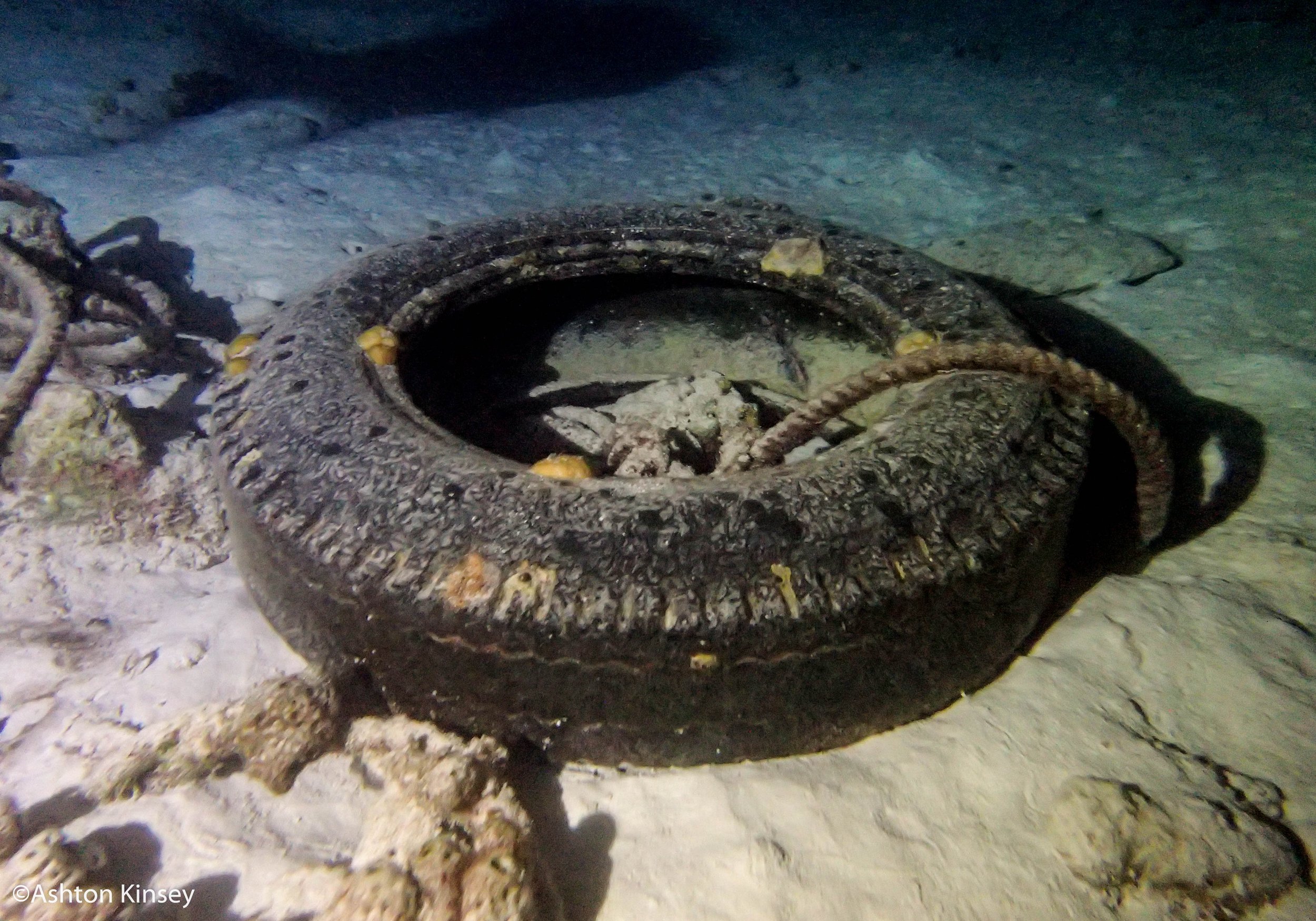
This isn't a dive site to visit for its coral. Most of the shallow bank consists of sand and dead coral remains with scattered car tires and engine blocks, which were previously used to anchor buoys. However, these have meanwhile become beautifully overgrown, sometimes with countless Christmas Tree Worms, small sponges and coral species, and provide shelter to various small fish. Be on the lookout for passing boats. Sailboats are permitted to anchor here.
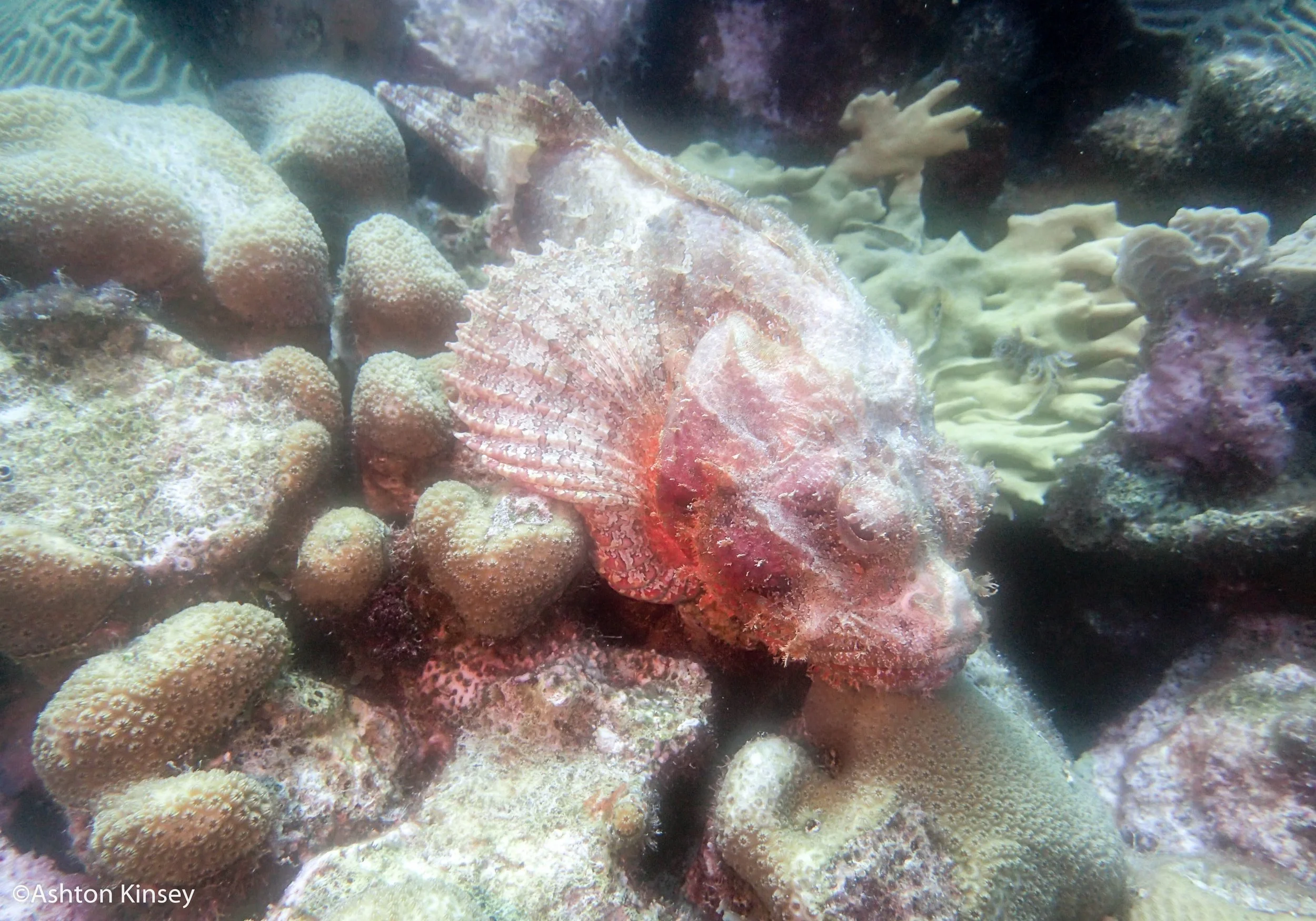
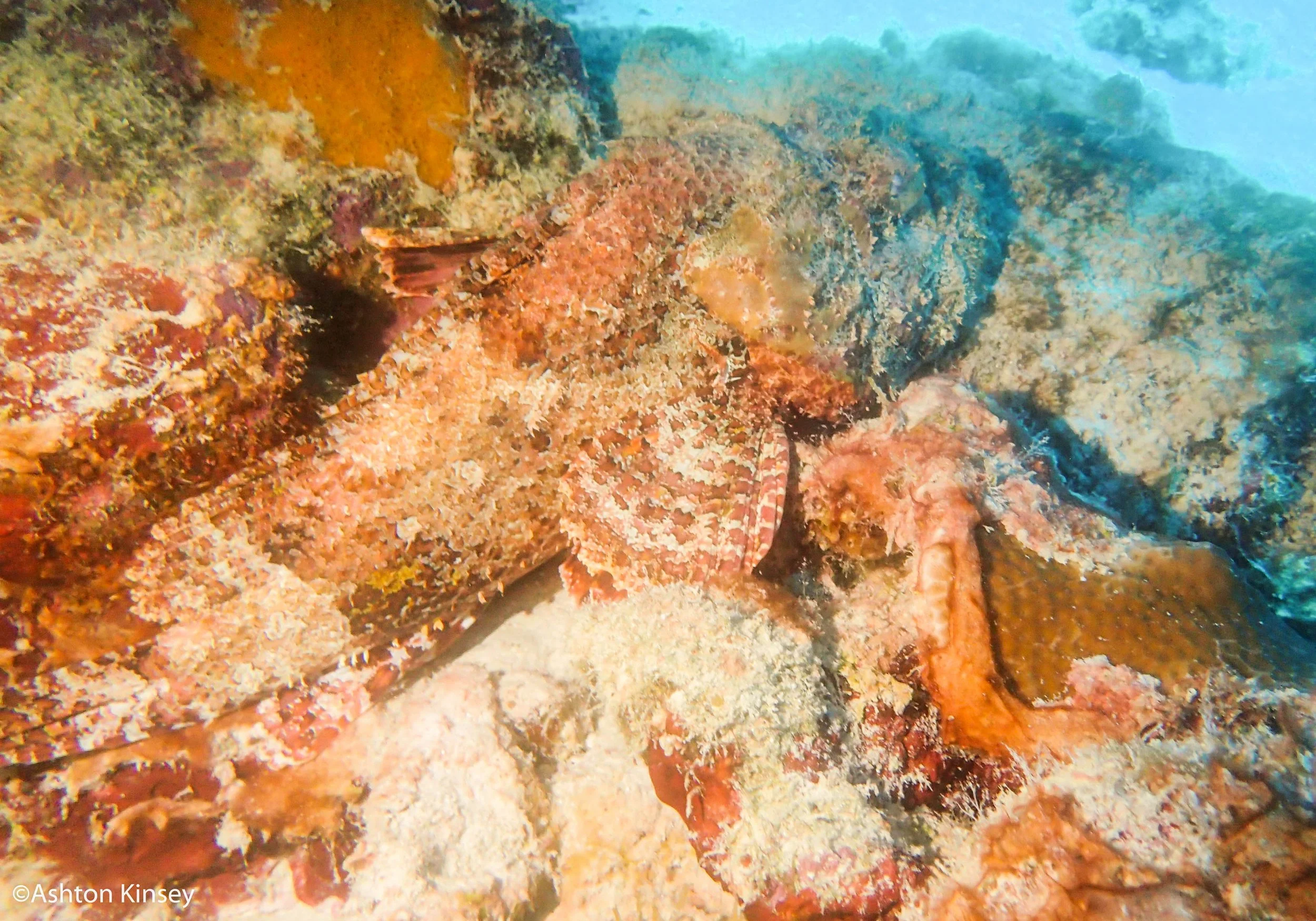
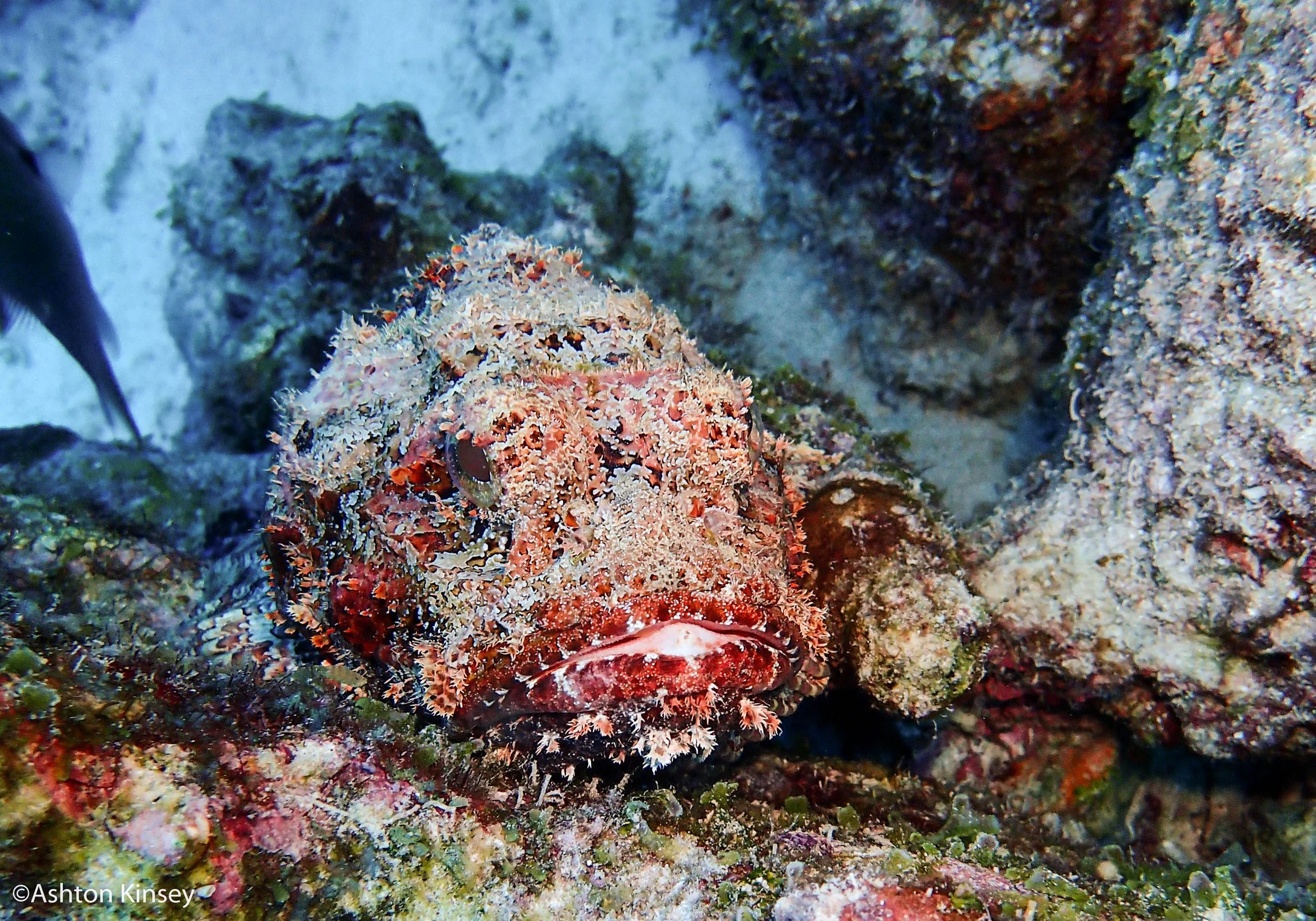
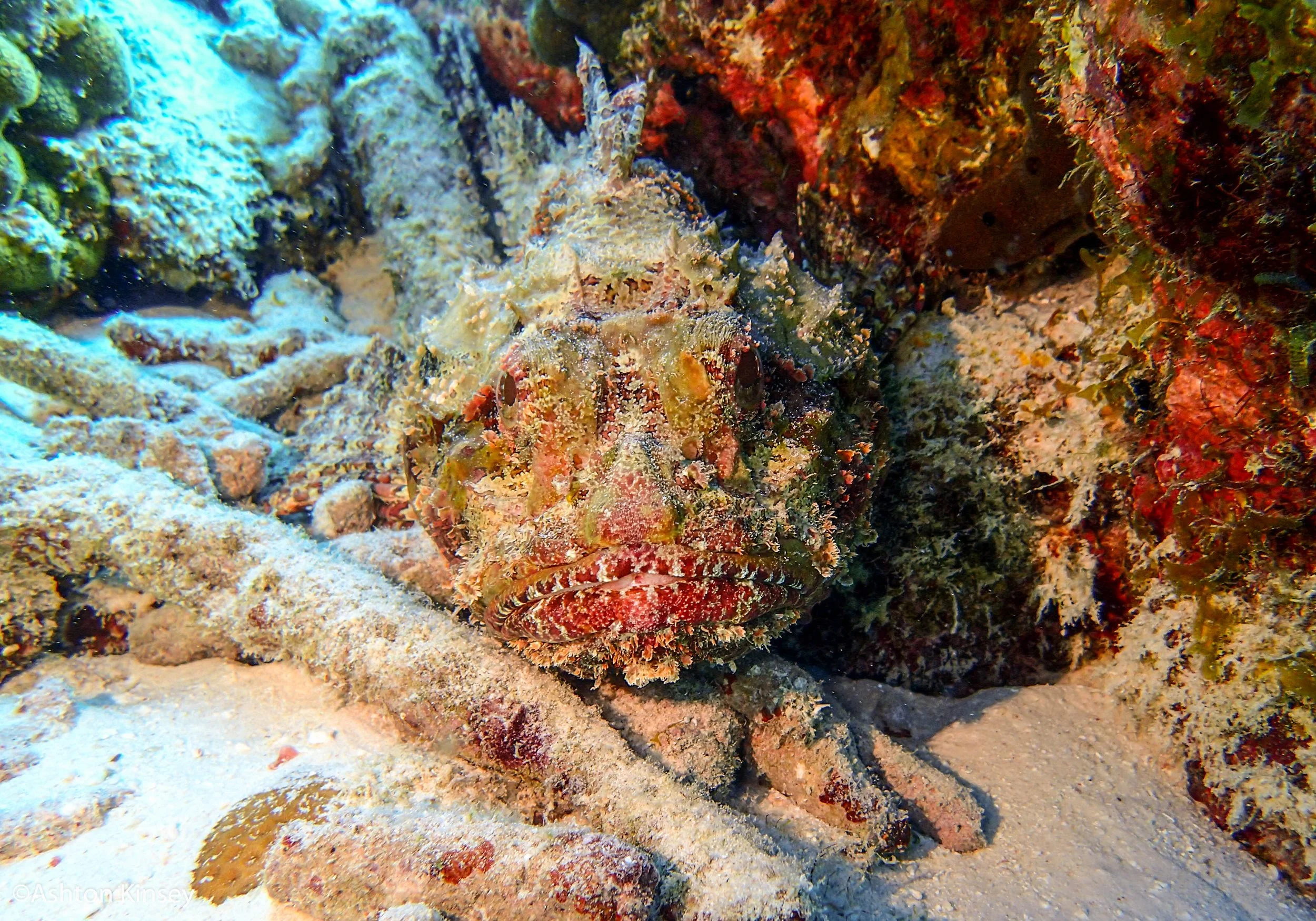
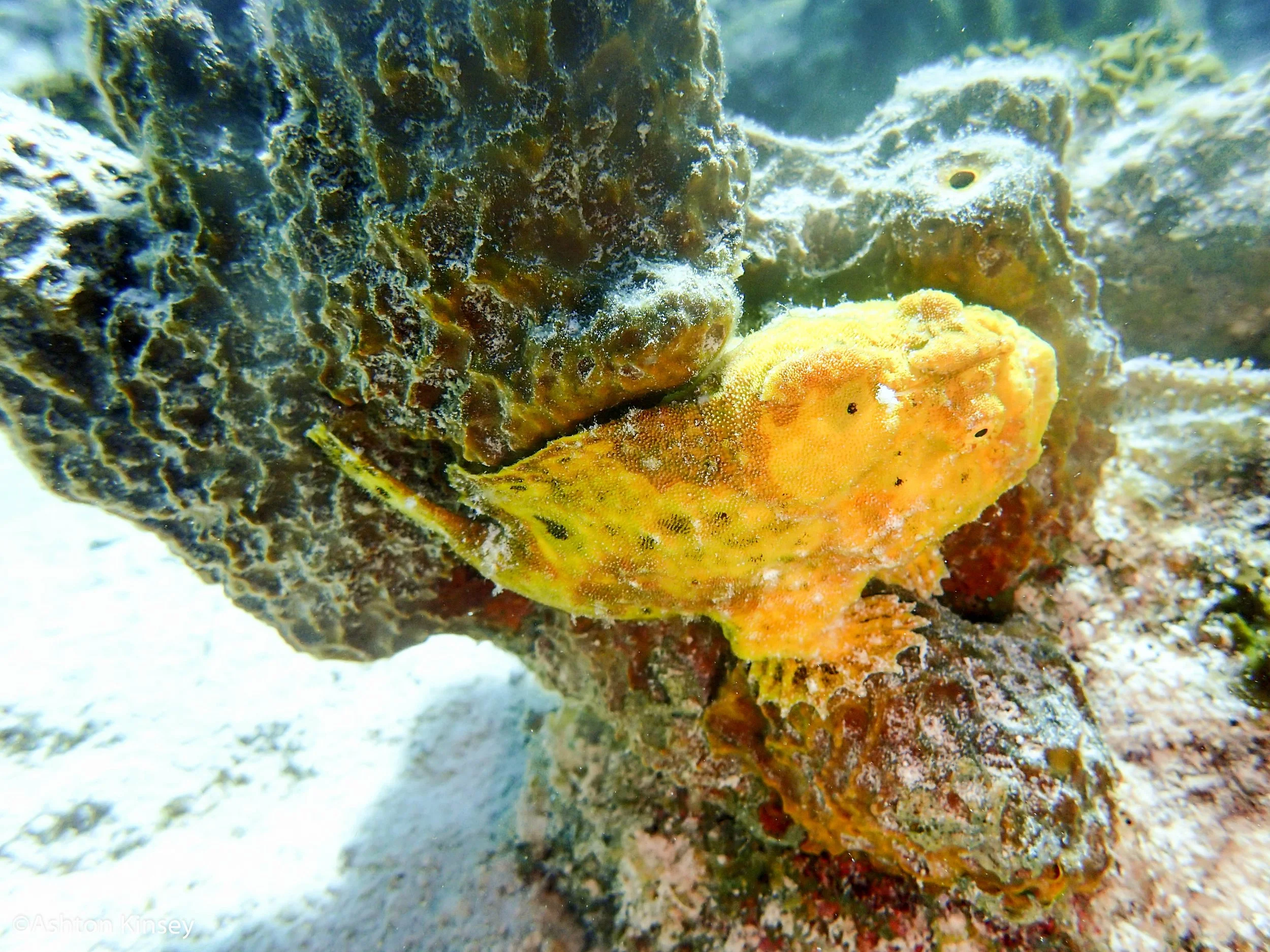
This dive site is known for its Frogfish, which are almost always present here. You are most likely to see Frog-fish between depths of 6 and 12 meters (20 and 39 feet). The buoy is anchored quite far to the north at a depth of 3 meters (10 feet). There's a steeply descending wall beyond the buoy, which starts at a depth of 9 meters (30 feet). This wall ends towards the northern end of the reef at a depth of 15 meters (49 feet). Towards the south, the wall continues down to greater depths. Scorpion Fish can be spotted along the wall, which consists of various hard coral species and sponges
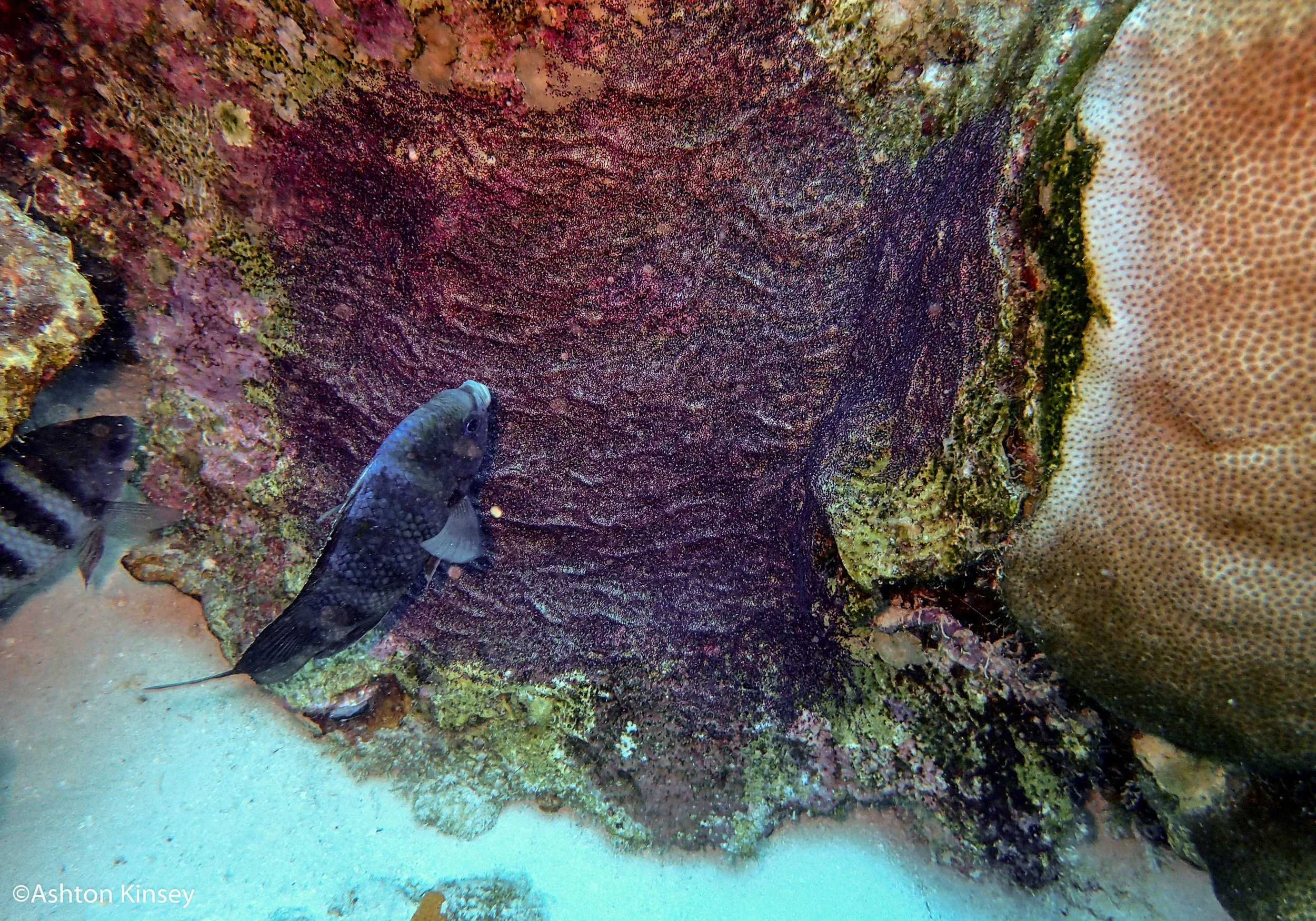
The sandy channel towards the right of the dive site becomes ever-wider until it runs out onto a sandy bank. Groups of Garden Eels and Caribbean Stingrays are often found here. In order to see as much of the dive site as possible, it's best to swim straight out from the buoy and descend along the wall. At a depth of 24 meters (79 feet), you'll reach the sandy floor where you'll find several garden eels. From here, swim left along the bottom part of the wall. As you continue in this direction, it consistently becomes shallower. Once you reach your desired depth, you can again turn left towards the buoy. This particularly applies to boat dives. If you dive from the shore, you'll see mainly the southern part of this dive site. This dive site is especially suited to night dives and close-up photography.
1000 Steps
Surroundings
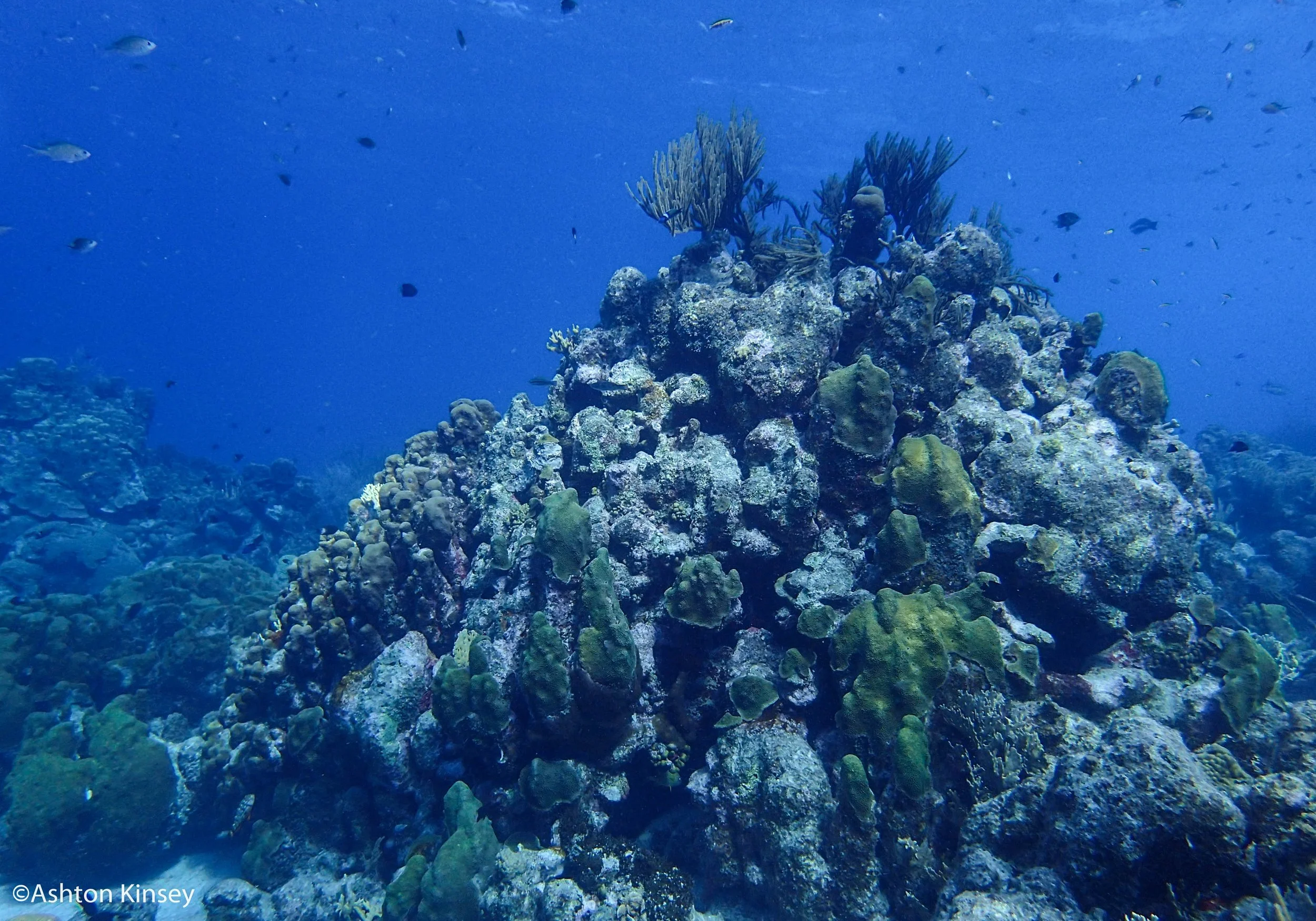
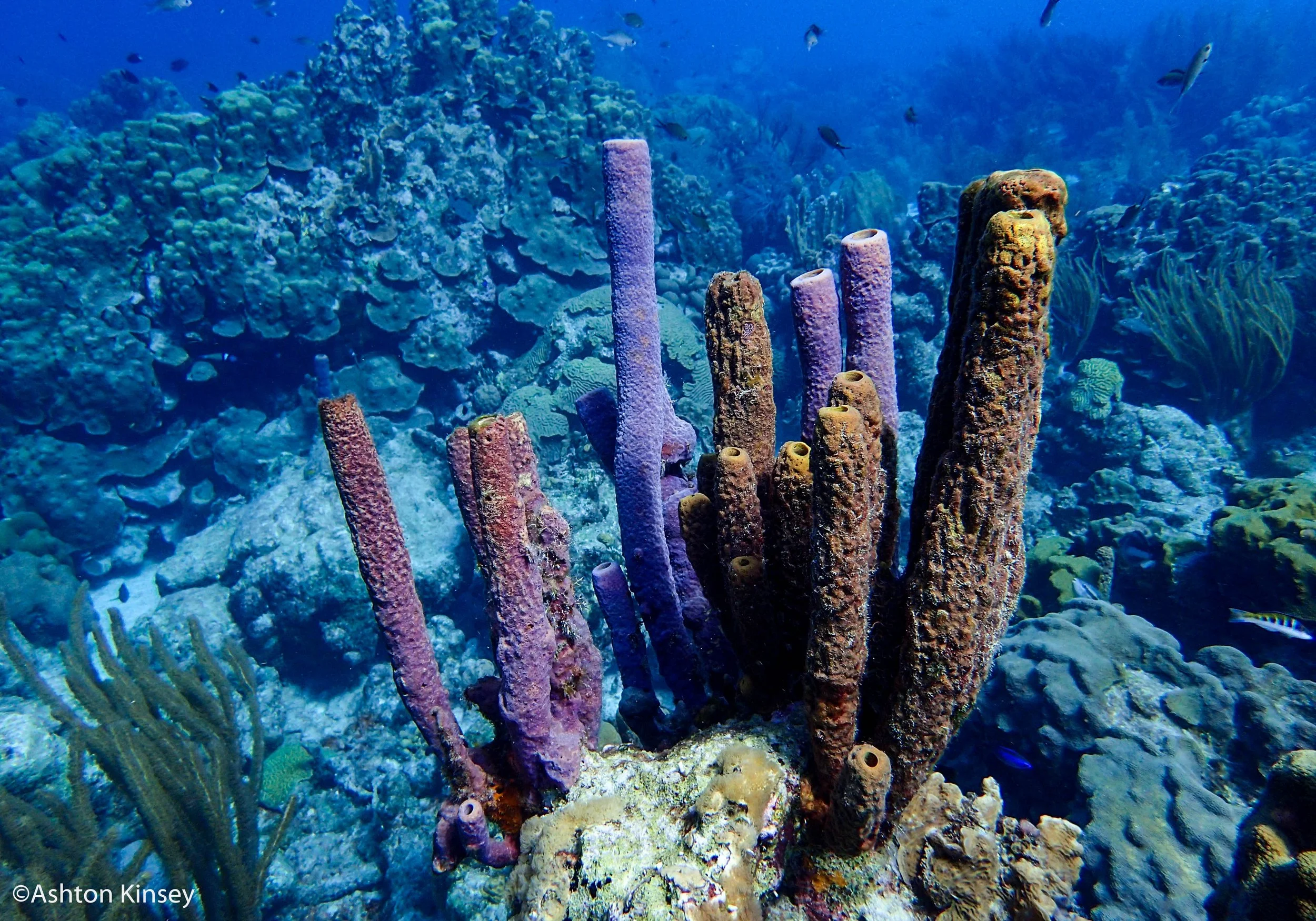
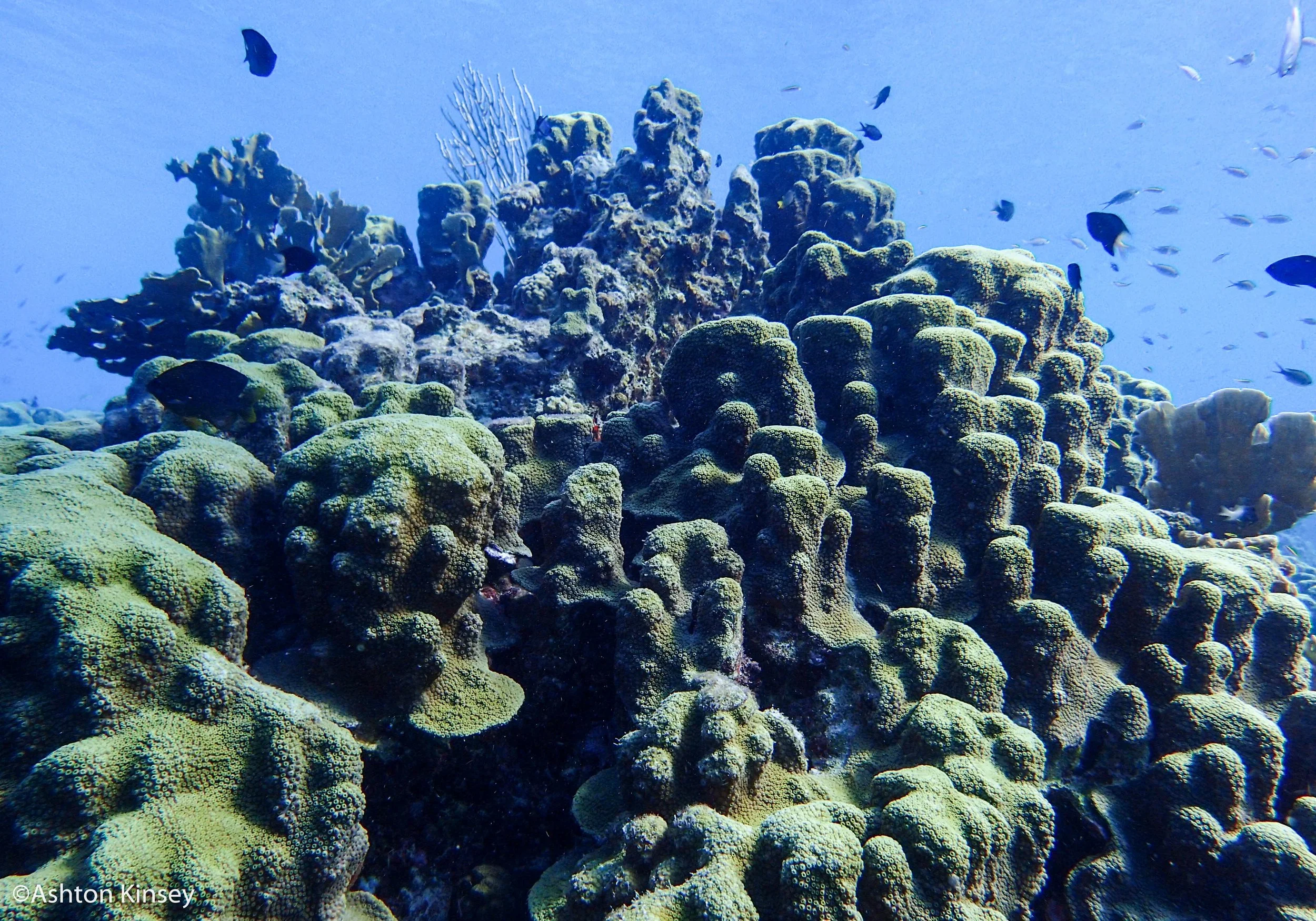
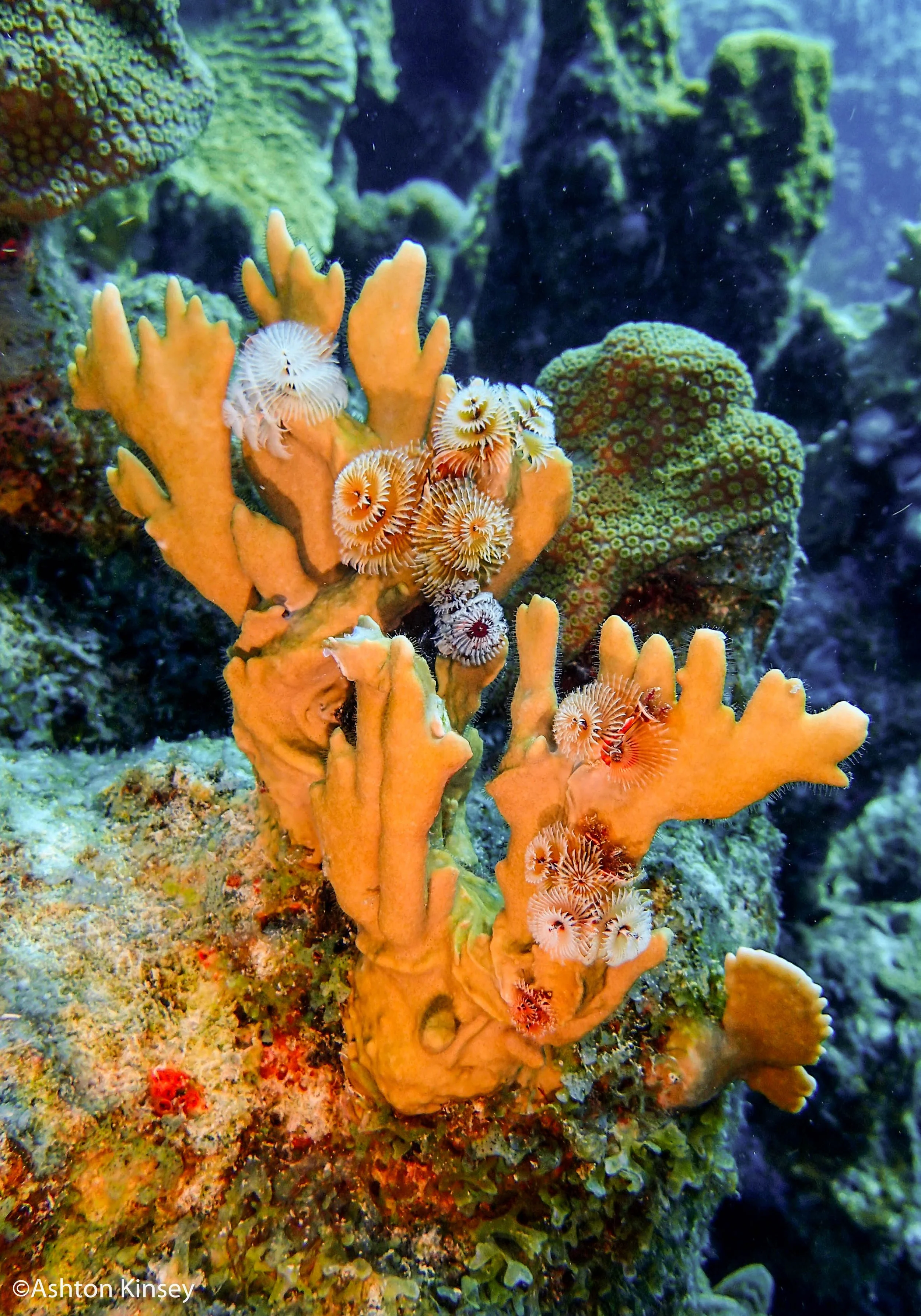
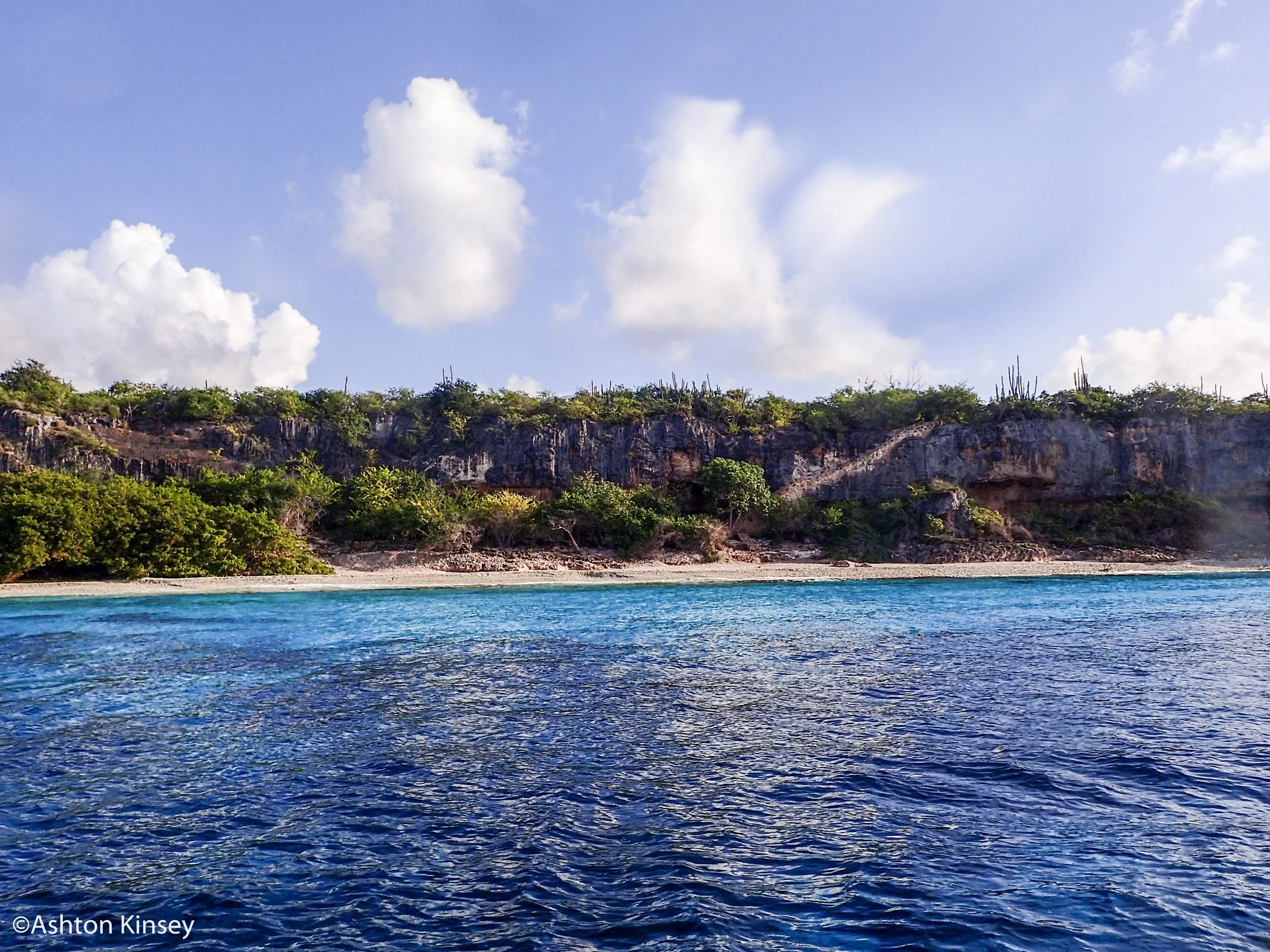
1000 Steps is a well-known beach and many diver’s favorite dive site. A flight of steps with 73 stairs was constructed here in 1968. However, walking up these steps when laden with diving gear makes it feel like 1000 steps, hence the name of the site. From the top of the flight of stairs, the view over the ocean is stunning. This dive site has enough parking for a few cars. Trash cans and portable toilet are also available for use. On Sundays, the locals barbeque and spend the day on this beach. It's a rocky and not a sandy beach.
Dive 20: 100’ for 61 minutes [Dive 1000]
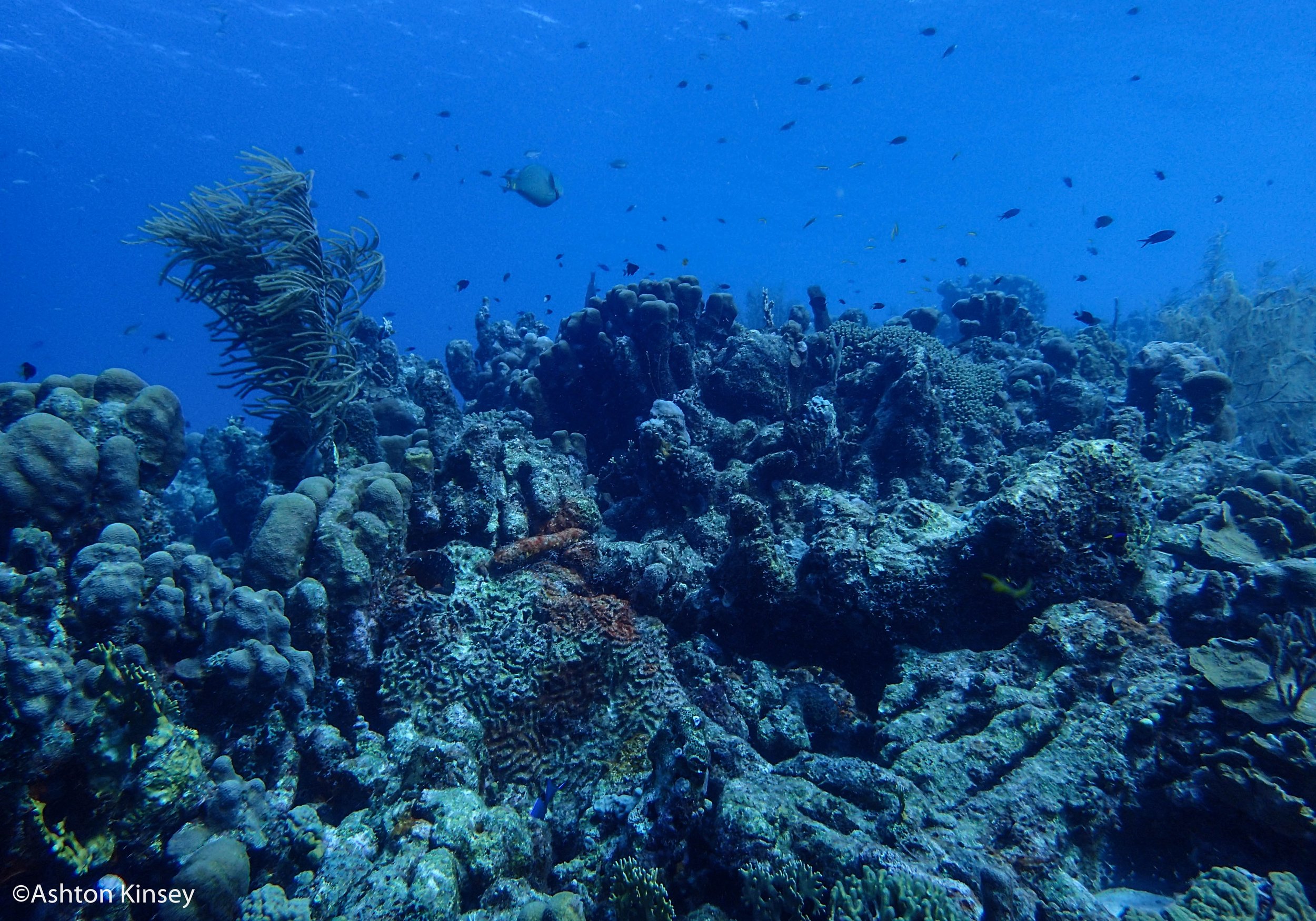
Entering the water across the rocky beach is easy. The shallow bank consists of sand with Boulder Star Coral, some Staghorn Coral, and various soft coral species. The swim to the buoy, anchored at a depth of around 6 meters (20 feet) near the edge of the drop-off, is a short one. Because it's reasonably shallow all the way to the drop-off, and because the seas are usually calm, this is also a good snorkeling site.
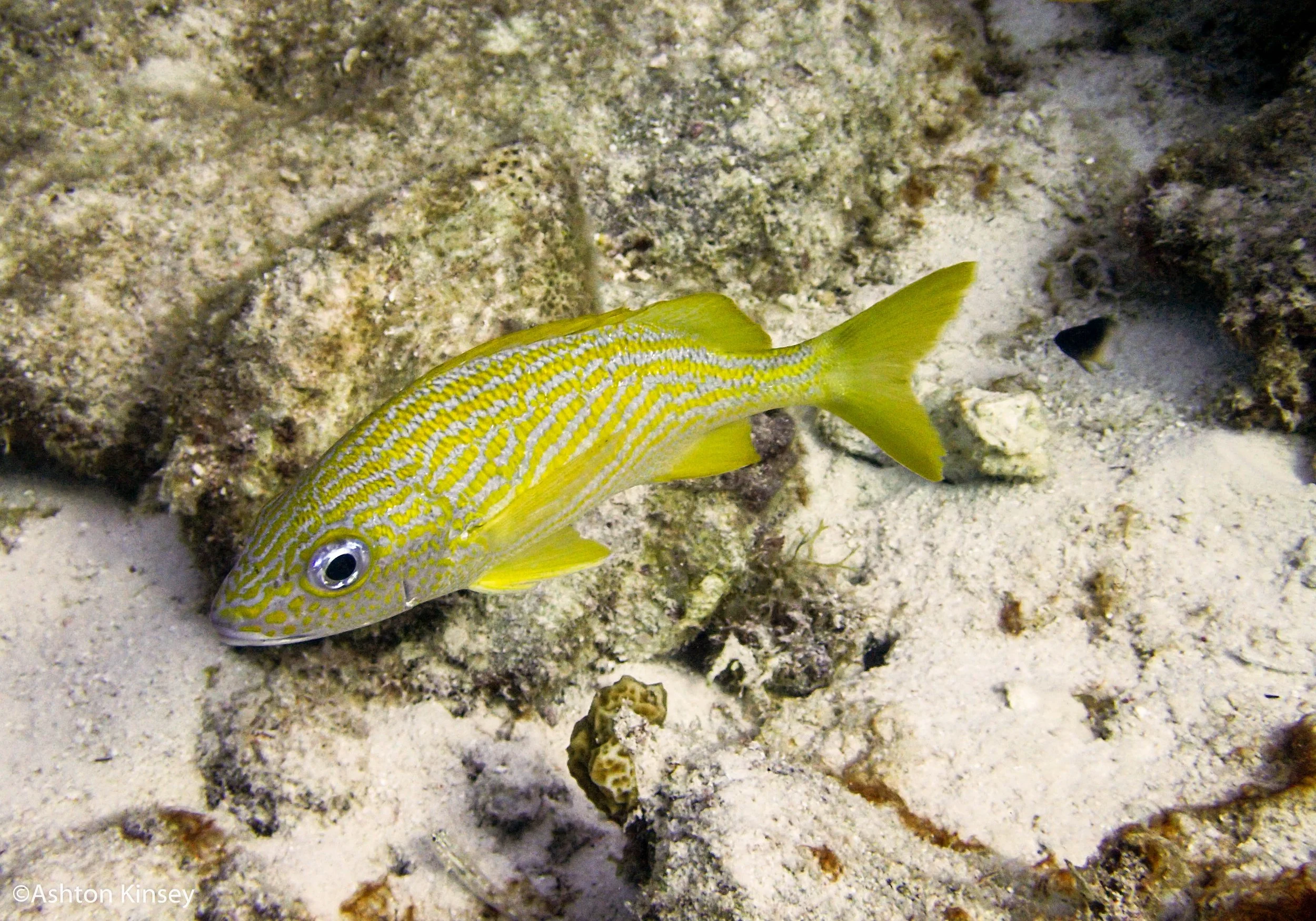
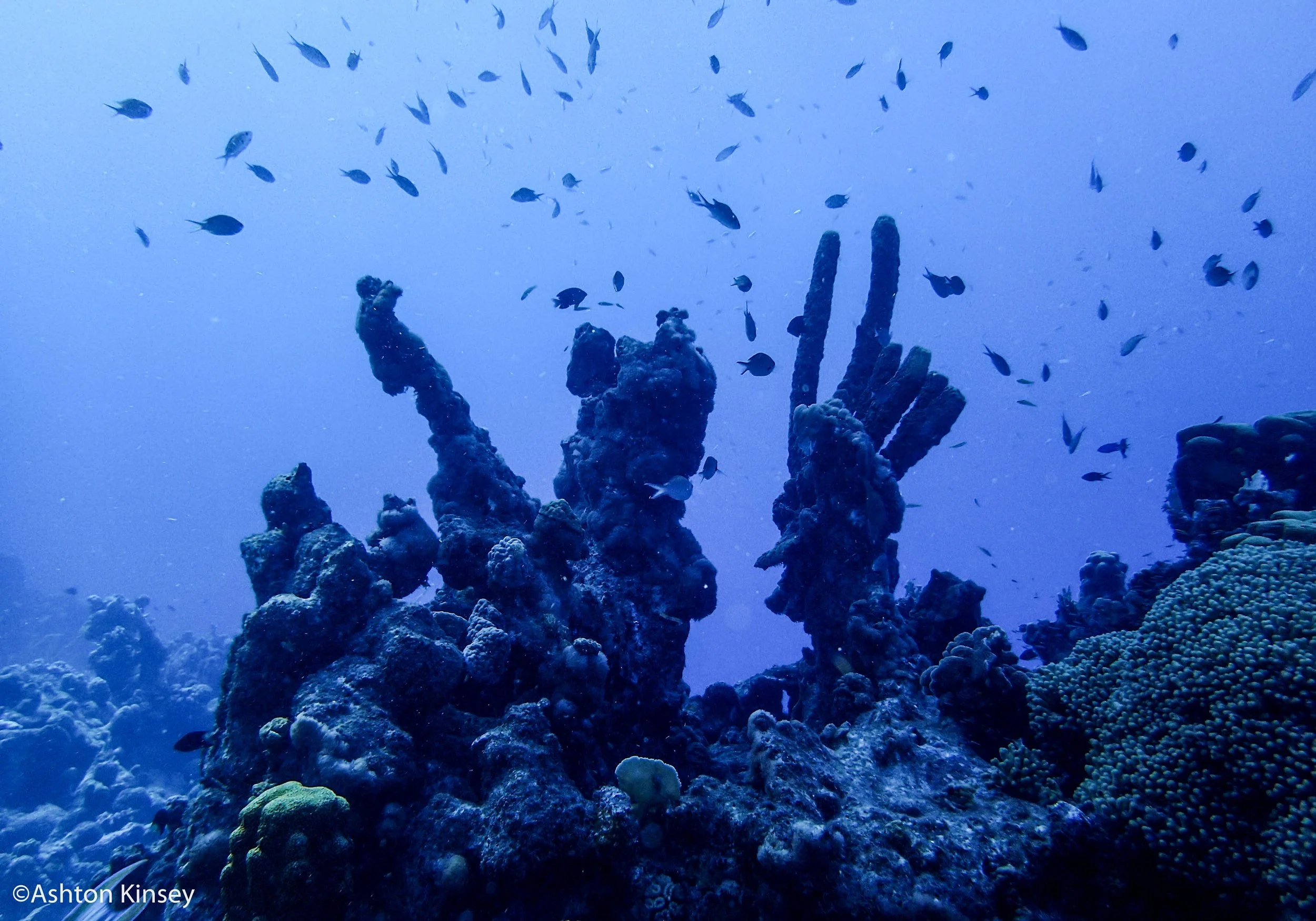
From the buoy, the reef- with Brain Coral, Staghorn Coral and large Star Corals - gradually descends to a depth of 10 meters (33 feet). Many Tangs, Parrotfish and Snappers can be found here. Partially dead Boulder Star Coral formations serve as cleaning stations for larger fish. Yellowtail Snappers, Mahogany Snappers and Blue striped Grunts come here to have parasites removed by the small cleaner fish.
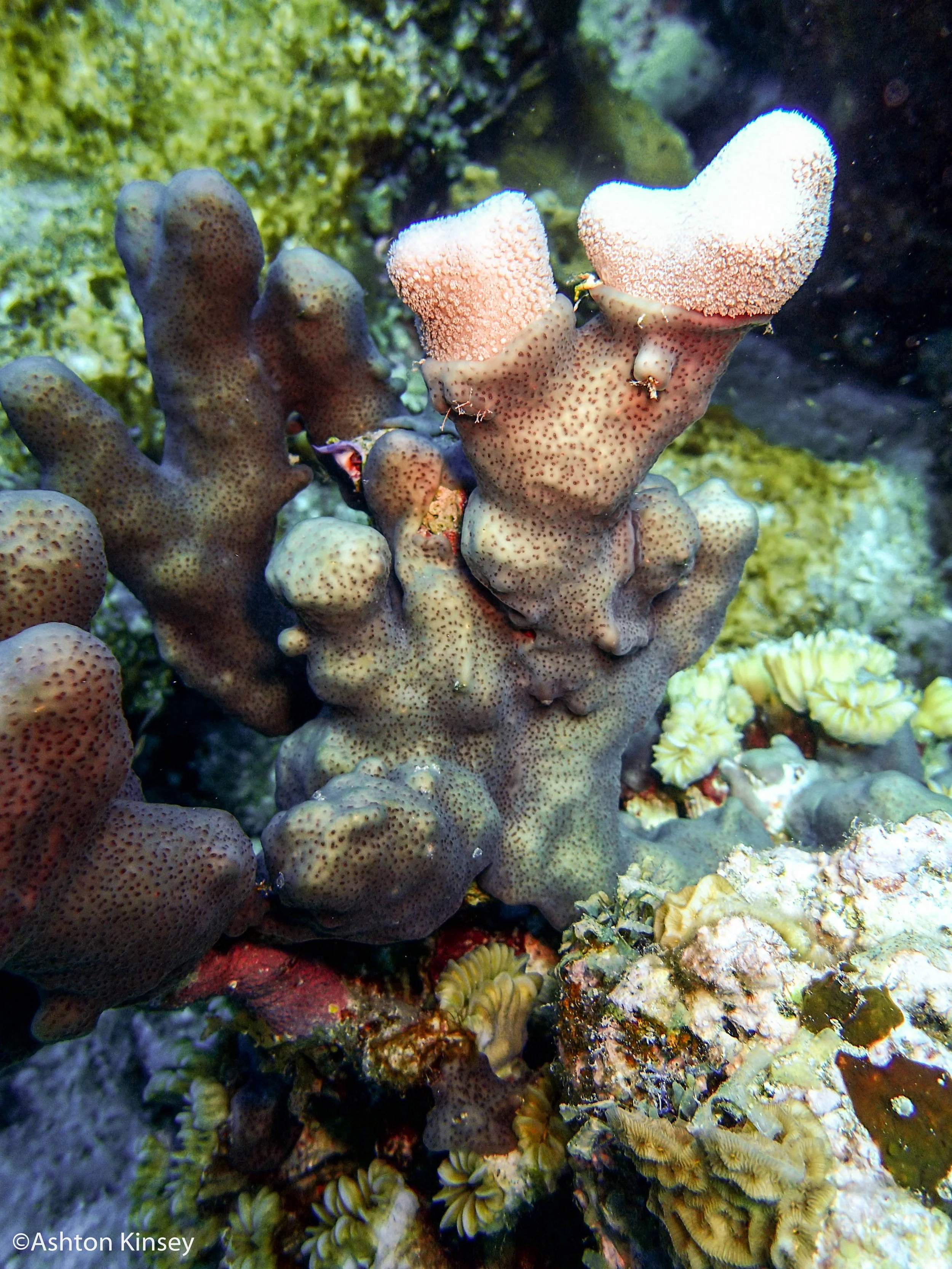
From a depth of 10 meters (33 feet), the reef descends more steeply and some soft corals, especially Boulder Star- and Blade Coral, grow here. A lot of Cactus Coral can also be found down to a depth of 25 meters (82 feet). Encrusting Fan Leaf Algae covers some of the coral.
The reef descends to a depth of 40 meters (131 feet), after which it gradually gives way to a sandy floor. Turtles are often seen here, while sightings of reef sharks and dolphins are not uncommon.
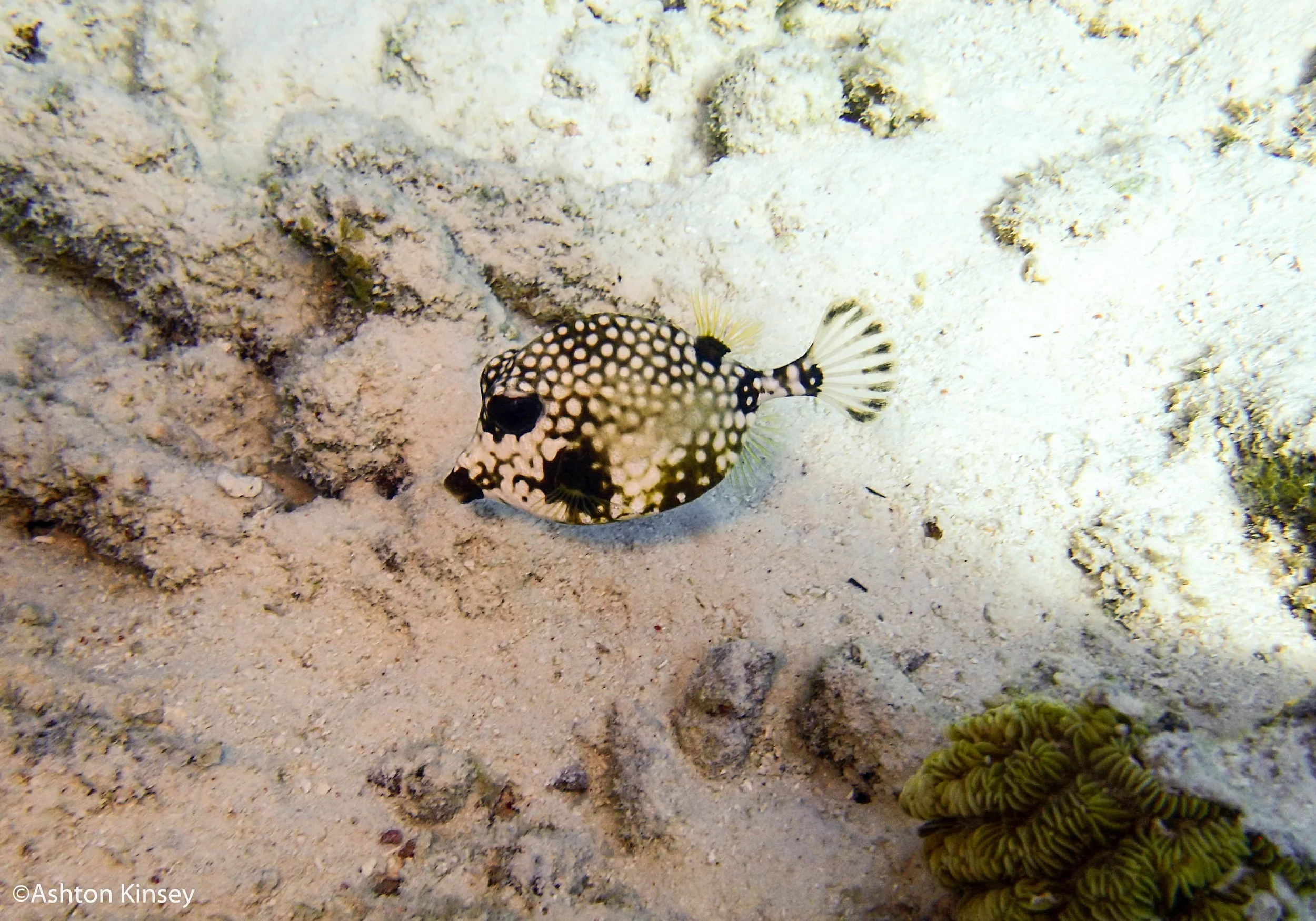
The water at this dive site is usually brilliantly clear and a large variety of fish species is found here. Gray Angelfish, Horse Eye Jacks, Bar Jacks, various species of Filefish and Smooth Trunkfish inhabit the reef.
The diverse underwater life and the stunning surroundings make this dive site a favorite amongst divers.
The Cliff
Surroundings
This dive site is located at Hamlet Oasis. The resort offers restaurant facilities and a dive school (Divefriends). This is where Captain Don placed a memorial to all "divers who have gone before us".
Dive 21: 82’ for 64 minutes
Entering the water via the steps on the beach is simple. There's a narrow channel that runs through the Elkhorn- and Fire Coral onto the shallow bank. This bank is narrow with some scattered Boulder Star-, Maze-, and Grooved Brain Coral. Smooth Trunkfish, Palometas, and various Gobies and Blennies inhabit the sandy floor with its dead coral remains.
The buoy is anchored to the bank at a depth of 4 meters (13 feet). The memorial lies on the edge of the bank at a depth of 8 meters (26 feet. It consists of a concrete block and a flagstaff flying a diving flag at half-mast.
From a depth of 8 meters (26 feet), the reef drops steeply, and therefore dives at this site can truly be classified as wall dives. The wall descends sharply from 9 to 22 meters (30 to 72 feet), where a narrow sandy ledge interrupts the reef. After this, it drops less steeply to a depth of 38 meters (125 feet). Here, the reef gives way to a sandy floor inhabited by Garden Eels and Sand Tilefish. The reef below the wall is overgrown with hard coral, though not very densely. However, there are many different species of sponges, including large orange Elephant Ear Sponges. Between depths of 9 and 22 meters (30 and 72 feet), the wall features a lot of Blade Coral, large and flat Star Coral formations, and some Rope Coral. A few Tubastrea Corals also live here but can only be seen during night dives.
These light-shunning creatures are not really anemones but are known as such because of their similarity to anemones. They often grow in shallow caves or under ledges and will instantly close if directly illuminated by diving lamps. So, to view these creatures properly, only shine the edge of your light onto these Tubastrea Corals. Stunning Purple Tube- and large Elephant Ear Sponges grow on the reef. Fairy Basslets contrast beautifully with the Elephant Ear Sponges, creating great photo opportunities. The same can be said about the black and yellow Rock Beauties and the French Angelfish.
The best times for diving here are during the late morning or early afternoon. Early in the morning, the wall is shadowed, making colors less bright.
Windsock (Donkey Beach)
Surroundings
The Windsock dive site is located next to the airport and is named after the airport's windsocks, which indicate wind direction. It has a rocky beach with some sand and some shade provided by overhead trees.
Dive 23: 65’ for 60 minutes
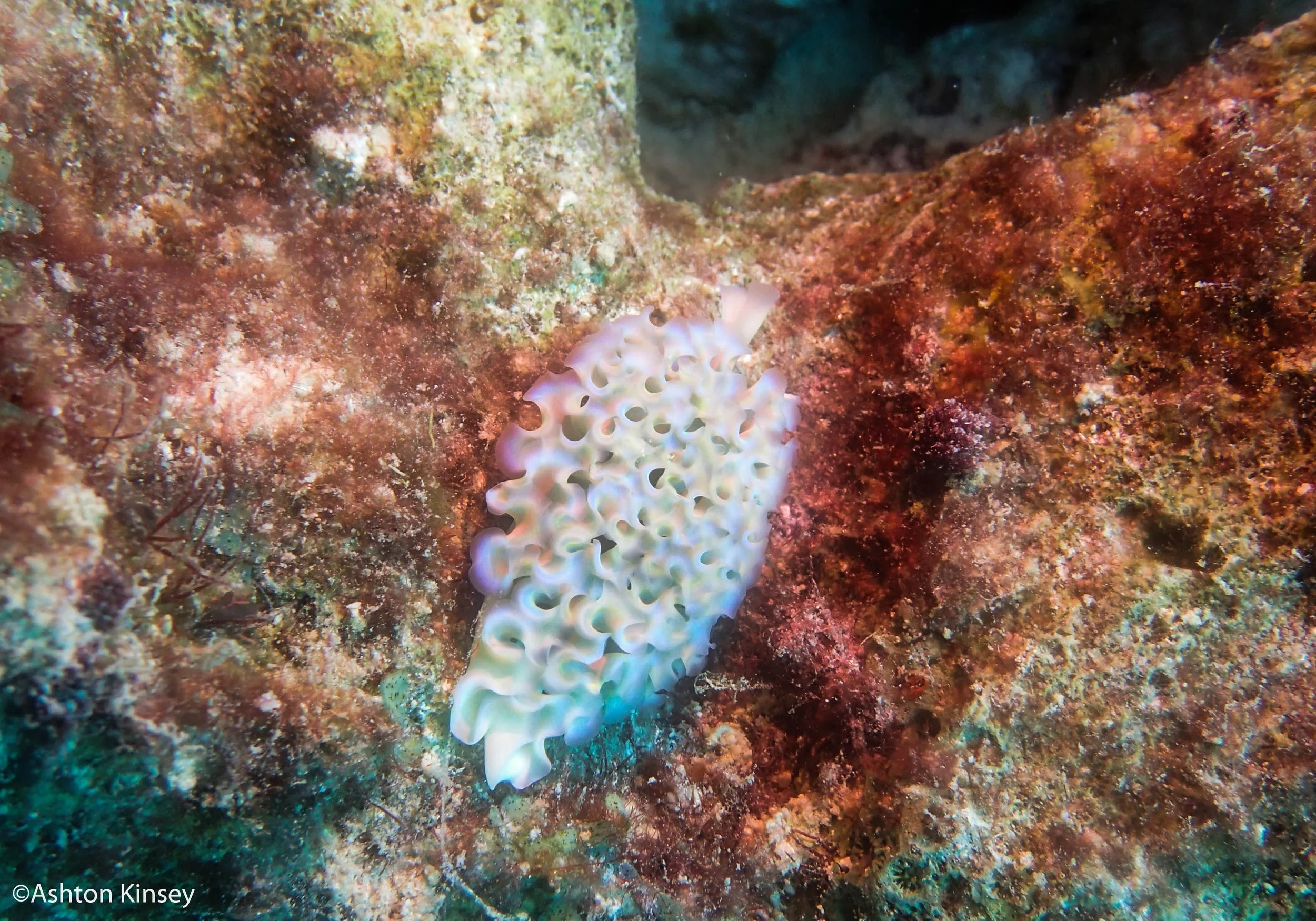
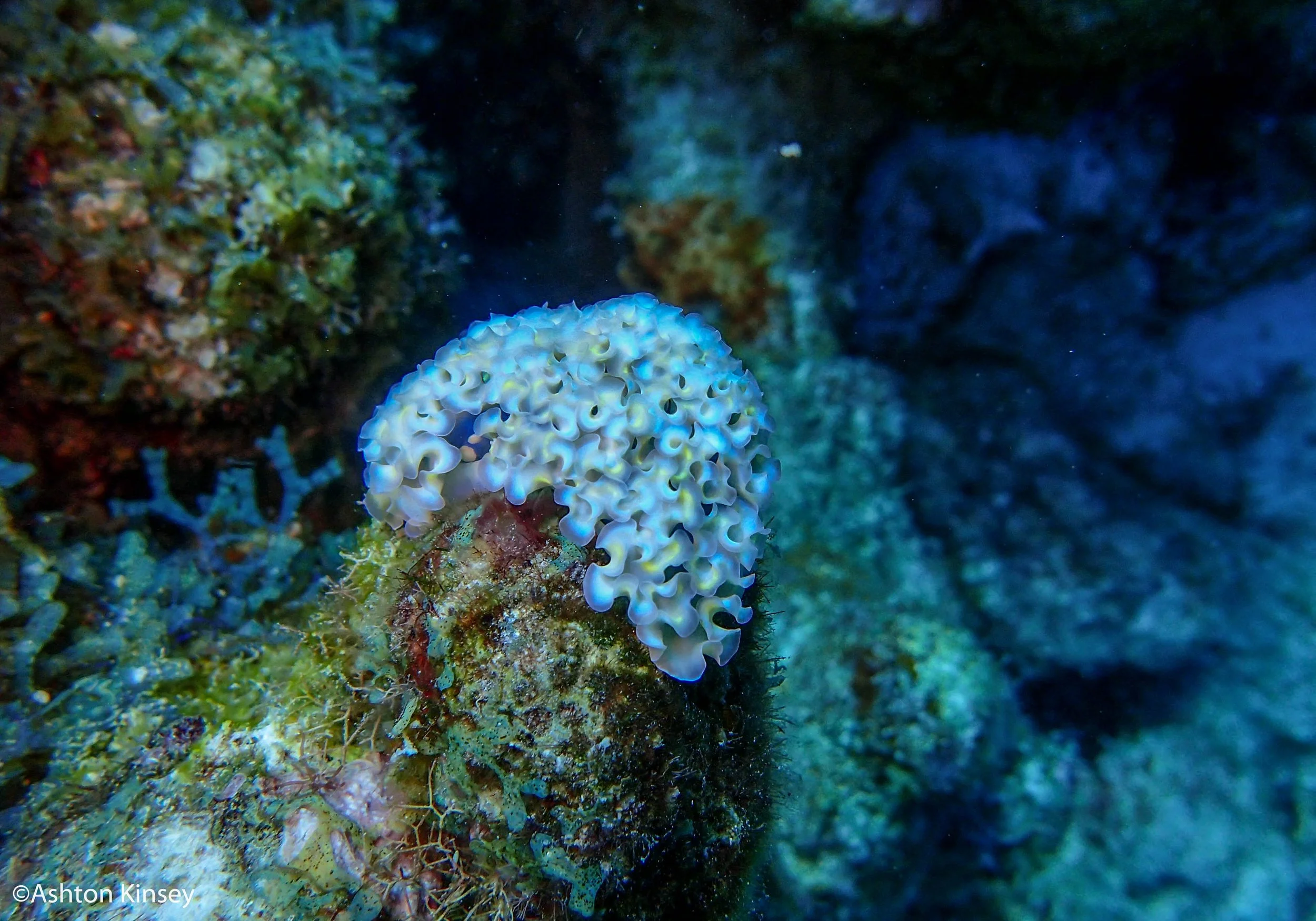
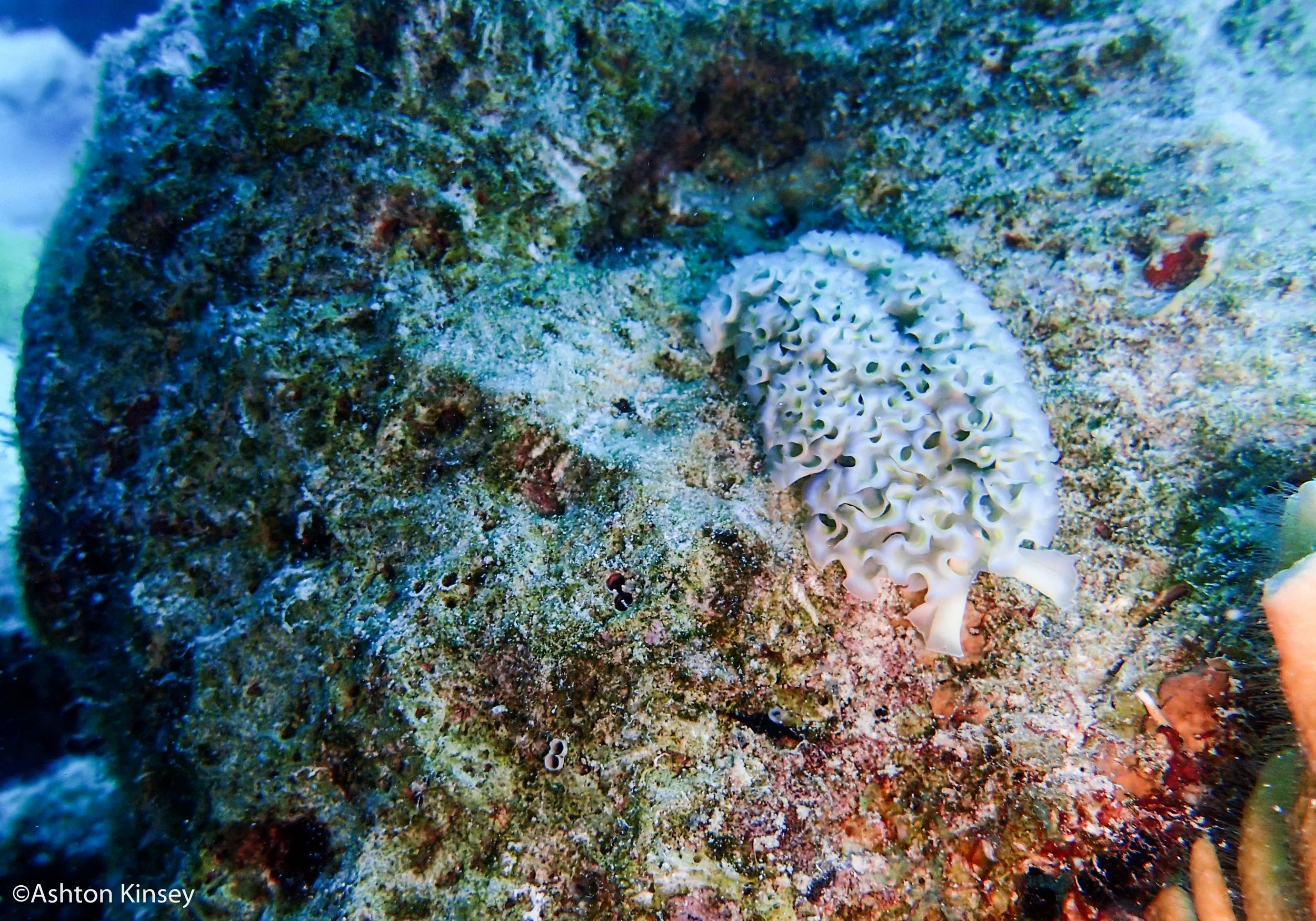
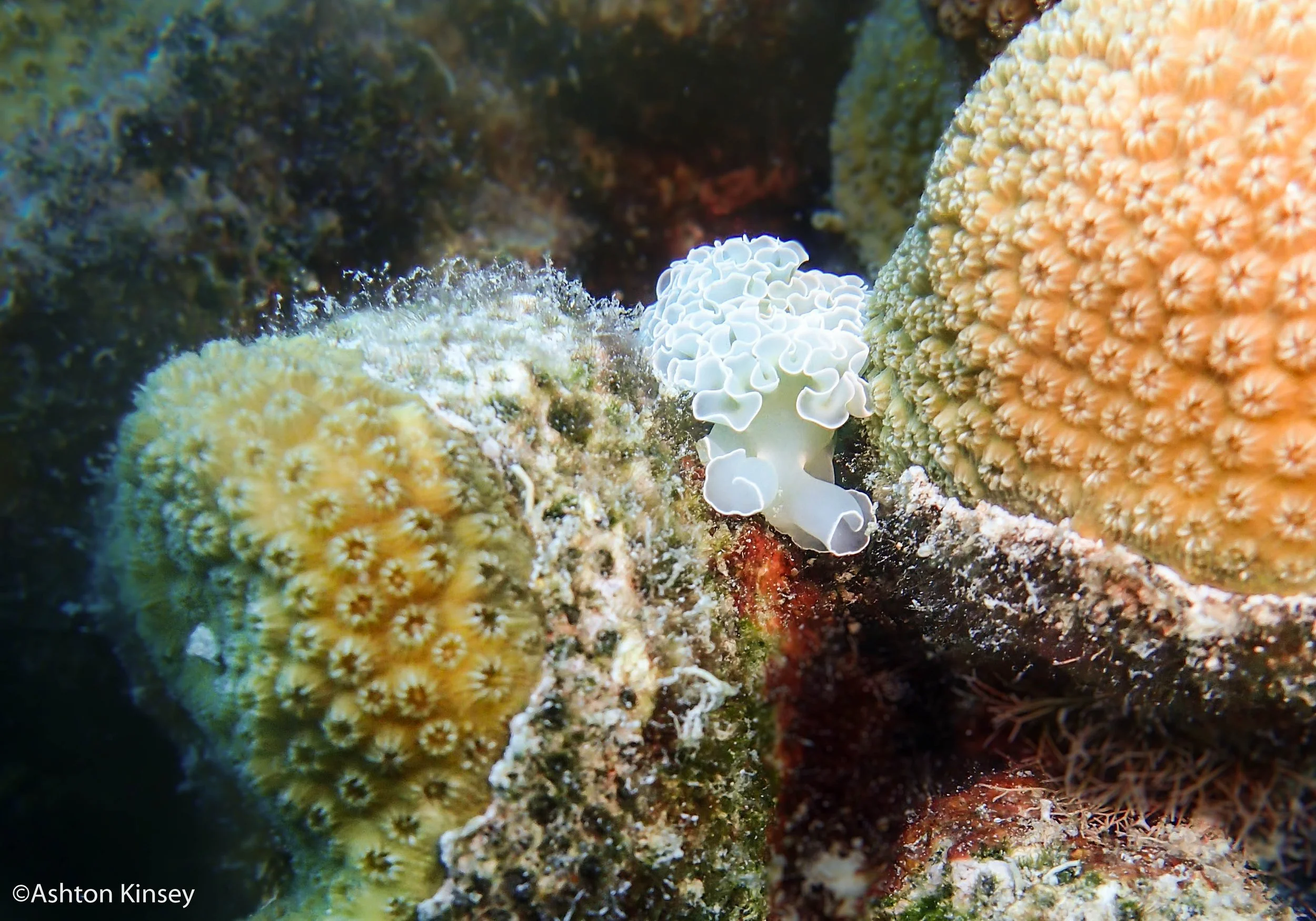
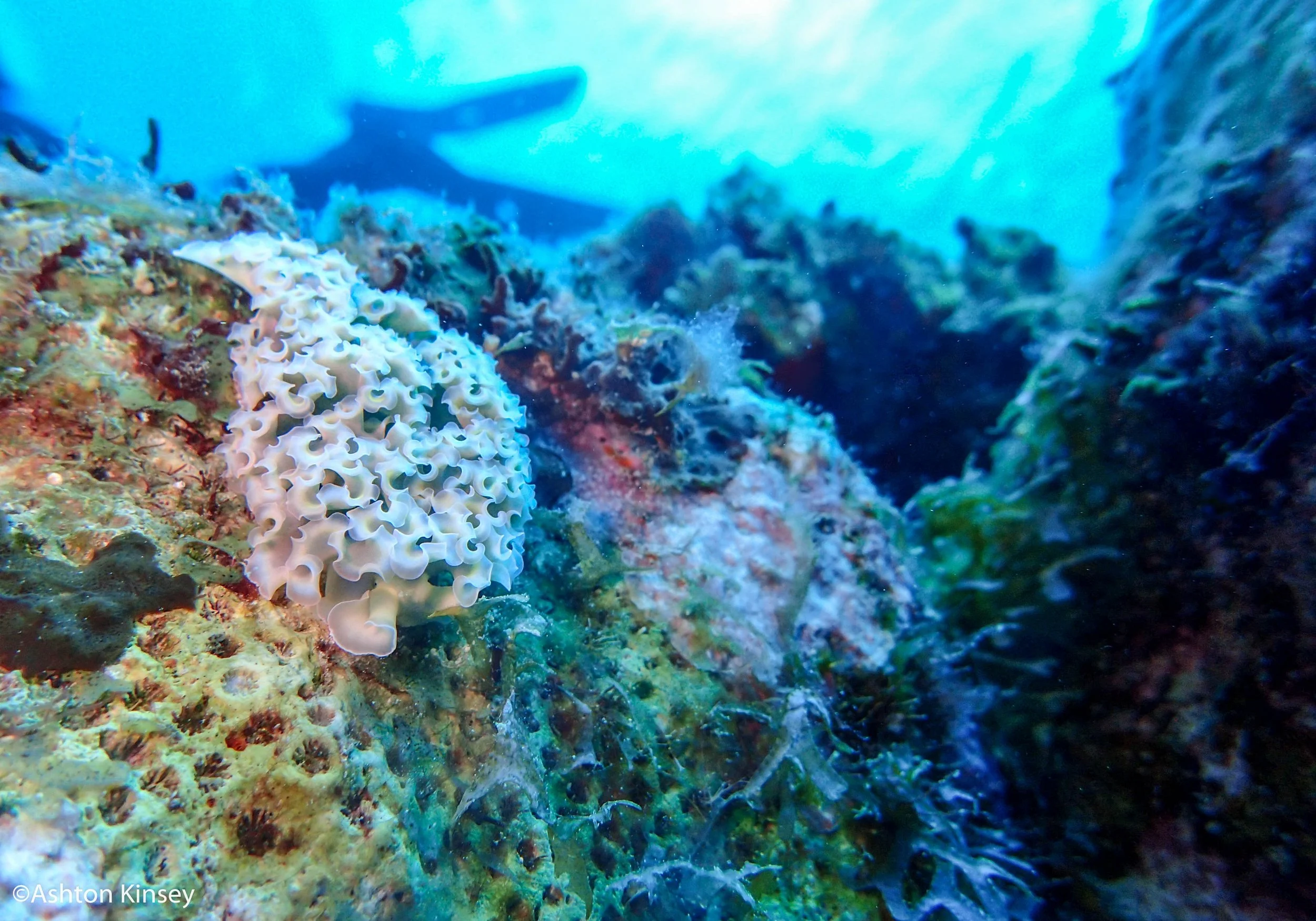
The shallow bank alternates between a sandy floor and some coral outcrops. This area is also great for snorkeling, although snorkelers must be careful not to touch the Fire Coral. The best snorkeling spot is on the northern side of the beach and out towards the Plaza Resort. Blue spotted Cornetfish, which aren't often sighted around Bonaire, can sometimes be found here. Lettuce Sea Slugs in stunning white and light-blue colors can also be spotted here.
The best spot from which to enter the water is at the yellow rock at the end of the pathway. Here, you can simply walk into the water across the sandy floor. At this site, the drop-off starts at a depth of 5 meters (16 feet), from where the reef gradually descends to a sandy floor at a depth of 28 meters (92 feet). The buoy, anchored somewhat to the left, lies at a depth of 7 meters (23 feet). Turtles, which like to swim along the bottom of the reef, are often found here. Various species of rays can also be seen on the sandy floor. The best dive route takes you straight out from the beach to the drop-off and then down along the wall to the sandy floor. You could follow the edge of the reef and -halfway through your dive (or your air supply) -slowly rise along the reef to finish your dive at the desired depth. Remember that the further south you go, the deeper the bottom of the reef drops. It can descend to a depth of 35 meters (115 feet).
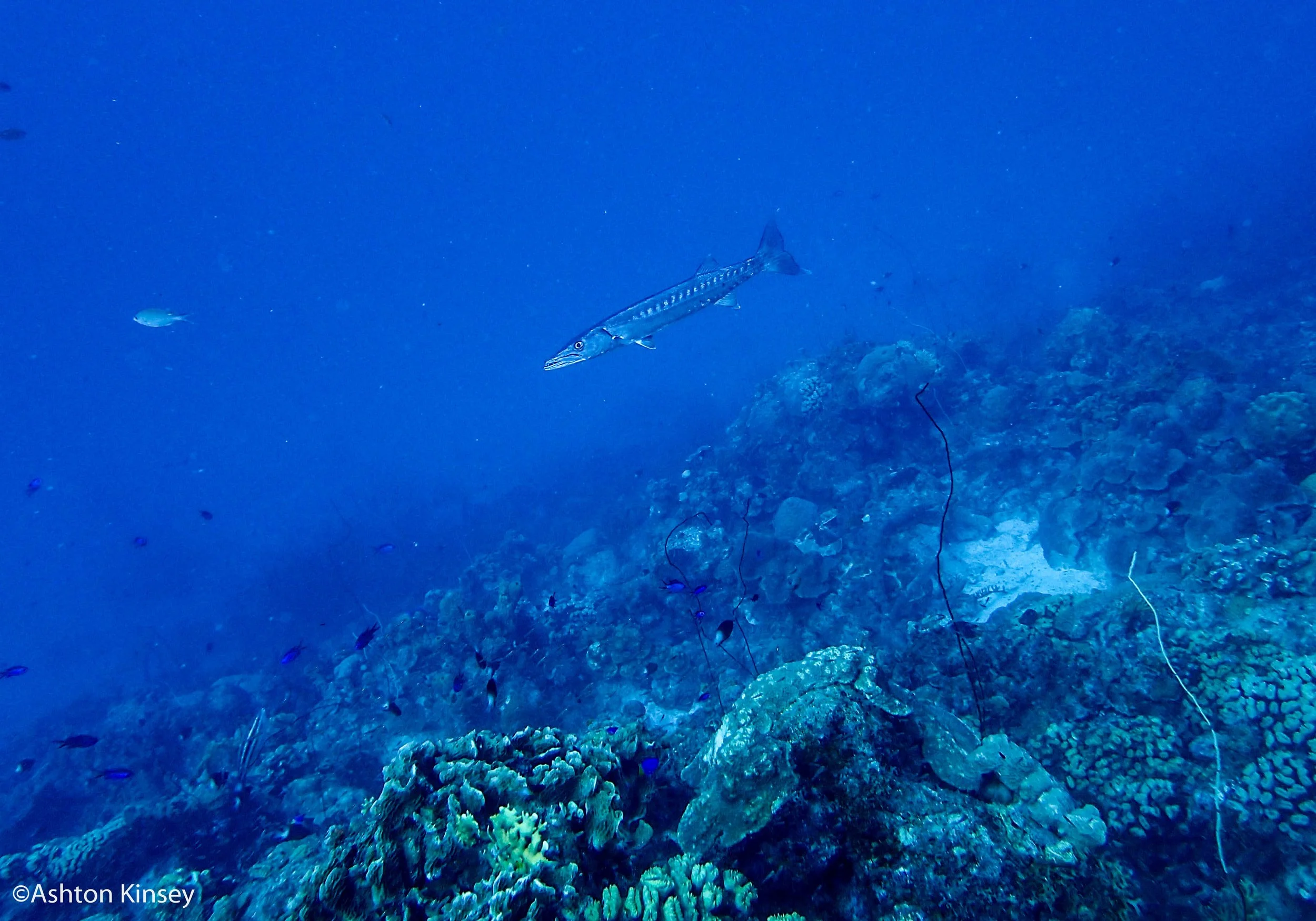
The reef is not hugely dense and is dotted with small sandy patches. You might find Lizardfish and Soapfish on these patches. Blue striped Grunts, Angelfish and Filefish inhabit the reef. A school of smaller Barracuda also often patrols the lower part of the reef. The main part of the reef consists of hard coral, although some soft coral also grows down to a depth of 15 meters (49 feet). Various sponges also grow here, some of which have reached enormous proportions. There's virtually no current here, making it a great site for beginner divers.
Forest
Surroundings
This dive site is in the southwestern corner of Klein Bonaire on a small, rocky peninsula. It's considered one of Klein Bonaire's most beautiful dive sites.
It is not possible to go ashore here.
Dive 24: 90’ for 62 minutes
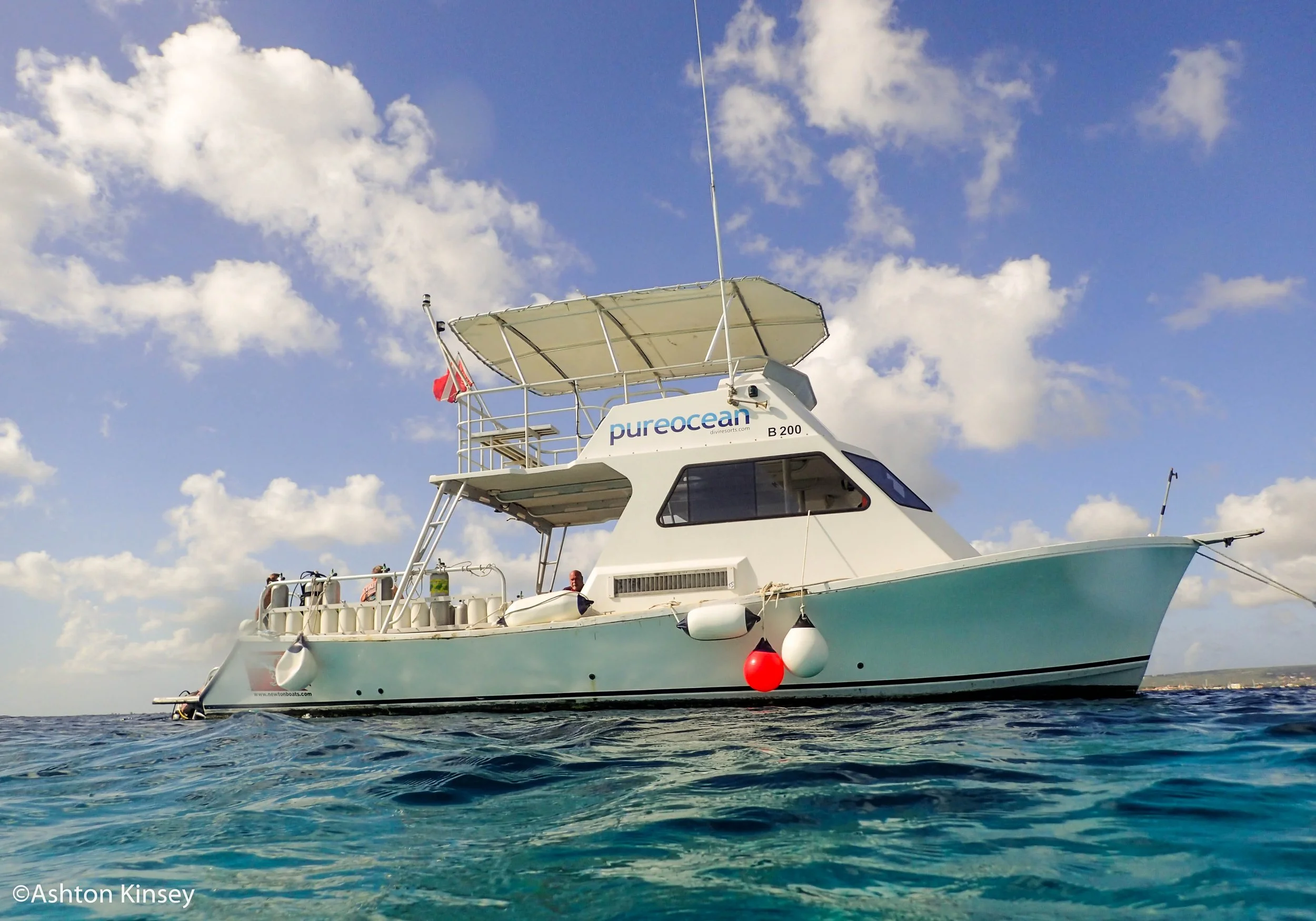
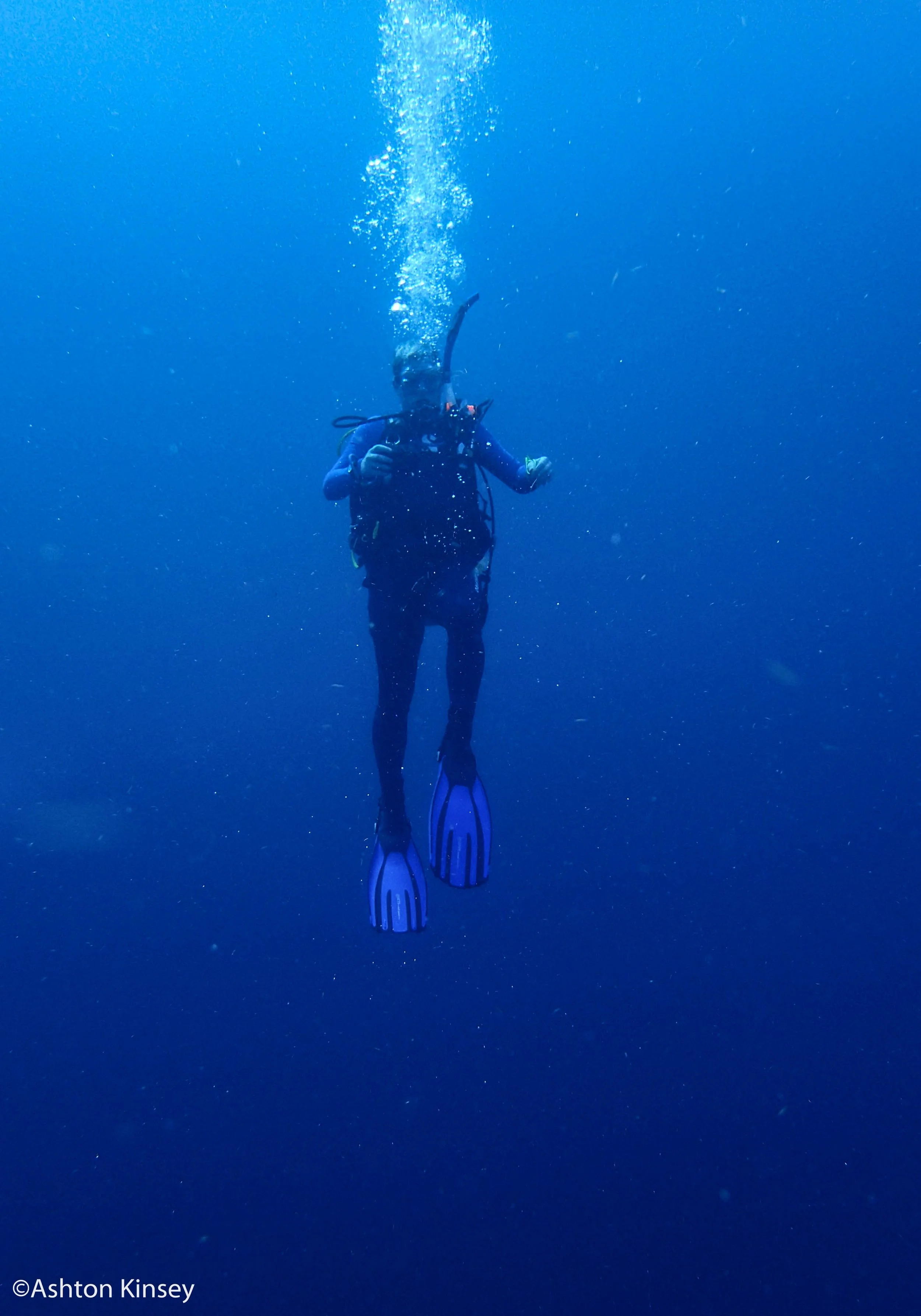
Due to its position in the farthest corner of the island, Forest is strongly affected by wind. The wind whips up surface waves, which often makes it difficult to moor to the buoy. Since only a single boat can moor to the buoy at a time, it would be best to depart early if you'd like to dive at this site. Conditions are best if there is little wind.
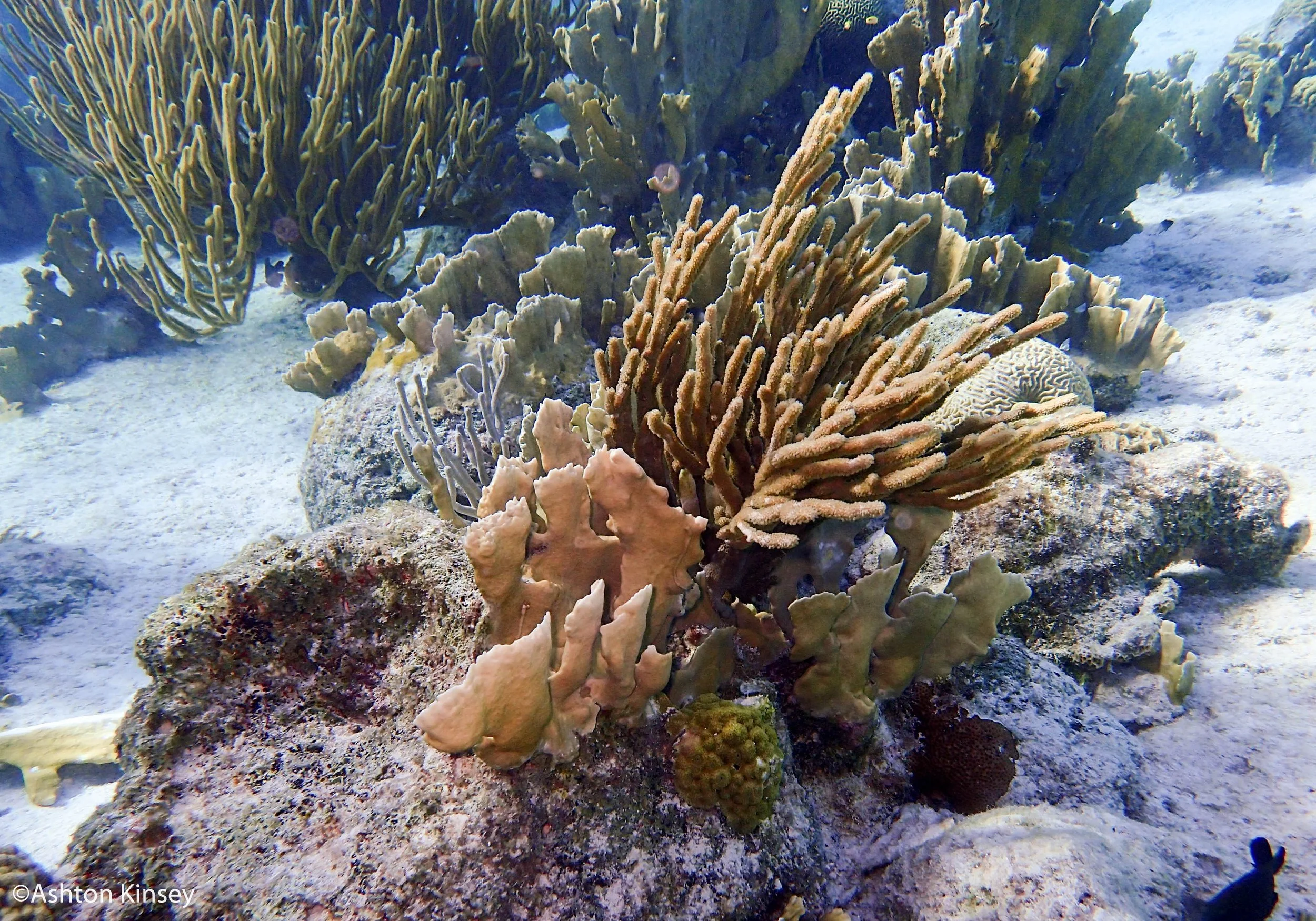
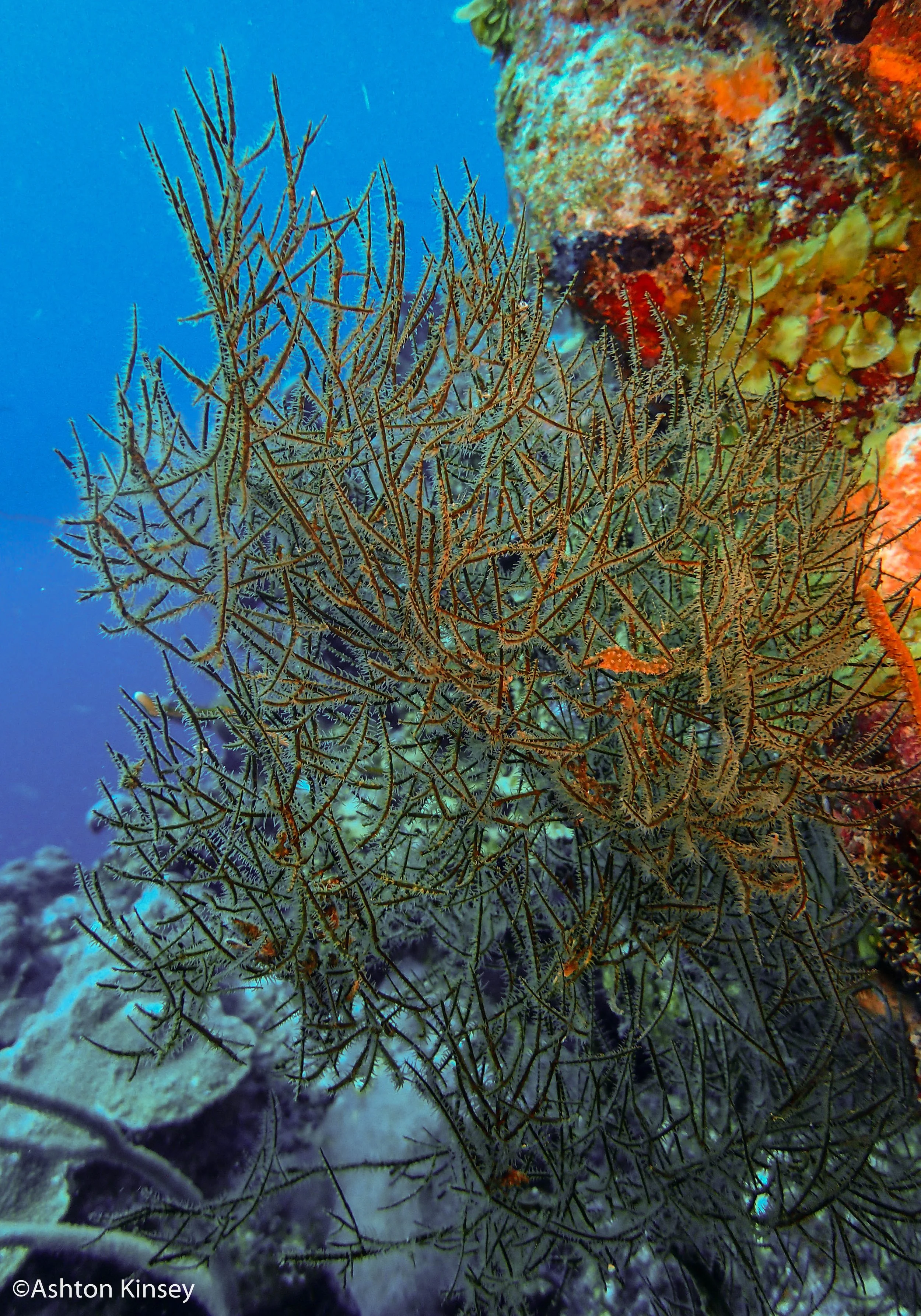
This dive site is known for its massive Elephant Ear Sponges and -of course -the 'forest' of Black Coral. This much Black Coral cannot be found anywhere else around Bona ire. It is most abundant below a depth of 15 meters (49 feet).
The buoy is anchored at a depth of 6 meters (20 feet) on a narrow shallow bank. A few French Angelfish almost always hang around the area of the buoy. They were obviously fed in the past and still approach divers, hoping for a bite to eat. These friendly fish are totally unafraid of divers and offer stunning photo opportunities.
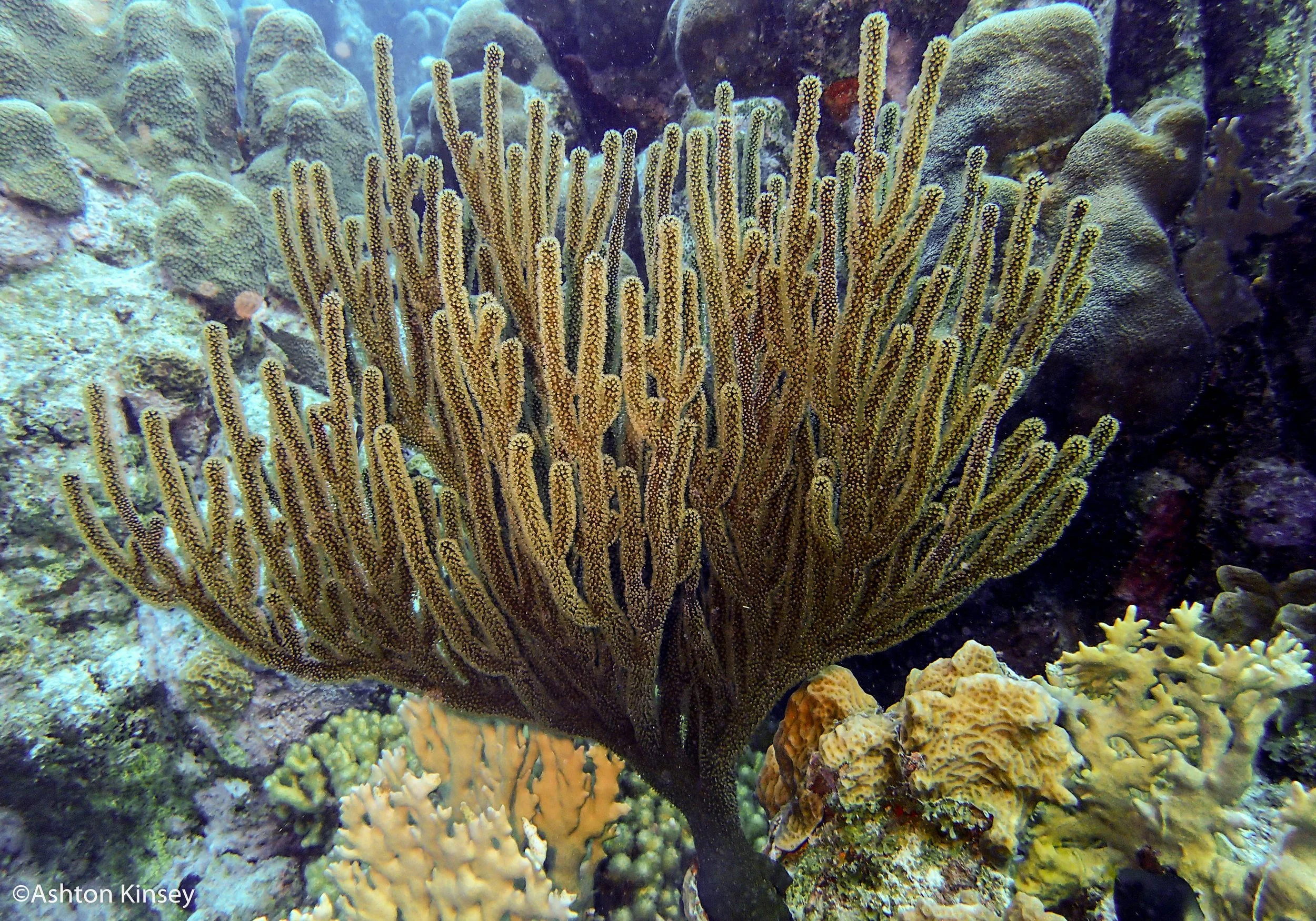
At a depth of 9 meters (30 feet), the wall drops almost vertically. Many fan corals, Star Corals and fish are found around this drop-off, while turtles are also often sighted here.
The reef descends steeply to a depth of 18 meters (59 feet), after which the gradient eases. To the east of the buoy, there are many wide and deep channels that add shape to the reef. Some of the channels are sandy and run through to the sandy floor found at a depth of 49 meters (161 feet). The channels gradually disappear towards the west. There is also less black coral in this direction.
Between a depth of 15 and 20 meters (49 and 66 feet), there are many cleaning stations, where Tiger Groupers wait their turn to be relieved of parasites. Big Bar Jacks and Horse Eye Jacks are also regular visitors to these cleaning stations.
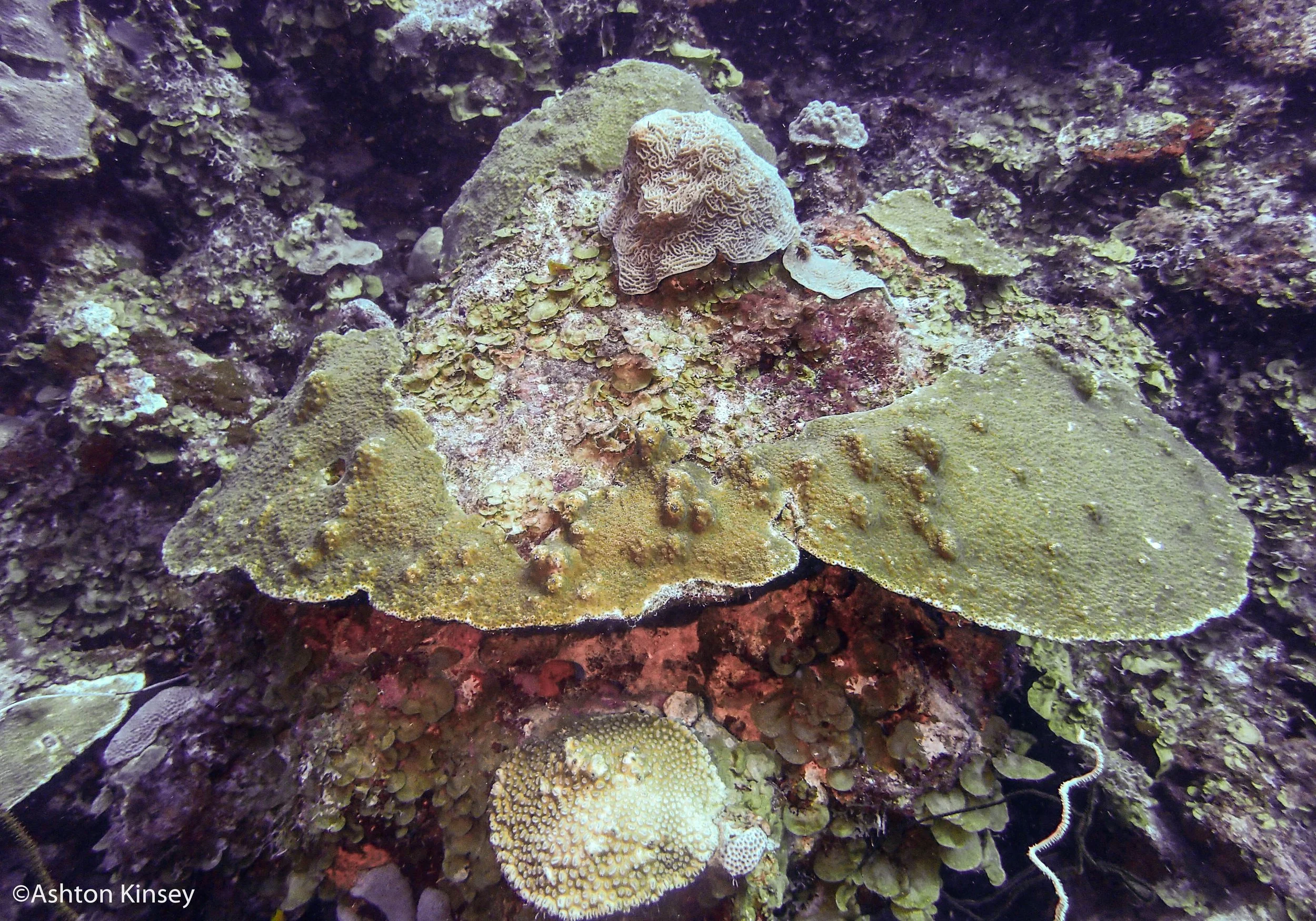
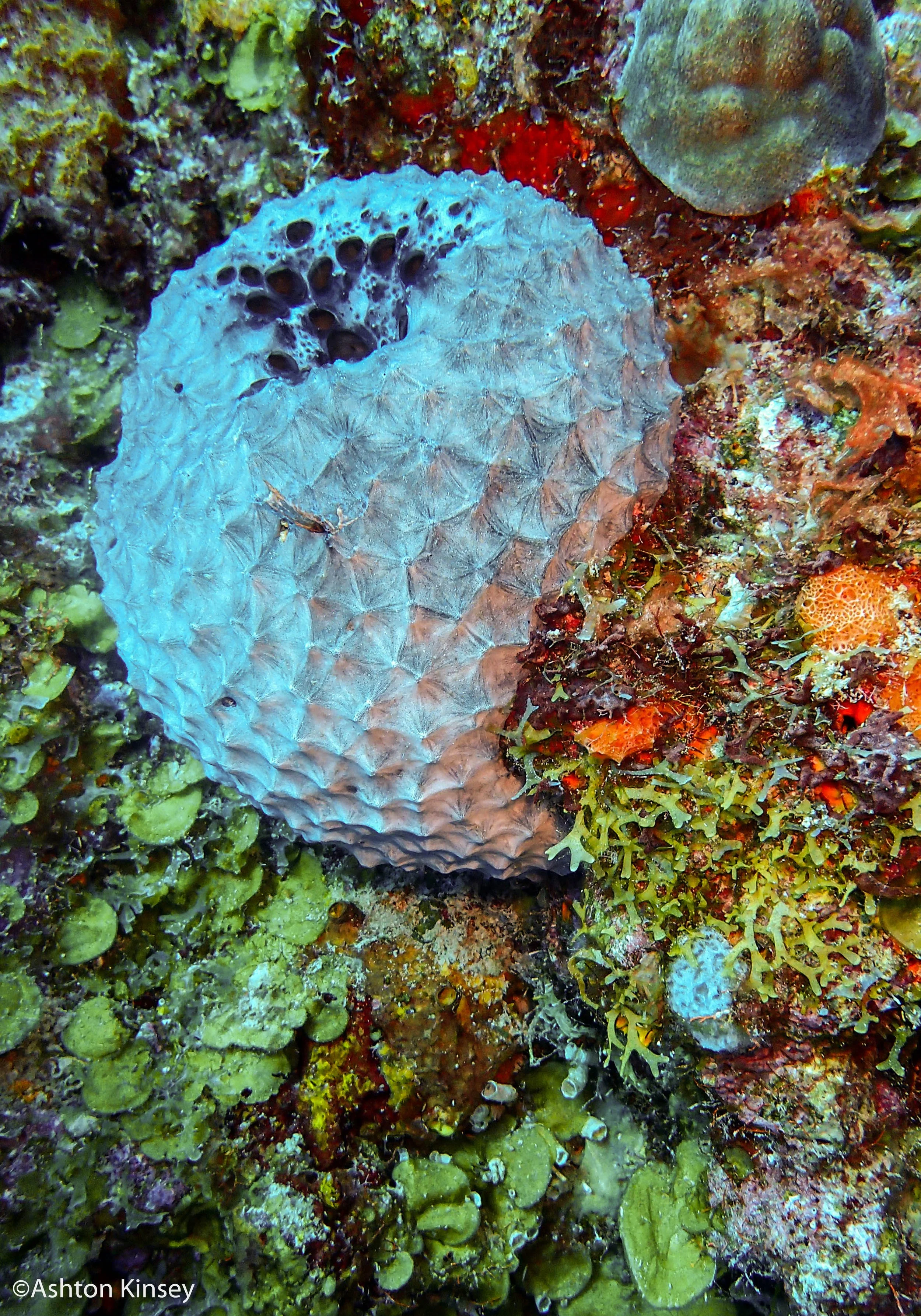
Many sponges grow down to a depth of 24 meters (79 feet). Deeper than this, the reef mainly consists of deep-water coral, like Sheet Coral. Some colonies of this coral have circumferences of more than 3 meters (10 feet).
The current here is light to moderate and usually flows in a westerly direction.
Rock Pile
Surroundings
This dive site on the southern coast of Klein Bona ire is named after a pile of rocks on the beach that serves as a point of reference. The dive site is also known as Bonheur de Betsy. Even though the Monte's Divi and Joanne's Sunchi dive sites are nearby, this is still a unique site.
Dive 25: 54’ for 70 minutes
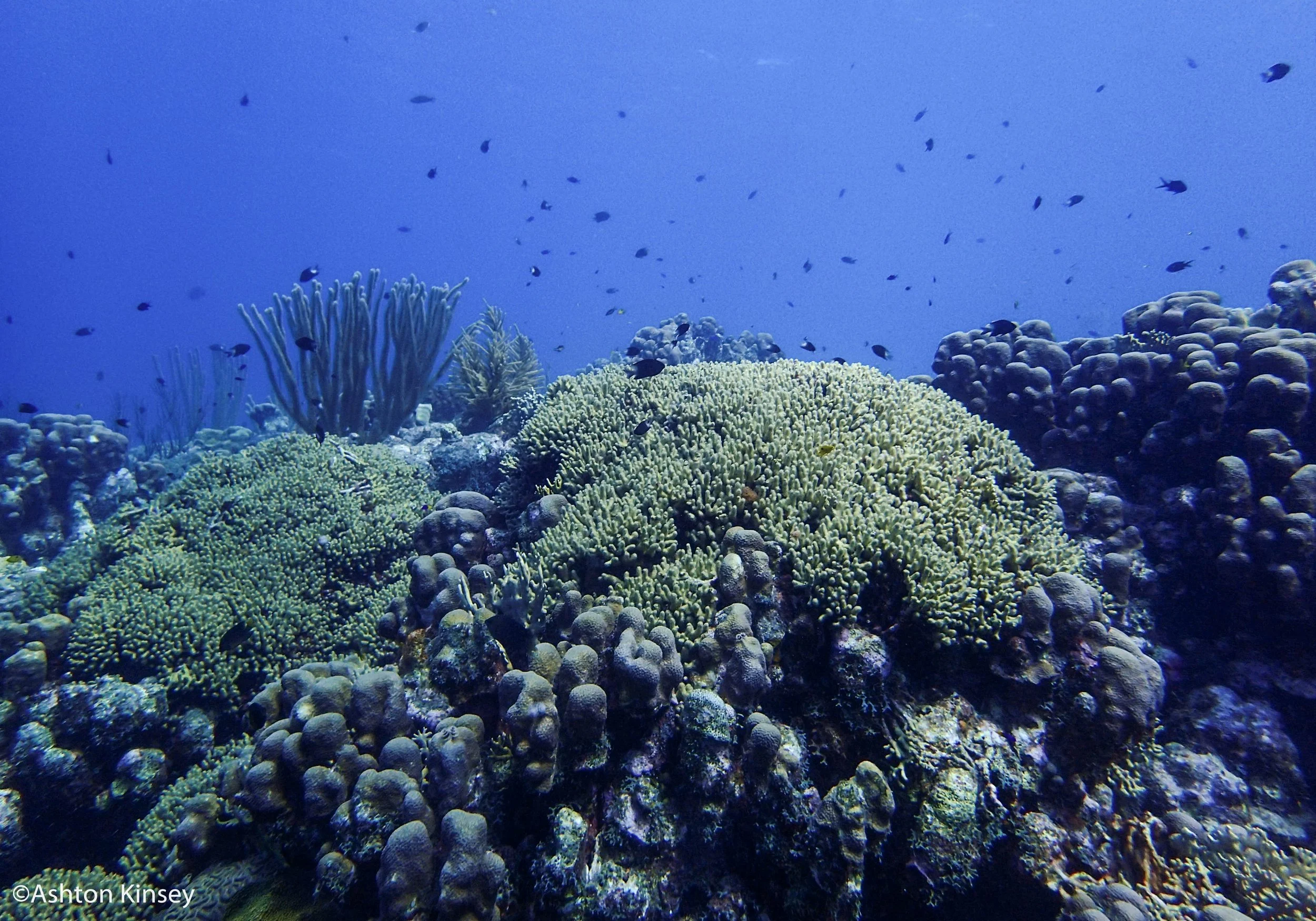
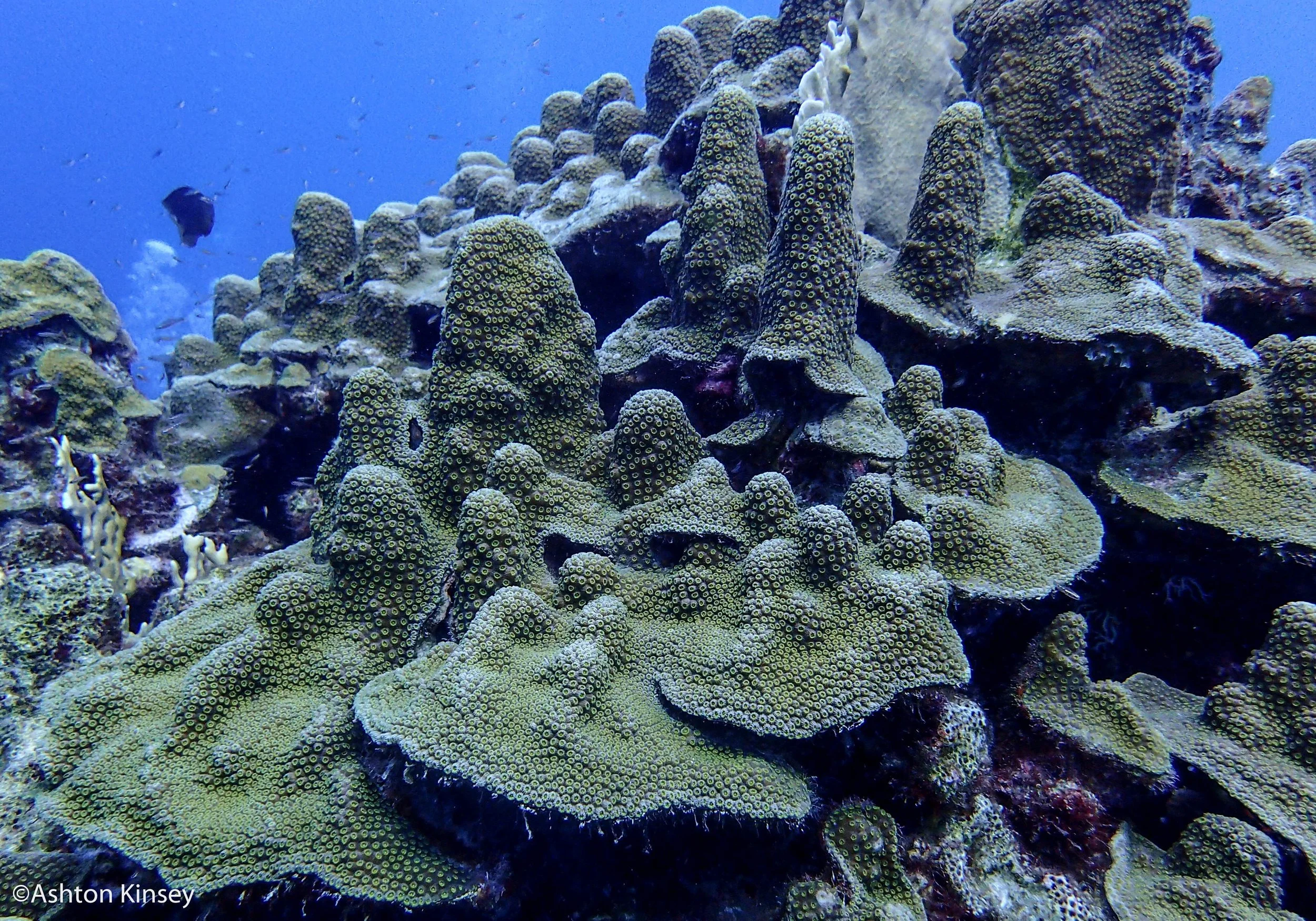
The reef at this dive site is a typical Klein Bonaire reef. The buoy is anchored at a depth of 5 meters (16 feet) close to the drop-off. Especially Boulder Star Coral, though also Golfball Coral, Grooved Brain Coral and various species of soft coral grow on the shallow bank that's almost entirely covered in white sand. Big schools of Grunts and Snappers live on the bank, along with Goatfish and parrotfish.
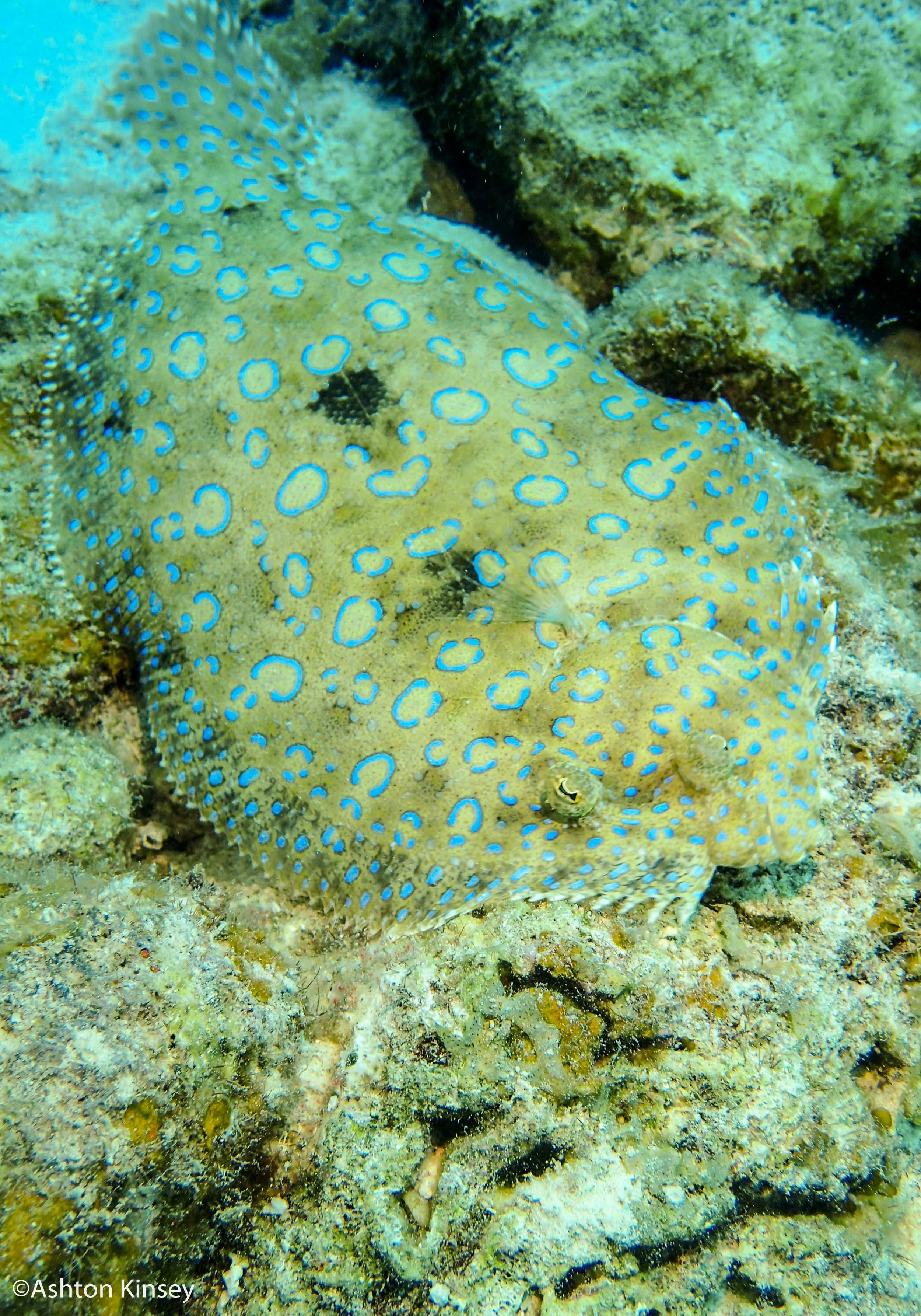
The light to moderate current and the lovely shallow bank makes this site suitable for snorkelers too. It's a dive site where many divers like to leisurely explore the shallower waters. Octopuses and Gold spotted Eels are often sighted here. To the east of the buoy, several steep ridges develop around the drop-off, protruding upwards from the reef. Yellowmouth and Tiger Groupers are often found at the cleaning stations in this area. The drop-off is located at a depth of 9 meters (30 feet) where a dense reef starts. A few small sandy patches amongst the coral provide habitats for Peacock Flounders and small fish species that prefer a sandy floor environment.
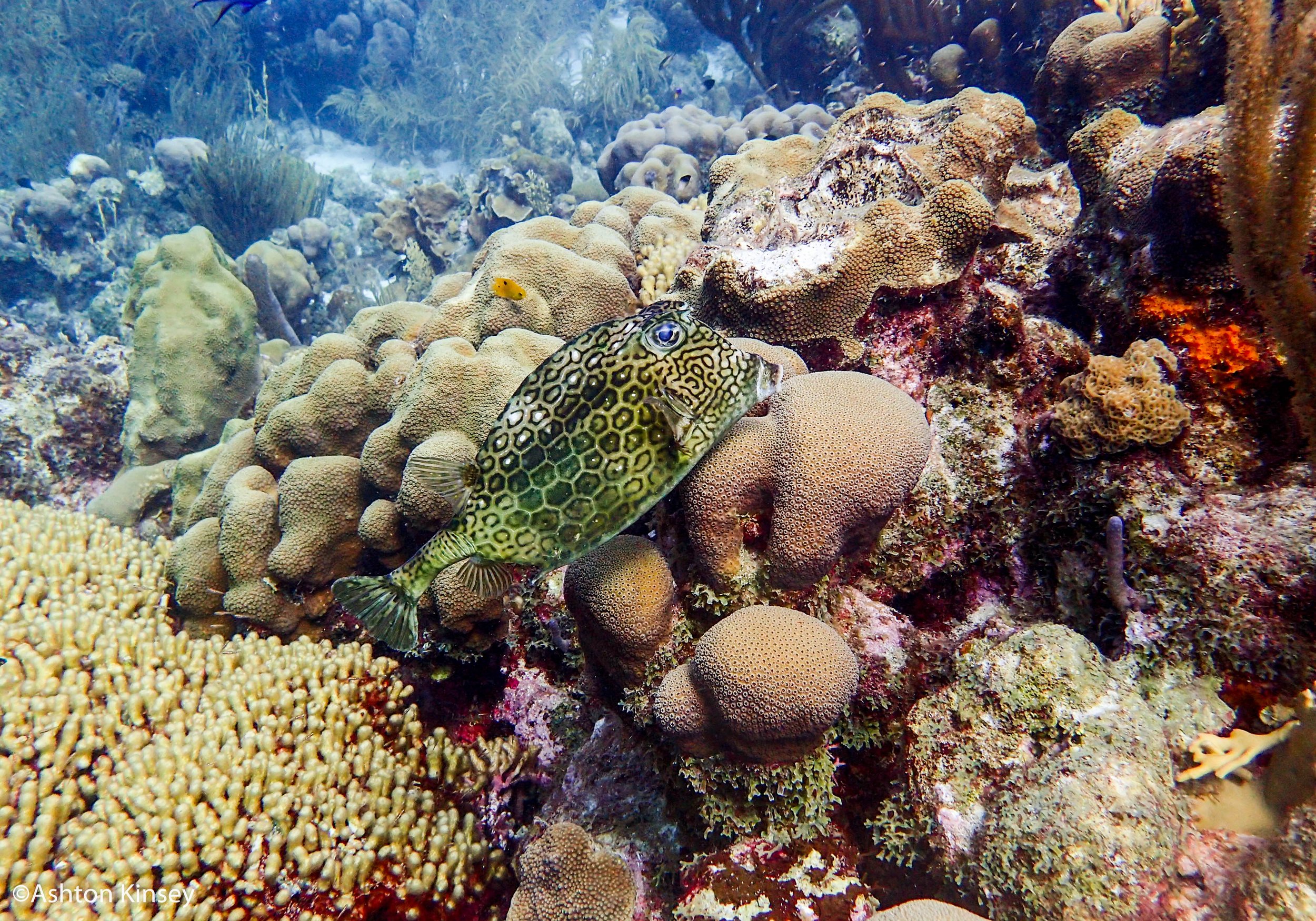
The section between the drop-off and a depth of 16 meters (52 feet) is stunning, with healthy Boulder Star- and Brain Coral combined with Finger Coral and Porous Sea Rods. Trumpet Fish, Queen Angelfish, Honeycomb Trunkfish and White spotted Filefish like to swim along the upper part of this reef.
Wire Coral and large sponges grow here from a depth of 17 meters (56 feet). Deeper than 22 meters (72 feet), the reef consists of Blade Coral that is, for the most part, covered with Encrusting Fan-Leaf Algae and Y-branched Algae. Unfortunately, Red Algae is abundant along the entire reef. Fish do not eat this alga and it's the result of a combination between water temperature and certain nutrients, which are produced by pollution.
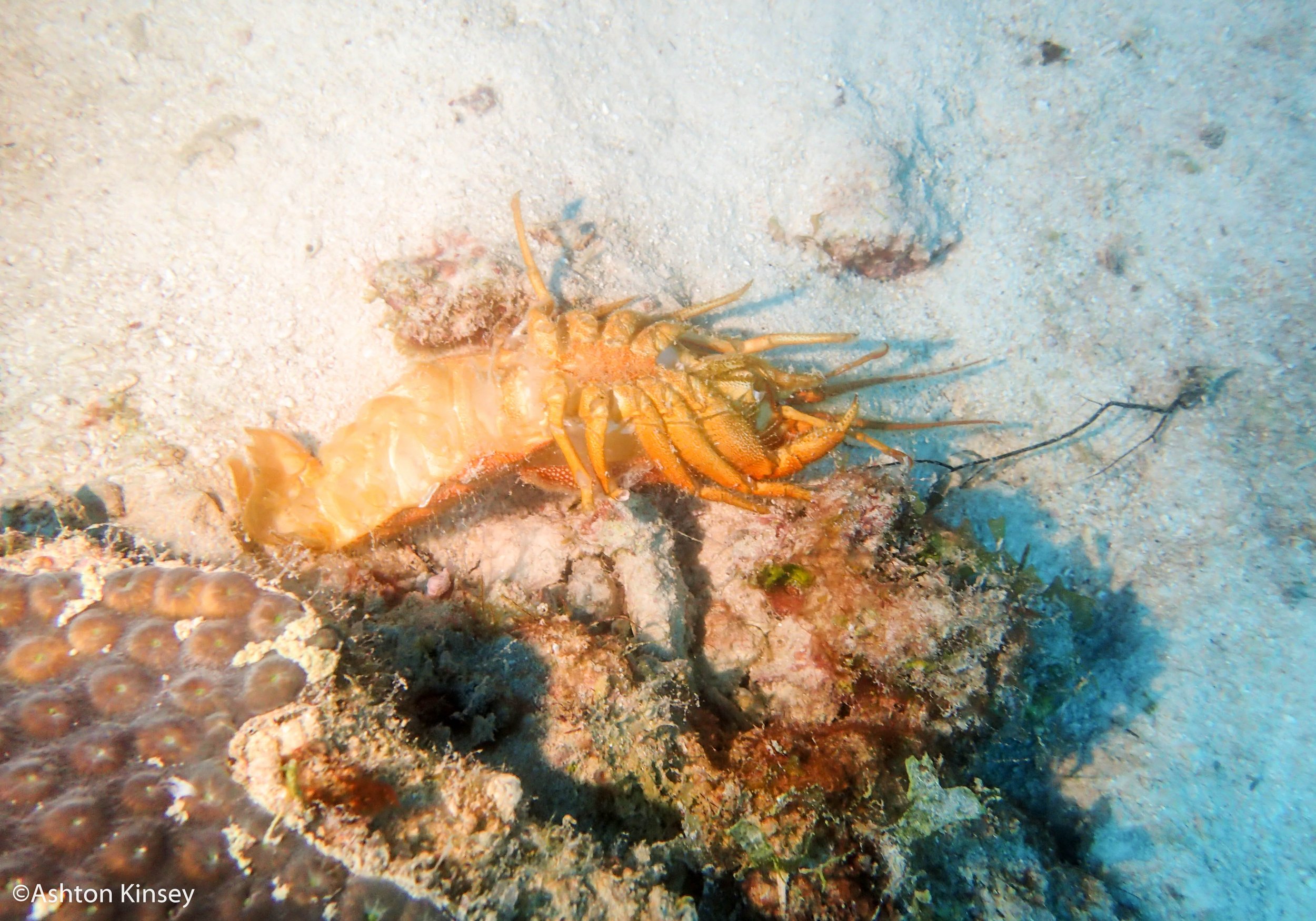
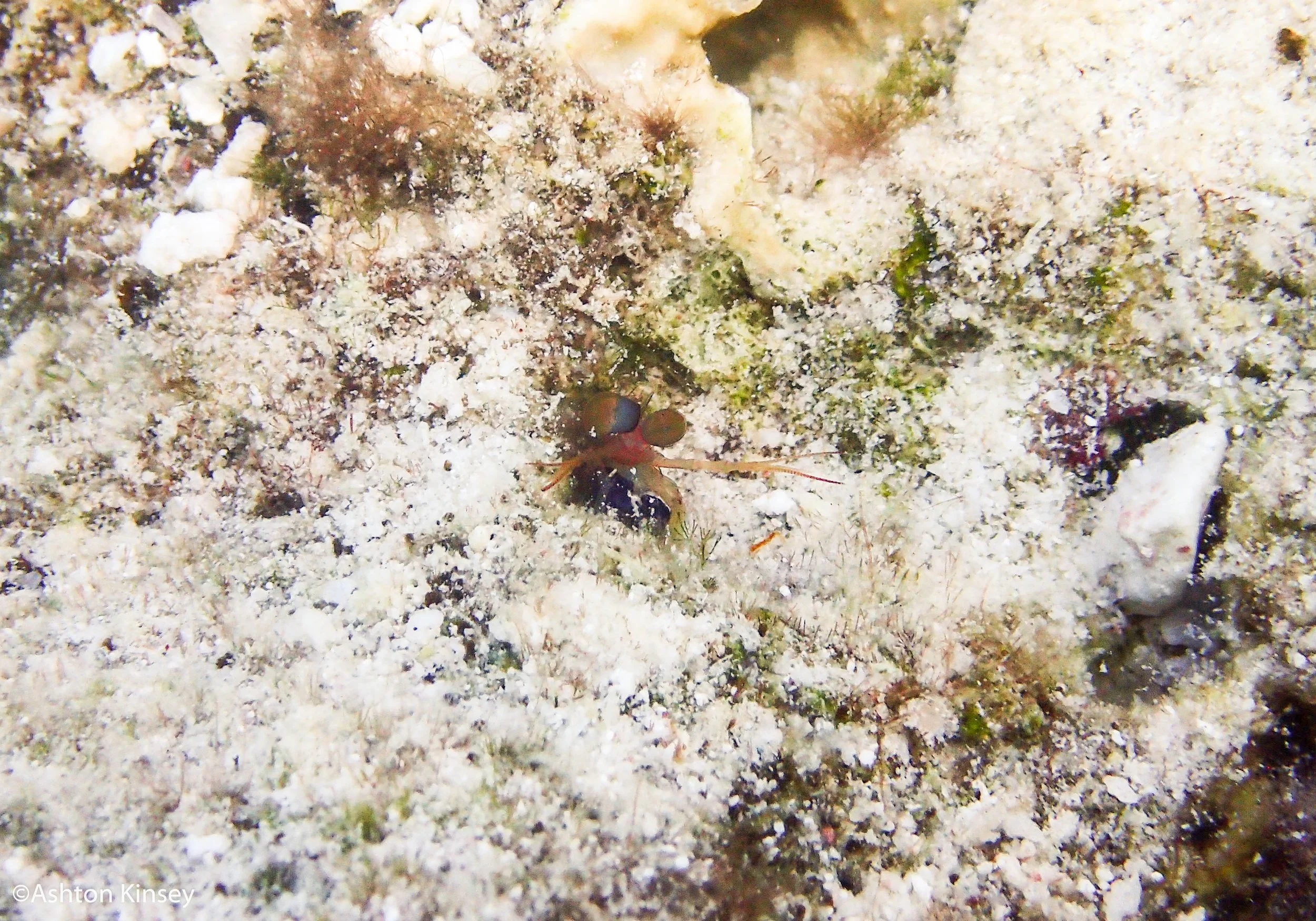
This is a great site for a night dive, and the area from the shore to just beyond the drop-off is best for this purpose. Red Hermit Crabs, Yellow Arrow Crabs and Octopuses hunt at night, so you should find them quite easily. The Yellow Arrow Crabs look a lot like daddy long-leg spiders with their small, triangular bodies and long legs. Their front 2 legs end in pincers, proving that they are indeed crabs and not spiders. As its name suggests, this crab is yellow or golden in color with some dark lines on its legs.
Punt Vierkant
Surroundings
This dive site is in the Punt Vierkant district. It's in a remote area near an unfinished hotel. As a result, there's not much for non-diving family members to do in the area. The Punt Vierkant dive site is sometimes said to be a little further along close to a construction site. However, it's more difficult to enter the water here.
Dive 26: 74’ for 72 minutes
Punt Vierkant is a dive site along the double reef off Bonaire's south coast. The reef splits towards the left of this dive site, while it remains a single reef in front of the parking lot. Enter the water at the large rock on the shore. This is the shallowest part. It's not difficult to enter the water, but beware of hollows in the floor, especially if there is surf.
The floor consists of sand and coral remains followed by a soft coral zone starting from a depth of 3.5 meters (11 feet). A lovely coral garden with various species of soft coral develops from a depth of 5.5 meters (18 feet). It's worthwhile to look for seahorses here. Small Filefish like to hide amongst the soft coral, as do Trumpet Fish and Flamingo Tongue Cowries.
The drop-off is located at a depth of 11 meters (36 feet) where hard coral growth also starts. The entire reef is covered with soft and hard coral and sponges that don't grow in specific zones. Straight to sea from the parking lot, as well as in a northerly direction (right), the reef continues downwards to a depth of 40 meters (131 feet) where it suddenly gives way to a sandy floor.
However, to the left the reef splits, creating a double reef. A sandy channel starts at a depth of 27 meters (89 feet), which gradually becomes wider as you move further south. The second reef ls located at a depth of between 21 and 38 meters (69 and 125 feet} from where the reef rises from the sandy floor and crests at a depth of 21 meters (69 feet). Garden Eels and -occasionally- Caribbean Stingrays and Jacks can be found in the sandy channel between the two reefs.
This is a lovely dive site, especially on sunny days. Be aware of currents, which can be strong at greater depths and along the second reef.